
A customer walks in with a thick gold-tone necklace, matching clip-ons, and a look every jeweler knows well. They want to know whether they've brought in a real vintage 80s set, a later revival piece, or a costume bundle with more style than value. You have to answer fast, but not casually. If you overvalue it, you tie up cash in the wrong inventory. If you undervalue it, you miss margin and possibly a collectible.
That's the story behind 80s jewellery trends right now. This isn't just nostalgia. It's a buying, pricing, merchandising, and risk-management issue sitting on your counter.
For jewelers, the opportunity is obvious. Bold pieces photograph well, sell on sight, and give younger buyers a gateway into vintage. The problem is that the same visual language also makes confusion easy. Big hoops, chunky chains, pearls, and geometric earrings are everywhere again. Style alone won't tell you whether you're looking at vintage stock, modern fashion jewelry, or a piece that deserves tighter documentation and more careful insurance treatment.
The Return of 80s Jewellery Trends
You see the shift before you see it in trend reports. Intake trays are filling with oversized earrings, broad bangles, thick chains, and pearl pieces with real visual weight. For a working jeweler, that changes the job from simple style recognition to margin control, authentication discipline, and risk assessment.

The pattern is consistent across the trade. A customer brings in a piece that looks period-correct at first glance, often because the scale and silhouette line up with what buyers associate with the 1980s. Then the bench or appraisal side tells a more complicated story. Hardware may be later, plating wear may point to mass-market production, and the finish may place it closer to revival stock than true vintage.
Why the style keeps moving stock
The commercial appeal is straightforward. Big jewelry reads well in a display case, on social media, and across a room. Buyers respond to presence before they ask about alloy, maker, or replacement cost, which means 80s-influenced pieces can sell quickly in both vintage and contemporary assortments. If you need clean product visuals for merchandising, Glima AI for creative image editing can help a team present statement earrings more clearly without reshooting every concept.
Commercially, the era helped turn jewelry into an overt fashion purchase category as well as a precious-goods category. That history still affects buying behavior now.
For a retailer, two practical consequences follow:
- Customers shop for visual impact first: Scale, color, and recognizability often drive the sale before metal value does.
- Category lines get messy: Fine jewelry, signed costume, plated fashion pieces, and modern revival designs can end up competing for the same customer and the same display space.
Practical rule: If a piece sells on presence, assess its sales appeal, service risk, and insurance treatment at the same time.
The business problem behind the trend
Statement pieces create work after the sale as well as before it. They get tried on hard, clipped on and off repeatedly, photographed for listings, packed for shipping, and worn in ways that expose plating, hinges, glue-set stones, and tension points faster than smaller jewelry usually does.
That is where shops lose money. Staff can overbuy lookalike stock, under-document collectible costume pieces, or price fragile plated items as if they will perform like better-made vintage. Returns, repairs, customer disputes, and coverage gaps usually start there.
The 80s look is easy to spot. The profitable move is separating visual trend value from material value, brand value, and liability before the piece ever reaches the case.
Defining the 80s Aesthetic for Your Inventory
A buyer walks in with a tray of bold gold-tone clips, oversized faux pearls, and bright stone pieces. If your team files all of it under “vintage statement jewelry,” you will misprice some of it, overinsure some of it, and miss margin on the pieces that deserve stronger presentation. The 80s aesthetic needs a tighter definition than “big and flashy.”

The shapes that define the era
Start with silhouette and scale because those are the fastest sorting tools at intake. Strong 80s pieces usually read from a few feet away. Earrings frame the face aggressively. Necklaces occupy real visual space. Bracelets look substantial even when the underlying material is light.
The clearest inventory markers usually include:
- Face-framing earrings: Oversized hoops, button earrings, clip-ons, discs, and geometric drops
- Heavy-looking neckwear: Thick chains, layered strands, broad collars, and large pendant formats
- Statement wristwear: Big bangles, stacked bracelets, and cuff-style pieces with obvious presence
- Pearl volume: Pearl chokers and multi-strand pearl looks built for mass, not restraint
That silhouette test saves time. If the piece disappears in the tray, it usually does not carry the visual language that makes 80s stock easy to merchandise.
Materials tell you how to classify the piece
Material mix matters because the decade produced strong looks at every price level. Some pieces belong in fine jewelry inventory. Others belong in designer costume, signed fashion, or trend-driven modern revival. They can share a display theme and still require different pricing logic, service expectations, and insurance treatment.
You need at least three working buckets:
| Inventory type | What you usually see | Main business implication |
|---|---|---|
| Fine jewelry of the era | Precious metal, genuine stones, stronger intrinsic value | Appraisal, repair, and replacement need fuller documentation |
| Signed costume or designer fashion jewelry | Brand recognition, plated surfaces, faux pearls, crystals, base metals | Value often sits in maker, era, and condition more than raw materials |
| Modern revival pieces | Newer finish, current components, trend-driven styling | Good sell-through potential, but usually limited collectible upside |
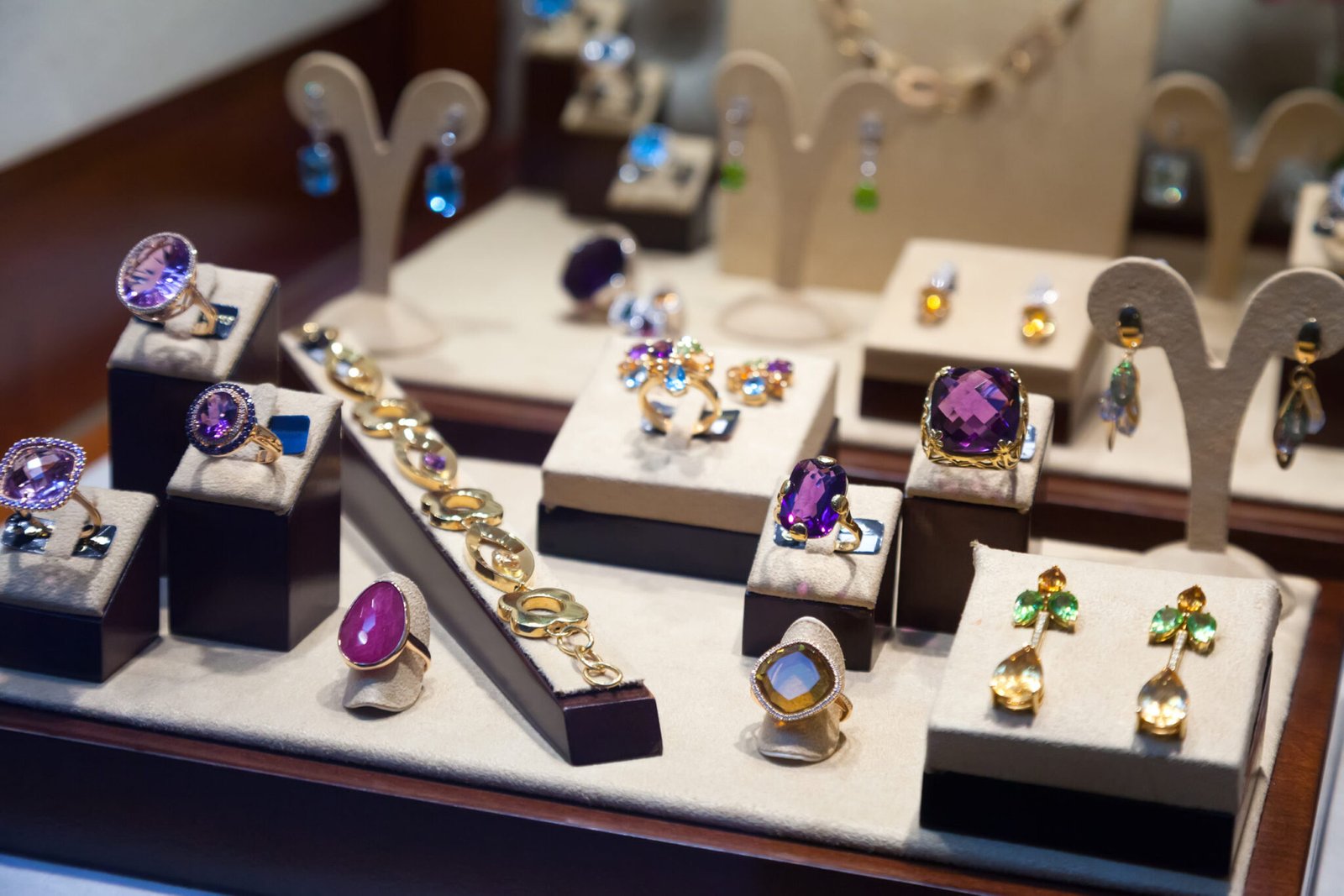
For visual reference, a well-shot antique jewelry inventory image helps train staff to separate visual impact from material class before pieces ever reach the case.
Color and contrast drive the sale
The 80s favored contrast, saturation, and obvious focal points. Amethyst, citrine, topaz looks, faux colored stones, black enamel, crystal accents, and high-shine gold-tone finishes all fit the period language because they hold attention quickly. Buyers respond to that immediacy.
Delicate matching sets often miss the mark when you're trying to merchandise 80s-inspired stock. One dominant piece usually sells the story better than a coordinated suite. A broad collar necklace, a thick gold-plated chain, or oversized pearl earrings will do more work in a case than three smaller pieces arranged for politeness.
A strong 80s presentation usually depends on one item with enough size, contrast, or shine to carry the display.
What works in a buying room
I sort 80s-leaning stock by commitment. Does the piece commit to volume, contrast, and attitude, or is it borrowing one period cue and relying on current minimal styling for the rest? That distinction affects where it goes in inventory and how hard I push on price.
This also matters for photography and campaign planning. If a team wants to test how bold earrings or chunky neckwear will read before a full shoot, Glima AI for creative image editing can help mock up stronger visual concepts for merchandising review.
Current minimalist logic usually weakens this category. If the item's selling point is presence, present it that way. Clean classification, confident styling, and realistic handling expectations are what turn an 80s look into profitable inventory instead of expensive confusion.
Authenticating Vintage Versus Modern Revival Pieces
Profit protection hinges on the fact that the market doesn't pay the same for “looks 80s” and “is 80s,” and the gap widens when the piece is signed, collectible, or headed into insured inventory.

Demand is already moving in that direction. Susan Caplan reported a 30% increase in sales of authentic 1980s earrings, including oversized hoops, discs, crystals, and pearls, as noted in Marie Claire's report on 80s jewelry trends. Once buyers start paying a premium for authenticity, your intake process has to get sharper.
What I check before I trust the story
A modern revival piece usually gets the shape right first and the period character wrong second. That's where the close inspection matters. I don't start with branding claims. I start with construction.
Check these points in order:
Surface wear
- Real vintage usually shows believable age at edges, backs, clip points, and friction areas.
- Artificial distress often looks too evenly distributed or oddly placed.
Hardware
- Clasps, hinge action, earring clips, and pin assemblies tell you a lot.
- A silhouette can be copied easily. Hardware choices usually reveal the actual production era faster.
Weight and feel
- Older statement pieces often have a different balance in hand.
- Revival pieces may look heavy but feel noticeably lighter because the build is optimized for current mass production.
Plating behavior
- Vintage plating wear tends to appear naturally on high-contact points.
- Newer plating often presents with a cleaner, more uniform finish, even when the style imitates age.
Signs that deserve a second look
Not every authentic piece has romantic wear, and not every clean piece is modern. Estate storage can preserve items unusually well. On the other hand, reproductions can be convincing from the front.
That's why I like to keep a visual reference file for the team. Even a simple image library of clasps, clip backs, brooch pins, hallmark placements, and common finish patterns can improve consistency. When training staff, I often use examples like this antique jewelry reference image as a reminder that age shows up in construction details, not just styling.
A quick visual explainer can help your sales and intake staff calibrate their eyes before they start making pricing assumptions.
A practical authentication framework
| Question | If yes | If no |
|---|---|---|
| Does the wear pattern make sense for age? | Continue deeper inspection | Treat the piece as suspect until proven otherwise |
| Does the hardware look period-consistent? | Increase confidence | Reassess whether it's revival stock |
| Is there a maker's mark or identifying signature? | Document it immediately | Value may still exist, but with less support |
| Does the material quality match the asking story? | Move toward pricing | Slow down and verify before buying |
The mistake isn't buying revival pieces. The mistake is paying vintage money for revival pieces because the front view looked right.
What works is disciplined skepticism. What doesn't work is relying on trend familiarity. A lot of people can identify an 80s look. Far fewer can authenticate an 80s asset.
Sourcing and Merchandising 80s Inspired Stock
A buyer brings in a tray of oversized gold-tone earrings, chunky chain necklaces, and bright cocktail rings. Half the profit decision happens before you discuss price. The first call is deciding whether those pieces belong in your vintage pipeline, your fashion pipeline, or nowhere at all.
Stores lose margin when sourcing and merchandising are treated as separate jobs. They are tied together. If a piece will need a long sales story, stronger condition disclosure, or extra staff training, that cost belongs in the buying decision.
Buy by inventory role, not by trend appeal
Estate buying, specialist auctions, and established vintage suppliers usually produce the cleanest opportunities for signed or period-correct stock. Modern wholesale channels are better for quick trend response, repeat orders, and cleaner margin forecasting. Private buying can work well, but only if the item has enough upside to justify the inspection time, intake documentation, and possible repair risk.
I sort 80s-inspired stock into three working lanes:
- Collectible vintage for signed pieces, strong period examples, and items that can carry a provenance-based sales story
- Revival fashion stock for trend-led volume, easier replenishment, and lower authentication exposure
- One-off speculative buys for unusual pieces that may perform well, but only after tighter review of condition, materials, and sell-through odds
That separation helps with more than display. It keeps intake records cleaner, protects pricing discipline, and reduces the chance that a sales associate presents plated revival stock with the confidence of a true vintage asset.
Merchandise for clarity first
80s jewellery sells on presence, but presence alone does not close the sale. Shoppers need to understand what they are looking at within seconds.
Use one hero piece per visual story. A major earring pair, pearl collar, or thick chain can carry the display by itself. Add one or two supporting pieces at most. Too many loud items in one case flatten each other out, and staff end up spending the sale untangling confusion instead of building desire.
Accurate labeling matters here. Mark pieces as vintage, vintage-inspired, or contemporary fashion stock without hedging. That protects trust, lowers return disputes, and gives your team a cleaner script on the floor.
Build displays around margin and handling risk
Large 80s-style pieces draw attention, but they also create practical problems. Clip earrings can stress hinges. Plated surfaces show wear fast under repeated handling. Oversized necklaces tangle, scrape, and take up more case space than their ticket price sometimes justifies.
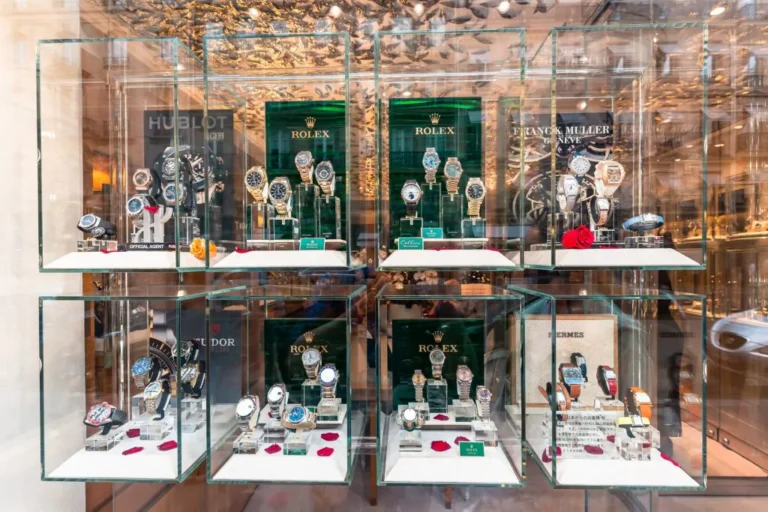
Merchandising has to account for that. Give statement pieces room to sit flat, keep fragile finishes away from high-touch positions, and train staff to present them over a pad instead of across glass. Even a simple visual reference, such as a watches and accessories merchandising image, reinforces a basic point. Bold accessories read better when each item has space around it.
Online, the product page has to do the selling and the risk control
Strong photography helps, but product data closes the gap between interest and purchase. Title the item clearly. State whether it is vintage or revival. Disclose plating, repair history, missing stones, replaced backs, and visible wear in plain language. That reduces preventable returns and gives you a cleaner record if a claim or chargeback dispute appears later.
If marketplace selling is part of your channel mix, MerchLoom's Etsy product guide is a useful reference for understanding how visually distinctive products perform in browse-heavy environments. The lesson for jewelers is practical. Strong silhouettes get the click, but clear material and condition details get the conversion.
Buyers will forgive bold design. They will not forgive vague descriptions.
The stores that handle 80s-inspired stock well do one thing consistently. They make the category easy to understand, easy to shop, and hard to misrepresent.
Valuation and Pricing Strategies for Vintage Finds
The fastest way to lose margin on 80s stock is to price it by materials alone. That approach misses why many of these pieces sell in the first place.

Some pieces deserve a metal-and-stone valuation. Others deserve a collectible valuation. Many deserve a blended one. If you don't know which lane you're in, your pricing will drift.
Why replacement cost and selling price are not the same thing
The revival is active in the luxury market, with major houses selling oversized circular earrings and other supersized silhouettes as fall 2024 front-runners, according to this luxury-focused review of 1980s jewelry trends. That kind of high-fashion validation affects how buyers perceive both vintage and revival stock.
Perceived value is not fake value. It's market value in motion. But it still has to be disciplined.
A practical pricing model should account for:
| Factor | Why it matters |
|---|---|
| Material authenticity | Precious versus non-precious changes both intrinsic and claim support |
| Condition | Wear, repairs, missing stones, plating loss, and altered components all hit value |
| Brand or signature | Signed pieces often command stronger resale confidence |
| Rarity of design | Some silhouettes are common; some are unusually desirable |
| Current market demand | A hot silhouette can support stronger pricing if the piece is documented properly |
What I won't do when pricing these pieces
I won't assume an unsigned item with dramatic scale deserves a premium just because it photographs well. And I won't dismiss signed costume jewelry because the metal isn't precious. Both are common mistakes.
The right question is, “What is the buyer paying for?”
Sometimes they're paying for gold content. Sometimes they're paying for a recognizable vintage signature. Sometimes they're paying for a wearable statement piece with era credibility. Those are different value propositions and should not be folded into one lazy price.
A sharper pricing discipline
Use these checkpoints before a tag gets printed:
- Document first: Record marks, condition, materials, dimensions, and any repair evidence before discussing selling price.
- Separate replacement logic from resale logic: Insurance support may require one kind of valuation thinking. Retail sell-through requires another.
- Discount hidden problems early: Weak clips, stressed hinges, unstable faux pearl coatings, or visible plating loss should be reflected up front.
- Price the story only when the story is supportable: “Vintage-inspired” and “authentic vintage” are not interchangeable.
A big 80s piece can be easy to admire and hard to price. If your valuation notes are thin, your confidence is borrowed, not earned.
When this category works, it works because the store knows exactly why the piece belongs at that price. That confidence translates to staff, to customers, and eventually to claims documentation if something goes wrong.
Insuring Your Collection and Mitigating Risk
A standard business policy often looks adequate until a claim tests it. That's especially true with statement jewelry.
Large 80s-style pieces create a specific exposure profile. They're conspicuous. They attract handling. They move between showcases, repair stations, photographers, off-site events, and shipment channels. Some are plated or built with materials that don't repair neatly after impact or abrasion. Others are hard to replace because the exact vintage equivalent isn't sitting in a catalog.
Where ordinary coverage assumptions break down
A store owner may assume bold fashion-forward stock is less of an insurance concern because some pieces aren't fine jewelry in the traditional sense. That's the wrong lens. Insurance trouble doesn't start only with precious metal content. It starts when an item is desirable, movable, difficult to document, or hard to replace cleanly.
The risk points are practical:
- Theft exposure: Statement pieces are easy to notice and easy to target
- Transit issues: Vintage and revival inventory often travels for shows, repairs, or client approvals
- Handling damage: Clip systems, plating, stones, faux pearl finishes, and decorative elements can fail under repeated try-ons
- Valuation disputes: If your records are weak, proving what was lost becomes harder
Documentation is part of risk control
Good coverage starts before the policy form. Your records need to stand on their own. For this category, that means more than a short SKU description.
Build files that include:
- Clear photos from multiple angles
- Measurements and weight where relevant
- Material notes
- Maker's marks or signatures
- Condition notes before sale or storage
- Any appraisal or acquisition record tied to the piece
I also recommend using visual references in training and internal documentation. Even a simple benchmark image like this ring photography example used in jewelry presentation reinforces the point that clean imagery and consistent records matter when value has to be defended later.

Why specialty coverage matters
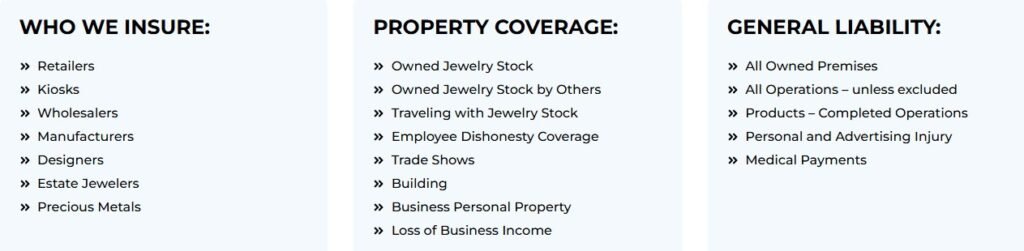
Jewelers need insurance built around jewelry realities, not generic retail assumptions. A specialized Jewelers Block policy is designed for exposures such as theft, mysterious disappearance, damage during handling, and losses in transit. That matters more with vintage and statement-heavy inventory because replacement isn't always straightforward and claim support depends heavily on how well the stock was classified and documented.
What works is treating insurance as part of inventory strategy. What doesn't work is buying aggressively into a trend, mixing value tiers in the case, and assuming the policy on file will sort out the details later.
If your store is carrying statement inventory, vintage finds, or hard-to-replace stock, it's worth reviewing whether your current coverage fits the way your business operates. First Class Insurance specializes in Jewelers Block and related protection for jewelry stores, wholesalers, and other jewelry businesses, with coverage built around theft, mysterious disappearance, transit exposure, and the day-to-day realities of handling valuable inventory.