
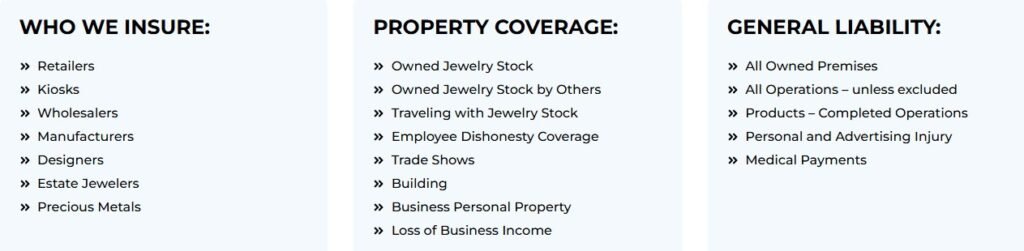
Before you even think about ordering display cases or sourcing your first diamond, you need a blueprint. Turning a love for beautiful gems into a profitable business starts with a rock-solid plan. This is where the real work begins—the strategic groundwork that separates a hobby from a thriving enterprise.
Your Blueprint for a Thriving Jewelry Business

The journey to opening your doors successfully begins long before the first sale. It starts with a clear vision and an actionable strategy. Too many aspiring jewelers get caught up in the romance of the product and skip the hard questions.
Who are you selling to? What makes your store different from the one down the street? And most importantly, how will you actually make money? Answering these honestly is the first, most critical step.
Defining Your Niche in a Crowded Market
You can't be everything to everyone. The jewelry market is massive, and trying to capture all of it is a surefire way to get lost in the noise. The key is to specialize. Find your corner of the market and own it.
Are you the go-to expert for custom engagement rings? Or maybe you'll focus on ethically sourced gemstones, appealing to a new generation of conscious buyers. Perhaps your passion is for vintage estate pieces with a story to tell.
Consider a few popular paths:
- Bridal and Engagement: A perennially strong market built on custom rings and wedding bands.
- Sustainable and Ethical Jewelry: This fast-growing segment attracts shoppers who care about lab-grown diamonds and recycled metals.
- Vintage and Antique Pieces: This niche appeals to collectors and clients looking for truly one-of-a-kind treasures.
- Men's Jewelry: A once-overlooked category that’s now a major growth area, from classic watches to bold, modern accessories.
Your chosen niche becomes the heart of your brand. It dictates your store’s name, its design, your marketing—everything.
Crafting Your Comprehensive Business Plan
Think of your business plan as your operational roadmap. It's not just a formality to get a bank loan; it's the document that will keep you grounded and focused as you build your business. It forces you to think through every single detail.
A well-researched business plan does more than outline your strategy; it demonstrates your commitment and understanding of the industry, making you a more credible and attractive prospect for lenders and investors.
Your plan needs to cover your company's mission, a deep analysis of your target market, your organizational structure, and exactly what you'll be selling. Most importantly, it needs brutally honest financial projections. You have to forecast revenue, map out every startup cost, and calculate when you’ll break even. This financial discipline is non-negotiable for managing cash flow and having enough capital to survive the crucial first year.
Don't forget to budget for essential protections, like specialized insurance for a jewelry business, right from the start. It’s a cost of doing business you can't afford to ignore.
Understanding the Market and Financial Realities
The good news? The opportunity is huge. The global jewelry market hit USD 366.79 billion in 2024 and is expected to climb to USD 578.45 billion by 2033. This isn't just a number; it's proof of a strong, consistent demand for what you're selling.
You can dive deeper into these trends by exploring detailed jewelry market research findings. Understanding this growth helps justify the vital need for comprehensive Jewelers Block insurance to protect the high-value assets at the core of your operation.
But this potential comes with a hefty price tag. You're not just renting a space; you're investing in top-tier safes, advanced security systems, quality display cases, and professional staff. To give you a realistic picture, here’s a breakdown of what you might expect.
Initial Startup Cost Estimation for a Jewelry Store
A breakdown of potential one-time and recurring expenses to help you build a realistic budget for your new jewelry business.
| Expense Category | Estimated Cost Range (Low-End) | Estimated Cost Range (High-End) | Key Considerations |
|---|---|---|---|
| Inventory | $50,000 | $500,000+ | Your biggest expense. Depends entirely on your niche (e.g., fine diamonds vs. silver fashion jewelry). |
| Rent & Security Deposit | $5,000 | $25,000 | Varies dramatically by location (mall vs. standalone). Prime locations cost more but offer more foot traffic. |
| Store Build-Out & Design | $25,000 | $150,000 | Includes lighting, flooring, custom cabinetry, and creating the right luxury ambiance. |
| Security Systems & Safes | $10,000 | $50,000 | Non-negotiable. Includes UL-rated safes, alarm systems, and high-res surveillance cameras. |
| Insurance (Initial Premium) | $3,000 | $15,000 | Jewelers Block and liability insurance are essential. Premiums are based on inventory value and security measures. |
| Legal & Licensing Fees | $1,500 | $7,500 | Cost to form your business entity (LLC, etc.), plus local permits and licenses. |
| Marketing & Grand Opening | $5,000 | $20,000 | Website development, initial ad campaigns, and promotional events to generate buzz. |
| Working Capital | $20,000 | $100,000 | Cash reserve for payroll, utilities, and unforeseen expenses for the first 6-12 months. |
This table provides a starting point, but your actual costs will depend heavily on your specific vision and location. The key is to be thorough in your planning to avoid surprises. As part of that planning, start looking at key industry events to meet suppliers. You can check out details for major shows like the upcoming INS event to get a feel for the industry calendar.
Navigating Essential Legal and Financial Requirements
Before you even think about placing that first diamond ring in a display case, you need to build the foundation of your business. This isn't the glamorous part, but the legal and financial framework is what protects you, your assets, and your entire venture from collapsing.
Getting this wrong isn't just a minor misstep; it's a direct threat to everything you're building.
The first big decision you'll face is choosing a business structure. This choice dictates everything from your personal liability and tax burden to how you can raise money down the road. A sole proprietorship might seem simple, but it offers zero separation between you and the business. In a high-value industry like jewelry, that’s a dangerous game to play.
Selecting the Right Business Structure
For most jewelers just starting out, the choice usually comes down to a Limited Liability Company (LLC) or an S Corporation (S-Corp).
An LLC is a popular starting point. It's flexible, relatively simple to manage, and most importantly, it creates that critical liability shield between your business debts and your personal assets. An S-Corp offers similar protection but can sometimes provide tax advantages, though it comes with more rigid rules and formalities.
Here’s the breakdown:
- Limited Liability Company (LLC): This structure protects your personal assets—like your home, car, and savings—from business lawsuits or debts. Profits and losses simply "pass through" to your personal tax return, which helps you avoid the dreaded double taxation.
- S Corporation (S-Corp): You get the same personal asset protection here. The potential perk is that you can pay yourself a "reasonable salary" and take any remaining profits as distributions, which might save you a chunk on self-employment taxes.
Don't guess on this. Spending a little money now to consult with a lawyer or CPA is one of the smartest investments you can make. They'll look at your specific situation and help you choose the structure that offers the best protection as you learn how to open a jewelry store.
Building Your Financial and Legal Checklist
Once your structure is decided, it's time to make it official. This part is all about checking boxes, but every single one is non-negotiable for running a legitimate operation.
First, you'll register your business name. This could be a trade name (often called a "DBA" or "Doing Business As") or the legal name of your new LLC or corporation. After that, you'll need an Employer Identification Number (EIN) from the IRS. Think of it as a Social Security number for your business—you can't open a bank account, file taxes, or hire employees without one.
One of the cardinal rules of business ownership: never, ever mix your personal and business finances. Opening a dedicated business bank account is the first and most important step in protecting your personal liability and keeping your books clean.
Next up are the licenses and permits. You'll need a general business license, a seller's permit to collect sales tax, and possibly even a secondhand dealer license if you plan on buying and selling estate jewelry.
Setting Up for Financial Success
With the legal paperwork filed, it's time to get your financial house in order. A solid accounting system isn't a luxury; it's a necessity.
Software like QuickBooks or Xero is perfect for tracking every dollar coming in and going out, from inventory buys to payroll. Trust me, you'll thank yourself when tax season rolls around.
Finally, while we're talking about legal setup, you can't separate it from your physical location. Before you sign any lease or purchase agreement, a thorough review of a commercial real estate due diligence checklist is an absolute must. It’s the only way to ensure the property is zoned correctly and free of hidden problems that could stop your grand opening in its tracks.
Creating Your Store and Sourcing Your Collection
This is where the rubber meets the road. Your physical space and the pieces you fill it with are what turn your business plan from paper into a real, breathing brand. Get these right, and you're not just selling jewelry; you're creating a destination that people want to experience.
Choosing your location is one of the biggest decisions you'll make. A high-traffic storefront in a bustling shopping district gets you eyeballs, but it comes with a hefty price tag. On the other hand, a more intimate boutique on a quieter street can create a sense of exclusivity and allow for a deeply personal customer experience.
Designing an Unforgettable Store Experience
The second a customer walks through your door, their impression is formed. Everything, from your lighting to your layout, has to tell the story of your brand. If you specialize in vintage pieces, for example, you might go with antique-style display cases and warm, ambient light to evoke a feeling of history and romance.
Professional lighting is non-negotiable in this business. Period. It has to be bright enough to show off the fire and brilliance of your diamonds without feeling harsh or clinical. Your display cases aren't just for security; they're the stage. Clean lines, quality materials, and smart arrangements make every single piece pop.
Your store’s layout needs to be a perfect marriage of luxury and security. You want an open, welcoming flow for customers, but your high-value items must always be within staff sightlines and positioned away from the door.
This balance is key. It makes clients feel comfortable while ensuring you never lose control of your most valuable assets.
Building Your Perfect Jewelry Collection
Sourcing your inventory is an art form. Your collection is the heart and soul of your business, which means finding reputable suppliers is everything. The goal isn't just to make a few purchases; it's to build long-term relationships with vendors who deliver on quality, reliability, and price.
Start by hitting the major industry trade shows. These events are priceless for meeting a huge range of suppliers in person, from diamond wholesalers to finished piece designers. It’s your chance to see and feel the merchandise, compare quality, and start building your network.
Before you commit to a new supplier, do your homework:
- Ask for references. Talk to other store owners who've worked with them.
- Verify certifications. Make sure they follow industry standards, like the Kimberley Process for conflict-free diamonds.
- Negotiate terms. Get pricing, minimum orders, and return policies nailed down upfront. Don’t be afraid to push for terms that work for your cash flow.
- Start small. Place a small test order to gauge their quality and reliability before you sink significant capital into a large purchase.
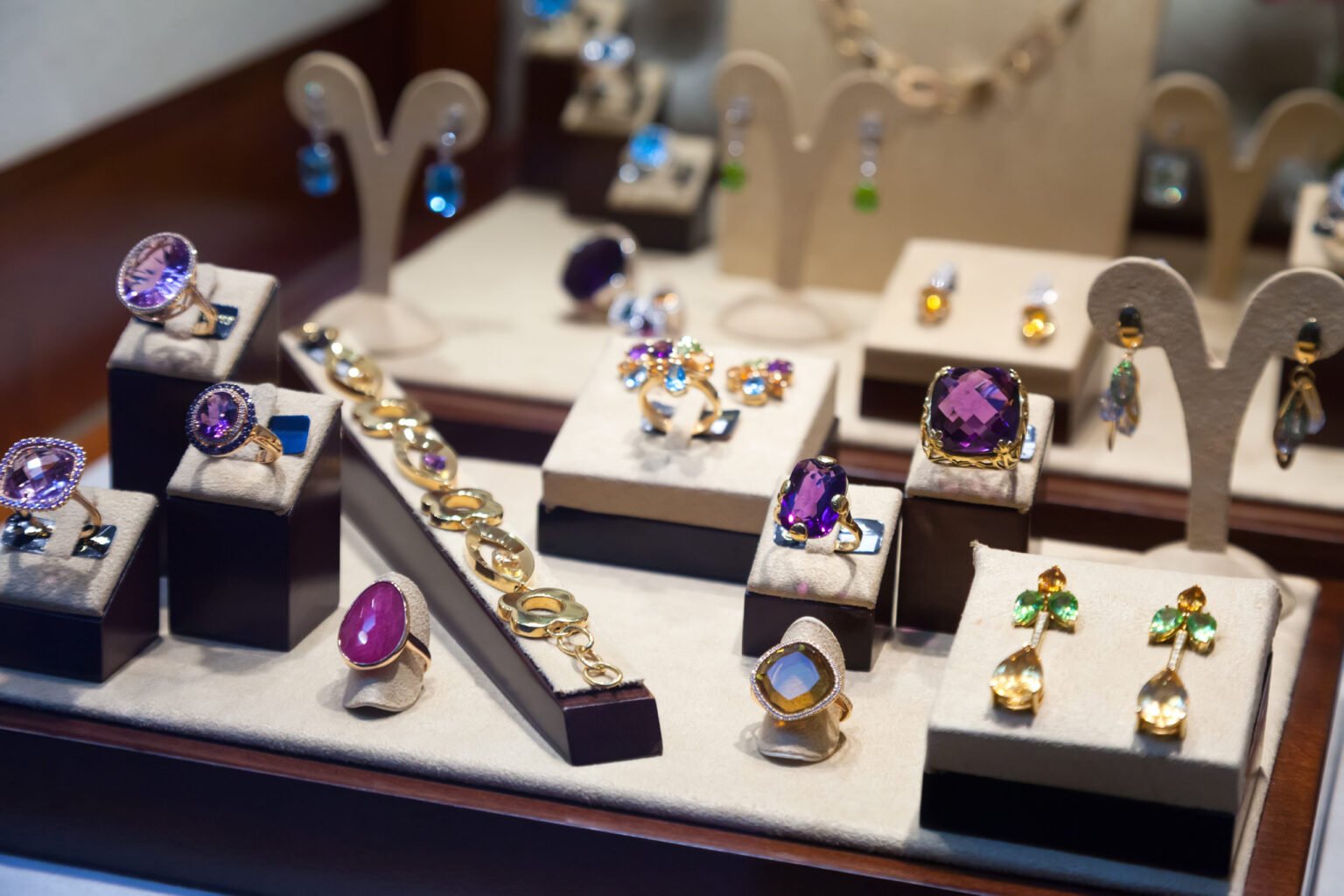
Putting together your initial inventory is a balancing act. You need a solid mix of classic bestsellers that bring in steady cash, plus those unique, show-stopping pieces that really define who you are. This is your chance to explore everything from timeless antique jewelry to modern classics.
Navigating the Modern Retail Landscape
While a brick-and-mortar store creates a powerful brand experience, a beautiful showroom alone isn't enough anymore. The ground is shifting under our feet, and success now means bridging the physical and digital worlds.
Independent jewelry stores currently hold a 35% market share, which sounds solid until you realize it’s down from 42% in 2020. A big reason for this slip is the growing competition from major chain retailers, who now command 28% of the market. Their secret? They expertly blend their physical stores with powerful online platforms.
For anyone learning how to open a jewelry store, the takeaway here is crystal clear: a strong digital presence is no longer a "nice-to-have." It's essential for survival. To get a better handle on the market, you should read up on these jewelry industry trends and statistics.
Implementing Ironclad Security and Specialized Insurance
In the world of fine jewelry, your sparkling inventory isn't just a collection of beautiful items; it's the heart of your business and a massive financial asset. Protecting it isn’t an afterthought—it's the single most critical investment you'll make. You need a multi-layered defense that weaves together physical security with specialized jewelry store insurance to survive.
A standard business policy is dangerously out of its depth here. It just doesn't understand the unique risks you face, or the sheer concentration of value in such small, desirable items. You need a security strategy as meticulously crafted as the pieces you sell.
Fortifying Your Physical Space
Your first line of defense is your physical store. It has to be a fortress, but one that still feels warm and welcoming to your clients. This starts with investing in commercial-grade security hardware built for high-value retail.
Don't just think about a simple alarm. Your system has to be much more robust.
- UL-Rated Safes and Vaults: Your most valuable pieces must live in a UL-rated safe when the store is closed. That rating (like TL-30 or TRTL-30×6) tells you exactly how long the safe can withstand a professional attack with tools and torches. It's not a suggestion; it's a requirement.
- Advanced Alarm Systems: This means motion sensors, glass-break detectors, and panic buttons. The crucial part? It must be monitored 24/7 by a reputable central station that can dispatch law enforcement immediately.
- High-Definition Surveillance: Cameras need to cover every single inch of your showroom, back office, and all entry/exit points. Crystal-clear footage is non-negotiable for identifying suspects and, just as importantly, for backing up an insurance claim.
These physical measures are the absolute baseline. They prove to insurers and would-be criminals that you are serious about security.
The Critical Role of Specialized Insurance for Your Jewelry Business
This is where so many new store owners make a catastrophic mistake. They assume a general business owner's policy (BOP) will cover them. It won't. The exclusions and laughably low coverage limits for theft in a standard policy leave you almost completely exposed.
You need Jewelers Block insurance. This is a highly specialized policy designed from the ground up to cover the specific, high-stakes risks of the jewelry world. It’s the only real safety net for your business.
Jewelers Block is an "all-risk" policy, which means it covers everything unless it is specifically excluded. This is the complete opposite of a standard policy that only covers what is specifically named. For a jeweler, that difference is everything.
A solid insurance for jewelry business policy will protect your inventory against a whole range of perils that standard policies just ignore, such as:
- Armed robbery or smash-and-grab theft
- Mysterious disappearance or unexplained loss
- Employee dishonesty or internal theft
- Damage during shipping or while at a trade show
- Customer jewelry left in your care for repair ("bailee" coverage)
Without this specific coverage, a single major theft could easily shut your doors for good. That's why it is critical to get a quote for Jewelers Block from an agency that lives and breathes this industry. A specialist firm like First Class Insurance Jewelers Block Agency truly understands the risks and can build a policy that actually protects your assets.
Building Your Blueprint for Success
This infographic pulls together the foundational pieces we’ve talked about—location, design, and sourcing—that set the stage for the security and insurance measures that will protect your investment.
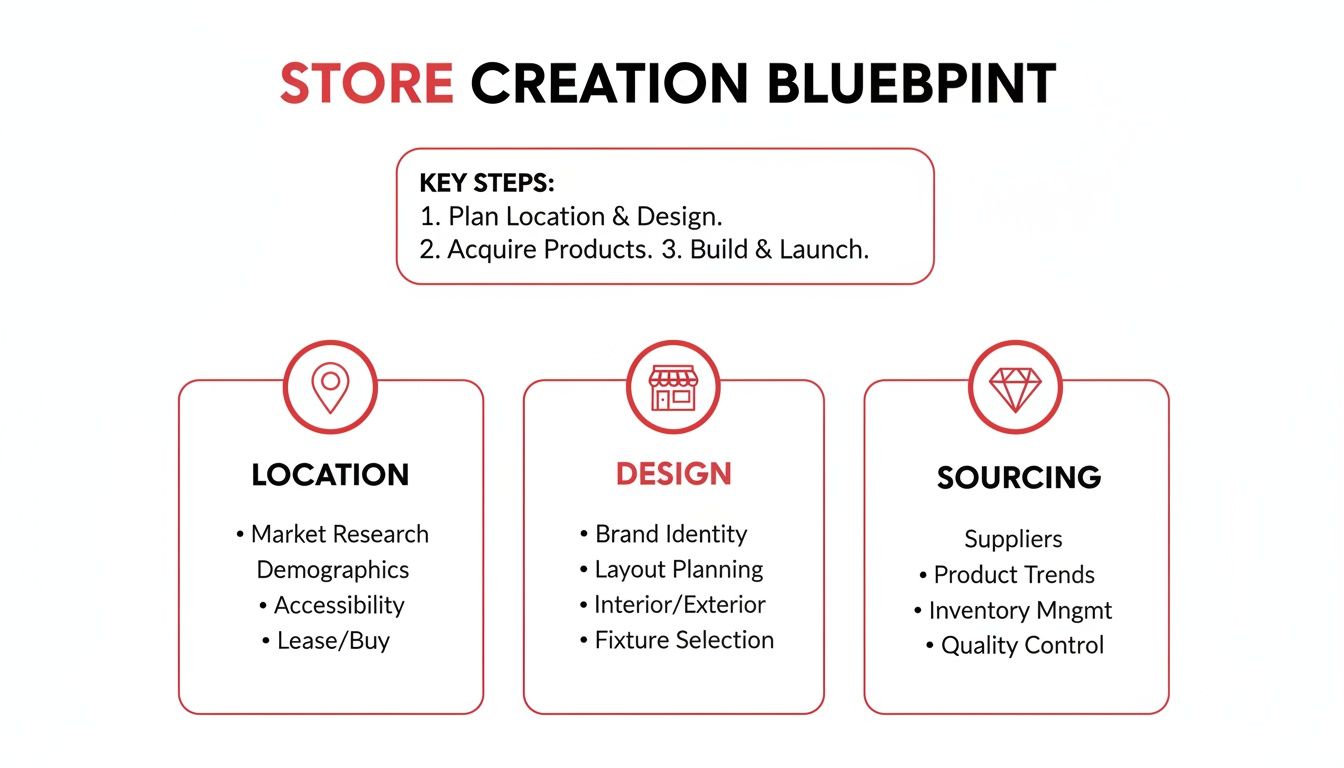
Each of these core components informs the next. It’s about creating a cohesive business where a premium location is fortified by top-tier security and insured by a policy that understands its true value.
Comparing Your Insurance Options
The gap between general business insurance and specialized protection becomes glaringly obvious when you look at the fine print. A standard policy might cover a stolen laptop, but it will fall disastrously short of the value of a single tray of diamond rings. Understanding this is vital when you're figuring out how to open a jewelry store.
Think about the protection offered for this stunning diamond ring. Only a Jewelers Block policy would come close to covering its full value against the unique risks it faces every day.

Let's break down the key differences to make it crystal clear why specialized insurance for a jewelry store is the only real choice.
Comparing Standard Business Insurance vs Jewelers Block Insurance
Understanding the critical coverage differences between a generic business policy and specialized insurance designed for a jewelry store.
| Coverage Area | Standard Business Owners Policy (BOP) | Jewelers Block Insurance |
|---|---|---|
| Inventory on Display | Very limited coverage, often with a low sub-limit (e.g., $2,500) for theft. | Covered up to the full policy limit, even for open stock during business hours. |
| Mysterious Disappearance | Almost always excluded. If a piece simply vanishes, there is no coverage. | Typically covered. This is a crucial protection unique to Jewelers Block. |
| Items in Transit | Generally not covered or requires a separate, expensive rider. | Covered. Includes inventory shipped to customers or between locations. |
| Employee Theft | Excluded. Requires a separate crime policy. | Often included, providing protection against internal dishonesty. |
| Customer Property | Not covered. This leaves you liable for items left for repair. | Covered under "bailee" provisions, protecting your clients' property and your reputation. |
As you can see, relying on a standard policy leaves massive, business-ending gaps in your protection. Jewelers Block is designed to fill those gaps, ensuring your most valuable assets are properly secured.
Building Your Brand and Launching Your Store
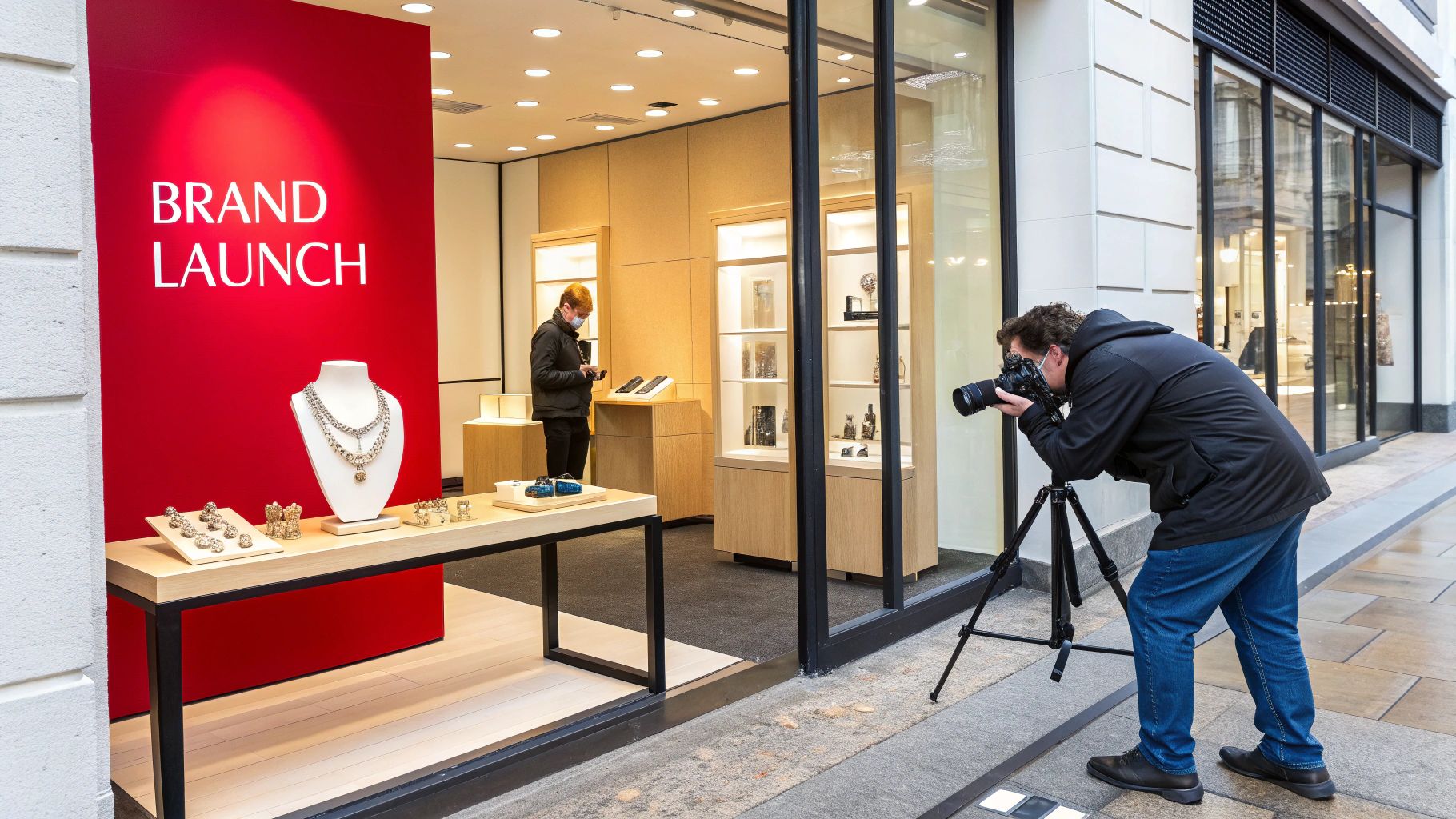
You’ve got the security dialed in and your insurance is rock-solid. Now for the fun part—turning your vision into a brand that people connect with.
A powerful brand is so much more than a pretty logo. It's the story you tell, the feeling a customer gets when they walk through your doors, and the promise you make with every piece you sell. This is how you transform a space full of beautiful things into a destination.
Your Digital Storefront Comes First
In today's world, your website is your most important showroom. Long before someone steps foot in your physical store, they're going to check you out online. A polished, professional e-commerce site isn't a "nice-to-have" anymore; it's the bedrock of a successful jewelry business.
Your website has to be a flawless extension of your in-store vibe. This starts with killer product photography. Let’s be honest, jewelry is a nightmare to shoot well. It’s worth every penny to hire a pro who knows how to make a diamond sparkle and a pearl glow on screen.
Then, you have to lean into the visual nature of what you sell. Platforms like Instagram and Pinterest aren't just social media—they're discovery engines for jewelry lovers. Use them to tell your story, show off new pieces, and connect with people who will genuinely love what you do.
The Unstoppable Shift to Online Shopping
You can't afford to ignore the digital side of the business. The U.S. online jewelry market has been exploding, jumping from USD 20.1 billion in 2023 to an estimated USD 22.5 billion in 2024. Projections show it hitting USD 25.7 billion by 2025.
That’s a growth rate of roughly 14% year-over-year. It tells you everything you need to know about where customers are. For any new jeweler, blending a strong online presence with a great physical store is the only way to compete.
Planning a Grand Opening That Makes a Splash
Your grand opening is your big debut. It's your chance to generate a ton of local buzz and build momentum from day one. Don't just unlock the doors—create an event.
Here are a few ideas to get you started:
- Team Up with Other Locals: Partner with a high-end clothing boutique or a popular restaurant nearby. Cross-promoting introduces your brand to their established clientele.
- Create Some Urgency: Offer an exclusive discount or a gift with purchase for the first 50 customers. It's a simple way to drive a crowd.
- Host a VIP Preview: The night before you open to the public, invite local media, influencers, and business owners for an exclusive first look. This can generate incredible press and social media hype before you even open.
Once the doors are open, you’ll need solid strategies to attract customers for the long haul. A great launch is just the first step.
Your team is the face of your brand. Hire knowledgeable, passionate staff who not only understand jewelry but also embody the values and style of your store. Their ability to create a memorable customer experience is your greatest marketing asset.
From the first time someone sees your brand on Instagram to the moment they walk into your store, every single interaction needs to feel special. That's how you build loyalty and turn first-time buyers into customers for life.
Common Questions About Opening a Jewelry Store
Getting a new jewelry store off the ground is an incredible feeling, but it’s also a time filled with tough questions. From figuring out how much cash to sink into inventory to navigating a market full of giants, new jewelers all face the same core challenges.
Let's break down some of the most common questions we hear and give you some straight answers to guide you through the final stages of your launch.
How Much Should I Budget for Initial Inventory?
There's no single magic number here. Your starting inventory budget is completely tied to your specific niche. If you’re opening a high-end bridal boutique with large natural diamonds, you could be looking at millions. On the other hand, a shop specializing in sterling silver and trendy lab-grown pieces might get started with $50,000 to $100,000.
The real secret is to avoid tying up every last dollar in stock. A smart way to manage this is with the 80/20 rule.
Dedicate 80% of your budget to your bread-and-butter items—the classic gold chains, simple diamond studs, and other core pieces you know will move. The other 20% is your "personality" fund. Use it for those unique, trend-forward pieces that make your store stand out and get people talking. This strategy gives you steady cash flow from reliable sellers while still letting you offer the exciting, distinctive items that build your brand.
Don't overbuy at the start. It’s a classic rookie mistake. You’re far better off launching with a tight, well-curated collection and reinvesting your profits than being stuck with cases full of inventory that isn't moving and no cash to pivot.
Why Do I Need Specialized Jewelers Block Insurance?
Thinking a standard business owner's policy will protect you is one of the most dangerous—and common—assumptions a new jeweler can make. It absolutely won't. Those generic policies are riddled with exclusions for high-value goods like jewelry. They often cap theft coverage at a few thousand dollars, an amount that might not even cover the cost of one of your engagement rings.
This is exactly why Jewelers Block insurance is non-negotiable. It’s not just an add-on; it's a completely different type of policy built from the ground up for the unique risks of our trade. It provides comprehensive coverage for scenarios standard policies won't touch, like:
- Armed robbery and smash-and-grab theft.
- Mysterious disappearance (when an item is just… gone).
- Employee dishonesty and internal theft.
- Loss or damage while a piece is being shipped.
- Damage to a customer's item that you're repairing.
Without the right insurance for a jewelry store, one bad day—one robbery, one dishonest employee—could put you out of business for good. Getting a solid jewelry store insurance policy from a specialist is one of the most critical investments you'll make. You need to get a quote for Jewelers Block early so you can build that cost into your financial plan from day one.
How Can I Compete with Big Chains and Online Retailers?
Trying to go head-to-head with massive online retailers and established chain stores on price is a losing game. So don't play it. Your power as an independent jeweler lies in the things they can’t easily replicate: deep expertise, genuine personal connection, and a real tie to the community.
Focus on creating an experience that's second to none. This is your true competitive advantage.
Offer custom design services where clients can sit down with you, the expert. Become the go-to for skilled repair work. Build relationships by remembering your clients' names, their stories, and their anniversaries. Position yourself as the trusted local jeweler, not just another faceless transaction.
Anchor yourself in the community. Host trunk shows, partner with other local shops for events, and get involved. Pair that strong local footprint with a sharp, easy-to-use website and a social media presence that tells your story. When you offer a level of service and a personal touch the big-box stores can't dream of, you'll build a fiercely loyal customer base that values what you do, not just what you sell.
Navigating the complexities of starting a jewelry business requires a partner who understands your unique risks. At First Class Insurance, we specialize in providing the comprehensive Jewelers Block coverage you need to protect your valuable assets and secure your future. Learn more and get the peace of mind you deserve at https://firstclassins.com.