
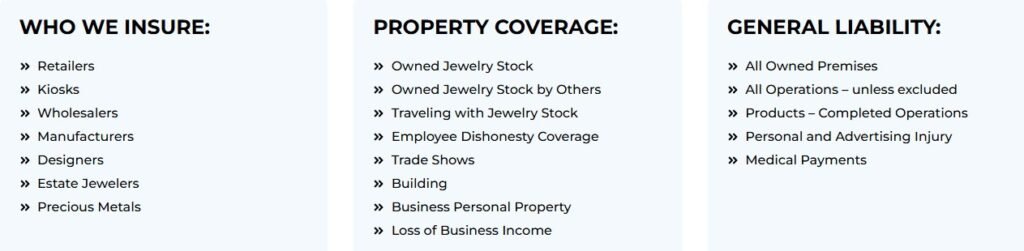
A safe's UL rating is so much more than a sticker. Think of it as a certified report card from an independent expert, grading the safe's ability to stand up to a professional attack. For any jewelry business, this certification is one of the most critical parts of your store's security—and it's a non-negotiable for getting the right insurance for jewelry business coverage.
Why UL Ratings Are the Bedrock of Jewelry Store Security
When you’re protecting high-value inventory, you can’t afford to guess. A safe without a verified Underwriters Laboratories (UL) rating is a massive business risk, one that can put your Jewelers Block insurance in jeopardy right when you need it most.
A UL rating is the unbiased proof your insurance carrier needs to see. It shows them your safe meets a specific, measurable standard of resistance against sophisticated attacks. This proof is what they use to determine if you even qualify for coverage and what your limits will be.
The system is built on trust because UL isn't the manufacturer. They are a completely independent, third-party organization that subjects safes to intense, timed attacks using the very tools a burglar would. This brutal testing cuts through all the marketing fluff and gives everyone a clear, objective measure of security.

The Foundation of Trust in Safe Certifications
For a jeweler, that little UL mark means the safe has passed a grueling, real-world exam. UL has been the gold standard in safe testing for over 80 years, making them the most trusted and recognized certification body in North America.
This long history of tough, consistent evaluation is why insurance companies rely on their ratings. They know a UL-certified safe has truly earned its stripes.
Burglary vs. Fire Ratings: A Critical Distinction
It’s crucial to know that safe UL ratings are split into two completely different categories, each one designed to handle a different kind of disaster. Getting this right is the first step toward total protection for your business.
- Burglary Ratings (TL-Ratings): These are the ratings that matter most for theft. Ratings like TL-15 and TL-30 measure a safe's resistance to "Tool Latency"—a timed, forced entry attack using everything from drills and sledgehammers to pry bars. This is the rating your Jewelers Block insurance underwriter will focus on.
- Fire Ratings (Class Ratings): These ratings, like UL Class 350 – 1 Hour, tell you how long the safe’s interior can stay below a certain temperature during a fire. A good fire rating is what protects your paper records, client files, and more delicate pieces from being destroyed by heat.
For a modern jeweler, understanding the tech securing your insured items goes hand-in-hand with physical security. But it all starts with choosing the right certified safe.
When you're in the jewelry business, the difference between a TL-15 and a TL-30 safe isn't just a technical detail—it's the bedrock of your security and a critical factor for your insurance policy. These ratings aren't just letters and numbers; they represent how long your safe can stand up to a professional, determined attack.
The "TL" part stands for Tool Latency, which is UL's way of measuring how much time a safe can buy you when a skilled burglar is trying to get inside. It’s a direct measure of how long an expert can wail on your safe before it gives up the goods.
A TL-15 rating means the safe door is certified to withstand a full-on assault from expert testers for a net working time of 15 minutes. Grasping what that really means is essential for any store owner.
What Is "Net Working Time," Really?
"Net working time" is the key here. Think of it like a stopwatch that only runs when a tool is actively grinding, drilling, or prying at the safe. The clock stops the moment the testers step back to switch tools, strategize, or catch their breath.
So, a real-world burglary attempt on a TL-15 safe could easily stretch to 30 minutes, an hour, or even longer. The rating guarantees 15 solid minutes of tool-on-metal punishment.
This isn't just a casual test. The UL technicians who conduct it are pros who know safes inside and out. They work from the safe's blueprints and bring an entire arsenal of tools, all designed to find and exploit the weakest point. Surviving that for 15 minutes is a serious testament to a safe's construction.
The Burglar's Toolkit
The tools used in a TL-15 test aren't what you'd find in a basic toolbox. They're specifically chosen to replicate what a sophisticated thief would carry.
- Hammers (up to 8 lbs)
- High-speed carbide drills
- Sledgehammers and pry bars
- Chisels, punches, and various picking tools
To earn its rating, the safe has to prevent the testers from either opening the door or creating a hole of at least six square inches. It's a brutal standard that ensures a TL-15 safe is a real obstacle for criminals.
This diagram shows how UL ratings split into two main categories you'll need to know.
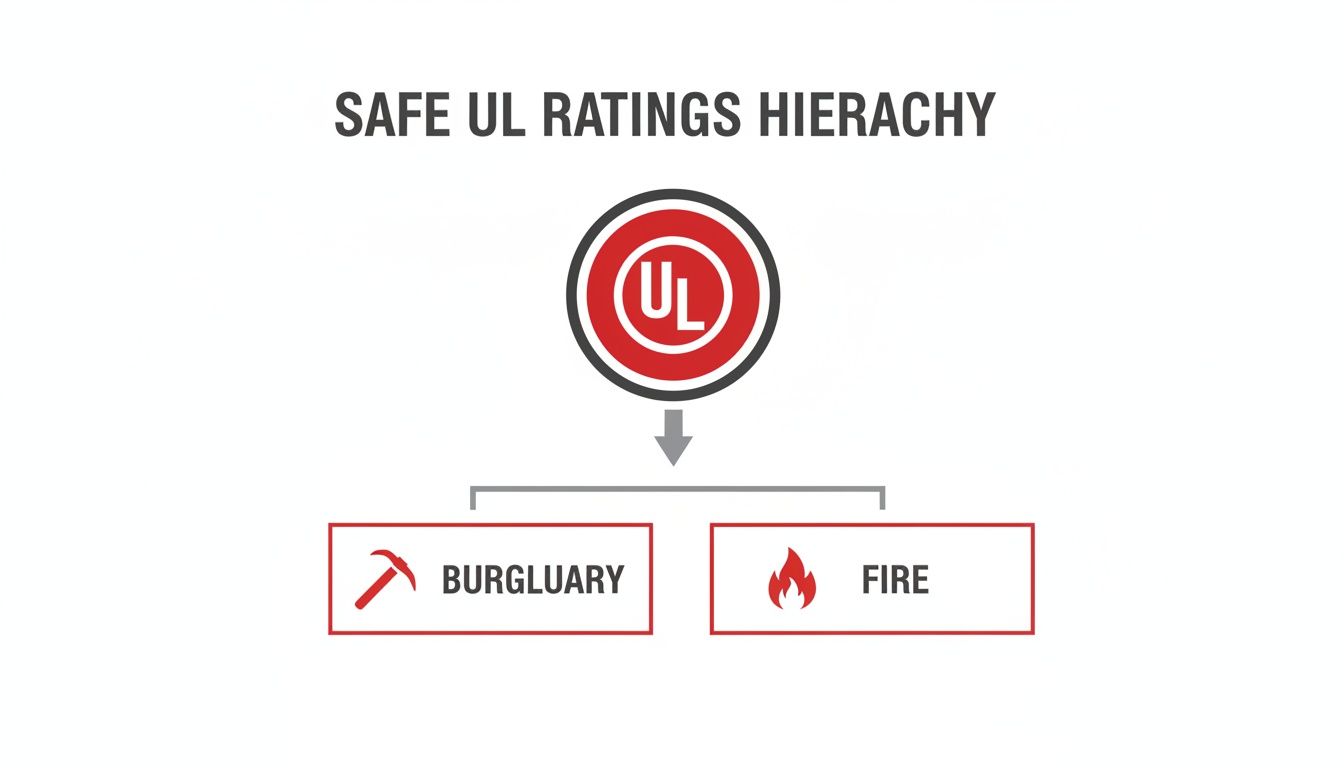
As you can see, burglary and fire ratings are completely separate worlds, each designed to protect your jewelry from a very different kind of threat.
Why Upgrading to a TL-30 Changes Everything
If a TL-15 is that tough, you might wonder why anyone needs a TL-30. It all comes down to the value of what you're protecting. A TL-30 rating doubles the net attack time to 30 minutes, and the testers get to bring bigger, nastier tools to the party.
For a TL-30 test, they get everything from the TL-15 list plus more powerful equipment like abrasive cutting wheels and power saws. This is a massive leap in security, designed for businesses with significant inventory at risk.
That jump from a TL-15 to a TL-30 is a huge deal when it comes to your Jewelers Block insurance. Your underwriter will look at the total value of your inventory to set the minimum safe rating you need. More valuable stock makes you a bigger target, so you need a safe that can hold out longer against a more aggressive attack. Stepping up to a TL-30 can open the door to higher coverage limits and may even help with your premiums, as it shows you’re serious about protecting your assets.
Protecting Assets From Fire With UL Ratings
A skilled burglar is a serious threat, but a fire can be just as devastating. In minutes, a blaze can destroy not only your high-value inventory but also the vital paper records you'd need to rebuild your business and file an insurance claim. This is where the other half of a safe's protection comes in: its UL fire rating.
Think of a fire-rated safe not as a fortress against thieves, but as a time capsule built to survive extreme heat. It’s all about buying you precious time.
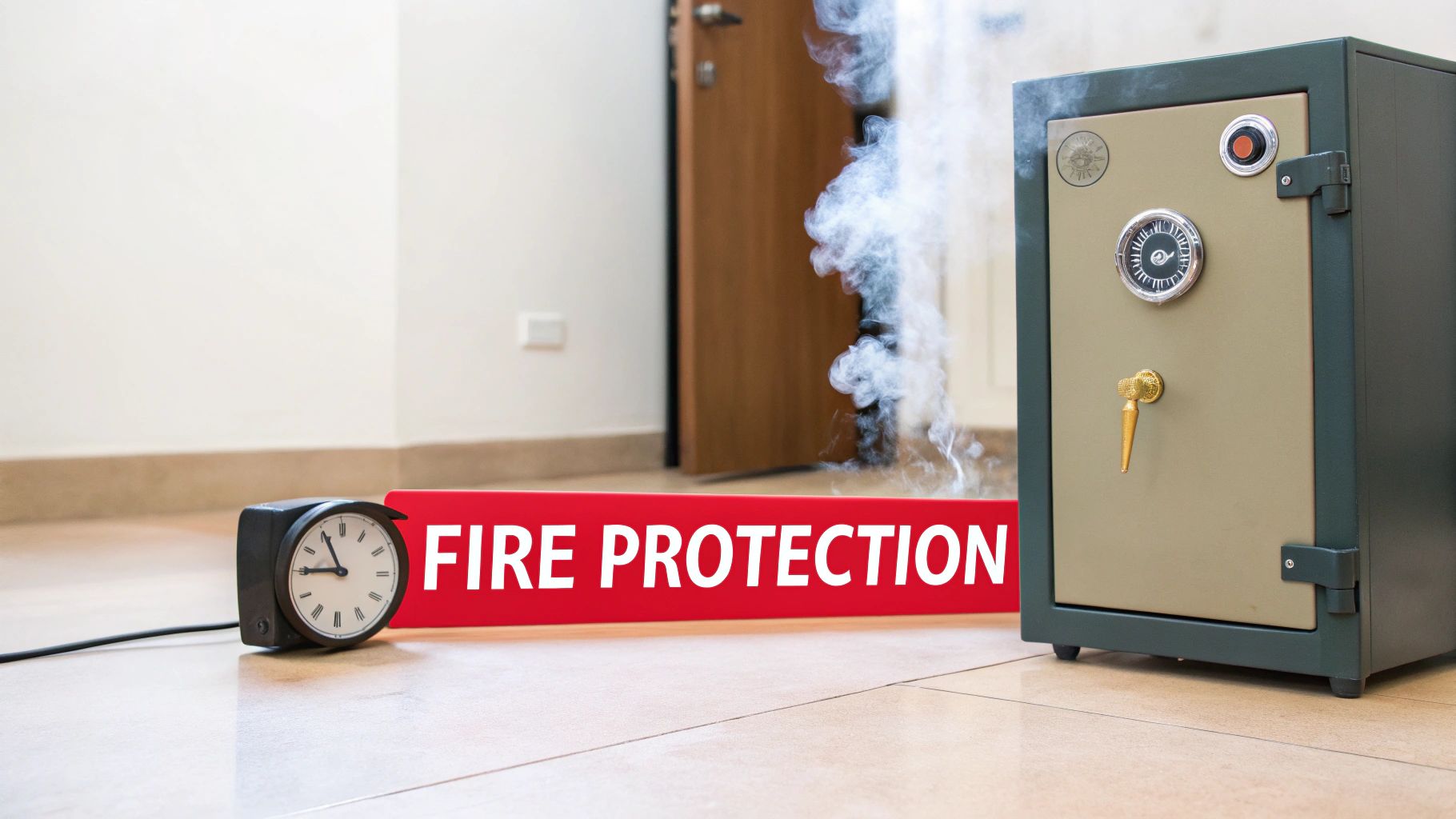
The standard for this is UL 72. To earn a rating, a safe is shoved into a furnace and cooked at temperatures that can soar to 1700°F and beyond. The clock starts ticking, and the safe's only job is to keep its cool inside. The rating it gets—whether 30 minutes, one hour, or two hours—depends on how long it can withstand that inferno before its internal temperature crosses a critical line.
Decoding UL 72 Fire Classifications
Unlike the straightforward "stop the bad guys" goal of burglary ratings, fire ratings get more specific. They are broken down into classes based on what you’re trying to protect, because paper, computer disks, and film all have different flashpoints.
For a jeweler, the Class 350 rating is the one to know. It’s designed specifically to protect paper.
A Class 350 – 1 Hour rating is a guarantee. It means that while the outside of the safe is being blasted with 1700°F heat for a full hour, the temperature inside will not go above 350°F. That’s low enough to keep paper documents—like appraisals, receipts, and inventory logs—from turning to ash.
This isn’t a trivial detail; it's a business survival tool. After a fire, those very records are your lifeline for filing a successful Jewelers Block claim.
Here's a quick look at the main UL 72 classifications to see how they differ.
UL 72 Fire Rating Classifications Explained
| UL Fire Class | Max Internal Temp (°F) | Test Duration | Protects Against Damage To |
|---|---|---|---|
| Class 350 | 350°F | 30 min, 1, 2, 3, 4 hrs | Paper documents (records, cash, certificates) |
| Class 150 | 150°F | 1, 2, 3, 4 hrs | Magnetic tapes, photographic film, some computer media |
| Class 125 | 125°F | 1, 2, 3 hrs | Floppy disks, flexible computer disks, sensitive electronics |
As you can see, the lower the class number, the more delicate the items it's designed to protect. For most jewelers' operational needs, the Class 350 safe is the industry standard for protecting crucial paperwork.
Surviving More Than Just The Heat
A real-world fire is chaotic. It’s not just a quiet oven—it’s explosions, collapsing floors, and fire hoses. UL knows this, so they offer optional, advanced tests that simulate these brutal conditions.
Two of the most valuable tests to look for are:
- Impact Test: This mimics a safe falling through a collapsing floor. After being heated, the safe is hoisted 30 feet into the air and dropped onto a pile of bricks. Then it’s cooled and put right back in the furnace to see if it can still hold up. A pass means it's built tough.
- Explosion Hazard Test: To earn this, the safe is locked and thrust into a furnace pre-heated to a blistering 2000°F. It has to sit there for 30 minutes without the door blowing off from a sudden pressure build-up inside.
A safe that has passed these extra trials is on another level. It’s the difference between a simple insulated box and a true survival vault.
While these ratings are about protecting what’s inside your safe, don't forget the bigger picture. Understanding the broader commercial property fire safety regulations is also part of a complete security plan. Ultimately, the right safe is your last line of defense, ensuring that when disaster strikes, you have what you need to get back on your feet.
How Safe Ratings Directly Impact Your Jewelers Block Insurance
This is where the rubber meets the road. Your investment in a high-quality safe isn't just about physical security; it directly translates into your financial protection. When an underwriter looks at your application for a Jewelers Block policy, a verified UL-rated safe isn’t just a nice-to-have. It’s often the absolute bedrock of your coverage.
The specific safe UL ratings on your equipment will determine more than just your premium—they can set the very limits of what an insurer is willing to protect.
Think of it as a negotiation. You tell the insurance provider how much your inventory is worth. In response, they tell you the minimum level of protection they need to see to feel comfortable covering that value. A safe’s UL rating is the universal language in this conversation, giving both sides a clear, objective yardstick to measure its defensive strength.
Ultimately, your safe's rating is one of the most important factors in the underwriting process. It’s tangible proof of your commitment to managing risk, and it shows insurers that you’re a serious partner in protecting your assets. This can make a huge difference in the cost and scope of your policy.
Matching Your Inventory Value to the Right UL Rating
Insurance for a jewelry store runs on a simple principle: bigger risk demands stronger protection. Underwriters use your total inventory value to set the minimum safe rating you’re required to have. This isn’t arbitrary; it’s a calculated risk assessment. A store with a massive inventory is a much more tempting target for sophisticated criminals, so it needs a safe that can fend off a longer, more determined attack.
While the exact numbers can shift from one carrier to another, the general industry guidelines look something like this:
- For inventories up to roughly $300,000 – $500,000: A TL-15 rated safe is typically the starting point. Its proven ability to withstand a 15-minute expert tool attack provides a solid baseline of security.
- For inventories over $500,000 and often into the millions: You'll almost always need a TL-30 rated safe. That jump to 30 minutes of tool resistance is considered essential for protecting a higher concentration of value.
This tiered system ensures the security measures you have in place are proportional to the financial risk the insurer is taking on.
An underwriter views a UL-rated safe as a critical gatekeeper. Without the right rating for your inventory, you’ll either struggle to get enough coverage or face premiums that are painfully high.
It’s also worth noting that insurers look at the whole picture. Your certified alarm system, video surveillance, and how the safe is anchored all play a part. But the UL-rated safe is always the centerpiece. In fact, many policies will spell out the exact anchoring requirements needed to keep your coverage valid.
How a Better Safe Can Lead to Better Premiums
Upgrading to a higher-rated safe—say, from a TL-15 to a TL-30—does more than just unlock higher coverage limits. It can actually lower your insurance premiums.
Insurers reward jewelers who are proactive about managing risk. By choosing a safe that goes above and beyond the minimum for your inventory, you are dramatically cutting down the odds of a successful theft. That reduced risk can lead directly to more favorable premium calculations.
Sure, the upfront cost of a TL-30 is higher than a TL-15, but the long-term savings on your Jewelers Block insurance can make it a very smart financial move. It's an investment in both your security and your bottom line.
In the world of high-value insurance, underwriters from globally recognized markets, like those represented by this logo from Lloyd's of London, depend on proven standards like UL ratings to make their decisions. It's the accepted shorthand for security, no matter where you are.
At the end of the day, your safe's UL rating is much more than a technical label. It’s a vital part of your business's financial health, directly shaping your ability to get the right insurance, dictating your coverage capacity, and proving your commitment to protecting what you’ve built.
A Jeweler’s Checklist for Choosing the Right UL-Rated Safe
Buying a safe for your jewelry business is one of the most critical investments you'll make. It directly impacts not just your physical security, but your ability to get the right Jewelers Block insurance. This isn't about just picking a big, heavy box; it's about making a smart, informed decision that lines up with your inventory value, your insurer's demands, and where you see your business going.
Let's walk through the essential steps to make sure your next safe is the right one for the job.
The very first thing you have to do is learn to see past the marketing fluff. You'll see a lot of safes advertised with vague, misleading phrases like "built to UL standards" or "UL-style." These are giant red flags. To an insurance underwriter, those words mean absolutely nothing. Your policy demands a genuine, verifiable UL certification, period.
How to Spot a Real UL Certification Label
Before you even think about buying a safe, you need to know what a real UL label looks like. A legitimate certification isn't a flimsy sticker or a painted-on logo. It’s a solid metal plaque, and you'll almost always find it fastened to the inside of the safe's door.
This little plaque holds all the details your underwriter needs to see. When you're looking at a safe, here’s what to check for on that label:
- The UL Mark: Look for the official Underwriters Laboratories logo.
- The Burglary Rating: It should be clearly stated, like "TL-15," "TL-30," or another recognized class.
- The Fire Rating: If it has one, it will list the class and time, for example, "Class 350 – 1 Hour."
- Manufacturer and Model Info: This helps confirm the safe is what the seller claims it is.
If a safe is missing this plaque or you can't read it, it’s a deal-breaker. For insurance purposes, that safe is considered unrated. No label means no coverage.
Key Questions to Ask Your Safe Vendor
Okay, so you've found a safe with what looks like a real UL label. Your work isn't done yet. You need to treat this purchase like you're conducting an interview. Ask direct questions to make sure the safe will actually work for your business and satisfy your insurance carrier.
Take this list with you when you talk to a vendor:
-
Can you show me the exact burglary and fire ratings on the label?
Don't just take their word for it. Have the vendor physically point out the safe UL ratings on the certification plaque. Ask for paperwork that confirms the ratings belong to the specific model you're buying. -
What are the anchoring requirements for this safe?
Nearly all jewelry store insurance policies require a UL-rated safe to be professionally bolted into a concrete floor. Find out the manufacturer's specific requirements for bolt size and installation. A safe just sitting on a wood floor is practically useless from a security standpoint. -
Will my inventory actually fit inside?
Think about your current inventory, but also plan for growth over the next five, even ten years. A safe that’s too small will become a huge headache very quickly. Measure your largest jewelry trays and make sure they’ll slide in and out with room to spare. -
What are the exact weight and dimensions?
This is a logistical must. You have to be sure your building can handle the safe's weight, especially if you're not on a ground-floor concrete slab. And, of course, measure your doorways to make sure you can even get it into the building and into its final spot.
An informed investment upfront prevents a very expensive mistake later. A safe that doesn’t meet your insurer’s requirements is just a steel box, not a secure asset.
Following this checklist will give you the confidence to choose a safe that truly protects your inventory and keeps your insurance underwriter happy. When you get it right, your safe becomes a true cornerstone of your security, protecting your assets and your peace of mind.
Essential Recordkeeping to Guarantee Your Insurance Claim
Choosing the right UL-rated safe is a fantastic start, but it’s only half the story. When you actually have to make a claim after a fire or theft, the real challenge begins: proving you did everything you were supposed to. This is where meticulous recordkeeping becomes your best defense, turning your investment in security into hard proof for your insurance carrier.
For any jewelry business, this paper trail isn't just a good idea—it's absolutely essential. Without it, you could face serious delays or even have your claim denied, which can turn a terrible situation into a business-ending catastrophe. A few simple steps now can make all the difference later.
Building Your Proof of Compliance File
Think of this as creating an ironclad case file for your business's security. You want to gather everything you need to leave no doubt that you've followed every requirement in your Jewelers Block insurance policy. This file should be stored in multiple places—a physical copy somewhere safe and a digital backup in the cloud.
Here’s what you absolutely need to include:
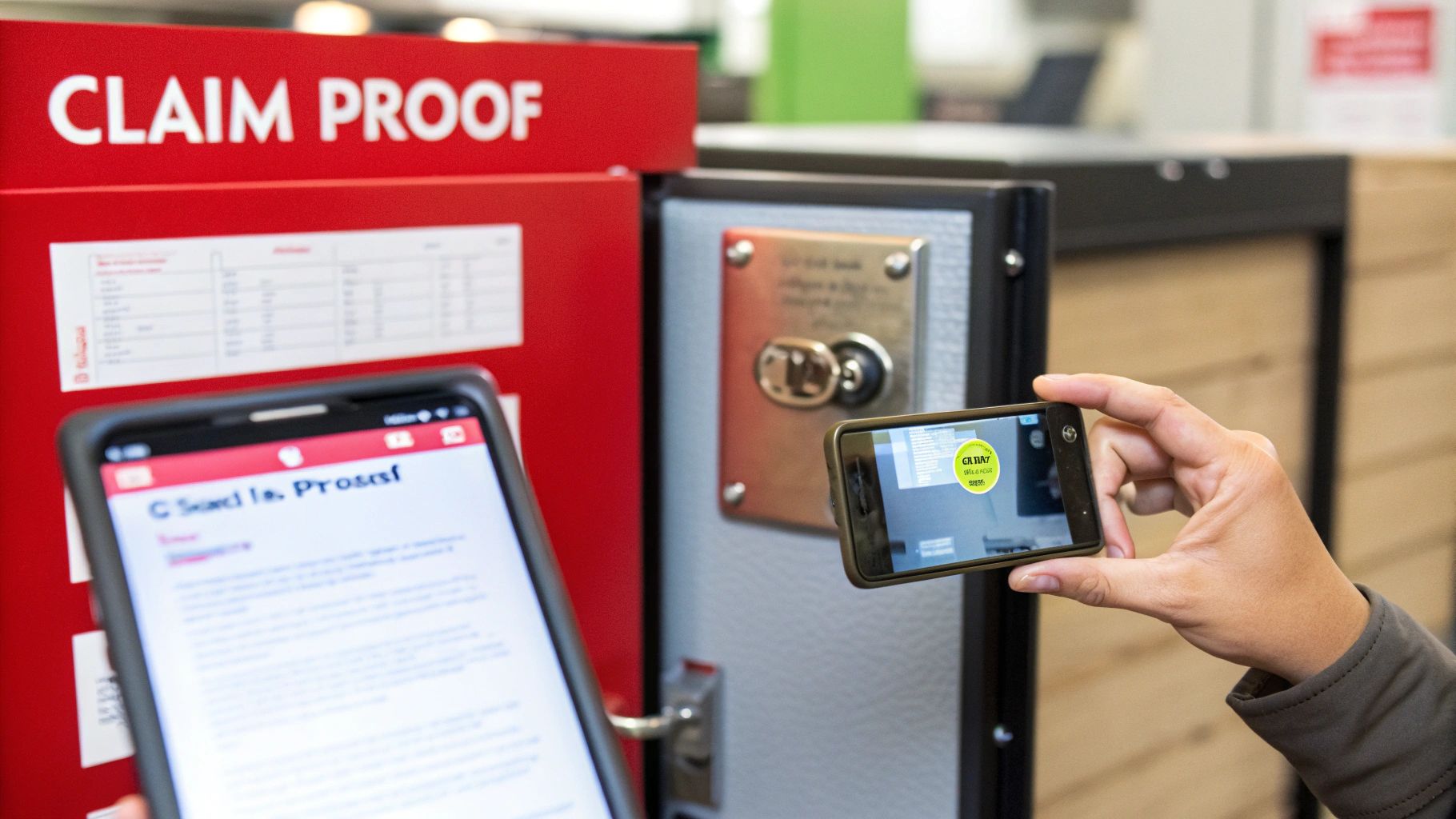
- Clear Photographs of the UL Label: Get your phone out and take several high-resolution pictures of that metal UL rating plaque, usually found on the inside of the safe door. Make sure the burglary and fire ratings are crystal clear. This is often the first thing an adjuster will ask for.
- The Original Purchase Receipt: Dig up the sales invoice for your safe. This is your proof of purchase, confirming the model, when you bought it, and from whom. It’s a key piece of evidence that validates the safe is what you say it is.
- Professional Installation Documentation: Don't lose the invoice from the company that installed and anchored your safe. This paperwork should explicitly state how the safe was bolted down, especially if your policy requires it to be secured to a concrete foundation for safe UL ratings compliance.
Documenting Your Inventory: The Final Piece
Now for the most important part: you need a detailed, current, and accurate inventory of everything inside that safe. After a loss, this isn't just helpful; it's the very foundation of your claim. Without an accurate log, you can't prove the value of what you lost.
In the chaotic aftermath of a loss, an organized inventory is your best friend. It streamlines the claims process, reduces stress, and accelerates your financial recovery, allowing you to focus on rebuilding your business.
Critically, your inventory records must live somewhere else—not just inside the safe that might be stolen or burned. Keep a copy off-site or use a secure cloud-based system. A list that gets destroyed along with your inventory is completely useless.
To make your claim even stronger, take photos and videos of your high-value pieces. For instance, detailed images of beautiful examples of antique jewelry can supplement your written logs. This kind of visual evidence is powerful, undeniable proof of what you owned and its value.
Got Questions About Safe Ratings and Insurance? Let's Clear Things Up.
Diving into the world of safe UL ratings and insurance rules can feel a little overwhelming. Let's break down some of the most common questions jewelers have when trying to lock down their business and stay on the right side of their policy.
Do I Really Need a Safe with Both Burglary and Fire Ratings?
Yes, you absolutely do. Think of it this way: you need to be prepared for more than one kind of disaster.
Your Jewelers Block insurance provider is going to zero in on the burglary rating—like a TL-15 or TL-30—because that's what protects the high-value inventory from theft. But what about a fire? A fire rating is what saves your crucial business records, client appraisals, and other sensitive items that can't be easily replaced. A dual-rated safe is your best defense, giving you a fighting chance to recover whether you're hit by a thief or a fire.
What's the Big Deal Between a TL-30 and a TL-30×6?
This is a fantastic question, and the difference is huge. A standard TL-30 rating means the safe door can stand up to a skilled attack with tools for a full 30 minutes. That's solid, but it only covers the front.
A TL-30×6 rating, on the other hand, is the real deal. That "x6" tells you that all six sides of the safe—the door, back, top, bottom, and both sides—passed that same tough 30-minute test. If your safe isn't going to be fully encased in reinforced concrete, this is non-negotiable. It closes the loophole that allows a thief to just attack a weaker side wall.
When it comes to getting insurance for a jewelry business, you'll often find that a TL-30×6 is the minimum requirement for higher-value inventories. It's simply a much more secure box.
My UL Label Is Gone or I Can't Read It. Now What?
This is a tough spot to be in. If that official UL label is missing, damaged, or unreadable, your safe is essentially a ghost. As far as an insurance underwriter is concerned, it's unrated, no matter how tough you think it is.
You won't be able to prove its security level for your Jewelers Block policy, which is a major problem. You can try contacting the manufacturer with the safe's serial number to see if they can provide official documentation. Honestly, though, in most cases, you'll have to bite the bullet and replace it with a new safe that has a clear, verifiable UL rating. It's the only way to guarantee your coverage.
Is Bolting My Safe to a Wooden Floor Okay?
Almost certainly not. Anchoring a high-security safe to a wooden floor just doesn't cut it for insurance purposes.
Policies for insurance for a jewelry store are very specific here: a TL-rated safe needs to be professionally bolted down into a solid concrete slab. This single step is what stops a determined crew of thieves from just hauling the entire safe out of your store and cracking it open later. Always check the anchoring requirements from both the safe's manufacturer and your insurer—getting this wrong could jeopardize a claim.
Protecting your life's work is about more than just buying a heavy box. It's about having the right insurance partner who truly gets the risks you face every day. At First Class Insurance Jewelers Block Agency, we build custom Jewelers Block insurance policies that actually match your security and inventory. Get a Quote for Jewelers Block and let our experts give you the peace of mind that your assets are as secure as your vault.