
A central station monitored alarm isn't just a noisemaker. It's a sophisticated security system that, the moment it detects a threat, sends a signal to a professional monitoring center staffed 24/7. Unlike a local alarm that just blares into the street, this system guarantees a trained operator will verify the emergency and dispatch the authorities. For a high-value business like a jewelry store, that professional response is everything.
Your Essential Guide to Monitored Alarms
Think of a central station monitored alarm as a dedicated, digital watchdog for your jewelry business—one that never sleeps. It’s your first and most critical line of defense against both smash-and-grab thieves and calculated, professional burglars.
When a sensor is tripped, this system doesn't just create a racket that neighbors might ignore. It instantly alerts a team of security professionals who are trained to act immediately.
This is the key difference that separates a professional-grade security setup from a basic one. A local, unmonitored alarm just makes noise. A central station monitored alarm creates action. That distinction is absolutely crucial when you’re protecting the kind of high-value inventory found in a jewelry store.
Why This Matters for Jewelers Block Insurance
For any serious jewelry business, the right insurance isn't optional. Insurers need to see that you’ve put robust security measures in place to mitigate their risk, and a professionally monitored system is right at the top of their list. In fact, having this kind of alarm is almost always a mandatory requirement to even qualify for Jewelers Block insurance.
A verified alarm from a central station tells law enforcement that a crime is actively in progress, not just another false alarm. This verification leads to a prioritized, faster police dispatch—a response that can be the difference between a minor incident and a catastrophic loss.
This setup is non-negotiable for safeguarding your inventory. Securing a policy for your insurance for a jewelry business is directly tied to the quality of the security you have in place.

While the systems required for a jewelry store are far more advanced, you can get a broader sense of the technology by looking at guides on the best smart home security systems. Ultimately, investing in a monitored alarm isn't just an expense; it's an investment in the survival and insurability of your entire business.
How a Monitored Alarm System Actually Works
A central station monitored alarm isn't just about making noise. It’s about triggering a professional security protocol designed for one thing: rapid intervention. The whole process, from a sensor trip to an emergency dispatch, happens in seconds. It’s a seamless chain of communication that turns a potential disaster into a controlled event.
Imagine this: a thief smashes one of your showcases. The second that glass-break sensor goes off, it kicks off a precise, high-speed sequence. The system isn't just screaming into an empty store; it’s talking directly to a team of trained security operators who are ready to act.
This simple flowchart shows you just how powerful that connection is, taking you from the initial threat to a verified, professional response.
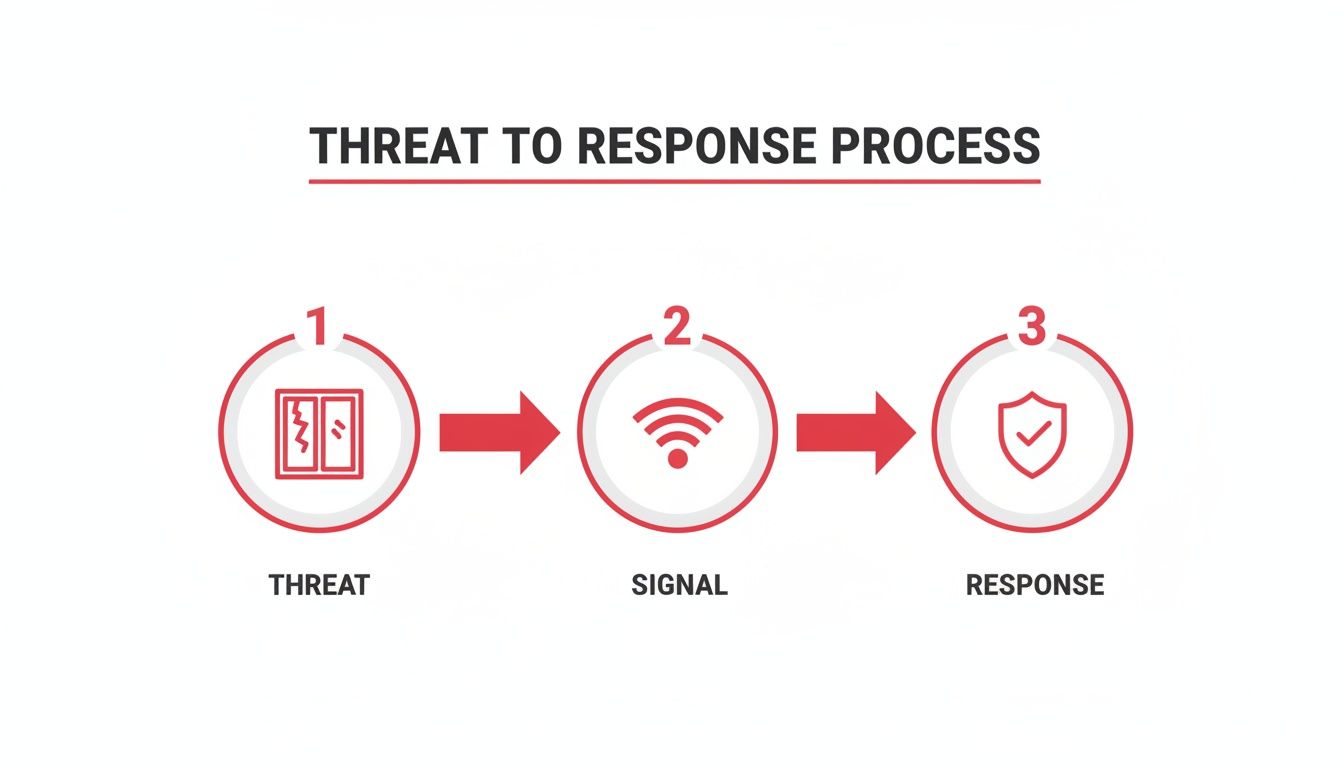
As you can see, it’s a direct line from detection to action. This is what cuts out the delay and uncertainty that costs businesses everything. That immediate, verified communication is what separates a true, insurer-approved security system from a standard alarm that just makes a racket.
The Journey of a Security Alert
The instant a sensor is triggered, a secure signal shoots from your store’s control panel to the off-site central monitoring station. This isn't your average Wi-Fi signal. To ensure it can't be easily cut, it travels through multiple secure channels, like dedicated cellular and internet lines. This redundancy is a non-negotiable part of getting proper insurance for a jewelry store.
Once that signal hits the station, a trained operator is alerted. Their first job is to verify the threat—and this is the step that makes all the difference.
An unmonitored alarm is just noise. A monitored alarm is intelligence. The verification process ensures that when a call goes out to law enforcement, it’s treated as a high-priority, confirmed event.
This single step builds immense credibility with local police departments and prevents them from wasting time on false alarms.
Verification and Prioritized Dispatch
To confirm the threat is real, the operator follows a strict playbook. This usually involves a few key steps:
- Audio Verification: Listening in through integrated microphones to hear the distinct sounds of a break-in, like shattering glass or forced entry.
- Video Verification: Instantly accessing connected security cameras to see exactly what triggered the alarm.
- Contact Protocol: Calling you or your designated keyholders and using a secure passcode to confirm if it's a real emergency.
If the operator verifies a legitimate threat—say, they see intruders on camera or hear a vault being drilled—they dispatch the police immediately. Because the alarm is verified, police treat it as a crime in progress, not a speculative guess. That distinction is what gets you a faster, more urgent response when every second counts.
In a world where theft rates are climbing, these systems have become the bedrock of security for high-value assets. Central stations connect directly to alarm panels and can dispatch law enforcement in seconds. In fact, studies show response times average under 5 minutes in urban areas, which can slash theft losses by up to 85% compared to having no monitoring. You can dig into more of these findings in this alarm monitoring market report. This swift, confirmed response is fundamental to protecting your insurance for jewelry business.
Why Insurers Demand Monitored Alarms for Jewelers Block
If you're looking to secure a Jewelers Block policy, you'll find out pretty quickly that a central station monitored alarm isn't a friendly suggestion. It’s a dealbreaker.
Insurance companies are in the business of managing risk, and let's face it, a jewelry store is one of the most concentrated pockets of value you can find. From an underwriter's perspective, a local alarm that just makes noise is pretty much worthless.
A professionally monitored system, on the other hand, completely changes the game. It shows underwriters at agencies like the First Class Insurance Jewelers Block Agency that you're a serious partner in preventing the kind of catastrophic losses they'd have to pay for. Without that 24/7, verifiable protection, the financial risk is just too big for most carriers to even consider.
Mitigating Catastrophic Financial Risk
The main reason insurers insist on these systems is straightforward: they actually work. A loud siren might spook an amateur thief, but the professionals who hit jewelry stores work fast. They know a local alarm won't get an immediate police response, and they count on that delay.
A central station monitored alarm closes that window of opportunity. By having a trained professional verify a break-in and dispatch police within seconds, the system dramatically cuts down the chances of a total loss.
For an insurer, preventing a $500,000 theft is infinitely better than paying out a $500,000 claim. The monitored alarm is their frontline defense against the kind of devastating financial event that can cripple both the jeweler and the insurance provider.
This active risk management is the foundation of the entire jewelry store insurance model. The alarm isn't just protecting your inventory; it's protecting the insurer's balance sheet. That’s why they won't budge on this requirement.
To truly understand what insurers are looking for, it helps to see the difference between a standard system and one that meets Jewelers Block standards.
Alarm Systems Feature Comparison: Insurer vs. Standard Requirements
This table breaks down the crucial differences between a basic, off-the-shelf alarm and the robust systems required for proper insurance coverage.
| Security Feature | Standard System (Non-Compliant) | Jewelers Block Compliant System |
|---|---|---|
| Monitoring | Often self-monitored (sends alerts to your phone) or unmonitored (local siren only). | UL-listed central station monitoring is mandatory. |
| Signal Paths | Single path, typically a phone line or basic internet connection, which can be easily cut. | Dual, redundant signal paths (e.g., cellular and IP) are required to ensure the signal always gets through. |
| Tamper Detection | Minimal or no tamper protection on panels, sensors, or wiring. | Comprehensive tamper detection on all components, creating an immediate alarm if a criminal tries to disable it. |
| Verification | No mechanism to confirm if an alarm is real, leading to high false alarm rates. | Verified alarm protocols (audio, video, or sequential sensor confirmation) to ensure police response is prioritized. |
| UL Certification | System components and installation may not meet any specific standard. | UL-certified equipment and installation are required to guarantee reliability and performance under duress. |
| Power Backup | Limited battery backup, often lasting only a few hours. | Extended power backup (typically 24-48 hours) to protect against power outages. |
As you can see, the requirements for a Jewelers Block policy go far beyond just making noise. They’re designed to create a resilient, intelligent system that law enforcement and underwriters can trust.
Building Credibility with Law Enforcement
Insurers know a hard truth about modern policing: officers are swamped with false alarms. An unverified signal from a standard alarm often gets pushed to the bottom of the priority list, leading to slow—or even no—response. That's a gamble underwriters for Jewelers Block insurance policies simply will not take.
A UL-listed central monitoring station cuts through that noise. It acts as a trusted filter. When an operator from a certified station calls the police, they’re providing verified intelligence, not just another ringing bell.
- They can confirm a break-in is happening right now using audio or video feeds.
- They provide a direct line of communication to relay real-time details to officers on their way.
- They weed out false alarms, so when a dispatch request goes out, it's treated as a high-priority crime in progress.
This verification process transforms the alarm from a potential nuisance into a confirmed threat, guaranteeing a faster, more serious police response. This rapid intervention is precisely what insurers need to see to confidently write an insurance for jewelry business policy. The move to advanced central stations is a game-changer. Modern systems using video analytics can cut false alarms by 50%, leading not only to faster dispatch but also unlocking insurance discounts of up to 25% for jewelers. This partnership with law enforcement has been shown to slash response times to just 180 seconds on average, a crucial factor in stopping an estimated 75% of potential thefts. You can see more data on how the alarm monitoring market is evolving at Mordor Intelligence.
Creating an Indisputable Data Trail
If a theft does happen, the aftermath can be a chaotic mess. A central station monitored alarm provides a clean, objective, time-stamped record of exactly what happened and when. This data becomes invaluable when it's time to file a claim.
The system logs everything:
- The exact time a specific sensor was tripped.
- The steps the monitoring station operator took to verify the alarm.
- The precise moment law enforcement was called.
- Records of all communications between the station, your business, and the authorities.
This clear, indisputable data trail makes the claims process incredibly straightforward. It delivers the solid proof of loss that insurers need and shows that your security protocols were up and running as promised. This level of detail and accountability proves you're a reliable, insurable partner—a key factor for underwriters at major insurance entities, including those represented by a Lloyd's of London coverholder.

Key Features of an Insurance-Compliant Alarm
When you're trying to secure a Jewelers Block insurance policy, not just any off-the-shelf alarm system will pass muster. Underwriters have a very specific technical checklist they work from, and it goes way beyond a simple siren and a door sensor. If you understand what they’re looking for, you can talk confidently with security vendors and make sure you’re investing in a system that actually protects your store and satisfies your insurer.
Think of these features less as complicated tech add-ons and more as layers in a professional security strategy. Each one is designed to shut down a specific tactic that seasoned burglars use to bypass standard alarms. For a high-value business like yours, these layers aren't just a good idea—they're non-negotiable.
The Gold Standard: UL Certification
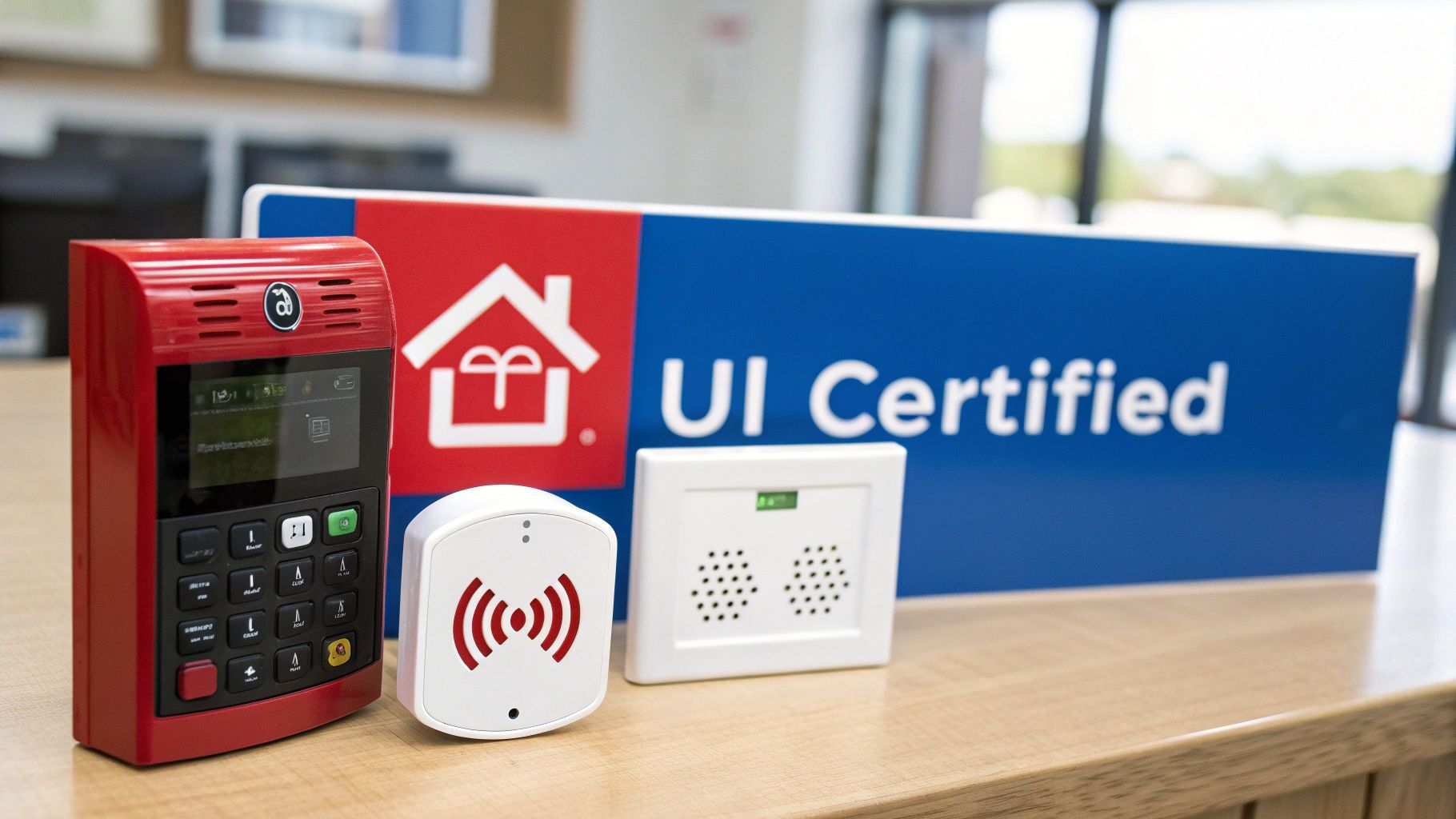
The first—and most critical—requirement from any insurer is UL certification. Underwriters Laboratories (UL) is an independent organization that puts security equipment and monitoring stations through the wringer, testing them against brutal standards for performance, reliability, and safety.
A UL-listed central station monitored alarm gives you confidence in two key areas:
- The Equipment: Your control panel, sensors, and communicators have been proven to resist tampering and will work when it matters most.
- The Monitoring Station: The central station itself meets strict operational rules, including backup power, secure communication lines, and highly trained operators.
To an insurer, UL certification is the ultimate seal of approval. It’s a third-party guarantee that your security is built to professional-grade standards, which dramatically lowers the risk of a system failing during a real emergency.
Trying to get proper insurance for a jewelry store without UL certification on both your equipment and monitoring service is practically impossible. It’s the foundation all your other security measures are built on.
Dual-Path Communication and Line Security
Professional thieves know an alarm system's Achilles' heel is its communication line. A common tactic is to cut the phone or internet lines before breaking in, which silences a system that only has one way to call for help. This is exactly why insurers demand dual-path communication.
This technology creates two independent channels for your alarm to signal the central station. It typically uses a combination of a hardwired internet connection and a cellular backup. If a thief cuts the internet cable, the cellular communicator kicks in instantly, guaranteeing the emergency signal gets out.
But redundancy isn’t enough. Insurers also require line security. This is a feature where the alarm panel constantly supervises its own connection to the central station. If that connection is ever lost—whether from a storm or a criminal's wire cutters—a tamper alert is immediately sent to the monitoring station using the backup path.
Encrypted Signals and Verified Alarms
As the world gets more connected, criminals are also looking for digital backdoors. An unencrypted alarm signal is a vulnerability; it could potentially be intercepted or faked. A compliant central station monitored alarm uses encrypted signals, scrambling the data so it can't be hacked as it travels from your store to the monitoring station.
Another game-changing feature is verified alarm technology. With police departments drowning in false alarms, they've started de-prioritizing unverified calls. Verified alarms fix this by giving them solid proof that a real threat is underway.
This verification can be achieved in a few ways:
- Video Verification: Integrated cameras let the central station operator see inside your store to confirm an intrusion.
- Audio Verification: Microphones allow the operator to listen for the sounds of a break-in.
- Sensor Cross-Zoning: This smart setup requires multiple sensors in different zones to be triggered in a logical sequence, suggesting a person is moving through the space—not just a mouse running across the floor.
To get the most out of your alarm system, adding visual surveillance components like the Homeboy Security Camera can provide the critical evidence needed to deter thieves in the first place. This kind of visual proof is what turns a standard dispatch call into a high-priority, crime-in-progress response, ensuring police arrive faster.
Central monitoring stations are becoming the go-to for securing showrooms and high-value collections. While hospitals still make up a huge chunk of central station revenue at 53.20% for life-critical monitoring, the technology is a perfect fit for commercial security. Hybrid networks now command a 41.80% market share, allowing jewelers to seamlessly integrate intrusion sensors, cameras, and even environmental alerts for vaults and workshops into one dashboard. You can dive deeper into these trends in the central monitoring station market report on futuremarketinsights.com. This kind of integrated approach is essential for building a system that meets the strict demands of an insurance for jewelry business policy.
Installation and Daily Operations for Your Store
Choosing the right central station monitored alarm is only half the battle. Integrating it seamlessly into your daily operations—turning it from a piece of hardware into a living, breathing part of your security culture—is what truly solidifies your defense.
This all starts with a professional, specialized installation and carries through to the consistent, disciplined security protocols your team follows every single day.
The installation itself is far more than just mounting sensors on walls and running some wires. For a jewelry business, this is a highly specialized task. You need technicians who understand the unique vulnerabilities of your environment, not someone who thinks they're just protecting a typical retail space.
What to Expect from a Professional Installation
A proper installation for a Jewelers Block compliant system involves a meticulous, almost forensic, survey of your premises. The security vendor's job is to think like a burglar and protect every potential point of entry and high-value area.
This means getting specific:
- Showcases and Windows: Securing these with a combination of glass-break sensors and shock sensors that detect the vibration from an attempted smash-and-grab.
- Safes and Vaults: Layering protection with seismic sensors that can detect drilling or torching, along with heat sensors and high-security door contacts.
- Entry Points: Covering all doors, including backrooms and often-forgotten roof hatches, with heavy-duty contacts designed to resist tampering.
- Interior Spaces: Strategically placing motion detectors to create overlapping fields of coverage, leaving absolutely no blind spots for a thief to hide in.
The right technicians will work discreetly to minimize disruption to your business, but their primary focus must be on creating a fortress. This is not a job for a generalist; it demands expertise in the specific world of jewelry store security.
Developing Your Daily Security Protocols
Once installed, your alarm system's effectiveness depends almost entirely on your team. Clear, well-practiced security protocols are non-negotiable. They're essential for preventing both simple human error and the constant threat of false alarms, which can lead to costly fines and, worse, a diminished police response over time.
Your daily routine has to include strict opening and closing procedures. Staff members should never punch in a code while being watched and should always visually inspect all entry points before disarming the system in the morning.
The most reliable security technology in the world can be undermined by inconsistent human behavior. Training your staff to be as vigilant and dependable as your alarm system is a critical, non-negotiable step in protecting your business.
This level of training turns your team from potential liabilities into active, engaged participants in your store's defense.
Mastering Duress Codes and Emergency Responses
One of the most powerful—and thankfully, least-used—features of your central station monitored alarm is the duress code. Think of it as a silent cry for help. It's a secondary code that appears to disarm the system normally but secretly sends an emergency signal to the monitoring station, alerting them that you are being forced to comply with a criminal.
Your staff must be trained on how and when to use this discreetly, especially under extreme pressure. This training has to cover:
- When to Use It: In the terrifying event of a robbery where a thief demands the alarm be turned off.
- How to Use It: By entering the specific duress code instead of the standard one. No hesitation.
- What Happens Next: The system will look normal to the criminal, but a high-priority police dispatch will already be underway.
Similarly, every single team member must know the exact protocol for a real alarm event. They need to know who the designated contacts are for the central station and what passcodes are needed to cancel a false alarm or verify a real one. This clarity prevents panic and ensures a swift, correct response when every second counts. To better understand how this applies to specific high-value inventory, you can review our guidance on the essentials of watch insurance.

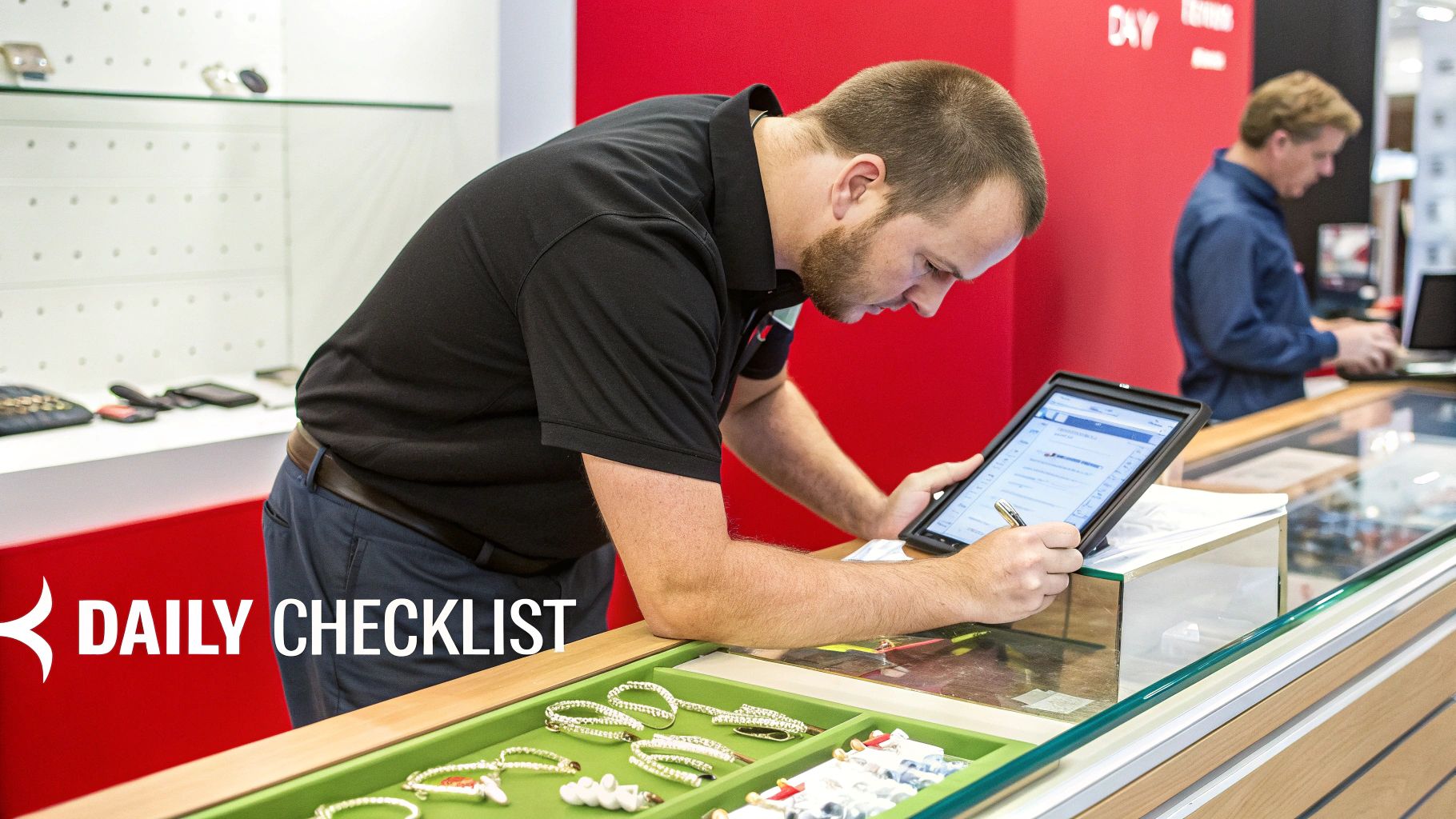
A Simple System Testing Checklist
You can't just assume your system is working. Regular testing is the only way to ensure every component is communicating correctly with the central station. Perform these checks weekly or bi-weekly by first putting your system into "test mode" with the monitoring center—this is a critical first step.
- Notify Your Central Station: Always call them first to prevent an accidental dispatch.
- Test Each Zone: Open each protected door and window, one by one, and confirm the control panel shows it was triggered.
- Walk-Test Motion Sensors: Move through the coverage areas to make sure the motion detectors are picking you up.
- Verify Communication: Have the central station operator confirm they received a signal from each specific zone you tested.
- End Test Mode: Don't forget to call the station back to take your system out of test mode.
This simple routine takes just a few minutes but provides invaluable peace of mind. It's your proof that the multi-layered defense you've invested in is fully operational and ready to protect you.
Common Questions About Monitored Alarm Systems
Investing in a central station monitored alarm is one of the foundational moves for any serious jewelry business. Once you understand how these systems work and why they're non-negotiable for Jewelers Block insurance, the practical questions start to surface. This section tackles the most common queries we hear from jewelers, giving you the direct answers needed to move forward.
Think of this as moving past the "why" and into the "how." Understanding the details of cost, police response, and system integration makes it clear that this isn't just another expense. It’s about building a security posture that actually protects your inventory, your team, and your entire business.
What Is the Typical Cost of a Compliant Monitored Alarm System for a Jewelry Store?
The cost of an insurance-compliant system really breaks down into two buckets: the upfront equipment and installation, and the ongoing monthly monitoring fee. It’s a mistake to see these as simple costs; they are a direct investment in the long-term health of your insurance for jewelry business.
For a professional system that meets the tough standards of Jewelers Block insurance, you can expect the upfront investment for hardware and installation to be anywhere from $2,500 to over $10,000. The big swing in price comes down to the size of your store, the complexity of the layout, and how many high-value targets like vaults and safes need their own specialized sensors.
The monthly monitoring fees typically land between $50 and $150. While that might feel like another line item on your P&L, it’s what pays for the 24/7 professional oversight that makes the system work. More to the point, this investment often unlocks insurance premium discounts of 15% to 25%. But the real ROI isn't a discount—it's preventing a single catastrophic loss that could put you out of business for good.
Does a Monitored Alarm Guarantee a Faster Police Response?
Let’s be direct: no security company can promise a specific police response time. But what a professionally monitored alarm with verification does is dramatically change your priority in the dispatch queue. Police departments are absolutely swamped with false alarms from basic, unverified systems, forcing them to treat those calls with a lower sense of urgency.
This is where a central station monitored alarm completely changes the game. When a UL-listed central station operator can provide video or audio proof of a live break-in, the call is instantly elevated from a "maybe" to a verified, in-progress crime.
Law enforcement treats a verified alarm as actionable intelligence. Confirmation from a trusted monitoring station means officers know they're responding to a confirmed threat, not just a ringing bell. That confirmation triggers a faster, more urgent deployment.
This level of certainty is exactly what your underwriter is banking on. They're covering the financial risk of theft, and a system that all but guarantees a high-priority police response is the best tool they have to reduce that risk.
Should I Choose a National or a Local Alarm Monitoring Provider?
When you’re picking a provider, the single most important factor isn't their size—it’s their certifications. Whether you go with a big national player or a trusted local outfit, their central monitoring station must be UL-listed. For any Jewelers Block insurance policy, this is completely non-negotiable.
That said, each type has its own advantages:
- National Providers: These companies often operate multiple, redundant monitoring centers across the country. If a hurricane or power grid failure knocks out one station, your signals are automatically rerouted to another. You get uninterrupted protection.
- Local Providers: A good local company may have deep, long-standing relationships with your local police and fire departments. That kind of familiarity can sometimes mean they have a better handle on local response protocols and contacts.
At the end of the day, the UL certification is the great equalizer. An experienced insurance broker, like the team at the First Class Insurance Jewelers Block Agency, can help you vet any potential provider. They'll confirm that the company meets the strict technical and operational standards your policy demands, safeguarding your insurance for a jewelry store.
Can I Use My Existing Security Cameras with a New Alarm System?
In most cases, yes. Modern alarm control panels are built to play nice with most existing IP-based camera systems. This kind of integration is fundamental to modern security because it’s what enables video verification—the key to getting that priority police response.
Video verification gives the central station operator instant access to your camera feeds the moment an alarm is triggered. They can see what caused the motion sensor to trip and confirm whether it’s a smash-and-grab in progress or just a marketing sign that fell over after hours. That real-time visual proof is what gives police actionable intelligence before they even roll up.
Before you sign any contract with a new alarm company, demand a full audit of your current camera setup. A qualified technician needs to confirm compatibility, check the quality of your video feeds, and make sure your cameras are positioned to meet your insurer's strict requirements. This step ensures your entire security ecosystem is working together seamlessly to protect what you've built.
Ready to secure your jewelry business with an insurance policy that recognizes and rewards top-tier security? The experts at First Class Insurance specialize in crafting customized Jewelers Block policies for businesses like yours. Get a Quote for Jewelers Block and discover how a compliant central station monitored alarm can protect your assets and strengthen your insurability.