
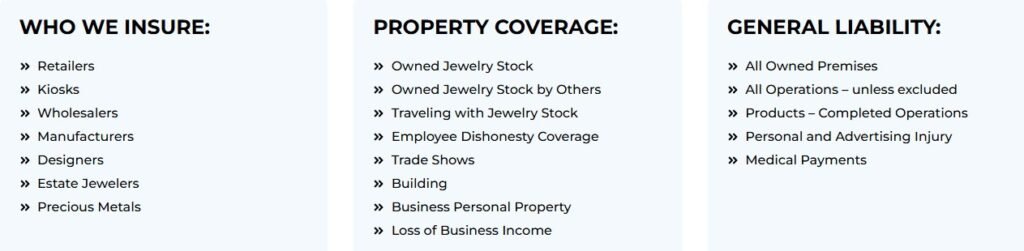
For anyone in the jewelry business, risk isn't just some abstract concept—it’s a daily reality. This is why true risk management services are so much more than a simple insurance policy. They're about creating a proactive strategy to defend every single part of the business you’ve poured your life into, from the gems in your safe to your hard-earned reputation.
Why Your Jewelry Business Needs a Fortress, Not Just a Safety Net
Let’s be honest. Running a jewelry store means you’re managing incredibly high-value, highly portable assets. Unlike almost any other type of retail, the potential for a catastrophic loss from just one incident is staggering. Simply seeing risk management as another business expense is a critical, and potentially fatal, mistake.
It’s far better to think of it as the architectural blueprint for your store's fortress.
This kind of proactive thinking means you stop waiting for disaster and start actively identifying and neutralizing threats before they ever have a chance to hit your bottom line. Specialized partners, like a dedicated First Class Insurance Jewelers Block Agency, weave these protective strategies right into your core coverage. This transforms your policy from a passive safety net into an active shield.
Moving Beyond Generic Security
A standard alarm and a basic safe just don't cut it anymore. The threats facing a modern jeweler are sophisticated and varied, demanding a defense with multiple layers. A truly effective risk management plan gets into the weeds of your specific operations.
We’re talking about core areas of concern like:
- Physical Threats like brazen smash-and-grab robberies or highly organized overnight burglaries.
- Internal Risks such as employee theft, which can be subtle and bleed you dry over months or even years.
- Inventory Shrinkage from those mysterious disappearances that you just can't seem to explain.
- Digital Dangers, from cyberattacks aimed at your customer’s credit card data to crippling ransomware on your point-of-sale systems.
Of course, any real talk about protecting luxury goods has to include a clear understanding of what is brand protection and how it defends your reputation from counterfeiters and other damaging activities. It's just one more layer of the comprehensive shield modern jewelers need.
The Growing Importance of Proactive Defense
It's not just jewelers; businesses in all high-stakes industries are getting serious about advanced risk strategies. You can see it in the numbers. The global market for risk management consulting is exploding, valued at an incredible USD 139.78 billion in 2025 and projected to climb to USD 231.82 billion by 2032.
This massive growth reflects a global shift. In the face of rising cyber threats, economic uncertainty, and new regulations, businesses are realizing that a proactive defense is the only way to survive and thrive.
For a jeweler, a comprehensive risk management program isn't just a good idea—it's the very foundation of your business's longevity. It ensures that your insurance for a jewelry store actually works when you need it, your assets are truly secure, and your business is resilient enough to last for generations. By anticipating threats, you build a stronger, more insurable, and ultimately more profitable enterprise.
Identifying the Unique Risks in the Jewelry Industry
A jewelry store isn’t just another retail shop; it’s a treasure chest. And while every business has its worries, the threats that keep jewelers up at night are in a class of their own. Getting a handle on these specific vulnerabilities is the absolute first step toward building a real defense.
Generic security plans just don't cut it. They fail because they don’t account for the sheer value and portability of your inventory. A single blind spot in your operation can open the door to devastating financial and reputational loss. That’s where risk management services come in—the goal is to find and neutralize these threats before they ever become a problem.

Common Risks for Jewelers and Their Potential Impact
To really understand what you’re up against, it helps to see the threats laid out clearly. Each risk carries a unique financial and reputational sting, making proactive management non-negotiable.
| Risk Category | Specific Threat Example | Potential Business Impact |
|---|---|---|
| Physical Security | A "smash-and-grab" robbery during business hours. | Immediate inventory loss, employee trauma, and damage to customer confidence. |
| Internal & Inventory | An employee methodically stealing small items over several months. | Gradual but significant inventory shrinkage, loss of trust, and potential for larger, organized theft. |
| Transit & Shipping | An "insured" shipment of loose stones is lost or stolen by a carrier. | Total financial loss (carrier liability is minimal), supply chain disruption, and damaged supplier relationships. |
| Cyber & Digital | A data breach exposes your client list and their purchase history. | Severe reputational damage, loss of customer trust, and potential legal and regulatory fines. |
This table isn't just a list of hypotheticals; it’s a snapshot of the daily reality for jewelers. Each one of these scenarios underscores why a standard business policy is simply not enough.
The Four Pillars of Vulnerability
The dangers facing your jewelry business can really be broken down into four critical areas. A slip-up in any one of them can have a ripple effect that touches every part of your operation, from your inventory right down to your customers' trust.
- Physical Security Risks: This is the one everyone thinks of first. It covers everything from brazen, daytime robberies to sophisticated overnight burglaries where criminals try to defeat high-tech alarms and crack your safe.
- Inventory and Internal Risks: Sometimes, the biggest threat is already inside. This pillar deals with the maddening puzzle of mysterious disappearance—items that just vanish—as well as deliberate employee theft that can slowly bleed a business dry.
- Transit Risks: A huge portion of a jeweler’s inventory is always on the move. That journey of loose gems, finished pieces, and customer repairs between suppliers, workshops, and your store is a period of extreme vulnerability to theft or loss.
- Digital and Cyber Threats: A modern jewelry store is as much a data hub as it is a retail space. Cyberattacks targeting your point-of-sale system, customer database, or even your digital design files are a massive—and often underestimated—risk.
These pillars are the foundation of any solid risk assessment. They also show exactly why generic retail insurance falls so far short of the specialized protection you get from a true Jewelers Block insurance policy.
Real-World Scenarios and Their Impact
Let’s make this real. Imagine a wholesaler losing a package worth six figures because the shipping label accidentally hinted at its valuable contents. Or a retailer suffering a major theft after a new hire—who was never properly vetted—got access to the alarm codes and safe combinations.
These aren’t just stories; they're recurring nightmares for businesses that aren't prepared. The financial hit from the stolen goods is just the beginning. The damage to your reputation, the spike in your insurance premiums, and the emotional toll can be just as crippling. This is why a proactive strategy isn’t a luxury; it’s essential for survival.
A single, unsecured display case or an unencrypted customer list represents a potential failure point. Effective risk management is about identifying every one of these weak links and reinforcing them until your entire operation becomes a hardened target.
The Market Push for Better Defenses
The need for specialized risk management isn't just something we're seeing anecdotally; it's a clear market trend fueled by escalating threats. The numbers don't lie. Regulatory and tech pressures are supercharging the risk management services market, with operational risks now commanding a huge 35.7% market share.
For jewelers, this is critical. FBI data shows that U.S. jewelry crimes shot up by 45% between 2019 and 2024, costing businesses an estimated $500 million. At the same time, cloud-based security solutions, which now dominate 64% of the market, are providing the real-time monitoring needed to fight back against issues like transit losses, which impact 15% of wholesalers every single year. You can learn more about the factors driving the risk management services market and its growth.
Building Your Own Robust Risk Management Program
Knowing the unique risks you’re up against is one thing, but actually neutralizing them takes a dedicated plan. Building a solid risk management program is about turning your store from an easy target into a hardened fortress. It means creating smart, overlapping layers of defense that work together to protect every single asset you own.
This isn't about just buying a new safe or camera system; it's about embedding a security-first mindset into every part of your operation. From the vault that locks down your inventory overnight to the simple protocols your team follows at closing time, every little piece is a crucial part of your overall defense. To really get it right, it’s worth looking into modern enterprise risk management frameworks that give you a structured, proven path to follow.
This flowchart breaks down the core areas where a jeweler's risk management has to be sharp, starting with physical defenses, moving to inventory controls, and finishing with digital security.
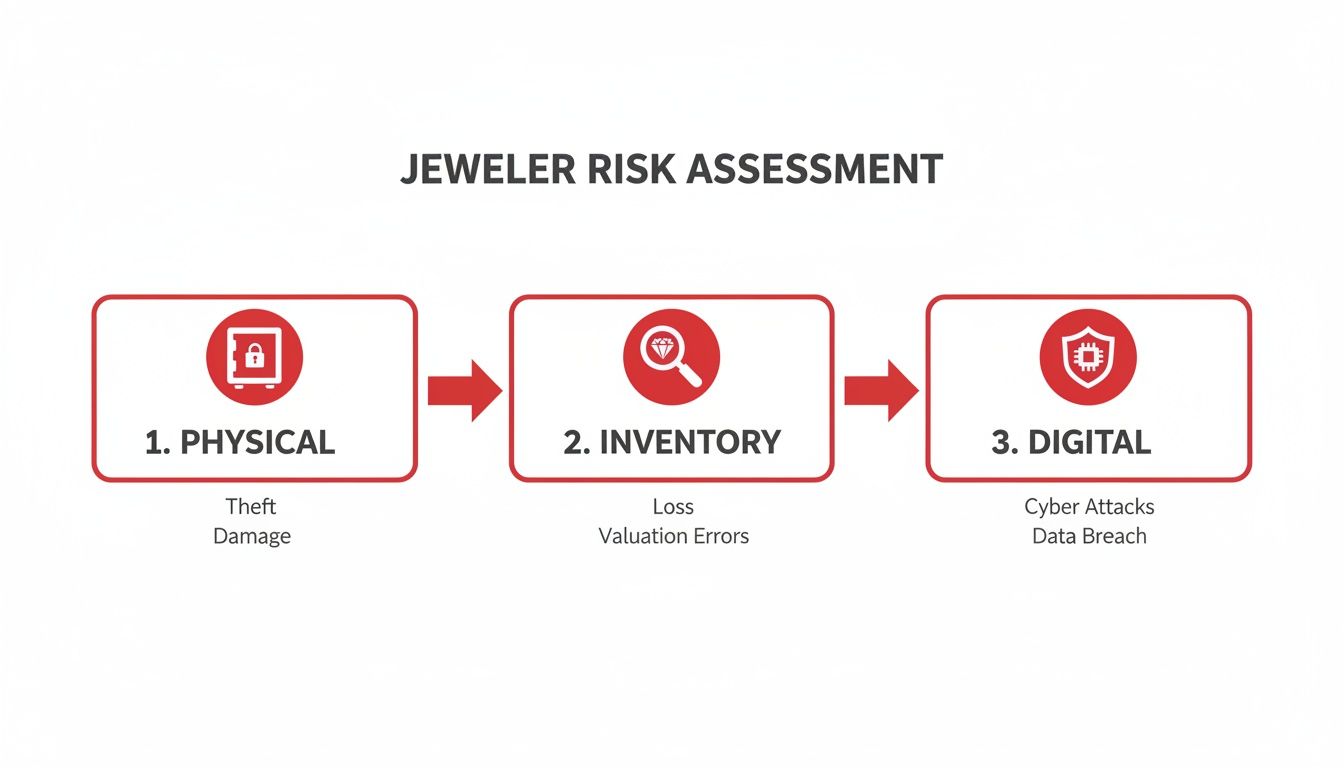
As you can see, a strong program hits threats from every angle. A weakness in one spot can easily compromise the others.
Fortifying Your Physical Defenses
Your physical security is your first line of defense, period. It all starts with your safes and vaults—the heart of your overnight protection. There's a world of difference between a standard safe and a UL-rated vault, which has been brutally tested to withstand specific attack methods for specific amounts of time. Investing in the highest-rated safe your business can handle is one of the most important risk management decisions you'll ever make.
Beyond the vault, your security needs to be layered. Think about these protocols:
- Access Control: Be strict about who gets keys, alarm codes, and safe combinations. The moment an employee leaves, those codes and combinations need to be changed. No exceptions.
- Alarm Systems: Your alarm system must have a cellular backup and be hooked up to a reputable central monitoring station. Test it regularly to make sure it’s actually working.
- High-Security Locks: Use top-shelf locks on every single entry point. We’re talking about locks that are resistant to picking, drilling, and bumping.
- Surveillance: Modern, high-definition camera systems covering every inch of your store—inside and out—are completely non-negotiable. They scare off criminals and give you critical evidence if something does happen.
Mastering Inventory and Internal Controls
"Mysterious disappearance" is one of the most infuriating and costly problems a jeweler can face. The absolute best defense is a meticulous, unwavering inventory management process. This is where your program shifts from hardware to human procedure.
The core principle of inventory control is simple: nothing should ever move, change hands, or leave the store without being documented. This discipline is your single best defense against both internal theft and unexplained losses.
This means daily counts of high-value items and regular, full audits. When you find a discrepancy, you investigate it immediately—not next week. This kind of rigor not only helps you spot potential theft early but also gives you the detailed records your Jewelers Block insurance provider will demand if you ever need to file a claim. You can see how this level of detail supports unique pieces by checking out our guide on how to handle things like antique and estate jewelry.

Securing Your Digital and Human Assets
In today’s world, your digital assets are just as valuable as the diamonds in your vault. A proper insurance for jewelry business plan must include strong digital defenses to protect client information, transaction records, and all your operational data. This means using a secure point-of-sale system, locking down your network with firewalls, and training your staff to spot phishing emails a mile away.
Finally, your employees are your greatest asset, but they can also be your biggest risk. Effective risk management services have to include thorough pre-employment screening. Running background checks is a critical step in stopping internal threats before they ever walk through your door. By pulling all of this together—strong physical, inventory, and digital protocols—you create a comprehensive program that makes your business resilient from every side.
How Proactive Risk Management Improves Your Insurance
Smart risk management and solid insurance aren't two different things; they're two sides of the same coin. When you have a strong, documented security program, you're doing a lot more than just stopping a potential theft. You're fundamentally changing how insurers see your jewelry business, making it a far more attractive and predictable risk to cover.
This connection becomes crystal clear the moment you apply for a Jewelers Block insurance policy. Underwriters at a specialized agency like First Class Insurance Jewelers Block Agency aren't just glancing at your inventory value. They’re digging deep into your daily security habits to figure out your premiums and coverage terms.
The Underwriter's Perspective on Your Business
Think of an insurance underwriter as a professional risk detective. Their entire job is to predict how likely you are to suffer a loss. When they see a jeweler with a documented, multi-layered security plan, they see someone who is actively preventing the very claims they'd have to pay.
Taking security seriously tells them you're a responsible partner in your own protection. This isn’t just about feeling good; it has a direct financial payoff.
An underwriter's main goal is to put an accurate price on risk. A well-documented risk management program gives them a clear, verifiable roadmap of your security, letting them offer better terms and pricing because your operational risks are lower and more predictable.
This proof of diligence is your best friend during the application process. It shifts the whole conversation from "How much is this going to cost me?" to "How can we build the best possible coverage for this well-run business?" To get a better feel for the key players in this specialized market, it's worth understanding the history and role of major underwriters, like those tied to the esteemed Lloyd's of London market.

Tangible Actions That Lower Your Insurance Costs
So, what moves the needle for an underwriter? It boils down to verifiable proof that you’re shutting down the most common and costly threats. These aren't just good habits; they are powerful negotiating tools for your insurance for a jewelry store.
- High-Security Safes and Vaults: Showing that you use UL-rated safes or vaults for overnight storage is one of the single biggest things you can do. It proves you've invested in tested, certified hardware to protect your inventory when it's most vulnerable.
- Vetted Employees and Strict Protocols: A tough employee screening process, backed by written rules for opening, closing, and handling valuable items, cuts down the huge risk of internal theft.
- Secure Transit and Shipping: Using trusted armored car services or sticking to strict insured shipping protocols tackles the immense risk of something happening to your goods on the move.
- Comprehensive Surveillance and Alarms: Modern, centrally monitored alarms with cellular backups and crisp HD camera coverage serve as both a powerful deterrent and a critical source of evidence if something does go wrong.
Each of these steps provides concrete evidence that you are a lower-risk client. That translates directly into better premiums and can even open the door to broader coverage options that a business with weaker controls simply can't get.
The Growing Demand for Integrated Security
The line between physical security and digital defense is blurring, and it's driving massive growth in the risk management services market. This industry, valued at USD 15.40 billion in 2024, is expected to skyrocket to USD 51.97 billion by 2033. A big part of this is that threats are getting more complex. For example, jewelers in the U.S. lost an estimated $100 million a year to smash-and-grab thefts between 2020 and 2024, pushing them to seek out integrated services that bundle physical security audits with crucial cyber defenses. You can get more insights on this expanding market and its drivers.
At the end of the day, investing in proactive risk management is one of the smartest financial moves a jeweler can make. It hardens your business against devastating losses and directly improves the cost and quality of your Jewelers Block insurance. It’s a synergy that makes sure your prevention efforts deliver a real, measurable return on investment, securing both your assets and your legacy.
Partnering with Specialists for Tailored Jewelry Protection

When your entire livelihood is built on high-value, easily-pocketed assets, working with a generalist insurance provider is a gamble you just can't afford to take. You need a specialist who speaks your language—someone who gets that insurance for a jewelry store isn't anything like a typical commercial policy.
That’s where a dedicated partner makes all the difference. Working with a true expert turns risk management from a paperwork exercise into a practical, powerful defense. A specialist knows the jewelry trade inside and out, from the specific dangers of overnight vault storage to the fine print of insuring pieces in transit.
The Value of Deep Industry Expertise
A genuine First Class Insurance Jewelers Block Agency brings a lot more than just policies to the table. They bring decades of focused experience. With over 30 years spent exclusively in the jewelry world, specialists like us have seen it all. We know exactly what underwriters are looking for and, just as important, how to frame your business in the best possible light.
This kind of deep expertise makes the whole process smoother and more effective. Instead of wasting time teaching a general agent the basics of your business, you can get straight to the details of your operation.
Choosing a specialist means you're not just buying a policy; you're gaining an advisor. Their focused knowledge ensures that your Jewelers Block insurance is not a generic template but a carefully constructed shield built specifically for your business's unique risks.
A Proven Process for Custom Protection
Getting the right insurance for a jewelry business should be a collaborative, detailed process, not a quick transaction. A specialist agency follows a clear path to make sure no stone is left unturned.
- Detailed Risk Assessment: It all starts with a deep dive into how you actually run your business. An expert will look at everything—physical security, inventory controls, employee protocols, shipping methods—to find any potential weak spots.
- Custom Policy Crafting: With that assessment in hand, the agency builds a custom Jewelers Block insurance policy. This isn't about checking boxes on a form. It's about strategically closing the critical gaps a standard policy would completely miss, like mysterious disappearance or the risks of international shipping.
- Access to Top-Tier Markets: A specialist agency gives you the personal attention of a boutique firm but with access to the world's best insurance markets. That combination means your coverage is both powerful and priced right.
Beyond the Policy: Boutique Service and Support
At the end of the day, the real value of a specialist is in the relationship. You get one-on-one attention from an expert who knows your business and is invested in seeing you succeed. They provide ongoing risk management services and advice, helping you adjust your defenses as new threats pop up.
This dedicated support is the final, crucial layer of your protection. When you’re ready to get that level of expert partnership on your side, the next step is simple. It's time to Get a Quote for Jewelers Block and see for yourself how a specialist can fortify your business's future.
Putting Your Risk Management Strategy into Action
Knowing the theory is one thing, but real security comes from taking decisive action. This is where you turn all that insight into a concrete plan that actually protects your jewelry business. It’s not a mystery—it's a straightforward roadmap for turning your vulnerabilities into strengths.
It all starts with an honest, hard look at your daily operations. The idea is to build a detailed picture of where your security stands right now, documenting every single protocol you have in place. Think of this as the foundation for a much stronger, more resilient business.
Your Four-Step Action Plan
Overhauling your security doesn't need to be a massive, complicated project. When you follow a structured approach, you can systematically close the gaps and put your business in the best possible position for top-tier insurance coverage.
Here’s a simple way to get started today:
- Assess Your Current Security Posture: Walk through your store with a critical eye. How good are your safes? What about the alarm system, camera coverage, and who has key access? Be brutally honest about the weak spots.
- Document Every Protocol: Write down your procedures for everything. Opening and closing, showing high-value pieces, shipping inventory, and vetting new hires. If it isn't written down, it’s just a suggestion, not a real protocol.
- Identify Your Most Vulnerable Areas: Based on your walkthrough, pinpoint your biggest risks. Is it overnight storage? Maybe it's employee theft or how you handle incoming shipments. Knowing your top threats tells you exactly where to focus your time and money first.
- Consult an Expert to Align Your Efforts: Once you have this internal audit done, it’s time to call in a specialist. An expert in insurance for jewelry business can look at what you've found and help you match your security upgrades with what the best insurers require for their policies.
Secure Your Financial Safety Net
After you've tightened up your physical and procedural security, the final move is to back it all up with the right financial protection. This is where all your hard work pays off, because a solid security plan directly impacts the quality—and cost—of your coverage. It makes you exactly the kind of client that gets the best rates on Jewelers Block insurance.
Taking these steps transforms your business from a passive target into a fortified operation. This proactive stance is exactly what specialized insurers look for when underwriting a policy for a high-value jewelry store insurance plan.
The only logical next step is to secure that financial backstop. This is the point where you move forward with real confidence. Get a Quote for Jewelers Block from First Class Insurance, and take the final, critical step to protect your inventory, your reputation, and your future.
Your Questions Answered: Jewelry Risk Management
Let's cut through the noise. Here are some straightforward answers to the questions we hear most often from jewelers trying to nail down their security strategy and get the right insurance in place.
What’s the Real Difference Between Risk Management and a Jewelers Block Policy?
Think of it like this: risk management services are everything you do to stop a bad day from happening in the first place. It’s the tough, UL-rated safe you lock every night, the daily inventory checks you never skip, and the armored car you use for that big shipment. It's all about prevention.
A Jewelers Block insurance policy is your financial backstop for when, despite all your best efforts, that bad day happens anyway. The two aren't separate ideas; they're partners. Great risk management makes you a much better risk in an insurer's eyes, which often translates into better terms and pricing. A specialist agency like First Class Insurance is built to help you weave them together perfectly.
My Business Is Small. Do I Really Need a “Formal” Program?
Yes, absolutely. In fact, it’s the smaller jewelry businesses that are often the most exposed. A single significant theft could put you out of business for good. But a "formal program" doesn't mean you need a binder thick enough to stop a door.
It can be as simple as having documented, written procedures for opening and closing up shop. It means keeping inventory logs that are actually accurate and ensuring your safes and alarms are up to snuff. These aren't just good habits; they're the foundational steps for protecting what you've built and are often non-negotiable for getting solid jewelry store insurance.
A formal risk management program, no matter the size of your store, is about creating discipline and consistency. It transforms good intentions into reliable, repeatable actions that reduce your vulnerability and demonstrate your commitment to security to your insurer.
How Does Mysterious Disappearance Coverage Actually Work?
Mysterious disappearance is a tricky one. This coverage is for inventory that just vanishes without any sign of a break-in or obvious theft—no shattered showcase, no forced entry. It's one of the most common and frustrating sources of loss for a jeweler.
The only way to fight it—and to have a prayer of making a successful claim—is with airtight risk management. We're talking about obsessive inventory tracking with daily counts and regular audits. It means having total surveillance camera coverage and knowing exactly who has access to your stock and when. Without these documented procedures, you have no way to prove the loss, and your insurer has no evidence to process the claim.
Can Better Security Actually Lower My Insurance Premiums?
Yes, it almost always does. When an underwriter prices an insurance for a jewelry store policy, they are calculating the odds of a loss. A jeweler who can show off high-level, documented security protocols is simply a much safer bet.
Here are the kinds of things that really move the needle:
- Investing in high-quality, UL-rated safes for overnight storage.
- Having a central station alarm with a cellular backup so it can't be cut off.
- Implementing strict, written rules for how inventory is handled and who can access it.
- Using secure shipping like armored transport for anything truly valuable.
When you invest in these proactive steps, you're not just buying security equipment; you're building a stronger, more defensible business that insurers want to cover. That can lead directly to better premiums and more favorable terms.
Working with a specialist is the smartest way to make sure your security efforts and your insurance policy are pulling in the same direction. The experts at First Class Insurance have the know-how and the coverage to protect your assets, your reputation, and your peace of mind. Get a Quote for Jewelers Block and start building a more secure future today.