
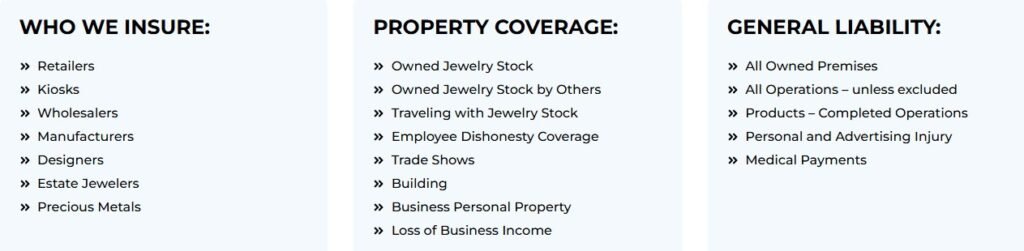
For a jewelry business, risk management insurance isn’t just another policy to file away—it's a fundamental part of staying in business. It’s a complete system for spotting, sizing up, and stopping threats before they ever have a chance to hurt your bottom line. This goes way beyond just buying an insurance policy and hoping you never have to use it.
Protecting Your Assets with Risk Management Insurance

Think of a solid risk management plan like building a fortress around your jewelry operation. You wouldn't rely on just one wall to keep you safe, would you? Of course not. You build layers of defense to protect your high-value inventory.
This multi-layered approach breaks down like this:
- Building Your Walls: This is where you identify every possible risk. For a jeweler, that list is long—smash-and-grab theft, sneaky employee dishonesty, fire, floods, and even the frustrating mystery of an item that simply vanishes.
- Posting Your Guards: These are the proactive steps you take to shrink those risks. We’re talking about high-security safes, strict inventory controls, advanced surveillance systems, and thorough staff security training.
- Calling in Your Strongest Ally: This is your insurance coverage. When a threat eventually breaks through your defenses (and sometimes, they will), your insurance is the financial backstop that lets you recover, restock, and keep your doors open.
Why Jewelers Need a Specialized Approach
Running a jewelry business means facing a unique set of dangers that a standard business policy just wasn't built for. The simple fact is, your inventory is small, valuable, and portable, making you a constant target. While the global insurance industry is massive—it saw an impressive +8.6% growth rate in 2024 with premiums hitting EUR 7.0 trillion—not all of that coverage is created equal, especially for a niche business like yours.
For a jeweler, risks like mysterious disappearance—where a piece vanishes without any obvious sign of theft—or losing merchandise on its way to a trade show are real, everyday concerns. A standard property policy will almost certainly deny those claims, leaving you to absorb a massive financial hit.
This is exactly why you need specialized coverage like Jewelers Block insurance. It’s designed from the ground up to cover the specific, high-stakes risks that come with the territory.
Beyond the policy itself, a huge part of protecting your valuables is how you secure them physically. For some great tips, you can explore these smart jewelry storage and organization ideas to beef up your on-site security.
At the end of the day, a true risk management plan is the combination of smart physical security, diligent procedures, and the right insurance. This complete protective shield, which includes safeguarding assets like these examples of high-value protected assets, is what ensures your business is ready for anything. Working with a specialist who lives and breathes this industry, like First Class Insurance, is the best way to build that comprehensive defense.

The Four Pillars of Jewelry Business Risk Management
Protecting a jewelry business isn't just about locking the doors at night. A real security strategy is a disciplined, four-step process. Think of it as the professional's playbook for defending against threats, both seen and unseen.
By moving through Identification, Assessment, Mitigation, and Transfer, you can build a formidable defense around your business. This isn’t abstract theory—it’s the same methodical approach that secures the world's most valuable assets.
Pillar 1: Identification — Uncovering Hidden Threats
You can't defend against a risk you don’t know exists. The first step is to actively hunt for vulnerabilities in every corner of your operation, well beyond the obvious. It’s about thinking like a thief, a disgruntled employee, and even a natural disaster.
This isn’t a one-time task. It’s an ongoing process of discovery:
- Security Walkthroughs: Regularly walk your entire store with a critical eye. Where are the camera blind spots? Are all display cases truly secure? Could someone hide after closing? Look at your space from the outside in.
- Staff Interviews: Your team on the floor sees things you can’t. They know which lock sticks or which customer behavior feels off. Talk to them. Confidential conversations often reveal procedural gaps or security concerns that fly under the radar.
- Incident Analysis: Every security event, big or small, is a lesson. That jammed lock, the momentary panic over a misplaced item, a convincing phishing email—these are not random inconveniences. They are data points showing exactly where your defenses need to be stronger.
Pillar 2: Assessment — Prioritizing Your Risks
Once you’ve listed out all the potential threats, it’s easy to get overwhelmed. This is where assessment brings much-needed clarity. Not all risks are created equal, and you can’t fix everything at once.
The goal here is to sort your identified risks by their potential danger. You can use a simple matrix to rank each one based on two factors:
- Likelihood: How likely is this to actually happen? (Low, Medium, High)
- Impact: If it happens, how bad is the damage? (Low, Medium, High)
A risk that is both High Likelihood and High Impact, like an overnight safe burglary, demands immediate attention. A Low Likelihood, Low Impact risk, like a minor scratch on a display case, can wait. This simple exercise ensures you put your time and money where it matters most.
Below is a sample risk assessment matrix that you can adapt for your own business. It’s a powerful tool for turning a long list of worries into a clear, actionable plan.
Jewelry Business Risk Assessment Matrix
| Risk Category | Example Risk | Likelihood (Low/Medium/High) | Impact (Low/Medium/High) | Priority Level |
|---|---|---|---|---|
| Physical Theft | Overnight Safe Burglary | Medium | High | CRITICAL |
| Physical Theft | Smash-and-Grab | High | Medium | HIGH |
| Internal Theft | Employee Stealing Inventory | Medium | Medium | HIGH |
| Cybersecurity | Ransomware Attack | Medium | High | CRITICAL |
| Property Damage | Fire or Water Damage | Low | High | HIGH |
| Operational | Loss of Key Supplier | Low | Medium | MEDIUM |
| Reputational | Negative Viral Social Media | High | Low | LOW |
By mapping out your risks this way, you create a visual guide that tells you exactly what to focus on first. A "Critical" priority item is a fire you need to put out now; a "Low" priority one is a problem you can schedule for later.
Pillar 3: Mitigation — Building Your Defenses
Now we get to the action. Mitigation is all about implementing real-world controls to reduce the likelihood and impact of your highest-priority risks. This is where you make your business a much harder target. For a jeweler, strong mitigation is non-negotiable.
Key defensive measures include installing UL-rated safes for overnight storage, creating strict, dual-control protocols for opening, closing, and inventory management, and conducting regular, documented staff training on security and emergency procedures. These proactive steps are what underwriters look for when evaluating your insurance for a jewelry business.
Pillar 4: Transfer — Sharing the Burden
No matter how strong your defenses are, some risks are simply too big to carry on your own. A sophisticated heist, a major fire, or a natural disaster could trigger a loss so catastrophic it would put you out of business overnight. This is where the final pillar, risk transfer, provides a vital safety net.
Risk transfer means shifting the financial weight of a potential disaster onto someone else. The most common and effective way to do this is with a specialized insurance for a jewelry store policy.
You pay a predictable premium to an insurance carrier. In return, they take on the risk of a multi-million-dollar loss. While the first three pillars are about preventing a loss from happening, a Jewelers Block insurance policy ensures that if the worst does happen, you have the capital to survive, rebuild, and get back to business. It's the final, crucial piece of your risk management insurance strategy.
Understanding Jewelers Block and Other Essential Policies
Once you've mapped out your risks, the final move is to transfer the biggest financial threats to an insurance partner. For any insurance for a jewelry business, that conversation starts and ends with one non-negotiable policy: Jewelers Block insurance.
Think of a standard business policy like a basic toolbox with a few separate tools. You’ve got a hammer for property damage and a wrench for liability, but nothing that truly understands your unique needs. Jewelers Block insurance, on the other hand, is a specialized, all-in-one toolkit engineered specifically for the jewelry trade. It rolls multiple coverages into one seamless policy to protect your most valuable asset—your inventory—no matter where it goes.
This is the final, crucial step in a solid risk management plan. You identify the threat, find ways to reduce it, and then insure against what's left.

Following this process isn't just about ticking boxes; it's a methodical way to shield your business from a catastrophic loss that could otherwise shut your doors for good.
The All-In-One Power of Jewelers Block Insurance
There's a reason Jewelers Block is the industry standard. It's designed to provide broad, "all-risk" protection for your goods, whether they're locked in the vault, sitting in a display case, in transit to a customer, or out on memo with a partner.
But its most critical function is covering a threat that standard policies won’t touch: mysterious disappearance.
Mysterious disappearance covers inventory that you discover is missing during a physical count, with no clear evidence of what happened. For a business handling thousands of tiny, high-value items, it’s an absolute lifesaver against those unexplained losses that can slowly eat away at your bottom line.
A solid Jewelers Block policy from a specialist like First Class Insurance Jewelers Block Agency is the bedrock of your risk management insurance strategy. You can Get a Quote for Jewelers Block to see exactly how this foundational coverage can be structured for your unique business.
Beyond the Block: Building a Complete Safety Net
While Jewelers Block is the star of the show, it doesn't do everything. It’s built to protect your stock. To create a true safety net, you need to layer on other policies that cover the full range of business risks you face every day.
Think of it this way: Jewelers Block is your lead actor, but you still need a support crew. A gap in your coverage is an open invitation for a lawsuit or liability claim that can be just as financially devastating as a major theft.
Other Essential Insurance Policies
- Commercial General Liability (CGL): This is your classic "slip-and-fall" coverage. When a customer trips on a rug in your showroom and gets hurt, CGL is what pays for their medical bills and your legal defense. It’s essential protection against claims of bodily injury or property damage.
- Commercial Property Insurance: Your Jewelers Block policy has your inventory covered, but what about the store itself? Commercial Property insurance protects your physical location, showcases, office equipment, computers, and tools from disasters like fire, storms, or vandalism.
- Cyber Liability Insurance: In today's world, a data breach is a massive liability. If your customer list gets hacked, this insurance helps manage the fallout—covering the immense costs of notifying clients, providing credit monitoring, and handling the PR nightmare.
These policies work together to form a powerful shield. Imagine a fire sweeps through your store. Your Commercial Property policy would help rebuild the physical space, while your Jewelers Block insurance would cover the cost of the destroyed inventory. Without both, you’re only halfway protected.
Ultimately, building the right insurance portfolio is a critical business decision. It's a balance between comprehensive protection and cost. Partnering with a specialist who lives and breathes this industry is key—they know how to blend these coverages into a plan with no dangerous gaps, ensuring your insurance for a jewelry store is perfectly matched to your real-world risks.
How Underwriters Look at Your Jewelry Business
When you apply for specialized jewelry store insurance, your application lands on an underwriter's desk. Think of them as the insurance company’s detective. Their job is to dig deep into your business and answer one question above all else: how likely are you to have a major claim?
That answer directly impacts whether you get coverage at all and, just as importantly, what you’ll pay for it. The underwriting process isn't some secret handshake; it's a straightforward look at your professionalism and security. Once you know what they’re looking for, you can frame your business as a top-tier risk and lock in better terms.
The Big Things They Scrutinize
Underwriters don't just glance at your inventory value and call it a day. They analyze your entire operation, homing in on the practical steps you take to protect your assets. Their review really boils down to a few key areas.
Your job is to prove that your approach to risk management insurance is a core part of your business, not an afterthought. That means having solid defenses in place and the paperwork to back them up.
1. Your Physical Defenses
This is the most obvious part of the review. An underwriter needs to see real, tangible proof of how you stop thieves in their tracks.
- Safes and Vaults: They won’t just ask if you have a safe; they’ll ask for its specific UL rating. A higher rating, like a TL-30 or TRTL-30×6, shows it can withstand serious attacks and is a huge factor in their decision.
- Alarm Systems: A basic alarm won’t cut it. You need a professionally installed, centrally monitored system as a bare minimum. They’ll want to know the provider, how much of the store is covered (doors, windows, motion sensors), and if you have a cellular backup.
- Surveillance: Clear, high-definition camera footage is non-negotiable. Your system should cover all entrances, showcases, and back rooms, with recordings available 24/7.
2. Your Daily Operations
The way you run your shop every day is just as telling as the hardware on your walls. Strong, consistent rules show an underwriter you’ve built a true culture of security.
Underwriters are looking for documented, consistently enforced procedures. This includes things like strict opening and closing protocols that require at least two employees, detailed inventory management systems for tracking every piece, and secure procedures for showing high-value items to customers.
Your Track Record Matters
Next, they’ll look at your history. For an underwriter, the past is often the best crystal ball for predicting future risk.
An established business with years of clean operations is naturally seen as a safer bet than a brand-new shop. But the single most critical factor is your loss history. If you have a track record of frequent or severe losses, especially from theft, it sends up a huge red flag. This can make it incredibly difficult or expensive to get the right insurance for jewelry business owners.
This is exactly why keeping detailed records is so important. If you can present clear documentation of security upgrades or changes to your protocols, it proves you’re serious about becoming a better, safer risk. Showing that commitment can help you secure the best possible terms on your Jewelers Block insurance. You can see this in how a legendary institution like Lloyds of London assesses risk and influences the entire market.

Ultimately, the underwriting process is your chance to put your best foot forward and prove your professionalism. When you partner with a specialist like First Class Insurance Jewelers Block Agency, we help you prepare an application that highlights your strengths from the very start. If you’re ready to see how your business stacks up, Get a Quote for Jewelers Block and let’s begin.
Navigating a Claim Successfully After a Loss

This is it—the moment your entire risk management insurance strategy is put to the test. After a theft, fire, or any other disaster, the decisions you make in the first few hours are absolutely critical. They can dramatically change the outcome of your claim.
It’s a chaotic, high-stress time, but a calm, methodical response is your greatest asset. Your Jewelers Block insurance was built for this, but a successful payout hinges on your immediate actions and preparedness. This isn't just about filling out forms; it's about proving your loss, clearly and without question.
Your First Actions After a Loss
As soon as you discover a loss, your priority is to regain control and start the claims process the right way. Every second counts, and these initial steps will lay the groundwork for everything else.
- Secure the Scene: First and foremost, protect yourself and your people. If you’ve been robbed, stay out until the police give the all-clear. For fire or water damage, prevent it from getting worse only if it’s safe. Don't touch or move anything that could be considered evidence.
- Notify Law Enforcement: Immediately call the police for any theft, vandalism, or other crime. A police report isn't just a formality—it’s a non-negotiable piece of evidence your insurer will demand.
- Contact Your Insurance Agent: Your next call should be to your specialist insurance agent, like First Class Insurance Jewelers Block Agency. They are your advocate and your guide through the chaos, helping you understand what your policy requires and what comes next.
The Power of Meticulous Documentation
Once the immediate danger has passed, your entire focus needs to shift to documentation. When you file a claim, the burden of proof falls on you. The more detailed and organized your records are, the faster and smoother the entire process will be.
Think of it like you're building a legal case. Your best evidence is a combination of the records you kept before the incident and the proof you gather after.
In the world of insurance claims, what you can prove is what gets paid. Detailed inventory records, security footage, and clear photographs of the damage are not just helpful—they are the foundation of a successful claim settlement.
Your claims adjuster will need a full accounting of every single item lost or damaged. Be ready to provide:
- Photographs and Videos: Take photos and videos of everything from every possible angle. Document how a thief got in, the full extent of the damage, and any affected showcases or equipment.
- Police Reports: Get a copy of the official police report as soon as it’s available. This is a critical third-party account of the incident.
- Inventory Records: This is where your day-to-day diligence shines. Hand over your detailed stock records, complete with descriptions, SKU numbers, supplier invoices, and the value of each and every piece.
Working with the Claims Adjuster
The claims adjuster is the person the insurance company sends to investigate and put a number on your loss. Their job is to verify what happened, check it against your policy's coverage, and determine the final settlement.
Good communication is everything here. Be organized, be responsive, and be transparent. Give them all the documents they ask for right away, and keep your own log of every phone call and email. Remember, they work for the insurer, but a professional and cooperative attitude will only help your cause.
When a major loss happens, understanding the claims process is vital. For more general advice on navigating property damage, resources that offer insurance claims assistance can provide a broader perspective. The core principles are the same whether you're a homeowner or managing insurance for a jewelry store.
Ultimately, a well-documented claim, backed by a specialist agency, proves the value of your risk management insurance program. It’s what turns a potential catastrophe into a recoverable event.
Choosing the Right Specialist Insurance Partner
When it comes to protecting high-value assets, not all insurance providers are the same. Picking a generalist insurer to cover your jewelry business is like asking your family doctor to perform open-heart surgery. They might understand the basics, but you're gambling with your livelihood by not bringing in a specialist.
The right risk management insurance isn’t just about a piece of paper. It’s about partnering with an expert who lives and breathes the unique risks of the jewelry trade. This is the difference between simply having insurance and building a strategic defense for your business's future.
What to Look for in a Specialist Agency
Your goal is to find an agency that feels like a true extension of your team, someone who offers proactive advice and is in your corner when things go wrong. As you evaluate potential partners, here are the non-negotiables.
- Proven Industry Expertise: Your agent needs to speak your language. They must get the nuances of inventory on memo, the dangers of transit, and exactly what security upgrades underwriters reward most.
- Access to Specialized Markets: The best policies aren't found on a comparison website. A specialist agency, like First Class Insurance Jewelers Block Agency, has spent years building relationships with the niche underwriters who create these policies.
- A Responsive Claims Team: After a loss, the last thing you want is a call center and a case number. You need a dedicated claims advocate who understands Jewelers Block insurance and can fight for a fast, fair settlement.
A true partner doesn’t just sell you a policy; they actively help you become a better, safer risk. They should be giving you advice on your security and operations—the kind of advice that lowers your premiums and prevents claims in the first place.
The First Class Insurance Advantage
When you choose First Class Insurance, you're not just hiring an agency. You're partnering with a team that has spent decades focused on one thing: insurance for jewelry business owners. We have nationwide licensing and a track record of building policies from the ground up to meet the real-world needs of jewelers.
We see ourselves as partners in your success. Our guidance is reinforced by our active involvement in the industry with groups like the Southern Jewelry Travelers Association (SJTA).

This laser focus ensures that every part of your business is properly protected, from the diamonds in your vault to your hard-earned reputation. If you're ready to see what a difference a true expert can make, it's time to take the next step. Get a Quote for Jewelers Block and let us show you what real peace of mind looks like.
Answering Your Top Questions About Jewelers Insurance
When it comes to protecting a jewelry business, we hear a lot of the same questions from owners. It’s a specialized world, and standard insurance advice just doesn’t apply.
Let's cut right to it and give you the straight answers you need to properly secure your life's work.
Is My Personal Homeowners Policy Enough to Cover My Jewelry Business?
Absolutely not. This is one of the most dangerous assumptions a new jeweler can make.
A standard homeowners policy is designed for your personal life, not your business. It has incredibly low limits for jewelry—often just $1,500 to $2,500—and, more importantly, it contains explicit exclusions for business inventory and liability. Relying on it is like using a garden hose to put out a house fire; it’s simply the wrong tool for the job.
For real protection, you need a commercial policy like Jewelers Block insurance built specifically for the risks you face.
What Is Mysterious Disappearance and Why Do I Need It?
Mysterious disappearance is the one coverage feature that truly separates a jeweler’s policy from a generic one. It protects you when an item goes missing without any clear proof of what happened.
Imagine a ring is in the case one moment and gone the next during a stock count, with no signs of theft. A standard policy would deny that claim instantly. This unique coverage is vital for protecting against the unexplained inventory shrinkage that can slowly bleed a business dry.
A business handling thousands of small, high-value items is exceptionally vulnerable to unexplained losses. Mysterious disappearance coverage is often the single most important feature that separates a generic policy from true, specialized protection.
How Much Does Jewelers Block Insurance Cost?
There's no one-size-fits-all answer here. The cost of Jewelers Block insurance is unique to your specific operation.
An underwriter will look closely at several key factors to build your premium:
- The total value of your inventory
- The strength of your physical security (safes, alarms, cameras)
- Your business’s location and claims history
- The coverage limits and deductible you choose
Because every detail matters, the only way to get a real number is to work with a specialist. You can Get a Quote for Jewelers Block to see a proposal designed for your exact needs.
Does This Policy Cover My Inventory During Travel?
Yes, and this is a huge benefit of a proper Jewelers Block insurance policy. It’s designed to protect your inventory while it's in transit, whether you're heading to a trade show or visiting a client.
However, coverage isn't automatic. You must review your travel plans and security measures with your agent beforehand. This ensures you're following all the policy's rules and travel limits, so there are no surprises if you need to file a claim.
Protecting your life’s work requires a partner who understands the high-stakes world of the jewelry trade. At First Class Insurance, we specialize in building the right protection for your business. Let our expertise provide you with the peace of mind you deserve. Start your customized quote today.