
Figuring out your insurance premium can feel like cracking a safe, especially when you're dealing with a high-value policy like Jewelers Block insurance. But the core concept isn’t as complicated as it seems. At its simplest, an underwriter starts with a base rate, multiplies it by your exposure (like your total inventory value), and then fine-tunes that number based on your specific risks and safety measures.
Think of it as a starting price that gets completely customized for your jewelry business.
The Building Blocks of Your Premium Calculation
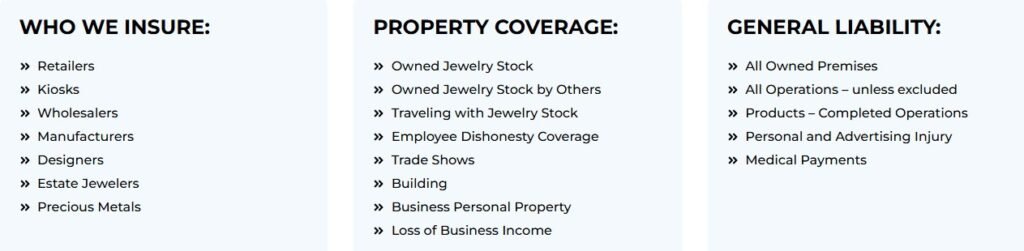
A standard business policy just won't cut it for a jeweler. You're not just running a store; you're safeguarding a fortress of high-value, portable assets. This is where a specialized Jewelers Block insurance policy becomes non-negotiable. It’s built from the ground up to handle the unique and severe risks of our industry—from a smash-and-grab theft to mysterious disappearance and damage during transit.
At its heart, an insurance premium is the price you pay to transfer your financial risk to an insurance carrier. And for a jeweler, that risk is immense. Underwriters don't just guess at a number; they use a methodical, data-driven process to arrive at a premium that accurately reflects the potential for a claim at your specific business.
The Key Factors Underwriters Scrutinize
Every policy is a unique reflection of the business it protects. When an underwriter, whether at a large carrier or a specialist like First Class Insurance Jewelers Block Agency, evaluates your application, they are piecing together a complete picture of your operational risk.
Here’s what’s on their checklist:
- Total Insured Value (TIV): This is the wholesale cost of everything you need to protect—your inventory in the showcase, your stock in the safe, and even loose stones. It's the single biggest driver of your premium.
- Security & Controls: This is where you can really move the needle. High-quality, UL-rated safes, central station alarm systems with the right credentials, and clear staff protocols for opening and closing can earn you significant credits.
- How You Do Business: Your risk profile changes dramatically based on your business model. A retailer in a high-foot-traffic mall faces different threats than a private dealer working by appointment only or a wholesaler who is constantly on the road.
- Your Location: The physical security of your building and the crime statistics for your specific area are always part of the equation.
- Claims History: A clean track record is your best friend. Having no claims for the last 3-5 years tells an underwriter that your risk management is working, which almost always results in a better rate.
A common mistake is thinking all Jewelers Block policies are priced from the same menu. The truth is, your policy is as unique as your business. The underwriter’s job is to craft a premium that mirrors your exact risk landscape, not your competitor’s.
To bring this all together, underwriters weigh each factor to build your final premium. The table below breaks down the most critical components they look at.
Key Factors Influencing Your Jewelers Block Premium
This table summarizes the primary components that underwriters evaluate to determine the final cost of your insurance policy.
| Factor | Description | Impact on Premium |
|---|---|---|
| Inventory Value | The total wholesale cost of your stock, including jewelry, loose stones, and raw materials. | High Impact: A larger inventory directly increases the carrier's potential payout and, therefore, your premium. |
| Security Systems | The grade and rating of your safes (TL-15, TL-30, etc.), your alarm systems, and your surveillance cameras. | High Impact: Strong, certified security dramatically reduces risk, which leads to significant premium credits. |
| Deductible Amount | The amount you agree to pay out-of-pocket for a claim before the insurance policy responds. | Medium Impact: Choosing a higher deductible lowers your premium by showing you're willing to retain a bit more of the risk. |
| Travel & Transit | How often you ship goods or travel with them outside your primary location, and the values involved. | Medium Impact: The more your inventory is exposed outside the security of your store, the higher the risk and associated cost. |
Each of these elements tells a piece of your story. The more you can do to present a low-risk picture, the more control you'll have over your final premium.
Ready to see how these factors add up for your specific business? Getting a personalized assessment is the only way to know for sure.
The Anatomy of Your Insurance Premium
To really understand how to calculate your insurance premium, you need to look at it the way an underwriter does: piece by piece. Think of your final premium not as a single number, but as a custom-built machine. For a high-value business like a jewelry store, the whole thing is built on four core components: the Base Rate, your Exposure Basis, Policy Limits, and Deductibles.
These aren't just arbitrary numbers. They are the gears that turn your business's unique risk profile into a specific dollar amount.
This simple flowchart shows how the process moves from a starting rate to your final, adjusted premium.

As you can see, it's a logical path where each step builds on the last to create a premium that fits your specific jewelry store insurance needs.
The Starting Point: Your Base Rate
Every single premium calculation starts with a base rate. This is the foundation, a number pulled from massive pools of historical insurance data. Insurers analyze thousands of policies and decades of claims from businesses just like yours to set this benchmark.
It’s the average cost of risk for a typical jewelry operation before any of your individual details are factored in.
For example, a retail jewelry store insurance policy will have a different base rate than a policy for a diamond wholesaler because their day-to-day risks are fundamentally different. This rate sets the initial price per unit of risk, which is then applied to your business.
Measuring Your Exposure Basis
With the base rate established, the underwriter then applies it to your exposure basis. This is simply the primary measurement of "how much" risk the insurer is taking on. For any jeweler, the most common exposure basis is your Total Insured Value (TIV)—the wholesale cost of your entire inventory.
So, let's say the base rate is $2 per $1,000 of value, and your TIV is $2 million. The initial math is pretty straightforward:
- ($2,000,000 TIV / $1,000) x $2 Rate = $4,000
This number is the raw, unadjusted starting point. It's the sticker price for covering your inventory value based on the industry's average risk.
Your exposure basis is the single biggest multiplier in your premium calculation. This is why accurate, up-to-date inventory records aren't just good for business—they are absolutely critical for getting an accurate insurance quote.
The Trade-Off: Limits and Deductibles
Next, the underwriter looks at the structure of your policy—specifically, your chosen limits and deductibles. These two elements work in tandem, representing a classic trade-off between how much coverage you get and how much you pay for it.
- Policy Limits: This is the absolute maximum amount the insurance company will pay for a covered loss. Higher limits give you a bigger safety net, but they also mean more potential exposure for the insurer, which naturally drives up your premium.
- Deductibles: This is the amount you agree to pay out-of-pocket on a claim before your coverage kicks in. By choosing a higher deductible, you're telling the insurer you're willing to handle smaller losses yourself. This reduces their risk and, in turn, lowers your premium.
For instance, simply increasing your deductible from $2,500 to $10,000 could cut your Jewelers Block insurance premium by 5-15%. It's a strategic lever you can pull to directly manage your costs. An experienced broker can model these scenarios for you, helping you find that sweet spot that protects your business without crushing your budget.
Once an underwriter has the basic components down, they stop looking at the industry as a whole and start looking directly at you. This is where the real work begins, moving from general formulas to a sharp, focused analysis of your specific business.
It’s what makes a policy for your jewelry store truly yours. This process is driven by two distinct methods: the Collective Risk Model and the Individual Risk Model.
Knowing which model your business falls under is the key to understanding how your final premium gets built.
The Collective Risk Model: A Group Approach
For most retail jewelry stores, the Collective Risk Model is the industry’s go-to. Think of it like this: an underwriter isn’t just insuring your store; they’re insuring a whole portfolio of businesses that look and operate a lot like yours.
They pool data from thousands of similar policies—cataloging everything from thefts and mysterious disappearances to transit losses—to predict the total losses for the entire group over the next year. It’s a method built on the law of large numbers.
For context, in a U.S. property and casualty market that saw $802 billion in premiums in 2023, these collective models are essential for keeping things stable. By crunching massive datasets, actuaries can estimate that jewelers face a claim about 1.2% of the time, with the average hit coming in around $45,000, based on industry loss data from 2018-2022.
By grouping thousands of similar businesses, the Collective Risk Model smooths out the impact of any single large loss. It creates a stable and predictable pricing foundation, which is why it's so widely used for standard jewelry store insurance.
This approach works incredibly well for businesses with risks that are well-understood and predictable. The more data an insurer has, the more accurately they can forecast what’s coming.
The Individual Risk Model: A Bespoke Calculation
But what if your business doesn't fit into a neat little box? This is where the Individual Risk Model comes into play. It’s designed for operations with a truly unique risk profile.
Think about these kinds of businesses:
- A high-end designer crafting one-of-a-kind pieces.
- A traveling wholesaler who carries millions in inventory on the road.
- An online-only retailer shipping high-value goods all over the world.
Instead of lumping these operations into a broad category, the Individual Risk Model zooms in. It dissects your specific security protocols, travel habits, sales methods, and claims history to build a premium from the ground up. An underwriter is essentially calculating the probability of a loss for you, and you alone.
For instance, a wholesaler who exclusively uses armored transport is going to get a much better look under this model than one who relies on standard couriers. It's built to reward exceptional risk management.
While it’s a more complex way to underwrite, this tailored approach often leads to more accurate—and often more favorable—pricing for jewelers who don’t fit the standard mold. This granular focus is a hallmark of specialty markets, like those accessed through agencies focused on the jewelry business, including the underwriters at Lloyd's of London, a key partner for many specialized programs.

Ultimately, whether an underwriter uses a collective model, an individual one, or a hybrid of both, the goal is always the same: to match the premium to the risk. When you understand these methods, you gain real insight into the "why" behind your Jewelers Block insurance quote. It puts you in a much stronger position to have a meaningful conversation with your broker and make sure you’re getting the right coverage at the right price.
Risk Factors and Credits That Shape Your Final Premium
Once the starting premium is on the table, the real underwriting begins. This is where an underwriter digs into the specifics of your operation, and it’s where your security investments and track record start to pay you back—or cost you.
Think of it as a scorecard. Certain risks add surcharges (debits) to your rate, while strong protective measures earn you valuable discounts (credits). Every single jewelry store insurance policy goes through this fine-tuning.

This detailed review is what makes your final Jewelers Block insurance premium a true reflection of your business's unique risk profile. Let’s break down the debits and credits that really move the needle on your final cost.
Common Factors That Can Increase Your Premium
In an underwriter’s eyes, some parts of your business just carry more inherent risk. It’s critical to know what these are, because they almost always lead to surcharges on your base premium.
Here are the big ones:
- Location: Operating in a zip code known for high crime, especially burglaries and robberies, is a major red flag for insurers and will drive up your rate.
- Travel Exposure: If your business model involves frequent travel with high-value goods—whether for trade shows or private showings—that transit risk adds a significant cost.
- Building Type: Your physical location matters. A ground-floor shop with large display windows is a much easier target than a secure office on the 10th floor of a commercial building.
- Limited Security: Using older, non-rated safes, not having a central station alarm that dispatches police, or having sloppy inventory controls all signal to an underwriter that your risk is higher than average.
These factors don't make you uninsurable, but they do adjust your premium to match the statistical reality of the risk you represent.
Earning Credits to Lower Your Insurance Costs
This is where you take back control. By investing in proven security and keeping meticulous records, you can earn substantial credits that slash your premium. Underwriters want to see that you're an active partner in managing your risk.
Here’s how you can earn those valuable discounts:
- Upgraded Safes and Vaults: This is one of the most powerful moves you can make. Using high-grade, UL-rated safes like a TL-30 or TRTL-30×6 will earn you a significant credit. The better the rating, the bigger the discount.
- Advanced Alarm Systems: A modern alarm with cellular backup and a direct line to law enforcement is a huge mitigating factor. It shows you’re serious about response time.
- Meticulous Inventory Management: When you can track every single piece from the moment you acquire it to the moment it sells, you demonstrate powerful internal controls. This reduces the risk of internal theft and mysterious disappearances.
- A Strong Claims History: Nothing speaks louder than a clean track record. Most insurers offer a "claims-free" discount that gets better each consecutive year you go without a loss.
For instance, just switching from a basic safe to a UL-rated TL-30 model can cut your Jewelers Block premium by as much as 15-20%. These security investments often pay for themselves through long-term insurance savings.
The logic behind this is universal across the insurance world. While it's a different product, you can see the same principle in action by looking at how much car insurance increases after an accident—a single event directly impacts future rates.
The Bonus-Malus System Explained
A core tool underwriters use to connect your history to your premium is the Bonus-Malus system. It’s a formal way of rewarding good behavior and penalizing losses.
It’s simple: for every year you remain claim-free, you earn a "bonus" (a discount). If you file a claim, you get a "malus" (a surcharge) at your next renewal. This dynamic pricing is standard for specialized policies covering a jewelry business, working just like the system that raises auto premiums after a wreck. And it works—one study found that 72% of commercial policies using this model had more stable and predictable loss ratios.
This system puts you in the driver’s seat. The more you invest in loss prevention, the more you save. By understanding both the risks that add cost and the proactive steps that earn credits, you can secure a much better outcome when determining how to calculate insurance premiums.
A specialist at First Class Insurance Jewelers Block Agency can run a full analysis to make sure you're getting every single credit you deserve. We can also provide insights on how underwriters approach valuing unique pieces, like those seen in specialized collections.
Actionable Steps to Lower Your Jewelry Insurance Premiums
Knowing how your premium is calculated is one thing. Actually lowering it without gutting your coverage is something else entirely. It’s time to move from theory to practice and take control of what you pay for your Jewelers Block insurance.
These aren't generic tips you’d find on any business blog. These are the industry-specific moves that directly influence how an underwriter views your risk. Every step, from physical upgrades to new protocols, sends a clear message: you’re a professional, low-risk partner they want to insure.

Fortify Your Physical Security
The quickest way to earn premium credits is by making your facility a harder target. Underwriters are looking for certified, tangible security measures that make your insurance for a jewelry store a less risky bet.
A major move here is upgrading your safe. If you're still using an older, residential-style safe, swapping it for a modern, UL-rated model like a TL-15 or, even better, a TL-30, can deliver big savings. Those ratings aren’t just letters and numbers; they certify the safe can resist a sophisticated tool attack for a set amount of time—a detail underwriters absolutely love to see.
Your alarm system is just as crucial. A basic local alarm is fine, but the gold standard is a central station-monitored system with cellular backup and police dispatch. It proves you have a plan for an immediate, verified response, not just a noisemaker to scare someone off.
Implement Strict Operational Protocols
How you run your business day-to-day speaks volumes about your risk profile. Strong operational controls are just as important as strong steel doors when it comes to your insurance for jewelry business.
Implementing these procedures shows underwriters you’re actively preventing losses from both outside and inside your business.
- Dual-Control Procedures: This one is simple but powerful. Require two authorized employees to be present for opening and closing the vault. It drastically cuts the risk of internal theft or a terrifying "tiger kidnapping" scenario.
- Regular Staff Training: Don't just train your team—document it. Hold frequent sessions on security protocols, robbery response, and inventory handling. An educated staff is your best first line of defense.
- Meticulous Inventory Management: Use a solid system to track every single piece from the moment it enters your store to the moment it leaves. Accurate, live records are critical for spotting issues early and are non-negotiable for substantiating a claim.
Partnering with a specialist broker, like First Class Insurance Jewelers Block Agency, is a strategic move. We know exactly how to frame your risk management efforts—like dual-control vault access and documented staff training—to secure the best possible terms on your behalf.
Document Everything for Underwriters
When it comes to how to calculate insurance premiums, underwriters can only work with what you give them. If your application is vague, they'll default to a conservative—and higher—price. Detailed documentation gives them the proof they need to justify a lower premium.
This means providing high-quality photos and detailed appraisals for your high-value pieces. It also means keeping meticulous records of your security system, including its model numbers, UL certifications, and service history. When you present a complete, professional package, you make it easy for an underwriter to give you the credits you’ve earned.
For example, a specialist agency like First Class Insurance doesn't use a generic formula for an independent bench jeweler in Los Angeles with $2.5M in tools and inventory. Instead, we use an individual risk model that calculates the premium based on expected claims from your specific operation. Actuaries plug in your details—your years in business (a veteran might get a 10% credibility weight), your vault's security rating (a UL Class 1 vault can slash rates by 30%), and your claims history. Five years with zero claims? You could see a 15% no-claim bonus. To explore this topic further, you can review some research about actuarial models for calculating premiums.
By taking these steps, you shift from being a passive policyholder to an active risk manager. The more you prove your commitment to security and tight controls, the more leverage you have. Now it's time to put that leverage to work and get a quote for Jewelers Block that truly reflects all your hard work.
Common Questions About Jewelers Block Premiums
Even after you understand the formulas, the real-world questions always pop up. We get it. So, let's tackle the practical concerns we hear most often from jewelers trying to nail down their insurance costs.
These are the make-or-break details that can swing your budget and your peace of mind. Think of this as the final briefing before you take the next step.
How Much Does One Theft Claim Really Affect My Premium?
A single theft claim will absolutely raise your premium at renewal. It's just a fact of the business. This is where the "Malus," or surcharge, comes into play.
The exact jump depends on the size of the loss and your history, but it's not unusual to see a 25% increase after a significant claim. The good news? It isn’t permanent. If you stay claim-free in the following years, you can earn back "Bonus" discounts that bring your rate back down. This is why investing in top-tier security isn't just a loss prevention tactic—it’s a direct investment in keeping your future jewelry store insurance costs under control.
Is It Cheaper to Insure Raw Materials than Finished Pieces?
Generally, yes. Underwriters see raw materials—like loose diamonds or bulk metals stored in a safe—as a much lower risk than finished jewelry sitting in a display case.
Why? Because finished pieces are far easier for a thief to fence on the black market, making them a prime target. Plus, the value of a finished piece includes labor, a subjective cost that's harder for underwriters to pin down. An expert broker at a specialized agency like First Class Insurance Jewelers Block Agency knows how to structure your policy to reflect these different risk levels, which can lead to real savings.
It's a common misconception that all inventory should be insured under one blanket rate. A sophisticated policy will differentiate between high-risk finished goods on display and lower-risk raw materials secured in a vault.
Why Did I Get Two Wildly Different Insurance Quotes?
This is an incredibly common—and frustrating—experience for jewelers. The massive difference in price usually comes down to two things: the insurance carrier's appetite and your broker's expertise.
- Carrier Appetite: Some insurance carriers just have a better "appetite" for certain types of risk. One might love retail stores and price them well, while another prefers wholesalers and will hit a retail shop with a high quote. They all have their own secret sauce for weighing factors like your location against your safe rating.
- Broker Expertise: The quality of the application submitted on your behalf is everything. A generalist broker might just fill out a basic form. A specialist, however, knows how to frame your security measures, highlight your business's strengths, and take your application straight to the right underwriter who is actively looking for a risk profile just like yours.
How Do I Get an Accurate Quote for My Jewelry Business?
The key to an accurate quote is complete and honest information. If you want to truly understand your costs and get a quote for Jewelers Block, you have to work with a specialist broker and be an open book about your operations.
Be ready to share:
- A complete, up-to-date inventory list with wholesale values.
- A full breakdown of all security systems—safes, alarms, cameras—including their UL ratings and monitoring company details.
- Your business hours and exact opening/closing procedures.
- Any travel or shipping you do, including the maximum values you carry and the methods you use.
- Your claims history for at least the last five years, even if it's clean.
The more detail you provide, the sharper the pencil will be on your quote.
Ready to move beyond estimates and see what a policy tailored to your exact business looks like? The team at First Class Insurance has over 30 years of experience protecting jewelers. We understand your risks and know how to secure the best coverage at the right price. Contact us today for a personalized quote, often within 24 hours. Learn more and get your no-obligation assessment at https://firstclassins.com.