
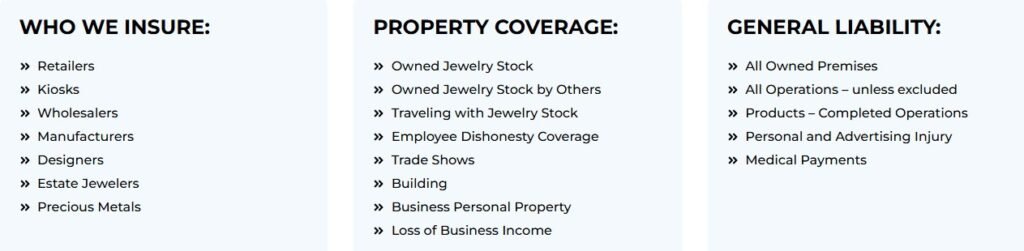
A pair goes missing more often in the back room than on the sales floor.
That is the uncomfortable truth behind a large share of earring losses. A sales associate puts a tray down between appointments. A repair intake envelope gets reused. A diamond stud is separated from its mate during cleaning and dropped into the wrong compartment. By the time someone notices, the inventory count is off, the paper trail is thin, and the loss has shifted from an operations problem to an insurance problem.
Anyone who works around Jewelers Block claims knows what happens next. The first question is not “Was the item valuable?” The first question is “How was it stored, logged, and controlled before it disappeared?”
Why Storing Earrings Is a Matter of Asset Protection Not Just Tidiness
At 5:15 p.m., a sales associate returns a pair of diamond studs to the back room after an unsuccessful showing. They do not go back into the assigned slot. They go into a convenient tray. By the next stock check, one back is missing, the mate is in another compartment, and no one can document who handled the pair last.
That sequence is not a housekeeping lapse. It is a breakdown in custody.
From an underwriting and claims standpoint, earring storage affects three things at once. It affects physical condition, inventory accuracy, and your ability to prove that a loss was sudden, accidental, or caused by a covered event rather than weak internal control. The distinction matters. A bent post or missing mate is expensive. A poorly documented file that invites questions from an adjuster is often worse.
What a preventable loss looks like
Earrings are unusually easy to separate, misfile, and damage in ordinary handling. A ring or bracelet usually remains one unit. Earrings become two small units plus backs, tags, envelopes, and repair paperwork. If the storage method does not keep the pair together at every handoff, the risk starts long before any suspected theft.
I see the same pattern repeatedly. A pair comes out for viewing, cleaning, photography, or repair intake. It returns to stock without being secured in its designated place and without a clean possession trail. Days later, the pair is incomplete. At that point, staff are trying to reconstruct events from memory, not records.
That is a weak position in any claim.
Insurers expect jewelers to show ordinary care over high-value, easy-to-conceal items. Storage is part of that standard because storage controls how easily a piece can be misplaced, switched, damaged, or removed without detection.
Tip: If one earring can be separated from its mate during normal handling, the storage system is creating avoidable claim friction.
The cost goes beyond the missing item
Poor storage produces more than shortages. It drives metal abrasion, bent posts, lost backs, stone exposure to unnecessary handling, and staff time spent searching, recounting, and explaining exceptions. Those costs rarely appear in one dramatic event. They show up as margin erosion, stock discrepancies, and small losses that accumulate into a pattern your carrier will notice.
Clean presentation does not solve that problem. Plenty of stores look orderly at the counter and still have weak controls in drawers, intake bins, memo packets, and transfer pouches.
The better standard is simple. Keep each pair together, assign one storage location, limit unnecessary touchpoints, and make every return to stock traceable. A system does not have to be elegant. It has to hold up under daily use and stand up to review after a loss.
Tidiness is the wrong benchmark
The objective is asset protection.
A sound earring storage system preserves condition, preserves pair integrity, and preserves evidence of control. If a claim file depends on phrases like "it should have been there" or "someone must have moved it," the storage method has already failed the business.
The Foundational Principles of Professional Jewelry Storage
Professional storage starts with three rules. Separate by material. Control the environment. Secure each pair individually.
Everything else is just packaging.
Material integrity comes first
Diamonds, gold, vermeil, sterling silver, plated pieces, enamel, and gemstone earrings do not behave the same way in storage. If you mix them casually, the harder materials mark the softer ones and reactive surfaces age faster.
Diamonds deserve special caution. They abrade other jewelry easily. A mixed compartment may look harmless at closing time and produce scratched gold by opening.
For that reason, the first sort should be by material class, not by color or vendor. In practice, that means:
- Hard stones apart from softer metals: Do not allow diamond or gemstone earrings to ride loose against gold or plated surfaces.
- Silver separated from mixed-metal fashion pieces: Tarnish behavior differs, and silver needs more environmental control.
- Plated and vermeil pieces isolated: These finishes are less forgiving of friction and repeated contact.
When professionals ask how to store earrings properly, this is the first dividing line. Storage by style alone is not enough.
Environmental control prevents slow damage
Most earring damage is not dramatic. It is gradual.
Humidity, warmth, and open-air exposure work in the background. Silver dulls. Finishes cloud. Some stones fade when left in direct light. Adhesives and residues left on jewelry after wear or handling can worsen the problem.
A sound storage environment has a few basic characteristics:
| Storage factor | Good practice | What goes wrong if ignored |
|---|---|---|
| Humidity | Keep storage cool and dry | Tarnish and corrosion develop faster |
| Light | Avoid direct sunlight for long holds | Gemstones and finishes can fade |
| Air exposure | Limit open-air storage for long-term holding | Oxidation and surface dulling increase |
| Temperature swings | Avoid hot, damp rooms | Condensation and surface degradation become more likely |
Bathrooms, window ledges, and open counters are poor choices. So are stockrooms where product sits near steam, sinks, or exterior doors.
Key takeaway: A clean, fabric-lined compartment in a poor environment is still poor storage.
Individual security is what stops pair loss
Pairs should stay paired.
That sounds obvious, yet many stores still use catch-all trays, shared envelopes, or crowded inserts where backs detach and single earrings migrate. Once that happens, even a modest item can become expensive because the pair is no longer saleable at full value.
Good systems make separation difficult. Better systems make it impossible without a deliberate logged action.
Use methods that preserve pair integrity:
- Dedicated compartments for each pair.
- Labeled positions so returns to stock are exact, not approximate.
- Secure backs or mounts before storage for studs.
- Consistent handling rules so staff do not improvise.
Some businesses also separate by turnover speed. Fast-moving inventory stays accessible but still compartmentalized. Long-hold stock belongs in a more controlled back-of-house environment.
The test underwriters care about
Ask one operational question. If a staff member pulls ten pairs for a client presentation and nine go back, can you identify exactly where the tenth should be, who last handled it, and whether the missing component is the earring, the backing, or the pair card?
If the answer is no, the issue is not a lack of trays. It is a lack of storage discipline.
That is the foundation. Once those principles are in place, the choice of case, tray, vault insert, travel pouch, or shipping pack becomes much easier and much more defensible.
Storage Solutions for Every Scenario Showroom Back-of-House and Transit
A salesperson closes a presentation, turns back to the case, and one earring is missing from a high-value pair. Another pair is back in the tray with the backs switched. By the time staff start retracing steps, you no longer have a storage issue. You have a shrink issue, a valuation issue, and possibly a claim issue if the record trail is weak.
The storage method has to match the exposure. Showroom control, back-of-house control, and transit control are three different jobs. Treating them as one is how inventory gets damaged, misplaced, or disputed after a loss.

Showroom display needs visibility with control
Showroom storage should help a sale without creating blind spots in accountability. Earrings are handled, compared, removed, and returned all day. Every extra touch raises the chance of bent posts, mixed backs, pair separation, or an unexplained shortage at close.
Use display hardware that supports one-pair access and immediate visual reconciliation:
- Locking insert trays for studs, petite drops, and matched diamond pairs that need fixed positions
- Single-pair presentation stands inside locked cases for higher-ticket items that staff show one at a time
- Shallow drawers under the case line for fast retrieval without carrying multiple pieces across the sales floor
- Numbered tray positions tied to stock records so staff return each pair to an exact location, not the nearest empty slot
Poor showroom choices usually look attractive for the first hour and create problems for the rest of the day. Open pads loaded with multiple pairs, shared forms, and crowded velvet surfaces invite contact damage and make end-of-day counts slower and less reliable.
A good display case does two things at once. It presents merchandise cleanly and makes absence obvious. For a visual standard on presentation that still respects asset value, see this high-value jewelry presentation example.

Back-of-house storage needs density, order, and clean audit trails
Back stock should be built for count integrity. Staff are not selling from this area. They are pulling, returning, receiving, and verifying. Storage has to support those tasks without forcing excess handling.
In practice, that means choosing the format by inventory type and turnover rate:
| Back-of-house method | Best use | Primary risk |
|---|---|---|
| Divided velvet trays | Daily active inventory | Miscounts if slots are not labeled clearly |
| Individual cards or mounts in drawers | Studs and small matched pairs | Slower visual scanning during broad searches |
| Fabric pouches in labeled bins | Special orders, repairs, memo goods | Misfiling if bins are overfilled or labels drift |
| Locked vault drawers | High-value or low-turn inventory | Uncontrolled pull-outs if access logs are weak |
Trade-offs matter. Trays are fast but only if slot maps stay current. Pouches save space but can hide errors. Vault drawers improve security but slow retrieval, which tempts staff to leave pulled goods unsecured on work surfaces. I see that pattern often after losses.
Storage logic from other collectible categories carries over. The Definitive Guide to Vinyl Record Storage Containers highlights the same underlying rule. The container has to support the item, limit avoidable contact, and make retrieval predictable. Earrings deserve the same discipline.
Transit storage needs immobilization and discretion
Transit changes the risk completely. Vibration, compression, temperature shifts, rough handling, and chain-of-custody gaps all show up at once. If earrings can move inside the inner package, you have already accepted avoidable damage.
Use a packing sequence that controls movement first and appearance second:
- Secure the pair in an inner holder. Studs should be mounted so posts do not pierce adjacent material.
- Isolate each item. Hoops, drops, and gem-set earrings should never share loose space.
- Cushion the holder inside a rigid or semi-rigid container. The goal is impact resistance, not decorative wrapping.
- Use plain outer packaging. Discretion still matters in losses involving theft and mysterious disappearance.
- Document condition before sealing. A quick photo and transfer record can save an argument later.
For routine operations, use the right pack style for the earring type:
- Studs: carded mounts inside padded pouches or small rigid boxes
- Hoops: individual sleeves or bagged compartments that prevent metal-on-metal contact
- Gemstone drops: rigid boxes with soft interiors and no side-to-side play
A simple field test works. Shake the packed inner container gently. If the earrings shift, click, or rattle, repack them.
That level of care is not fussy. It is defensible. When a jeweler can show that showroom display, stock storage, and transit packing were all matched to the exposure, the business is in a far better position to explain a loss, support valuation, and preserve coverage under a Jewelers Block policy.
Advanced Strategies for Tarnish and Damage Prevention
A pair of diamond studs can sit untouched for six months and still produce a claim dispute if they come out hazed, scratched, or mismatched. In my world, that is not a housekeeping failure. It is a preventable asset impairment problem.
Tarnish control starts before the earrings go into storage. Residue from handling, polishing compounds left in crevices, moisture in the stock room, and reactive packaging materials all shorten the useful life of fine inventory. Poor storage also creates a second problem. It blurs the line between accidental loss and avoidable deterioration, which is exactly where claim files become expensive and unpleasant.
A working protocol for fine inventory
Use a fixed procedure for any pair that will be held longer than routine daily turnover.
- Clean the piece before put-away. Skin oils, dust, and cleaner residue accelerate tarnish and can dull the finish on metals and stones.
- Separate by metal, finish, and vulnerability. Sterling silver, plated earrings, high-polish gold, pearls, and gem-set pieces should not share contact surfaces.
- Use inert, low-abrasion interiors. Fabric-lined trays, microfiber pouches, and archival barriers reduce friction better than bare plastic compartments.
- Control the micro-environment. Anti-tarnish strips, silica gel, and well-sealed containers help, but only if the earrings are dry before sealing.
- Assign review dates. Long-held stock needs scheduled inspection, not indefinite storage.
That sequence is practical because it reduces three costly outcomes at once. Surface corrosion, metal-on-metal abrasion, and delayed discovery of condition issues.
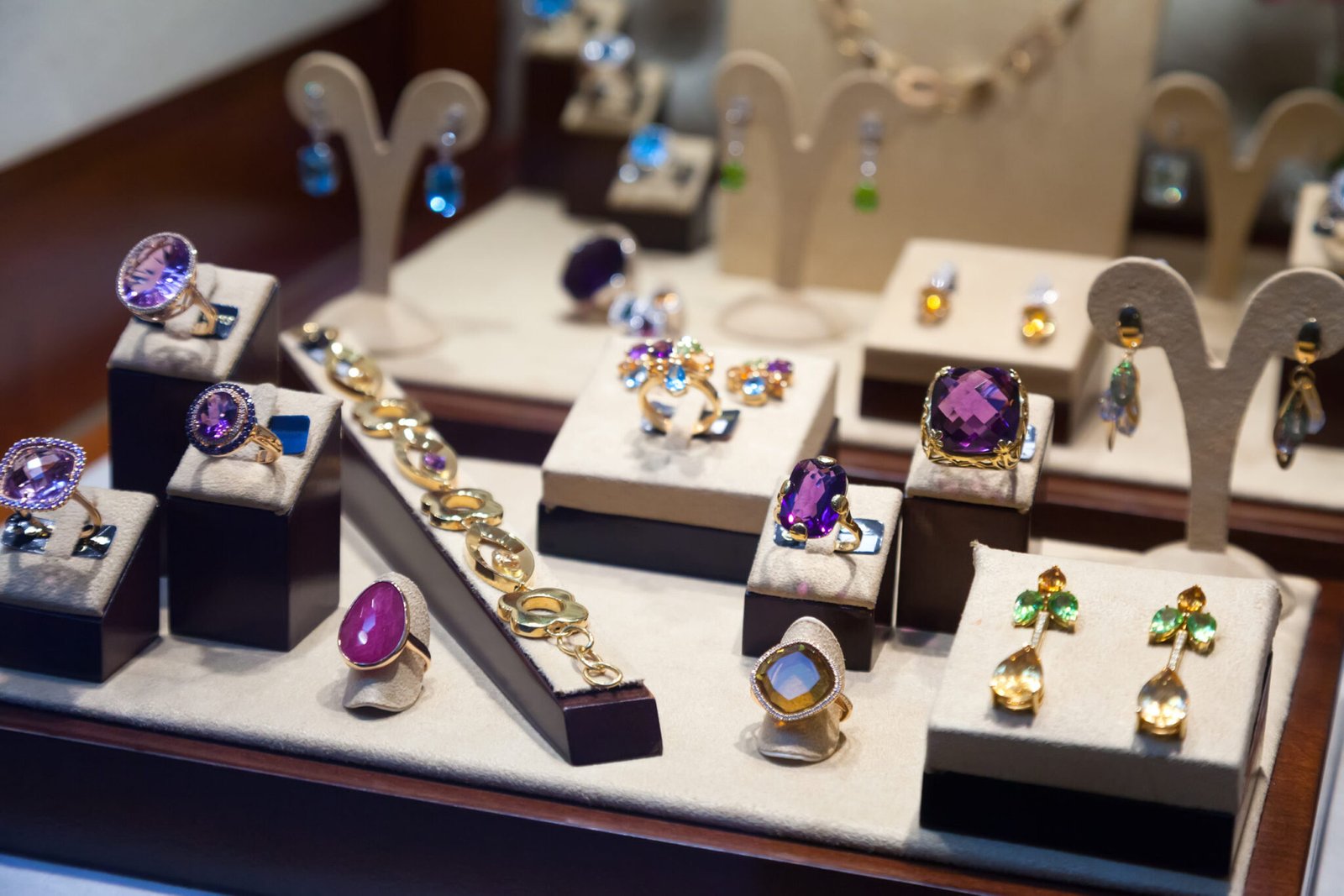
A strong visual example of the kind of inventory that warrants this level of control appears in this image of antique jewelry inventory.
What fails in real operations
I see the same mistakes across retailers, wholesalers, and private collections.
Long-term storage in ordinary plastic sleeves is one of them. Plastic can be useful for short handling intervals, but for extended holds it often traps humidity and any residue left on the piece. The result is tarnish that gets discovered only when the item is needed for sale, appraisal, or shipment.
Mixed storage is another. Fast put-away habits lead staff to group earrings by size or recent use instead of material and finish. That saves seconds and creates scratches, bent posts, and unnecessary bench work later.
Display storage causes its own trouble. A lockable glass cabinet may improve physical security on the sales floor, but glass display is not a preservation environment for long holds. Light, dust, repeated handling, and temperature fluctuation still have to be managed behind the lock.
Choosing materials that protect instead of react
Storage materials either protect the finish or work against it.
Velvet-lined and microfiber-lined inserts cushion contact points well, but they still need cleaning and periodic replacement. Dirty linings redeposit dust and polishing residue. Hard plastic inserts are acceptable for some lower-risk stock, though they are less forgiving with delicate finishes and sharp earring posts. Acid-free tissue and archival dividers are safer for sensitive surfaces than standard cardboard or paperboard, which can hold moisture and transfer contaminants over time.
One practical rule applies across all categories. If the storage material has an odor, sheds fibers, discolors, or holds dampness, do not put fine earrings against it.
This video gives a useful practical view of handling and storage habits that support better outcomes over time.
Long-hold storage requires inspection cycles
For high-value earrings in reserve stock, safe storage is an ongoing control process.
- Inspect on a schedule. Check for early tarnish, loose settings, bent posts, degraded backs, and wear inside trays or sleeves.
- Replace consumables. Desiccants and anti-tarnish components lose effectiveness and should be changed on a set interval.
- Verify pair integrity. Long-stored earrings are where single-piece separation, swapped backs, and labeling errors tend to surface.
- Record any condition change. A dated note or image creates a defensible history if value or condition is questioned later.
Good preservation work is quiet. It keeps earrings saleable, reduces reconditioning cost, and leaves less room for an insurer to argue that deterioration was the result of poor stock discipline rather than a covered event.
Connecting Storage Practices to Your Jewelers Block Insurance
A pair of diamond studs goes missing at 5:40 p.m. The sales log is incomplete, the tray held three similar pairs, one back was found in a different drawer, and no one can say with confidence who handled them last. That claim starts in a weak position before the carrier even asks about value.
I have reviewed enough Jewelers Block submissions and loss files to say this plainly. Earring storage is an underwriting issue because it reveals how you control small, high-value property that is easy to misplace, switch, scratch, or walk off with. Alarm certificates and safe details matter. So does the daily discipline behind the counter and in the stock room.
Why insurers care about your storage routine
Carriers do not expect perfection. They do expect ordinary care that can be demonstrated.
For earrings, that means pairs stored together, high-value items segregated from routine stock, access limited to the people who need it, and movement that leaves a record. If a loss file shows mixed trays, unlabeled envelopes, unsecured back-of-house drawers, or stock left out overnight without a documented reason, the adjuster has an opening to ask whether the loss arose from a covered cause or from poor controls.
That question affects time, friction, and sometimes outcome.
A burglary claim with clean records usually moves faster than a mysterious disappearance claim where the insured cannot show where the earrings were kept, when they were last verified, or whether the pair was complete before the loss.
Storage quality changes the economics of coverage
No responsible underwriter should promise a fixed premium reduction based on a generic storage upgrade. Pricing does not work that way. Rates turn on the full account, including location, protection class, prior losses, values, transit exposure, staffing, and internal controls.
Still, better storage usually improves the risk profile an underwriter sees.
A jeweler that can show compartmentalized storage, locked overnight placement, staff handling rules, pair-level inventory control, and clean exception procedures presents a lower frequency risk than a jeweler relying on open trays and memory. That does not guarantee cheaper coverage. It does improve how the account is viewed at submission, renewal, and after a loss.
The file should support the story.
A practical underwriting submission is stronger when it includes:
- Written storage procedures: Who may remove earrings from stock, how pairs are verified, and where high-value pieces go at close.
- Photos of actual controls: Trays, secured drawers, locked cases, vault interiors, and labeling methods.
- Pair-level inventory records: SKU, description, vendor or memo source, value support, and current location.
- Exception handling logs: Repairs, customer approvals, trunk shows, off-site appointments, and transfers between locations.
The claims question to answer before a loss occurs
Can you prove possession, handling, and storage conditions with something better than staff recollection?
That is where many Jewelers Block claims tighten up. The insured often knows the earrings were on hand recently. What the file lacks is a short, credible chain of proof. If the pair was last shown to a customer, returned by a sales associate, and placed in a locked compartment tied to the inventory record, the claim has structure. If the answer is "it should have been in that tray," the carrier has room to challenge the facts.
Here is the difference in practical terms:
| Claims issue | Weak file | Strong file |
|---|---|---|
| Proof of possession | Old invoice only | Invoice, current stock record, and recent dated photo |
| Handling history | Verbal recollection | Logged access, presentation note, or transfer record |
| Storage method | Shared tray or open counter area | Assigned compartment in locked case or secured drawer |
| Condition before loss | Unknown | Prior image or inspection note showing pair completeness |
Showroom fixtures are part of this discussion because display security and storage discipline overlap. If you are reviewing front-of-house controls, a lockable glass cabinet can support both customer presentation and loss prevention, provided it is tied to staff access rules and overnight removal procedures.
For larger schedules, higher values, or layered placement in specialist markets, underwriters also look at whether the insured understands how serious jewelry risks are placed. The Lloyd's market reference used by specialty Jewelers Block insurers signals the level of scrutiny many complex accounts receive.

What underwriters read between the lines
Storage habits rarely exist in isolation.
A jeweler who stores earrings with precision usually has better memo controls, cleaner repair intake, tighter shipping procedures, and faster discrepancy reporting. A jeweler who leaves small goods loose in a back-room tray often has the same looseness elsewhere. Underwriters notice that pattern because claims follow it.
This is why earring storage affects more than physical condition. It influences credibility.
If the business can show that stock was protected, identified, and monitored in a repeatable way, the claim starts from a position of control. If the records and storage method look improvised, the loss may still be covered, but the insured should expect harder questions and a slower process.
Insurance protects the balance sheet after a covered loss. Storage practices help determine whether the claim file is easy to defend in the first place.
Your Insurance-Ready Earring Storage Checklist for 2026
The simplest way to test your system is to audit it as if a claim were being filed tomorrow.
If you manage a jewelry store, wholesale inventory, a repair operation, or a private collection with meaningful value, the checklist below is the standard I would use to judge whether your earring storage is insurance-ready.
Inventory and documentation
Start with proof.
If a pair cannot be identified clearly in your records, storage discipline will not save the claim file later.
- Photograph each high-value pair: Front, side, backs, and any distinctive markings.
- Keep pair-level records current: Do not log “diamond studs” when the pair has its own identifying features, vendor reference, or valuation support.
- Match storage locations to records: The drawer, tray, compartment, or vault position should be knowable without guesswork.
- Document movement: Customer presentations, repairs, transfers, and off-site events should leave a trail.
- Review mismatches quickly: A single missing back, detached card, or empty slot should trigger same-day follow-up.
Physical storage and security
Many operations look organized but fail the true test.
Use the checklist below as a hard standard:
- Pairs stored together: No singles drifting between trays or envelopes.
- Compartments assigned: Each pair has a dedicated, repeatable home.
- Mixed-metal contact prevented: Hard stones and soft metals are not sharing loose space.
- Showroom returns controlled: Staff return items to exact locations, not nearest open space.
- Back stock locked after hours: High-value inventory is not left in open cabinetry or unsecured drawers.
- Transit packaging standardized: Shipments and inter-office transfers use immobilizing inner packaging, cushioning, and plain outer wrapping.
Preservation and anti-tarnish controls
Damage prevention belongs on the insurance checklist because damaged property often becomes a disputed property issue.
Ask these questions:
- Are earrings cleaned before long-term storage?
- Are silver and tarnish-prone pieces stored with moisture control?
- Are long-hold pieces kept in cool, dry conditions rather than exposed showroom air?
- Are anti-tarnish materials and desiccants replaced on a routine schedule?
- Are delicate finishes, plated pieces, and antique items separated from more abrasive neighbors?
A “no” to any of those means value is being left exposed.
Staff handling and accountability
Storage systems fail when the human routine around them is loose.
- One return-to-stock process: Not three versions depending on who is closing.
- Clear authority: Staff know who can remove high-value earrings, where they go during cleaning, and who signs them back in.
- Training on pair integrity: Backs, mounts, cards, and labels are part of the item control process.
- Exception handling: Memo goods, repair jobs, and customer-owned items do not get mixed into sale inventory storage.
Key takeaway: Most preventable earring losses begin as tiny process violations that nobody treats as urgent on the day they happen.
The 2026 self-audit question
Before you close tonight, pull one random pair from the showroom, one from back stock, and one from any shipment or transfer queue.
For each one, ask:
- Can I identify the pair immediately?
- Can I confirm where it belongs?
- Can I show who handled it last?
- Can I show it was stored in a way that protected both condition and custody?
If any answer is weak, your operation has a fixable risk.
The businesses with the strongest results do not treat storage as an afterthought. They treat it as part of asset protection, part of inventory control, and part of insurance readiness. That is the standard that supports stronger outcomes for jewelry store insurance, fewer preventable disputes, and a cleaner path when a real loss occurs.
If your current setup would be difficult to defend in underwriting or after a claim, it is worth reviewing your risk profile with a specialist. First Class Insurance helps jewelers, wholesalers, and high-value collection owners evaluate storage-related exposures and get a quote for Jewelers Block insurance built around how the business operates.