
You finally land the account you’ve been chasing. It might be a corporate gift program, a municipality buying presentation pieces, a mall landlord approving a new showroom, or a trade event that wants tighter compliance from every exhibitor. Then the paperwork shows up and one line stops everything: surety bond required.
Most jewelers don’t go looking for a bond until a contract forces the issue. That’s why the process feels backward. You already know how to insure inventory, protect stock in transit, and review alarm warranties. But a bond sits in a different lane. It’s not there to protect your diamonds from theft. It’s there to reassure the other party that your business will do what it promised to do.
That distinction matters. If you treat a surety bond like just another insurance form, you can waste time with the wrong provider, buy the wrong bond form, or miss a filing deadline that stalls the whole deal. In the jewelry trade, delays cost more than paperwork. They can cost a booth, a vendor relationship, a lease approval, or a profitable account you already earned.
A good jeweler knows the difference between a mounting and a finished ring. A good bond buyer knows the difference between speed and fit. Some bonds can be issued online in minutes. Others need a broker who understands unusual obligee language, high-value operations, or state licensing quirks.
When a Contract Suddenly Demands a Surety Bond
A jeweler signs a promising new vendor agreement. The margins work. The buyer is reputable. The shipment schedule is realistic. Then legal sends over final terms and adds a bond requirement.
That’s usually when the phone starts ringing.

Why this catches jewelers off guard
Jewelry businesses spend most of their risk-management energy on physical loss. You think about burglary, mysterious disappearance, shipping exposure, employee handling, and display risk. You don’t usually expect a contract clause to introduce a financial guarantee product.
But the other side of the deal sees it differently. They may want proof that you’ll perform, comply with licensing rules, pay required obligations, or follow the terms of a permit. In their eyes, the bond is a business credibility tool.
Here’s where owners lose time. They search where to purchase surety bond, click the first instant-issue site they find, and assume every bond works the same way. It doesn’t.
The first practical question
Before you shop, ask this:
Practical rule: Don’t start with price. Start with the exact bond form, obligee name, and filing requirement.
If the contract or state agency requires specific wording, the cheapest bond on a generic site may be useless. In jewelry, details decide value. A one-carat stone with the wrong cut grade is not the same stone in the market’s eyes. Bonds work the same way. Small wording differences can decide whether the obligee accepts the filing.
What usually works
When a bond demand appears suddenly, the cleanest first move is to gather these items:
- The contract page with the bond clause: Not a summary. The original language.
- The obligee’s name: The exact legal entity that requires the bond.
- The bond amount: You need the penal sum, not a guess.
- The deadline: Bond timing matters when a contract award or permit opening is on the line.
- Any bond form attached: If they provide their own form, that changes the shopping process.
A jeweler who comes prepared can move quickly. A jeweler who says, “I just need some kind of bond,” usually ends up buying twice.
Understanding Surety Bonds in the Jewelry Trade
A surety bond is not business insurance in the way a Jewelers Block policy is. The simplest way to understand it is this: a bond is a third-party guarantee of your business promise.
For a jeweler, the best analogy is a grading report. A GIA certificate doesn’t create the diamond’s quality. It validates and supports trust in the transaction. A surety bond does something similar for performance, compliance, or financial responsibility.

The three parties in plain English
Every surety bond has three parties:
- Principal: That’s your business. The jeweler, wholesaler, repair shop, exhibitor, or dealer required to obtain the bond.
- Obligee: The party requiring the bond. This could be a state agency, landlord, trade show organizer, municipality, or contracting party.
- Surety: The company backing the guarantee.
If the principal fails to meet the bonded obligation, the obligee can make a claim. That’s why underwriting matters. The surety is not just selling paper. It is extending its financial backing based on your business profile.
Why a bond is not the same as insurance
Insurance expects losses to happen across a pool and prices for that risk. A surety bond starts from the opposite assumption. The surety expects the principal to perform and may seek recovery if it pays a valid claim.
That’s why the application often feels closer to a credit review than a standard insurance application. The underwriter wants to know whether your business can keep its promise.
If you want a simple outside example of a related bond concept, this primer on what a surety bail bond is and how it works helps show how a surety stands behind an obligation for another party. It’s a different legal context, but the guarantee structure helps clarify the basic idea.
Why jewelers should care about who the surety is
Not every provider carries the same weight. The U.S. Treasury’s Department Circular 570 lists federally certified surety companies authorized to write or reinsure federal bonds, and it includes established names in the market. That list, updated by the Treasury, is a practical reference when financial strength matters in a larger transaction, especially since top providers such as The Hartford offer up to $1 billion in bonding capacity for commercial and contract bonds according to the Treasury surety program page at https://fiscal.treasury.gov/about-us/doing-business-with-fiscal-service/surety-bonds.
That matters more in jewelry than many owners realize. High-value inventory businesses often deal with counterparties who pay attention to the paper behind the promise, not just the premium charged for it.
A bond supports trust. It doesn’t replace protection.
A bond can help you win or keep a contract. It does not insure your showcases, memo goods, or shipments. Those still need dedicated coverage. If you think about your operation the way you think about a finished piece, the bond is one component in the setting, not the whole ring. Even the strongest presentation piece needs the right structure behind it, much like a secure setting supports a center stone, whether it’s a custom build or a classic solitaire ring presentation.

Three Paths to Purchase Your Surety Bond
There are three practical ways to buy a surety bond. Each has advantages. Each has blind spots. The right path depends on the bond type, the urgency, and how unusual your business operation looks to an underwriter.
Buying direct from a surety carrier
This route can work when you already know the exact bond form, the surety writes that class of bond directly, and your obligation is straightforward.
The upside is clarity. You’re dealing close to the source. For simple commercial bonds, that can be efficient.
The downside is market access. One carrier offers one appetite at a time. If that carrier doesn’t like your credit, doesn’t write that bond in your state, or dislikes the obligee language, you’re back at the beginning.
For jewelers, direct placement also breaks down when the bond requirement is unusual. High-value businesses often don’t fit neat boxes. A carrier that writes contractor license bonds all day may not be the best place to interpret a trade-show compliance bond tied to inventory movement and exhibition rules.
Using an online instant-issue marketplace
This is the fastest route for many standard bond types. Modern platforms have changed the buying process. Some bond categories can move through a three-step digital flow consisting of application, payment, and printing, with processing that Risk Strategies describes as a 2-3 order of magnitude improvement in speed compared with legacy brokerage workflows at https://www.risk-strategies.com/business-insurance/surety.
That speed has real value. If you forgot a filing deadline, an online platform may save the day.
But speed doesn’t solve every problem. Generic systems are strongest when the bond class is common and the underwriting rules are standardized. They are weaker when your business needs interpretation, negotiation, or a market that understands the risks around high-value stock, unusual obligee wording, or credit challenges.
Fast issuance is helpful. Correct issuance is what gets the contract accepted.
Working through a specialized surety broker
This is usually the strongest path for a jeweler with anything beyond a simple commodity bond.
Specialized surety brokers work differently from general insurance agencies. The key advantage is market access and underwriting fluency. The Bond Connect analysis states that specialized surety brokerages can access multiple surety markets and top AM Best-rated underwriters, and that this structure leads to superior rates and terms compared to general insurance agents, especially where risk profiles are unusual or misunderstood at https://www.bondconnect.ca/blog/where-to-purchase-a-surety-bond-a-guide-for-businesses-and-individuals/.
That matters in jewelry. A generalist may understand property and liability. That doesn’t mean they understand obligee wording, penal sums, indemnity issues, or how to present a high-value inventory business to a surety underwriter.
Comparing Surety Bond Providers
| Provider Type | Best For | Expertise Level | Speed | Cost |
|---|---|---|---|---|
| Direct surety carrier | Standard bonds when you know the exact requirement | Moderate to high, but limited to that carrier’s appetite | Moderate | Can be competitive, but no market shopping |
| Online marketplace | Simple bond types with urgent turnaround | Low to moderate for unusual risks | Very fast | Convenient, but not always best fit |
| Specialized surety broker | Complex bonds, unusual obligee language, jewelry-related operations | High | Moderate to fast, depending on underwriting | Often strongest overall value because the broker can shop markets |
What works best in real life
If the bond is routine and the obligee accepts standard forms, online can be fine.
If the bond requirement is tied to a contract, permit, lease, dealer regulation, or anything that mentions specific wording, default to a specialist. You’re not buying a commodity. You’re buying acceptability.
A jeweler shouldn’t choose a bond source the way a consumer chooses a watch battery. This is closer to selecting a bench jeweler for a difficult reset. Skill matters most when the work is least forgiving.
A quick decision filter
Use this short filter before you decide where to purchase surety bond:
- Choose online first if the bond type is common, the filing is standard, and time is the main issue.
- Choose direct if you already have an established carrier relationship and know the surety writes your exact bond class.
- Choose a specialized broker if the bond language is custom, the amount is significant, your credit needs explanation, or the obligee won’t tolerate errors.
Navigating Jewelry-Specific State and License Bonds
Many jewelers assume surety bonds only show up in construction. In practice, license and permit obligations appear anywhere a regulator or contracting party wants a financial backstop.
That’s why jewelry businesses run into bonds in ways that don’t always look obvious at first. A dealer license, a tax-related filing, a permit condition, or a trade event contract can all trigger the requirement.

The bond categories jewelers most often face
Some bond obligations are broad enough to apply across many industries, but they hit jewelry businesses in specific ways.
- License and permit bonds: A state or local agency may require these before issuing or renewing authority to operate.
- Sales tax or financial responsibility bonds: These come up when a revenue agency wants assurance that taxes or collected funds will be properly handled.
- Contract or performance-related bonds: Less common for a retail storefront, but relevant for specialty fabrication, municipal work, exhibit installations, or larger institutional jobs.
- Event or venue compliance bonds: Trade show organizers or property operators may require a bond as part of participation or operational terms.
Why state detail matters
Florida, New York, and California are good examples of why owners can’t rely on generic advice. Bond rules can differ by license type, by city, by state agency, and by the exact activity your business performs.
A retail jewelry store, a bench repair shop, a precious metals buyer, and a wholesale operation can face different requirements even if they all trade under the broad label of “jewelry business.” That’s why a generic bond portal often asks broad questions that don’t really capture what your operation does.
Where small businesses can look
The Small Business Administration maintains a nationwide directory of over 100 approved surety bond agencies across all states and territories. For owners who need a legitimate starting point, that directory is useful because it points small businesses to agencies that can handle SBA-guaranteed bonds. The SBA reports that in fiscal year 2023 it guaranteed $3.2 billion in bonds for small businesses, and notes that typical premiums for strong applicants often fall in the 1-5% range of the bond amount at https://www.sba.gov/funding-programs/surety-bonds/surety-bond-agency-directory.
That’s especially helpful when a jeweler needs guidance, not just a checkout page.
The mistake to avoid
Don’t assume the bond named in a contract is the same as the bond your state wants for licensing. They may be separate obligations with different obligees and different forms.
A jewelry business can be fully insured and still out of compliance if the wrong bond form is filed. The reverse is also true. A bond can satisfy a regulator while leaving your inventory exposure untouched.
A practical review checklist
Before you buy, verify:
- Who requires the bond
- Why they require it
- Whether the obligee supplies its own form
- Whether the bond must be filed electronically or in original form
- Whether the business name must match the license exactly
Those five checks prevent a lot of rejected filings.
The Surety Bond Application and Quoting Process
The bond buying process is usually simpler than owners expect, but it is more financial than many insurance applications. The underwriter wants evidence that your business can meet the obligation behind the bond.
What you’ll usually need
For a basic bond, the application can be short. For a larger or more specialized obligation, expect a deeper file review.
Common requests include:
- Business information: Legal name, address, ownership details, and years in operation.
- Bond details: Obligee name, bond amount, and any required bond form.
- Credit information: Personal credit is often part of the review, especially for closely held businesses.
- Financials: Some bonds require business financial statements or supporting documents.
- Background on the obligation: A contract copy, license requirement, or permit instructions may be needed.
If you’re a jeweler, be ready to explain what your business does. “Jewelry” is too broad for underwriting. Say whether you’re retail, wholesale, repair, custom manufacturing, estate buying, trade-show selling, or some mix of those.
How underwriters think
An underwriter is asking one core question. If the obligee makes a valid claim, how likely is it that your business should have been trusted with this obligation in the first place?
That’s why clean documentation helps. A business with stable operations, clear financials, and a straightforward explanation of the bond’s purpose is easier to approve than one that sends fragmented information over several days.
The quoting process in practice
The path usually looks like this:
- You submit the application and bond requirement.
- The provider reviews the bond form and underwriting profile.
- You receive a quote, or a request for more information.
- You accept terms and pay the premium.
- The bond is issued for filing.
For many standard bond types, technology has compressed that timeline dramatically. Some fully automated agencies can issue eligible bond classes instantly through a simple digital flow, which is why lower-complexity bonds now move much faster than they did in the old email-and-PDF routine.
Don’t compare quotes on premium alone
A low premium can still be the wrong choice.
Look at:
- The surety behind the bond: Financial strength matters if the obligee cares who is backing the paper.
- The bond form itself: A cheap quote on the wrong form is worthless.
- Indemnity terms: Know what obligations you are taking on when you sign.
- Claims support and service: If the obligee rejects the bond or asks for revisions, you want a provider who responds quickly.
The right bond quote is the one the obligee accepts the first time.
Why some applications stall
Most delays come from one of three issues:
- Missing bond language
- Mismatched business names
- An applicant who applies before understanding what the obligee requires
A jeweler would never order a custom head without checking stone dimensions first. Bond applications work the same way. Precision upfront saves rework later.
Pairing Surety Bonds with Your Jewelers Block Insurance
A surety bond and a Jewelers Block policy do different jobs. That’s exactly why they belong in the same risk conversation.
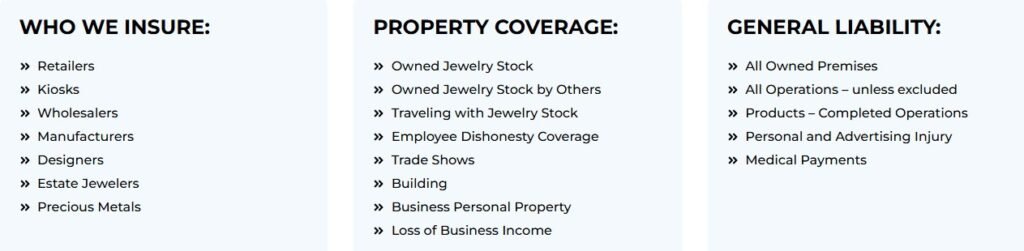
A bond supports your promise to someone else. Jewelers Block insurance protects your property exposures, such as stock, tools, showcases, and goods in transit. One speaks to compliance and performance. The other speaks to physical and financial loss inside your operation.

Why generic bond advice fails jewelers
Most broad surety guides are built around contractor bonds, motor vehicle dealer bonds, and other common categories. They rarely speak to the risks that define jewelry operations. That gap matters because jewelers may face issues tied to trade-show participation, transportation of high-value goods, or niche compliance expectations that don’t fit standard templates. That lack of jewelry-specific guidance is one reason broad bond platforms often leave owners in one-size-fits-all solutions, as noted in the industry discussion at https://www.suretybondsdirect.com.
What an integrated approach looks like
Think of it as two separate layers:
- The bond layer: Satisfies a third party that your business will meet a stated obligation.
- The insurance layer: Protects the business assets and operations that let you function day to day.
If you only handle one layer, you leave a gap. A contract may move forward because the bond is in place, while your shipment, display stock, or memo inventory still needs dedicated protection under a properly structured insurance program.
Why underwriter presentation matters
When a jewelry business presents itself well across both compliance and insurance, it tells a stronger story. Organized owners tend to maintain cleaner records, stronger controls, and better communication with counterparties.
That doesn’t mean a bond automatically improves your insurance terms. It does mean the overall presentation of the risk gets stronger when your compliance obligations, operating procedures, and specialty insurance are aligned.
The practical advantage
If your operation handles valuable inventory, works trade events, ships goods, or deals with unusual vendors, don’t let the bond purchase happen in a silo.
A bond answers, “Will this business keep its promise?”
Jewelers Block answers, “What happens if the inventory is stolen, lost, or disappears along the way?”
Those are different questions. Serious jewelry businesses need answers to both.
If you work with specialty markets, carrier strength and niche underwriting relationships also matter on the insurance side, especially when your program touches recognized global markets such as Lloyd’s-backed specialty insurance capacity.
Your Next Steps for Securing the Right Bond
If you’re trying to decide where to purchase surety bond, keep the sequence simple.
First, identify the exact requirement. You need the obligee, the bond amount, the filing format, and any required bond wording. Without that, you’re guessing.
Second, choose the buying path that matches the job. Instant-issue platforms are useful for routine bonds and urgent timelines. Specialized broker placement is usually better when the bond language is custom, the business profile is unusual, or the situation carries significant risk.
Third, prepare your file before you apply. Clean business information, clear financials when needed, and an accurate description of your operation will shorten the process and improve the quality of the quote.
For jewelry businesses, the smartest move is to treat the bond as one part of a broader protection plan. Compliance gets the deal moving. Insurance keeps the business standing when something goes wrong.
If your business also shows at trade events, sells high-value goods, ships inventory, or works with specialty vendors, it makes sense to review the bond requirement alongside the rest of your protection program. Even your event exposure can tie back into broader risk planning around industry activity and showroom presentation, including venues connected to trade gatherings such as major jewelry show participation.

Frequently Asked Questions from Jewelers
Can I get a bond with less-than-perfect credit
Yes, sometimes. But the path may be different.
For the 40% of small businesses with marginal credit, instant-issue platforms aren’t always the best answer, and recent data cited in the source material shows an 18% higher denial rate for such applicants. In those cases, SBA-backed programs or broker-sourced options can be more viable, even if they take longer to place at https://www.suretegrity.com/bond/state/florida.
Is a surety bond the same as Jewelers Block insurance
No. A bond protects the obligee by backing your promise. Jewelers Block insurance protects your business property and related exposures. They complement each other, but they are not substitutes.
How fast can I get a bond
Some standard bonds can be issued very quickly through automated platforms. More specialized bonds take longer because the underwriter has to review the business, the bond form, and sometimes the contract language.
Do I need a specialty broker or can any insurance agent handle this
Any agent can try. That doesn’t mean they should.
If the bond is simple and standard, almost any competent provider may be enough. If the bond is tied to a jewelry-specific operation, custom contract wording, or credit issues, a specialist is usually the safer route.
What’s the biggest mistake jewelers make
They buy before confirming the exact obligation. Wrong obligee name, wrong bond form, and wrong business entity are the three most common problems. In this business, details matter. Bond paperwork is no exception.
If you need help sorting out a bond requirement and how it fits with Jewelers Block insurance, talk with First Class Insurance. Their team focuses on jewelry stores, wholesalers, artisans, and high-value asset risks nationwide, and they can help you review the bond issue alongside the coverage that protects your inventory, transit exposure, reputation, and day-to-day operation.