
A jeweler usually notices the armoire when it’s full, not when it fails. A necklace goes missing after a busy Saturday. A pair of earrings is found scratched because it was dropped into the wrong drawer. A key lock sticks, staff leave the door unsecured for convenience, and a storage cabinet that looked fine on a showroom floor turns into a weak point in the chain of custody.
That’s why the best jewelry armoire for a business isn’t the one with the nicest finish or the brightest mirror. It’s the one that supports how you control access, separate inventory, document stock, and reduce preventable losses that can complicate a Jewelers Block claim. For a store owner, wholesaler, bench jeweler, or collector, the armoire sits at the intersection of daily operations and insurance discipline.
Your Jewelry Armoire Is Your First Line of Defense
A lot of owners buy an armoire the same way a homeowner does. They look at mirror size, drawer style, and whether it fits the room. That works for costume jewelry. It doesn’t work well for merchandise that has resale value, repair exposure, consignment implications, and claim consequences.

The storage category itself is no niche purchase. The global jewelry boxes and organizers market was valued at approximately USD 2.5 billion in 2023 and is projected to reach USD 4.1 billion by 2032, which reflects how strongly consumers and businesses value organized, protective storage. For underwriters, that growth matters because better storage choices often mean better loss control.
A practical risk review starts with a simple question. If an item disappears from this armoire tomorrow, can you show who had access, where it was stored, and whether the cabinet itself was reasonably secure?
Practical rule: If your armoire makes inventory harder to verify, it isn’t helping your insurance position, no matter how attractive it looks.
Good loss prevention often comes down to ordinary habits backed by physical controls. That’s why broader reading on Theft Protection is useful even outside the jewelry trade. The same principle applies here. Barriers, limited access, and clear procedures stop small breakdowns from becoming expensive losses.
What the wrong armoire usually gets wrong
Consumer-style cabinets tend to fail in familiar ways:
- Weak access control that relies on a basic lock and assumes everyone with a key uses it properly
- Poor separation of categories so repaired items, customer property, and store stock end up too close together
- Inconsistent compartments that encourage staff to improvise storage instead of following a system
- Portable construction that makes removal, tampering, or unnoticed relocation easier
What the right one changes
A professional setup does more than hold jewelry. It creates a repeatable storage method. That matters when you’re closing the shop, assigning staff duties, documenting intake, and responding to a discrepancy.
The best jewelry armoire is a control point. If it’s chosen well, it helps prevent theft, limits handling damage, and supports the documentation standards that make a Jewelers Block policy work the way it should.
Thinking Beyond The Velvet Lining Core Armoire Functions
Retail listings can distort what “best” means. Consumer-grade best-rated armoires often emphasize LED lights, mirrors, and visual appeal, with top sellers on major retailers drawing thousands of reviews for those features, as shown in Walmart’s best-rated jewelry armoire listings. In a jewelry business, those features are secondary. Security, control, and retrievability come first.
A consumer armoire is like a decorative file cabinet. A professional armoire should function more like a controlled archive. It needs to tell you what belongs inside, who should touch it, and how quickly you can verify its contents.
Access control
The first job of an armoire is deciding who gets in and under what conditions. If multiple employees can open it casually, the armoire becomes shared furniture, not controlled storage.
That doesn’t mean every shop needs the same hardware. It means the opening method has to fit the operation. A solo jeweler may manage a strict key routine. A multi-employee showroom may need tighter access assignment and a clear opening and closing protocol.
Physical protection
Velvet lining matters, but not in the way most buyers think. The lining protects surfaces. The cabinet itself has to protect the collection.
That means looking at door fit, hinge strength, cabinet stability, resistance to casual tampering, and whether the unit is easy to move. A cabinet that can be shifted, tilted, or carried off without much resistance creates problems before you ever get to a claim.
A jewelry armoire should reduce opportunities for both theft and mistakes. If it only looks organized, it’s not doing enough.
Environmental management
Most buyers think of armoires as furniture. Underwriters think in terms of exposure. Where the unit sits, how it’s ventilated, whether it’s near moisture, and whether pieces rub against each other all affect condition and recoverability.
Good environmental management is usually simple:
- Keep separation clear so chains, stones, and finished surfaces don’t scrape each other
- Avoid unstable placement near direct heat, moisture, or high-traffic bump points
- Use interiors consistently so delicate items aren’t stored in overflow spaces
Inventory facilitation
The strongest storage system is the one your staff follow every day. If a drawer layout makes intake and return cumbersome, people start cutting corners.
A solid companion process is a dedicated jewelry collection inventory system that matches how items are physically stored. The cabinet and the recordkeeping should support each other. One without the other leaves gaps.
Here’s the practical test I use mentally when evaluating a storage recommendation from a jeweler: if a stone ring, a repair intake envelope, and a consigned bracelet all arrive in the same hour, can the staff place each one correctly without inventing a temporary solution? If the answer is no, the armoire isn’t organized enough for professional use.
Key Armoire Features That Lower Your Insurance Premiums
Features matter when they change the risk, not when they make the cabinet easier to market. The best jewelry armoire from an underwriting standpoint is the one that improves access discipline, strengthens physical security, and makes missing-item investigations faster and cleaner.

Internal configuration that supports claims
The strongest example of this is compartmentalization. Professional armoires with capacity for 36+ necklaces, 98+ rings, and 120+ earrings are not about convenience. They’re about inventory control, as described in this professional mirrored jewelry armoire specification. That level of separation supports photographic documentation and more precise audits, which can reduce dispute when a mysterious disappearance claim arises.
If your staff can point to a designated hook row, ring slot area, and earring section, they can answer the first questions that matter after a loss. Where was the item stored, what was adjacent to it, and when was that area last verified?
Locks and access hardware
A lock only helps if it changes behavior. Basic key locks are common, but they often fail operationally before they fail mechanically. Keys get shared. Drawers are left open during rush periods. Backup keys drift into the wrong hands.
What works better is a setup that matches your staffing pattern and forces accountability. Ask these questions before you buy:
- Who opens it daily
- Who closes it at day’s end
- Where spare access is kept
- How you document access changes when staff roles change
If the seller can’t answer those questions in practical terms, they’re selling furniture, not security equipment.
Construction and anchoring
Material quality matters less as a marketing phrase and more as a theft-delay tool. A flimsy mirrored cabinet may hold a lot of stock, but if it flexes at the door, shifts under force, or can be walked out of the room, it doesn’t offer meaningful resistance.
A stronger unit should give you options:
| Feature | Why it matters in practice |
|---|---|
| Rigid door fit | Makes opportunistic tampering harder |
| Stable base | Reduces tipping, shifting, and forced-access leverage |
| Wall or floor anchoring option | Limits removal of the whole unit |
| Reinforced hinges | Protects one of the most common weak points |
A useful benchmark for quality discussions is to compare what you’re being offered to the expectations associated with established specialty markets and underwriting standards, not just home furniture listings. Even a simple visual reference such as the Lloyd’s market branding image reminds buyers that jewelry risk is treated differently from ordinary household property.

Interior materials and handling damage
Damage claims don’t always start with impact. They often start with poor routine. Rings rub against each other. Chains knot and kink. Earrings are piled where backs catch prongs.
That’s why interior finish and layout matter:
- Velvet or similarly soft lining helps reduce surface contact damage
- Separated channels and slots keep categories from mixing
- Bracelet rods and necklace hooks reduce tangling and repeated handling
- Tiered drawers make audits faster because visibility improves
The armoire that lowers claims is usually the one that makes staff slower in the right places and faster everywhere else.
The right cabinet won’t replace alarm procedures, staff supervision, or insurance. It will make all three more effective.
Advanced Security and Environmental Controls
Once the cabinet itself is sound, the next issue is whether it works as part of a larger protection system. That’s where many buyers stop too early. They purchase a decent-looking unit and treat it as a standalone answer. For higher-value inventory, it should be part of a layered setup.

Fixed installation versus movable storage
This is one of the clearest practical trade-offs. A freestanding armoire may offer flexibility and easier showroom placement. A wall-mounted unit usually performs better as a risk control because it is harder to move, reposition, or remove without notice.
That distinction matters because wall-mounted armoires with integrated locking systems can qualify for premium reductions on commercial property coverage when they reduce theft and mysterious disappearance exposure, especially when they’re tied to alarm systems. Underwriters tend to view fixed installations more favorably than portable ones for exactly that reason.
How to think about active protection
A strong setup answers three separate questions.
Can someone open it without authorization?
That’s the lock and cabinet question.Can someone move it or tamper with it unnoticed?
That’s the mounting, placement, and alarm question.Can the contents suffer damage while locked inside?
That’s the environmental question.
Most disappointing armoires only address the first question, and sometimes not very well.
Alarm integration and monitoring
If your store already uses intrusion alarms, cameras, and opening or closing routines, the armoire should fit those procedures rather than sit outside them. A cabinet that can be monitored within the existing security workflow creates cleaner discipline than one that depends on memory.
This visual reference helps illustrate the type of high-value property many owners are trying to protect, whether modern stock or antique jewelry and heritage pieces.

Environmental control matters too. Humidity, heat, and poor spacing can affect finish, settings, and condition over time. Even if the unit doesn’t include built-in climate features, placement and internal discipline still matter. Avoid treating the armoire like overflow storage. Crowding is one of the fastest ways to undo good physical protection.
For a broader look at secure cabinet hardware and lock styles, this overview is useful:
What underwriters usually like to see
Not every account needs the same setup, but favorable risk characteristics tend to include:
- Fixed placement with limited ability to relocate the unit
- Integrated locking that isn’t casually bypassed during business hours
- Compatibility with store procedures so the armoire is included in opening, closing, and audit routines
- Separation of delicate or high-value items to limit internal damage
A cabinet becomes much more valuable when it stops being furniture and starts being part of the security plan.
Showroom Back Office and Home Placement Strategies
The best jewelry armoire depends heavily on where it lives. A cabinet that works in a private dressing area may be the wrong choice in a showroom. A unit that makes sense in a back office may look too industrial for customer-facing use but still be the smarter business decision.

Showroom placement
A showroom armoire has two jobs that often conflict. It needs to look appropriate in a retail environment, and it needs to resist easy access in the busiest part of the premises.
The mistake here is choosing display appeal over discipline. If the cabinet sits where staff can’t monitor it consistently, if customers can approach it too freely, or if the opening side is exposed to traffic, the cabinet may increase operational risk. This is especially true when the armoire stores active inventory rather than lower-risk accessories or packaging.
Back-office placement
A back-office armoire usually gives the owner the most control. You lose some visual polish, but you gain the ability to separate work-in-process items, consignments, repair intake, and overflow stock in a quieter environment.
That’s often where a higher-capacity unit shines. The best jewelry armoire for a back office is rarely the prettiest one. It’s the one with the clearest compartments, the least unnecessary motion, and the strongest control over who enters the room.
Store display logic and secure-storage logic are not the same. Treating them as the same is how businesses create preventable blind spots.
Residential placement for private collections
A high-net-worth homeowner has a different balancing act. Residential users often want the cabinet to blend into the room, but concealment should not come at the cost of proper installation, lock use, or sensible placement.
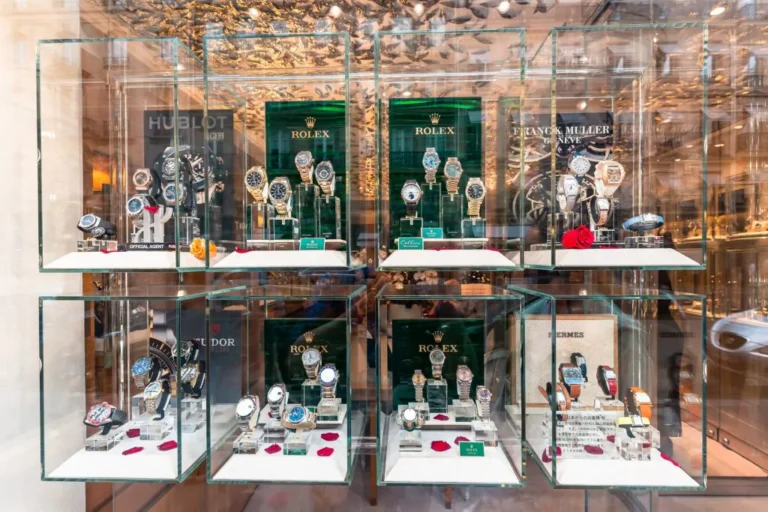
A home armoire should avoid obvious sightlines from doors and windows. It should also avoid damp areas, unstable flooring, and convenience-first locations that encourage items to be left out instead of returned. For collectors with watches and mixed valuables, placement often works best when the armoire sits within a broader protected area that also stores related pieces, such as watch collections and associated valuables.
A quick comparison
| Location | Best use case | Main concern | Better choice |
|---|---|---|---|
| Showroom | Limited-access active stock | Customer proximity | Controlled placement, stronger lock discipline |
| Back office | Inventory control and separation | Staff process drift | High-capacity, security-first organization |
| Private home | Personal collection storage | Convenience overriding security | Discreet placement with consistent return habits |
Placement changes the risk. The cabinet doesn’t stop being important when it moves rooms. The room changes what “best” means.
Maintaining Your Armoire for Continued Protection
A jewelry armoire isn’t a one-time purchase that stays equally protective forever. Hinges loosen. Locks wear. Mounting hardware shifts. Staff habits change. The cabinet may still look polished while becoming less reliable as a control point.
That matters during claims. When a loss occurs, the condition of the storage method and the discipline around it can affect how clearly the event is understood. A well-maintained armoire supports the argument that the business followed reasonable protective practices. A neglected one creates questions.
What to inspect regularly
Use a practical checklist, not a vague intention to “keep an eye on it.”
- Lock function for sticking, loose cylinders, worn keys, or inconsistent closing
- Door alignment so the cabinet closes flush and doesn’t leave pressure gaps
- Hinges and mounting points for movement, sagging, or signs of tampering
- Interior wear where torn lining, bent hooks, or broken dividers start causing damage
- Storage discipline so designated spaces haven’t turned into mixed-item overflow
What documentation helps
A maintained cabinet is good. A maintained cabinet with records is better.
Keep short dated notes when you replace a lock, tighten hardware, change access assignments, or reconfigure storage categories. Pair that with current photos of compartment layouts and a regular review of what belongs in each section. You don’t need elaborate paperwork. You do need something you can produce if a discrepancy turns into a claim.
A claim gets easier when you can show the system, not just describe it.
The habits that usually fail first
In most businesses, the cabinet doesn’t fail before the process does. Staff stop returning pieces to assigned spots. Temporary storage becomes permanent. Spare keys migrate. The armoire gets overfilled because no one wants to stop and redesign the layout.
That’s when mysterious disappearance risk grows. Not because the cabinet is of poor quality, but because no one is using it the way it was intended.
The best jewelry armoire keeps working only if the business keeps using it as a security asset. Review it the same way you’d review alarms, showcases, intake logs, and closing procedures.
Conclusion The Armoire as a Pillar of Your Security
The best jewelry armoire isn’t defined by mirror style, drawer count alone, or showroom appeal. For a jeweler, it’s defined by what it prevents and what it proves. It should control access, reduce handling damage, support clean inventory practices, and fit into the larger security routine of the business or home collection.
That’s the underwriter’s view of the cabinet. Not as décor, but as part of the protective chain that stands between ordinary daily operations and an expensive loss. When the armoire is selected well, installed well, and maintained well, it does more than organize valuables. It strengthens the quality of your risk.
If you’re evaluating a new unit, don’t ask only whether it holds enough inventory. Ask whether it improves your storage discipline, your documentation, and your ability to defend a claim if something goes wrong. That’s what turns a cabinet into a serious business asset.
If you want to match your storage setup with the right insurance protection, talk with First Class Insurance. Their team specializes in Jewelers Block coverage for jewelry stores, wholesalers, artisans, and private collections, and can help you evaluate how your security practices, including your armoire choice, fit into a stronger overall risk management plan.