
A lot of jewelry store owners find out they have the wrong insurance after the worst possible phone call.
A customer leaves a ring for repair. A parcel goes missing between locations. A tray count comes up short at closing. A smash-and-grab happens fast, but not fast enough to stop the financial damage. Then the owner pulls out a standard business policy and learns the hard truth: the policy was built for ordinary retail, not for high-value, portable stock that can disappear, be damaged in transit, or move in and out of the store every day.
That's where specialty insurance companies matter. For a jeweler, this isn't a niche technicality. It's the difference between having insurance in name and having insurance that responds to the way your business operates.
Why Your Standard Policy Fails Your Jewelry Business
A standard Business Owner's Policy often works well for a florist, a print shop, or a small office. It usually does not work well for a jewelry business.
The problem starts with the nature of your inventory. Jewelry is compact, high value, easy to move, and often handled by multiple people across the day. Stock goes from safe to showcase, from showcase to bench, from bench to customer pickup, from store to trade show, from office to shipper. A general retail policy usually isn't built around that chain of exposure.
Where the surprise usually happens
A jeweler has a break-in, files a claim, and assumes the stock is covered as business personal property. Then the exclusions and sublimits come out. Or there's no sign of forced entry, and the carrier treats it as a loss the policy wasn't designed to cover. Or customer goods in the jeweler's care weren't scheduled the way the owner thought they were.
Those are not unusual misunderstandings. They're common when a store buys a policy designed for broad, everyday risks instead of jewelry trade risks.
Practical rule: If your policy was quoted with minimal questions about your safes, alarms, inventory controls, transit methods, or memo procedures, it probably wasn't built for a jewelry operation.
Standard coverage also tends to fall apart around the exact issues jewelers worry about most:
- High-value stock concentration: One small tray can represent a major financial loss.
- Mysterious disappearance: Not every loss involves broken glass or a visible theft event.
- Property off premises: Inventory often leaves the store for shows, client meetings, repairs, or shipping.
- Customer property exposure: Repair items and entrusted goods create a separate layer of responsibility.
- Security dependency: Underwriters care about alarms, safes, locking procedures, and physical protection because the risk changes sharply when controls are weak.
If you're reviewing your store setup, good physical protection matters alongside the policy itself. Resources on expert jewellery security solutions can help owners think more clearly about alarm design, access control, and layered store security. Insurance and security work together. Neither fixes the other.
For many owners, the wake-up call comes after they compare their polished showroom with their actual risk. The business may look like a classic jewelry retail operation, but the insurance need is closer to a specialty risk portfolio than a standard storefront package.
That's one reason this market has grown so significantly. The specialty insurance market was valued at USD 104.7 billion in 2021 and is projected to reach about USD 279 billion by 2031, according to Allied Market Research's specialty insurance market analysis. Jewelry businesses sit squarely in the kind of hard-to-place, customized risk category that drives that demand.
What actually works
What works is a policy built for jewelers from the start, not a standard policy with a few hopeful add-ons. When the inventory is specialized, the claims scenarios are specialized too. The insurance has to match that reality.
Understanding Specialty Insurance and Jewelers Block
Think of standard insurance as an off-the-rack suit. It fits a broad group reasonably well, but it's made for average measurements.
A specialty policy is the bespoke version. The insurer expects unusual exposures, asks more detailed questions, and builds coverage around how the business operates.

What specialty insurance companies do differently
Specialty insurance companies focus on risks that standard carriers often restrict, exclude, or handle poorly. They're used when the exposure is unusual, severe, mobile, hard to model, or highly dependent on operations and controls.
For jewelers, that matters because your business combines several difficult risk traits at once:
- Portable high-value property
- Frequent movement of goods
- Entrusted customer items
- Large differences in risk from one location to another
- Heavy dependence on employee procedures and physical security
Nationwide notes that specialty insurance products are designed to “fill gaps” for risks previously underserved by the traditional market, as explained in its specialty insurance market overview. For a jewelry store, those gaps are exactly where losses happen.
Why Jewelers Block exists
Jewelers Block insurance is the practical expression of specialty insurance for the jewelry trade. It isn't just “property insurance for a jewelry store.” It's a purpose-built form designed around the daily movement, custody, display, repair, and shipment of jewelry stock.
That distinction matters. A standard policy asks, “Do you have business property at this location?” A Jewelers Block underwriter asks different questions:
- Where is stock stored at night?
- Who has combinations or key access?
- What percentage of inventory is in showcases during business hours?
- How do you ship?
- Do employees travel with goods?
- Do you take merchandise to shows?
- Are memo goods tracked separately?
- How are repair items logged and released?
Those questions aren't bureaucracy. They reflect the actual ways jewelers lose money.
A jewelry store doesn't just own inventory. It constantly transfers, displays, transports, cleans, repairs, and temporarily holds property that may belong to someone else.
What a jeweler should take from this
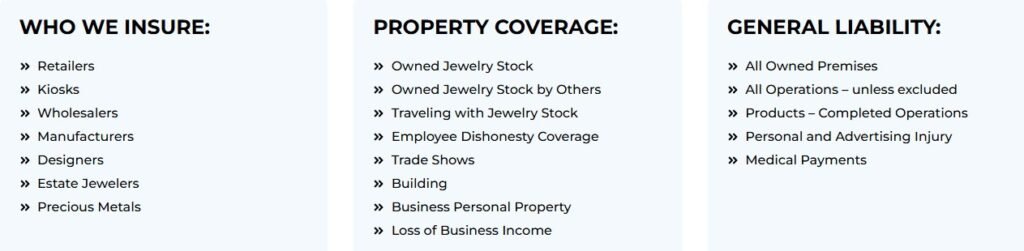
If you own a retail store, a repair shop, a wholesale operation, or a mixed business, Jewelers Block is usually the core policy to evaluate first. General liability and commercial property may still matter, but they don't replace a trade-specific form.
That's the key shift. You're not looking for “extra coverage” on top of a normal policy. You're looking for the correct insurance framework for a jewelry business.
How Specialty Underwriting and Pricing Differ
Getting a quote for a standard business policy is often quick. The carrier pulls broad business information, checks the location, asks about revenue, maybe asks a few property questions, and prices the account with a relatively standardized method.
A Jewelers Block submission doesn't work that way.
Why jewelers get more scrutiny
Specialty insurance lines rely on non-traditional risk signals and expert judgment because the exposure is often low-frequency but high-severity. Underwriters use granular data and scenario analysis, rather than conventional rating plans, to price volatility, according to Datos Insights on specialty lines trends.
For a jeweler, that means the underwriter isn't just asking, “What is your annual sales volume?” They're asking, “What happens to the merchandise every hour of the day?”
Here's the practical difference:
| Feature | Standard Business Policy | Specialty Jewelers Block Policy |
|---|---|---|
| Primary view of risk | Broad retail or office classification | Jewelry trade exposure by operation |
| Inventory treatment | General business property approach | High-value stock reviewed in detail |
| Security questions | Limited or basic | Detailed review of safes, alarms, procedures |
| Transit exposure | Often limited or narrowly defined | Usually a central underwriting issue |
| Customer property | May be secondary or limited | Often handled as a core exposure |
| Pricing approach | More standardized | More judgment-driven and individualized |
| Loss review | Broad claim history | Specific loss patterns and controls matter heavily |
What underwriters usually want from a jeweler
Owners sometimes get frustrated by the depth of the application. They shouldn't. The more complete the submission, the better the chance of a clear quote that reflects the actual account.
A strong submission usually includes:
- Detailed inventory values: On-hand stock, memo goods, repair items, watches, loose stones, and any concentration by category.
- Safe information: Construction, location, usage, and who has access.
- Alarm and monitoring details: Central station monitoring, opening and closing procedures, and whether the system protects all relevant areas.
- Operational flow: Retail sales only, repair work, custom work, wholesale activity, internet sales, travel, and trade show attendance.
- Shipping practices: Which carriers are used, who packages shipments, and how outgoing and incoming items are tracked.
- Loss history: What happened, what changed afterward, and what controls were added.
What works and what doesn't
What works is consistency. If your inventory report says one thing, your accounting says another, and your application says a third, the underwriter slows down. That can mean delays, more questions, and less confidence in the risk presentation.
What doesn't work is trying to “keep it simple” by leaving out parts of the operation. If you attend shows, say so. If employees carry goods off premises, disclose it. If you handle many repair items but don't have a clean intake and release process, fix that before you market the account.
The fastest quote is not the best quote if it's built on incomplete facts.
Underwriters don't expect perfection. They do expect clarity. A jeweler who can show disciplined controls often presents better than a jeweler with strong sales and weak documentation.
Essential Coverages Within a Jewelers Block Policy
When owners ask what a Jewelers Block policy does, the easiest answer is this: it follows the way jewelry businesses lose property.
That includes stock in the store, goods moving outside the store, customer property in your care, and losses that don't always come with obvious signs of theft.

Stock on premises and memo goods
Your first concern is usually your own inventory. That means finished jewelry, loose stones, watches, mountings, and other merchandise kept on site. But a jewelry business often also carries memo goods, vendor pieces, and items that don't fit neatly into standard property definitions.
If a store closes at night, places showcase goods into the safe, and later discovers a shortage that traces back to an earlier handling error or theft event, the policy structure matters. The stock itself is the business. If the coverage doesn't reflect actual inventory practices, the policy can fail where it matters most.
A good policy review should also address how consigned or memo inventory is documented. If you can't prove what was on hand, recovery gets harder.
Mysterious disappearance and unexplained shortages
This is one of the biggest reasons jewelers need specialty coverage.
A customer tries on two bracelets. An employee puts one back in the case. At closing, one item can't be found. There's no broken lock, no camera angle that settles it, and no witness who can say exactly when the item vanished. Standard insurance often struggles with losses like that. A Jewelers Block policy is designed with this kind of exposure in mind.
That doesn't mean documentation becomes less important. It becomes more important.
For specialty lines, the fidelity and timeliness of transactional data are critical, and poor data can distort risk measures and delay underwriting, as reflected in NAIC publications on insurance reporting and data practices. In jewelry terms, that means your inventory records, repair logs, transfer records, and exception reports need to be current and believable.
If you can't reconcile what left the safe, what entered the showcase, and what was sold or transferred, you create doubt before any claim is even filed.
Off-premises transit and trade activity
Jewelry doesn't stay put. It goes to trade shows, appraisers, clients, setters, repair vendors, and shipping counters. That movement creates some of the most serious exposures in the business.
A few common examples:
- Shipment to a customer: The package is sent correctly, but the delivery chain breaks down.
- Travel with merchandise: A sales rep carries goods to a presentation and a bag goes missing.
- Trade show display: Items leave your direct premises, enter a temporary environment, and face a different security profile.
- Transfer between locations: Inventory moves from office to showroom or workshop to retail floor.
These aren't side exposures. For many jewelers, they're ordinary business.
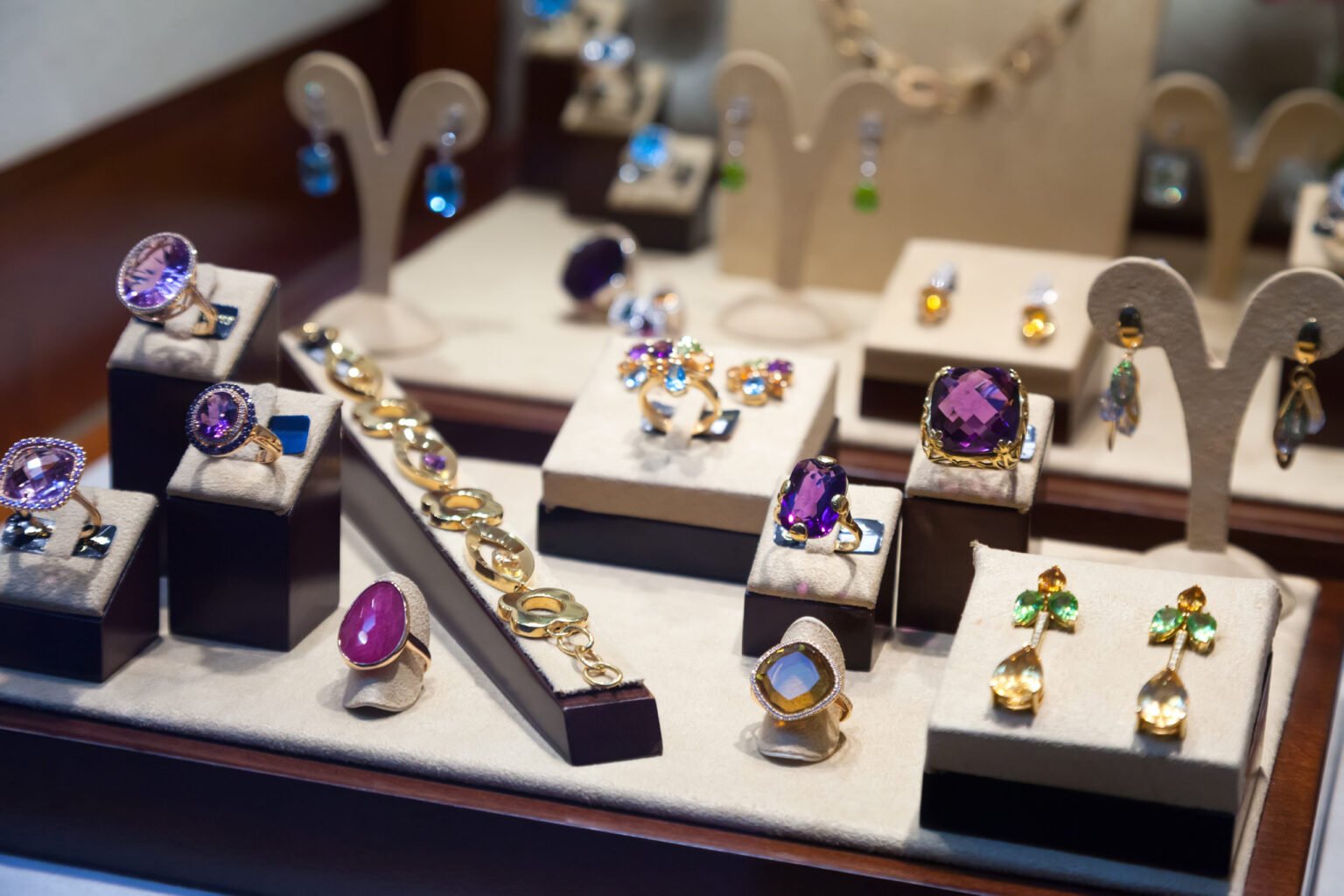
If you're thinking about how presentation and value concentration affect your risk, even a simple ring inventory visual reference makes the point. A small item can carry a large value, and it can leave the premises in seconds.

Customer property and repair exposure
A customer brings in a family heirloom for resizing. Another leaves a watch for service. A third drops off a ring to replace a center stone. Those items may not belong to you, but they are still your responsibility while they are in your custody.
That's where bailee-type exposure becomes critical. If the property is damaged, lost, switched, or stolen while under your control, the financial and reputational damage lands on your business.
Look closely at intake discipline:
- Item descriptions: Stone shape, metal type, brand, identifying marks
- Condition notes: Existing damage, missing stones, worn prongs
- Photographs: Taken at intake when appropriate
- Release controls: Who can pick up, and how identity is verified
A Jewelers Block policy should align with those realities, not ignore them.
Vetting Your Specialty Insurance Partner
The policy matters. The partner placing it matters just as much.
A weak broker can make a good market look bad by submitting incomplete information, missing operational details, or failing to explain restrictive terms before binding. A strong specialist can make the entire process cleaner, faster, and safer.

Questions worth asking before you trust the quote
Specialty insurers are getting more selective around risks like catastrophe exposure and supply-chain disruption, which makes expert broker guidance more valuable, as discussed in Hyperexponential's review of specialty insurance challenges.
That means you should ask direct questions.
- How many jewelry businesses like mine do you place? A broker who mainly writes restaurants and offices won't spot jewelry-specific issues early enough.
- Which parts of my operation concern underwriters most? The answer tells you whether the broker understands your real exposures.
- How do you handle mysterious disappearance questions? If the answer is vague, keep pressing.
- What documents should I prepare before submission? A specialist should have a clear list, not a shrug.
- How are repair items, memo goods, and off-premises transit addressed? Those are core concerns, not side notes.
- What happens if there's a claim? Ask who coordinates, what records will be needed, and how quickly the claim process starts.
One useful sign of market familiarity is whether the broker can explain the role of specialist underwriting platforms and markets, including institutions recognized across the trade such as Lloyd's market participation in specialty risk, without turning the conversation into jargon.

Red flags that should stop you
Some warning signs are obvious. Others are subtle.
A broker who can quote a jewelry account without many questions may be making the account sound easier than it is.
Watch for these problems:
- Thin applications: If they don't ask about safes, alarm procedures, transit, and customer property, the submission is likely weak.
- Ambiguous answers: “You should be covered” is not a coverage explanation.
- No discussion of documentation: Good specialty placement depends on good records.
- Overfocus on premium only: Cheap coverage that fails during a loss is expensive insurance.
Claims preparation is part of partner quality too. Even losses outside the jewelry trade show how documentation and prompt reporting shape outcomes. A plain-language Florida water damage insurance guide is useful because it reinforces a universal point: once a loss happens, the timeline, records, and communication trail matter.
A quick primer can also help you gauge whether an advisor explains insurance clearly or hides behind terminology.
What a strong partner actually does
A strong specialist doesn't just “shop the account.” They help you present it properly. They tell you where your procedures are helping, where they're hurting, and what underwriters will likely challenge.
That's valuable before the policy starts, and even more valuable when something goes wrong.
Actionable Steps to Get Your Jewelers Block Quote
If you're serious about protecting a jewelry store, waiting until renewal week is a mistake. Good Jewelers Block placement starts with preparation.
Here's the cleanest way to move.
Build your risk file first
Start with the records underwriters will ask for anyway. Pull current inventory reports, note any memo or consigned goods, organize repair logs, summarize your loss history, and write down your actual opening, closing, and key-control procedures.
Don't rely on memory. If your records are spread across spreadsheets, POS exports, handwritten intake slips, and employee habits, clean that up now. Practical tools can help. If you're evaluating systems, Vorby's inventory software recommendations are a useful starting point for thinking through tracking discipline and visibility.
Approach a specialist, not a generalist
A jewelry business needs someone who understands safes, central station alarms, transit methods, trade shows, repair exposure, and mysterious disappearance issues without needing a long explanation.
When you speak with a specialist, be candid. Tell them about the parts of your operation that feel messy or inconsistent. Hidden issues usually become underwriting problems later.
Review the proposal like an operator
When the quote arrives, don't look only at price. Read it the way a store owner runs the floor.
Check these points:
Inventory scope
Make sure the proposal reflects the full range of stock you carry and hold.Off-premises activity
Confirm how transit, travel, trade shows, and temporary locations are treated.Customer property handling
Review how repair and entrusted goods fit into the policy structure.
A good quote should make operational sense. If the language and limits don't line up with how your business moves jewelry, keep asking questions until they do.
If you want a Jewelers Block quote from a team that focuses on jewelers and high-value assets, contact First Class Insurance. They can help review your operation, identify coverage gaps, and guide you through a practical quoting process built for the jewelry trade.