
A lot of jewelers know this feeling. It's late afternoon, traffic has slowed, and a vehicle passes your storefront twice before settling into a spot with a clean line to your display glass. You glance at the window and run the same calculation every owner runs. If somebody hits that glass hard and fast, how much stands between the street and your inventory?
That's where the phrase window burglar proof stops being a marketing term and becomes an operational question. For a jewelry business, the storefront window isn't décor. It's part of your loss-control system, part of your overnight exposure, and part of what an underwriter will read as discipline or weakness.
A single upgrade rarely solves the problem. Stronger glass without detection can leave you with a delayed breach and no response. Bars without code-compliant egress can create another kind of risk. Good locks on weak frames can fail at the frame before the lock ever matters. In jewelry retail, the right answer is usually layered resistance tied to alarm response, display discipline, and insurance compliance.
The Moments Before a Smash-and-Grab
A smash-and-grab usually isn't complex. It's fast, noisy, and aimed at the assumption that the window is the weak point. A jeweler may spend heavily on showcases, safes, and interior cameras, then leave the storefront glazing to carry more risk than it was ever designed to handle.

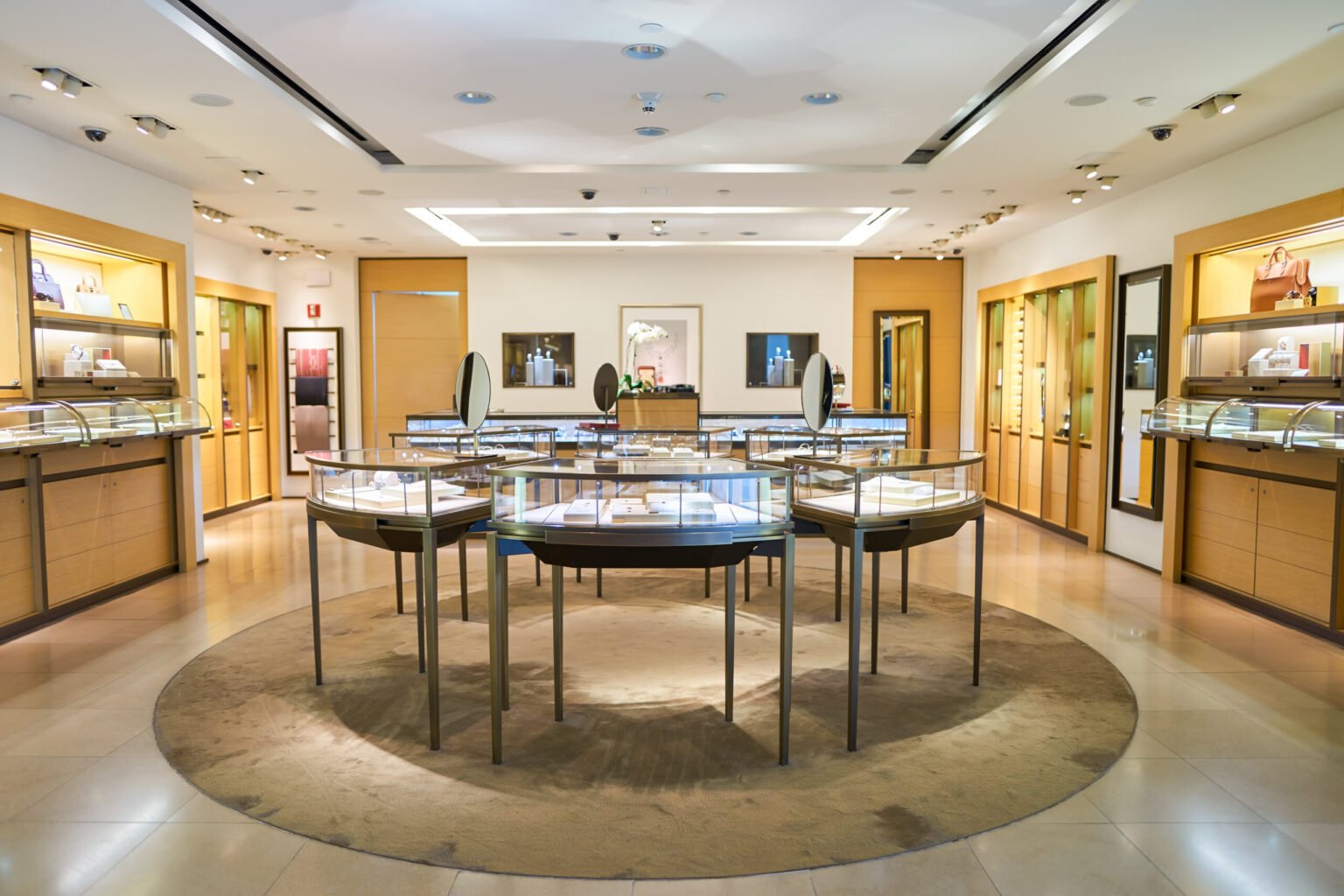
If you operate a showroom with street-facing displays, you already know what attracts attention. Bridal sets under focused light. Gold pieces near eye level. Watches arranged to stop foot traffic. The same presentation that helps sales can also help targeting. A storefront image like this jewelry display view captures the luxury side of the business, but it should also remind you how much value can sit just behind a pane of glass.

Why the storefront matters first
Windows are a common entry route. Security figures summarized by EPS Security report that 23% of burglars enter through a first-floor window in the United States, which is one reason reinforced window protection has become standard risk management for exposed retail locations (EPS Security burglary statistics).
For a jeweler, that number matters because storefront windows combine three things criminals like:
- Direct visibility into value. Merchandise, even when partially represented, signals the type of stock inside.
- A short path to exit. Street access allows a thief to strike and leave quickly.
- A testing opportunity. Criminals often watch whether staff remove display items, lower shutters, or rely on the glass alone after hours.
Practical rule: If your window security plan depends on the glass not breaking, it's too thin as a strategy.
What seasoned owners learn
The owners who avoid ugly losses don't treat the front window as a single product decision. They treat it as a sequence. Delay entry. Trigger detection. Expose the intruder. Protect the inventory beyond the glass. Make sure every layer satisfies policy conditions and local safety rules.
That's the difference between a storefront that looks secure and one that performs under pressure. In Jewelers Block terms, that distinction can affect whether your location is viewed as a disciplined risk or a marginal one.
Assessing Your Store's True Window Vulnerability
Most jewelry store owners see their windows as merchants. An underwriter sees them as exposure points. A burglar sees them as access points. You need both views.

InterNACHI's guidance on burglary resistance starts in the right place. Identify all ground-floor and obscured windows first, then move through glazing upgrades, physical barriers, and detection systems in that order (InterNACHI burglary-resistant guidance). That sequence is useful because it forces you to stop guessing and start ranking windows by actual risk.
Audit like a thief and an underwriter
Walk the exterior at opening, midday, dusk, and after closing. The window that looks fine during business hours can become the worst exposure after dark.
Use this checklist:
- Street visibility. Can passing traffic, adjacent tenants, or patrols clearly see the window area, or does landscaping, signage, or parked vehicles create cover?
- Display proximity. Is high-value merchandise or brand-signaling merchandise close enough to the glass to reward a quick hit?
- Approach routes. Side alleys, recessed entries, and parking-lot corners often matter more than the front sidewalk.
- Glass condition. Chips, edge damage, failed seals, and prior film bubbling all tell you the assembly may not perform as intended.
- Frame strength. Weak framing can fail before upgraded glass does.
- Lock quality. If the window opens, how it locks matters. So does whether the lock is used every night.
- Sensor coverage. Contact sensors, glass-break devices, and motion coverage should match the window layout, not just the alarm installer's convenience.
A storefront photo like this retail exterior example can help when you're reviewing sightlines with a security vendor or broker. It's easier to spot blind areas when you study the frontage as an outsider would.
The weak spots owners miss
The riskiest window isn't always the biggest one. It's often the one with poor natural surveillance, older hardware, or easier concealment during an attack.
Common misses include:
- Side display windows that don't face the main traffic flow
- Rear glazing near delivery zones or dumpsters
- Windows near temporary displays that encourage leaving stock close to the glass
- Service-area windows that feel secondary and get less maintenance attention
If you want a broader non-jewelry perspective on perimeter hardening, this piece on protecting your business from theft is useful because it frames theft prevention around practical environmental control rather than gadget buying.
The right audit question isn't “Is this window strong?” It's “If someone chooses this exact opening, how many things have to go right for them before they reach stock?”
That question changes spending decisions fast. It also helps you document security improvements in a way that makes sense to an insurer.
Choosing Your Physical Barrier Glazing Film and Grilles
Many jewelers oversimplify the problem. They ask whether to add film, replace the glass, or install grilles. The better question is which assembly gives your storefront the right balance of delay, appearance, operations, and insurability.
What actually counts as resistance
Performance matters more than marketing language. SILATEC notes that a complete package using P8B2 safety glass is designed to withstand an experienced burglar for about 10 minutes under RC2-level protection conditions, and that burglar resistance depends on the whole assembly, not just the pane (SILATEC burglarproof window guidance).
That last point matters in jewelry retail. Security film on weak framing can delay breakage but still leave the opening vulnerable to prying or frame failure. The same problem shows up when owners upgrade glass but leave old locking hardware or aging anchorage untouched.
Window Security Upgrade Comparison for Jewelers
| Security Measure | Resistance Level | Visibility/Aesthetics | Relative Cost | Best For |
|---|---|---|---|---|
| Security film on existing glass | Can add delay, but performance depends heavily on the existing glass and frame | Usually preserves storefront appearance well | Lower | Lower-risk frontages, interim upgrades, secondary windows |
| Laminated security glass | Stronger forced-entry resistance than standard glass, especially when paired with reinforced framing | Very good for luxury presentation | Moderate to high | Primary storefront windows where appearance matters |
| Performance-rated security glazing package | Measurable resistance based on the full assembly rather than a single component | Typically maintains a premium storefront look | High | High-value showrooms needing engineered delay time |
| Interior grilles or bars | Strong physical barrier if properly installed | Can affect open, luxury presentation | Moderate to high | High-risk locations, after-hours hardening, secondary exposures |
| Roll-down shutters | Strong deterrent and visible after-hours barrier | Least elegant during closed hours, minimal impact when open if concealed well | Moderate to high | Urban storefronts with repeated overnight exposure |
Where each option works and where it disappoints
Security film is often oversold. It has a place, especially when a jeweler needs better glass retention without rebuilding the entire frontage. But film isn't a substitute for a strong frame, proper edge attachment, and compatible detection.
Laminated glass is usually a better fit for jewelry retail because it protects appearance while adding meaningful delay. It's often the most practical compromise for stores that want a premium storefront during business hours and stronger resistance after closing.
Performance-rated systems make the strongest case when the store has a high street profile, valuable branded displays, or prior targeting concerns. They cost more, but they speak the language underwriters respect because they rely on tested assemblies rather than vague claims.
Grilles and shutters are the blunt instruments of storefront security. They work. They also change customer perception, daily opening procedures, and sometimes landlord discussions. In dense urban markets or repeat-target corridors, though, they can be the right answer.
Aesthetic friction is real
Luxury retail has a presentation problem that hardware stores don't. Your storefront has to invite customers in. Heavy visible barriers can send the wrong message in the wrong setting.
Still, jewelers shouldn't let aesthetics override risk discipline. If your location sits on an exposed corner, near fast vehicle access, or in a corridor where nighttime surveillance is poor, appearance alone isn't a reason to reject shutters or grilles. It's a reason to design them better.
For owners comparing after-hours barrier options, this guide for Canadian facility managers gives a practical view of roll shutters and how they fit commercial properties where glazing alone isn't enough.
A good storefront should sell by day and resist by night. If it can't do both, the design isn't finished.
One more point deserves blunt treatment. Bars and grilles can create life-safety problems if they block emergency escape. If you're considering them, the security decision has to be reviewed alongside local code and occupant egress needs, especially in any area used by staff or adjacent to occupied rooms.
Layering Detection and Deterrence
A hardened window buys time. Detection is what turns that time into a chance to stop a loss.

That distinction matters because many jewelry losses don't happen from one perfect vulnerability. They happen when multiple modest weaknesses line up. The glass resists for a bit, but no one is alerted. The alarm is armed, but the sensor layout doesn't match the upgraded glazing. Exterior shadows hide the approach. Staff assume the front window is “burglar proof” and leave too much confidence in one layer.
A major UK study found that between the early 1990s and the late 2000s, the share of households with security arrangements including both window and door locks increased by 60%, and that improvement was linked to the decline in domestic burglary rather than a broad change in offending patterns (UK burglary and security study). The lesson for jewelers is straightforward. Devices work best in combinations.
The operating layers that matter
A jewelry storefront should combine physical resistance with active response.
- Contact sensors on windows and doors. These tell the system when an opening is breached or moved.
- Glass-break detection matched to the glazing type. Different glass assemblies behave differently when attacked.
- Interior motion detection. This catches the intruder who gets through the perimeter.
- Exterior lighting. Motion-activated lighting along side yards, rear approaches, and dark frontage edges removes concealment.
- Monitored alarm response. A local siren alone doesn't satisfy the needs of most serious jewelry risks.
For owners reviewing alarm integration options, a resource on commercial property security systems can help frame what professionally monitored burglary alarms contribute beyond basic local noise.
Where systems fail in practice
Most failures come from mismatched layers, not missing products. A common one is upgraded glass with no sensor recalibration. Another is perfect storefront hardware with weak rear motion coverage. Another is a lighting plan focused on signage rather than approach routes.
Here's a useful video overview on practical burglary-resistant window concepts and how layers work together:
Don't think of alarms, locks, and glass as separate purchases. They're one system with one job. Delay entry long enough for detection to trigger response before inventory is reached.
Deterrence still counts
Visible security signage, disciplined closing procedures, and interior lighting on schedules all matter because they change the offender's read of the store. The goal isn't only to survive an attack. It's to make the attacker choose another target before the first strike happens.
That's why the best window burglar proof strategy doesn't start and stop with the pane. It makes the whole frontage look difficult, exposed, and noisy to attack.
Aligning Security with Your Jewelers Block Insurance
Physical security decisions don't sit outside your insurance program. For jewelers, they are part of the insurance file whether you intend that or not.
An underwriter looking at your location wants to know more than whether you have an alarm. They want to understand the quality of your perimeter, the consistency of your procedures, the visibility of your inventory from the street, and whether your protections make sense for the value at risk. Weak storefront glazing, poor closing discipline, or undocumented upgrades can all complicate eligibility and pricing.

What underwriters usually care about
They typically focus on questions like these:
- Is the storefront a likely attack point for a quick-entry theft or after-hours forced entry?
- Are the protections layered or dependent on one feature?
- Do procedures match the hardware you paid for?
- Is the inventory near the glass controlled properly after hours?
- Do any barriers create compliance or life-safety issues?
That last point is where owners sometimes get into trouble. ADT's guidance on burglar-proof windows notes that security must be balanced with emergency escape, especially when bars or grilles are involved (ADT guidance on burglar-proof windows and emergency escape). If a security upgrade creates an egress problem, you may have improved one exposure while creating another. Insurers notice that.
Documentation changes the conversation
If you upgrade your storefront, document it like a risk manager, not like a shopper.
Keep:
- Installer proposals and final invoices showing the exact products used.
- Photos of the completed work from inside and outside.
- Specifications for glazing, frames, locks, and shutters if applicable.
- Alarm integration records showing sensors and monitoring details.
- Written opening and closing procedures that reflect the new setup.
A carrier or broker can do more with clear records than with a verbal statement that the glass is “high security.” Product names, installation scope, and system integration matter. So does showing that the work is maintained and utilized.
Better security can support better insurability
No serious professional should promise that one upgrade automatically lowers premiums. Insurance doesn't work that way. But stronger, well-documented controls can improve how your account is presented and understood.
That matters when the risk involves visible stock, street exposure, or a location that needs a more thoughtful Jewelers Block submission. Underwriters are far more comfortable when the storefront story is specific and credible. Even a recognizable market reference point like this Lloyd's market image underscores the broader reality that specialty insurance markets expect discipline, documentation, and clear loss-control reasoning.

The best security upgrade isn't the most expensive one. It's the one you can document, maintain, and defend as appropriate for the inventory you carry.
Maintaining Your Shield Through Vigilance and Upkeep
A window security package ages the minute it's installed. Film can peel. Locks go stiff. Sensors drift out of alignment. Lighting burns out. Staff get casual.
That's why upkeep has to be routine. In jewelry retail, inconsistent maintenance turns expensive protection into false comfort.
A short maintenance discipline that pays off
Use a standing checklist:
- Test alarm devices. Verify contacts, glass-break devices, and motion sensors on a schedule that matches your alarm provider's recommendations.
- Inspect glazing and film. Look for edge lift, discoloration, cracks, seal issues, and signs of impact or tampering.
- Check frames and locks. If the frame moves, flexes, or binds, the opening may fail where you least expect it.
- Verify lighting coverage. Walk the exterior at night and make sure dark approach routes haven't crept back in.
- Train staff on closing. Window security fails fast when display routines slip and merchandise remains too close to the glass.
Don't let procedure become the weak point
Most jewelers already know that losses often begin with ordinary shortcuts. A manager props an opening during receiving. Someone assumes the shutter was dropped. A newer employee arms the alarm without checking a side window.
Review the window security plan at least annually and whenever your inventory mix, display strategy, or storefront layout changes. The more your business grows, the easier it is for yesterday's protections to become undersized for today's risk.
If you want your physical security and insurance program to move together, get a specialist involved before a claim forces the issue.
If you need help matching your storefront protections to a Jewelers Block program, First Class Insurance can help you evaluate the risk, present your upgrades properly, and get a quote built for how your jewelry business operates.