
Yes, the TSA says you can take jewelry on a plane in both your carry-on and checked bags. But for a professional jeweler, collector, or anyone carrying high-value pieces, that's the wrong question. The real question is how to do it without risking a catastrophic loss, because airline liability offers almost zero protection.
The Jeweler's Dilemma When Traveling with Valuables
Imagine you're flying to a trade show in Vegas or hand-delivering a custom engagement ring to a client. The financial—and reputational—stakes are enormous. For anyone in the jewelry business, the question isn't if you can fly with valuables; it’s about navigating the immense risks of risk, security, and financial exposure.
This guide isn't for vacationers. It’s a professional playbook designed to move past the dangerously inadequate advice you find online and give you a real strategy for moving high-value assets by air.

Why Standard Travel Advice Fails the Jewelry Business
The usual tips for traveling with personal trinkets are useless when you’re moving commercial inventory. For jewelers, the risks are magnified, and a single mistake can be devastating. Relying on basic precautions is like trying to guard a bank vault with a bicycle lock.
The problem comes down to two things: the high risk of targeted theft and the shockingly low liability limits airlines set for luggage. Losing a bag isn't just an inconvenience; it could mean losing tens or even hundreds of thousands of dollars in inventory.
For a jewelry store or wholesaler, air travel is a business necessity, but it's also one of the weakest links in your entire supply chain. One misstep can wipe out your profits and shatter the trust you've built with clients.
This is where specialized knowledge isn't just helpful—it's critical. You need proven strategies for everything from clearing security discreetly to understanding the fine print that lets airlines off the hook.
Introducing Specialized Protection
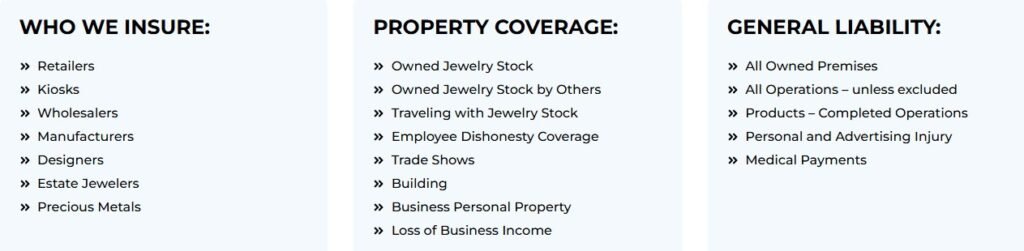
Your standard insurance for a jewelry store often has a massive blind spot: coverage for inventory once it leaves your building. That's why Jewelers Block insurance is so vital. It’s not just another policy; it’s a specific solution built to cover the unique risks of the jewelry trade, including your assets while they're in transit.
Throughout this guide, we'll walk you through:
- TSA & Airline Rules: How to get through security without putting a spotlight on your valuables.
- Packing & Documentation: The best ways to prevent damage, loss, and headaches with customs.
- Insurance Gaps: Why your current policies probably aren't enough and how to get the right coverage.
- Actionable Strategies: Practical steps to protect everything from a single piece to an entire collection.
Understanding these details is non-negotiable for protecting your business. Specialized agencies like First Class Insurance Jewelers Block Agency are experts in creating this shield, offering insurance for a jewelry business that travels. By the end, you'll have the confidence to fly, knowing your assets are truly secure.
Clearing Airport Security with Your Jewelry Collection
That moment in the airport security line is where your preparation really matters. For anyone carrying high-value pieces, this isn't just about getting through the checkpoint—it's about protecting your assets from loss, theft, and unwanted attention.

Let’s get the simple question out of the way: yes, you can wear jewelry through security. Small rings, delicate chains, and most earrings won't set off the metal detectors. It’s the bulky metal pieces that will almost certainly cause an alarm.
Think heavy statement necklaces, chunky metal watches, or large belt buckles. If that alarm sounds, you're looking at a pat-down or inspection with a hand-held wand. Suddenly, all eyes are on you and your valuables.
Understanding Screening Procedures
To avoid this, the smart move is to take off any large metal items before you even get to the scanner. But don't just toss them in a screening bin—that's asking for trouble. Secure them deep inside your carry-on bag, where they stay out of sight and under your control.
The single best strategy, however, is to request a private screening. This is your right as a traveler, and it’s the most effective way to maintain your privacy and security.
TSA's official policy allows any passenger to request a private screening for any reason. All you have to do is politely tell a TSA officer as you approach the checkpoint. They'll take you to a separate area, away from the public, to inspect your items with complete discretion.
For jewelers traveling with inventory, this step is absolutely critical for your jewelry store insurance to be effective. A private screening drastically cuts the risk of your collection being seen by other travelers, which reduces the chance of becoming a target for theft later on.
Strategic Tips for a Smooth Screening
Moving through security confidently is all about managing the process, not just enduring it.
- Consolidate Your Valuables: Before you join the line, put all your jewelry (except what you’re wearing) into a dedicated pouch or case and bury it inside your carry-on.
- Dress Smartly: Skip the clothes with big metal fasteners, flashy buckles, or metallic threads. Simple, comfortable attire helps you breeze through without a second look.
- Request Privacy: Never hesitate to ask for a private screening. It's a standard procedure, and it’s the professional way to travel with high-value items.
The biggest mistake we see is travelers putting loose watches, rings, or bracelets into those gray plastic bins. In the chaos of the security line, it's incredibly easy for these small, expensive items to be left behind or snatched. If you want more tips specifically for timepieces, check out our guide on how to properly transport luxury watches.
Imagine you’re flying to meet a client with a custom-made piece. The only safe places for that jewelry are on your person or in your carry-on. As an unbreakable rule, never put valuables in checked luggage. Airline liability is capped at a mere $4,700 for domestic flights, and carriers will fight tooth and nail to avoid covering jewelry at its real value. This leaves your jewelry business dangerously exposed.
For international flights, it's even worse—the limit drops to around $1,700. You can find more about your rights on the Department of Transportation’s website, but the takeaway is clear: your checked bag is no place for your livelihood.
Carry-On vs Checked Luggage The Critical Difference
When it comes to flying with jewelry, there’s only one rule that matters: never, ever put it in a checked bag. For a jewelry professional, this isn't just a best practice—it's the single most critical decision you'll make to protect your inventory. Thinking of your checked luggage as a safe place for valuables is a financial gamble you can't afford to lose.
The reason is simple: a checked bag is out of your control. Once you hand it over, you're at the mercy of the system.

The biggest danger isn’t just loss; it’s the harsh reality of airline liability. Carriers are famous for limiting how much they’ll pay for lost or damaged luggage. If your checked bag with thousands of dollars in pieces vanishes, the airline’s payout will be a tiny fraction of its real worth.
The Shocking Limits of Airline Liability
Airlines operate under alarmingly low liability caps. For domestic flights in the U.S., an airline’s maximum liability for a lost, delayed, or damaged bag is only about $4,700 per passenger. Flying internationally? It’s even worse. The cap is roughly 1,288 Special Drawing Rights, which works out to about $1,700 USD.
Let that sink in for a minute. A single engagement ring or a handful of high-end pieces could easily be worth ten times that amount. For a jeweler traveling to a trade show, the value of your entire line could be hundreds of times higher than the airline's maximum payout.
To make matters worse, most airlines flat-out exclude high-value items like jewelry from their standard liability coverage. Buried in their contracts of carriage, they state they are not responsible for valuables in checked bags, leaving you with practically no recourse. You can learn more by reviewing some helpful TSA rules and tips for locking checked luggage to see just how limited your options are.
Your Carry-On is Your Personal Vault
Think of your carry-on bag as your mobile vault. By keeping your jewelry with you, you maintain complete custody and control. It never leaves your sight and doesn’t get passed through the dozens of hands that touch every checked bag.
A checked bag’s journey is a long and risky one—it goes through handlers, conveyor belts, cart transfers, and security screenings, all happening far from your watchful eye. Every handoff is another chance for damage, misplacement, or outright theft.
Placing valuable inventory in a checked bag is a direct violation of the most basic principles of risk management for a jewelry business. The only secure method is to maintain personal possession in your carry-on.
Some travelers think they can get around this by buying "excess valuation" from the airline. Don't fall for it. This is not true insurance. It just slightly raises the airline's liability limit but still comes with all the same rules and exclusions for items like jewelry, making it a poor substitute for proper coverage.
Why Jewelers Block Insurance Is the Only Answer
This massive gap between your inventory's real value and an airline's tiny liability is precisely why specialized insurance for a jewelry business is non-negotiable. Your standard business policy won't cover it, and a homeowner's policy is totally inadequate for commercial goods in transit.
Only a dedicated Jewelers Block insurance policy, like those we create at First Class Insurance Jewelers Block Agency, is designed to cover your inventory while you travel. This type of insurance for a jewelry store protects you from the specific risks of the road, including theft and loss, up to the full appraised value of your items. If you're curious about how that value is determined, you can see the detailed process for insuring high-value antique jewelry.
Without this specific coverage, you are exposing your business to a level of risk that no successful jeweler can sustain.
Documentation and Navigating International Customs
When you take jewelry on a plane, your biggest risk isn't always the flight itself—it's the customs checkpoint at your destination. Having your pieces in a carry-on might protect them from the airline, but it’s your paperwork that will shield you from disastrous legal and financial trouble with customs officials.
Think of it this way: without the right documents, you’re essentially walking into a foreign country and asking them to take your word for it. That’s a gamble that can end with steep fines, outright confiscation of your inventory, and a permanent black mark on your travel record.
Building Your Documentation Toolkit
Before you even think about packing, your first job is to build a detailed inventory dossier. This isn't just a simple list; it's the official record that proves what you own and what it's worth to both customs agents and an insurance adjuster.
Your file must include:
- High-Resolution Photos: Clear pictures of every single item from multiple angles. Make sure to capture any identifying marks, engravings, or serial numbers.
- Official Appraisals: For any piece of significant value, a recent appraisal from a certified gemologist is non-negotiable. This is what officially establishes its replacement value.
- Receipts or Proof of Purchase: Original receipts help prove ownership and establish when and where you bought the jewelry, which is critical for customs.
- A Detailed Written List: Put everything into a spreadsheet. List each piece, its description, and its corresponding appraised value.
Keep copies of this entire file in two places. Store a digital version in a secure cloud service and carry a printed copy with you—but keep it separate from the jewelry itself. If your bag gets stolen, you can't afford to have your proof of ownership stolen along with it.
Personal Use vs. Commercial Goods
This is where many travelers get into serious trouble. The rules for international customs change dramatically depending on whether you’re carrying personal jewelry or pieces for your jewelry business.
- Personal Use: These are the items you own and wear. When you return to your home country, you typically don’t need to re-declare pieces you left with. Having your documentation (photos, appraisals) on hand proves you owned them before your trip, preventing you from being taxed on them like new overseas purchases.
- Commercial Goods: This is any inventory you intend to sell, show at a trade show, or deliver to a client. These goods are always subject to duties and taxes and require a formal declaration. Failing to declare them isn't an oversight—it's smuggling.
For a professional, trying to pass off commercial inventory as "personal items" is a high-stakes mistake. The penalties for a false declaration can include seizure of your entire stock, massive fines, and being flagged for intense scrutiny on all future travel.
The Jeweler's Secret Weapon: The ATA Carnet
For any jeweler who travels internationally with their inventory, an ATA Carnet is an absolute game-changer. Think of it as a passport for your goods.
This international customs document lets you temporarily bring commercial samples, displays, and professional tools into foreign countries for up to one year without paying any duties or import taxes. It’s a single, unified document accepted in over 80 countries, making it the perfect tool for attending trade shows or meeting with overseas clients without the customs headaches.
Smart Packing and Insurance: A Final Check
With your documentation locked down, your final step is to pack everything securely. You can’t afford to arrive with a mess of tangled chains or scratched stones. For jewelers, this means using structured cases with zippered pouches to prevent damage and keep every piece accounted for.
And this is exactly where solid insurance becomes your final layer of defense. Our Jewelers Block insurance policies are designed for these exact scenarios, covering transit losses, mysterious disappearances, and theft up to your inventory's full value, with 24-hour quoting from our Sunrise, FL headquarters. You can get more details on how travel is changing the industry by reading these insights on jewelry travel.
Ultimately, being proactive about paperwork and customs isn’t just a good idea; it's a fundamental part of risk management. It's the strategy that, when combined with the right insurance for a jewelry business, lets you focus on your work instead of a potential disaster at the border.
The Ultimate Safety Net: Jewelers Block Insurance
Even after you’ve meticulously documented every piece, sailed through customs, and clutched your carry-on for dear life, you're still exposed. The hard truth is that while you can take jewelry on a plane, no amount of personal watchfulness can erase every risk. All it takes is a momentary distraction, a sophisticated thief, or just a simple, unlucky accident to cause a devastating loss.
This is where standard precautions hit a wall and professional protection has to take over. Relying on airline liability or your standard business policy is like using a paper umbrella in a hurricane—it gives you a false sense of security that will collapse the second you actually need it. For any jewelry business, the only real safety net is Jewelers Block insurance.
What Makes Jewelers Block Insurance Different
Unlike a generic policy, Jewelers Block is a specialized form of insurance for a jewelry store or business, built by underwriters who get the unique risks you face every day. It’s not some flimsy add-on; it’s a comprehensive policy designed from the ground up to protect your assets wherever they go.
Think of it this way: a homeowner's policy is made to protect things that stay in one place. Jewelers Block, on the other hand, is built for inventory in motion. It understands your assets aren’t just sitting in a vault—they're traveling to trade shows, heading to client meetings, and moving between workshops.
A standard business or homeowner's policy is riddled with crippling exclusions for high-value items in transit and for commercial goods away from your main business address. Jewelers Block is specifically created to fill those exact gaps, giving you wall-to-wall coverage that travels right alongside you.
This type of policy is the definitive solution for the jewelry industry because it covers the very scenarios other insurers run from.
Core Protections for Your Jewelry Business
A well-designed Jewelers Block policy from an expert like First Class Insurance Jewelers Block Agency provides the critical coverage that directly counters the fears of any traveling jeweler.
This includes protection against:
- Theft During Transit: Whether it’s a smash-and-grab in a crowded airport or a more calculated heist, your policy is there to cover the loss.
- Mysterious Disappearance: This is a crucial and often misunderstood coverage. It protects you if an item simply vanishes with no clear sign of theft—a shockingly common problem when you're managing hundreds of small, high-value pieces.
- Loss from a Hotel Safe: Many people think a hotel safe is a fortress, but they offer very little real security and even less liability. Jewelers Block covers you even if items are stolen from a safe.
- Trade Show and Exhibition Losses: Your inventory is covered while it's on display, during the chaos of setup, or when you’re packing it all away.
This specialized insurance for a jewelry business is crafted by experts who understand your operational reality. Beyond documenting your jewelry, getting a handle on the customs and immigration process when flying overseas in a private jet gives you a deeper perspective on high-stakes travel.
Why Your Current Policy Is Not Enough
Let’s be crystal clear: if you are relying on a standard Business Owner's Policy (BOP) or a homeowner's policy to protect your inventory on the road, you are almost certainly uninsured for that trip.
These policies nearly always have a "sub-limit" for jewelry, often as low as $1,500, and typically exclude coverage entirely for commercial goods used away from your primary business location. This makes them functionally useless for a professional. It's a distinction recognized by major industry partners, including the ones we are proud to work with, like those represented by the

.
Our Jewelers Block policies are built to cover transit losses, mysterious disappearances, and thefts up to your inventory's full value, with 24-hour quoting from our Sunrise, FL headquarters. Don't let a 50% repeat loss rate derail your deals. Insure smart, travel safer, and focus on closing sales knowing your assets are protected nationwide.
Ultimately, asking "can you take jewelry on a plane?" is only the first question. The professional's question is, "Am I actually protected if something goes wrong?" With Jewelers Block insurance, the answer is finally yes.
Secure Alternatives for Transporting High-Value Inventory
While you can take jewelry on a plane yourself, for a professional jeweler moving significant inventory, the convenience simply isn't worth the risk. Sometimes, the smartest and safest way to transport high-value assets is to not carry them at all.
This is where professional, high-security alternatives come in. Services like Brinks or Malca-Amit are the gold standard for moving valuable inventory. They provide end-to-end, insured security with trained personnel and armored vehicles, practically eliminating the risks you face when traveling personally. It’s a bigger investment, of course, but for large or irreplaceable collections, it's the only real choice when security is your top priority.
Insured Shipping and Jewelers Block Insurance
Another route is using insured shipping through carriers like FedEx or UPS. But this path has a major pitfall: the carrier's own liability is shockingly minimal and usually riddled with exclusions for high-value jewelry. Simply declaring a high value isn't true insurance—it’s a false sense of security that offers very little real protection if something goes wrong.
This is exactly where a specialized Jewelers Block insurance policy becomes non-negotiable. This is the insurance for a jewelry business that provides actual coverage for your goods while they are in a carrier's hands. It bridges the massive gap left by standard shipping liability, ensuring your assets are protected for their full appraised value, from your door to their destination.
Just how risky is it? During the post-pandemic supply chain chaos of 2022, air cargo jewelry shipments saw staggering loss rates as high as 15-20%. That statistic alone highlights just how crucial robust protection is. You can even review a few tips on what items to avoid wearing to lower your personal risk based on official TSA guidance and travel tips.
This flowchart helps you see exactly when specialized Jewelers Block insurance is the right move over a standard policy.

As the chart makes clear, for business inventory and high-value personal collections—especially when they're in transit—a specialized policy like Jewelers Block isn't just a good idea, it's the only appropriate choice.
As your risk management partner, First Class Insurance Jewelers Block Agency is here to help you navigate these critical decisions. We can help you get a quote for Jewelers Block and build a protective strategy, whether that means insuring your own trip or coordinating proper coverage for an armored shipment.
Frequently Asked Questions About Traveling with Jewelry
Nothing creates more travel anxiety than figuring out how to get your valuable jewelry from point A to point B safely. When you're dealing with high-value pieces, you need clear, no-nonsense answers.
This guide tackles the most common questions jewelers and collectors ask, giving you the practical advice you need to feel confident on your next trip.
Can I Wear Expensive Jewelry Through Airport Security?
Yes, you can, but that doesn't always mean you should. While your delicate gold chain won't set off any alarms, large, bulky metal pieces absolutely can, leading to a public pat-down and unwanted attention.
For anything truly valuable, the smartest move is to pack it securely in your carry-on. You can always request a private screening with a TSA agent to avoid displaying your assets to a crowd of strangers.
What Is the Best Way to Pack Jewelry in a Carry-On?
First rule: never pack loose pieces. Use a hard-sided jewelry case or a quality travel roll with individual, padded compartments. This prevents your items from scratching, tangling, or getting damaged in transit.
Second, think like a thief. Don't put your jewelry case in an easy-to-grab outer pocket. Bury it deep inside your carry-on bag, surrounded by other items. Out of sight, out of mind.
Do I Need to Declare Jewelry at Customs?
If you're traveling internationally, the answer is an emphatic yes. You absolutely must declare high-value jewelry, especially if it’s inventory for a trade show or a client meeting.
For personal pieces you owned before your trip, bring along recent appraisals and photos. This helps prove prior ownership and prevents you from being incorrectly charged import duties. For any items related to your jewelry business, using an ATA Carnet is the only professional way to handle temporary, duty-free entry into a foreign country.
Is My Jewelry Covered by Homeowner's or Travel Insurance?
Almost certainly not. Most standard homeowner's policies have ridiculously low limits for jewelry that's away from your home—often just $1,500. Worse, they completely exclude any items considered commercial inventory. Regular travel insurance is no better, filled with strict limits and exclusions.
A recent study highlights a growing trend where nearly 80% of travelers opt for lower-value 'travel jewelry' to minimize risk, yet sentimental items like engagement rings are still worn on 52% of trips, showing a conflict between caution and personal attachment. This is a critical consideration for those in the jewelry business, as thefts often spike in hotels and restaurants. You can find more details in this analysis of jewelry travel trends.
This is a massive blind spot that only a specialized policy can fix. Jewelers Block insurance is the specific insurance for a jewelry store or business designed to provide real-world coverage for high-value items and professional inventory while in transit.
Don't leave your assets unprotected. At First Class Insurance, we specialize in Jewelers Block insurance that safeguards your inventory wherever your business takes you. Protect your livelihood from theft, loss, and transit risks. Get a Quote for Jewelers Block today.