
Let’s be direct—your business is built around fire. That simple fact makes candle maker insurance an absolute must-have, not a "nice-to-have." Think of it as the ultimate fire extinguisher for your finances. You hope you never have to use it, but if something goes wrong, it’s the one thing that can save your entire business from going up in smoke.
Why Candle Insurance Is Essential for Your Business
You’ve poured your heart into perfecting your wax blends, sourcing the most beautiful vessels, and designing labels that pop. But have you stopped to think about what protects all that hard work from the risks that come with selling candles?
It's a common and costly mistake to assume your homeowner’s or renter’s insurance has you covered. The truth is, those personal policies almost always have explicit exclusions for business-related activities.
If a candle you made is ever blamed for causing an injury or a house fire, you would be left holding the bag for every penny of legal fees and damages. Without the right coverage, a single claim could wipe you out.
Understanding Your Core Risks
The risks go far beyond a product simply malfunctioning. A customer could slip and fall at your booth at a craft fair. A fire in your home studio could destroy thousands of dollars in wax, wicks, and finished inventory overnight.
For every beautiful candle you create, there's a flip side—a potential risk. From a simple slip-and-fall claim at your market stall to a devastating house fire traced back to your product, the financial exposure is enormous without the right policy in place.
Every candle maker essentially faces two major buckets of risk, which we can break down visually.

As you can see, you need to shield your business from both property losses (your stuff) and liability claims (your responsibility for accidents). These require different types of coverage to be fully protected.
A Quick Guide to Essential Coverages
To get a clearer picture, it helps to see the main policies side-by-side. This table breaks down the essential coverages every candle business owner should consider.
| Coverage Type | What It Protects | Why It's Essential |
|---|---|---|
| General Liability | Bodily injury or property damage claims not directly caused by your product (e.g., a customer trips over a box at your booth). | Covers the "everyday" risks of running a business where you interact with the public. |
| Product Liability | Claims of injury or damage caused by a candle you sold (e.g., a vessel cracks, a wick causes a flare-up). | This is the core protection against lawsuits related to your product's performance and safety. |
| Commercial Property | Your business assets, like wax, fragrance oils, equipment, and finished inventory, from events like fire, theft, or vandalism. | Replaces your valuable stock and tools so you can get back to business after a loss. |
These three policies form the foundation of a solid risk management plan, protecting your hard-earned assets from the most common and costly threats.
A Growing Industry with Unique Hazards
Your business is part of a booming global candle industry, projected to hit nearly USD 14.77 billion by 2025. While that growth is exciting, it also brings more scrutiny and risk, especially for products involving an open flame.
With paraffin wax still holding a dominant 30.4% market share, the risks associated with widely used materials are significant. One bad batch or a single faulty wick can have catastrophic consequences for a customer—and your brand.
Just like a good business attorney helps you navigate legal contracts and protect your company from lawsuits, the right insurance is your first line of defense. It’s the foundational safeguard that gives you the confidence to focus on what you love: creating amazing products. This guide will give you a clear roadmap to understanding your options and securing your brand’s future.
For any candle maker, two types of insurance are the absolute foundation of your business's protection: General Liability and Product Liability. They’re often sold together, but they protect you from completely different risks. Getting this difference right is the first real step to finding the right candle maker insurance.
Think of General Liability as your “market booth” or “workshop” shield. It’s what protects you from accidents that happen during your business operations but aren’t directly caused by your candles—things like slips, falls, and other mishaps.
Product Liability, on the other hand, is your “what if the candle goes wrong” coverage. This is, without a doubt, the most crucial policy for a candle maker. It defends you when someone claims your product caused injury or damage, even if you’re sure they used it incorrectly. This policy pays for the lawyers and potential payouts so you don't have to.

General Liability: Your Public-Facing Shield
General Liability is all about protecting you from claims made by third parties—customers, vendors, or just a random person walking by your booth. It handles the financial fallout from accidents related to your "premises and operations."
Here are a few classic examples where this policy would save the day:
- Slip-and-Fall: A customer at a craft fair trips over a box of your supplies and breaks their ankle.
- Property Damage: While making a delivery to a local boutique, you accidentally knock over and shatter an expensive lamp.
- Advertising Injury: You use a photo on your Instagram that you didn't have the rights to, and the photographer sues you for copyright infringement.
Without this coverage, a simple accident could bury your business in medical bills or legal fees. It's why most farmers' markets, festivals, and retail partners won't even let you set up without seeing your proof of insurance first.
Product Liability: Your Most Critical Defense
While General Liability is non-negotiable, Product Liability covers the single biggest risk you face as a candle maker. You are, after all, selling a product designed to contain an open flame. That comes with a much higher chance of causing property damage or injury.
Even with perfect warning labels and rigorous testing, you can't control how every customer uses your product. Product Liability Insurance is the non-negotiable policy that stands between your business and a potentially ruinous lawsuit stemming from a product-related fire or injury.
This policy is your defense against claims that your candle was defective, badly designed, or didn't have the right warnings. Just think about these real-world scenarios:
- A glass jar you sourced has a hidden flaw and cracks under heat, spilling hot wax onto a customer's antique wood table.
- A customer alleges the wick you chose created a dangerously high flame that set their drapes on fire, causing extensive smoke damage.
- Someone gets a burn and blames your candle’s performance, even though they admit they left it unattended near a fan.
The stakes in the candle business are no joke. According to the National Park Service, candles cause around 7,610 home fires every year. If your candle is ever tied to an incident like that, product liability is what ensures you can afford a proper legal defense and stay in business.
Why You Absolutely Need Both
It’s simple: one policy won’t do the other’s job. General liability handles accidents at your booth; product liability handles fires caused by your candle in a customer's home.
Many experts find that a solid plan with $1 million in liability coverage can run between $350 and $600 per year—a tiny price for the peace of mind and access to markets it provides. This is especially true for home-based businesses, since your standard homeowner's policy will almost always deny claims related to commercial activities.
With the national candle market topping $3.14 billion and using over a billion pounds of wax annually, the industry is huge—and so is the risk. You can explore more data on the candle market to see just how big this has all become.
Because these two coverages are so essential, insurers often package them together in what’s called a Business Owner’s Policy (BOP). This bundle gives you that foundational protection every candle maker needs, from your workshop to your customer's living room.
Protecting Your Supplies and Physical Assets
While liability coverage shields you from accidents involving others, it does nothing to protect the physical heart of your candle business. We're talking about your wax, fragrance oils, vessels, and all the finished candles that make up your inventory. To find the right candle maker insurance, you have to look beyond liability and safeguard the very assets you rely on to operate.
A single disaster—a fire, a major theft, or even a burst pipe in your studio—could wipe out your entire stock in an instant. Without the right protection for your physical property, an event like that could bring your business to a grinding halt for good.
Commercial Property Insurance for Your Workspace
The first line of defense for your assets is Commercial Property Insurance. Think of this as the essential policy for your dedicated workspace, whether that's a corner of your home, a rented studio, or a small storefront. Let's be clear: your standard homeowner's policy almost certainly will not cover business-related property, leaving a massive and costly gap in your protection.
This coverage is designed to give you the funds to repair or replace your business property if it's damaged by a covered event like a fire, storm, or theft.
It typically covers items like:
- Equipment: Wax melters, pouring pots, digital scales, and heat guns.
- Fixtures: Your workbenches, shelving units, and storage containers.
- Technology: The computer and printer you use for managing orders and labels.
- Inventory: All the raw materials and finished candles stored at your primary business location.
A fire in your curing area or a break-in at your workshop could easily add up to thousands of dollars in losses. Commercial Property Insurance is what ensures you can replace what you lost and get back to business quickly.
Inland Marine Insurance: Your Stuff on the Move
Commercial Property insurance is great for what's inside your studio, but what happens the moment your inventory leaves the building? This is where a critical, but often overlooked, policy comes in: Inland Marine Insurance.
Don't let the name fool you; it has nothing to do with boats. The industry term is a bit dated, but you can just think of it as "insurance for your stuff in transit."
Imagine getting into a fender bender that shatters every candle you were bringing to a weekend craft fair. Or picture your entire pop-up shop display getting stolen overnight from the event space. Inland Marine Insurance is the specific policy built to cover these exact scenarios, protecting your assets once they're away from your primary address.
This coverage is absolutely vital for any candle maker who sells products outside their main workshop. It protects your inventory when it is:
- In your car on the way to a farmers' market.
- Temporarily stored at an event venue or pop-up shop.
- Sitting at a consignment shop or partner retail store.
- Being transported to a shipping carrier like FedEx or UPS.
Losing thousands of dollars in stock while it's on the move can be a devastating blow. Inland Marine coverage closes this common and expensive gap.
An Analogy from the Jewelry Business
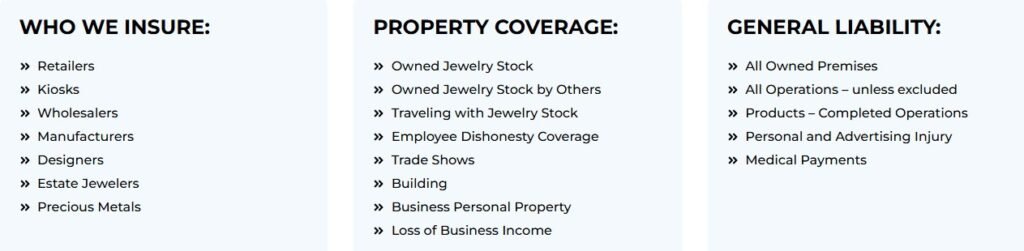
To truly understand why protecting mobile inventory is so crucial, consider another highly specialized industry: the jewelry business. No one would open a jewelry store insurance search without considering how to protect their most valuable assets everywhere they go. In this field, a specific type of coverage known as Jewelers Block insurance is essential. It protects precious metals and gemstones from loss, theft, and damage, whether they're in a vault, a showcase, or being driven to an appraisal.
A smart business owner looking for insurance for a jewelry business would seek out a specialist like a First Class Insurance Jewelers Block Agency to craft a policy that fits their unique risks. You should adopt the same mindset for your candles. While your inventory may not have the same per-item value as diamonds, your collective stock represents a huge financial investment. Protecting it everywhere it goes is just as vital for your business's survival as insurance for a jewelry store is for a jeweler. Your candle inventory is your treasure, and it deserves the same dedicated protection.
How Much Does Candle Maker Insurance Cost
Let’s cut right to it: what’s the price tag on peace of mind? When you're looking at candle maker insurance, the goal isn’t to find the cheapest policy—it’s about getting the right protection at a fair price. The cost is a direct reflection of your unique business, not some one-size-fits-all number.
Understanding what drives your premium is the first step. Insurers have a checklist of factors they use to calculate your annual cost, and once you know what they are, you’re in a much better position to manage them.

Key Factors That Determine Your Premium
At its core, your insurance premium is a risk calculation. The more risk an insurer sees in your candle business, the higher your cost will be.
Here are the main things carriers look at:
- Annual Sales Revenue: This is usually the biggest driver. More sales mean more products out in the world, which naturally increases the odds of a claim.
- Types of Candles: A maker selling complex, multi-wick candles in ornate glass is a different risk profile than someone pouring simple pillar candles.
- Sales Channels: Selling online from your home studio is generally lower risk. Once you start selling wholesale to big-box stores, your liability multiplies right along with your reach.
- Claims History: This is a direct reflection of your past risk. A clean record will always earn you better rates than a history of claims.
Thinking about insurance costs is a great time to also brush up on how to manage business expenses overall, since your premium is a key operational cost.
Realistic Cost Ranges for Candle Makers
While prices vary, we can talk about some real-world numbers. For a small hobbyist selling at local markets or online, a basic General and Product Liability policy typically starts around $350 to $600 per year. That gets you a standard $1 million coverage limit, which is the minimum most markets and retailers require.
As your brand grows, your premium will, too. A business with a serious online store, maybe a small retail space and a couple of employees, can expect to pay in the $1,000 to $2,500 range annually. This usually includes more robust coverage like Commercial Property to protect your equipment and stock.
Estimated Annual Insurance Costs by Business Size
To make it even clearer, let's look at how costs can scale. This table shows how your premium might shift as your candle business grows from a side hustle into a full-fledged brand.
| Business Profile | Primary Sales Channel | Estimated Annual Revenue | Estimated Annual Premium |
|---|---|---|---|
| Hobbyist/Side Hustle | Online (Etsy, Social) | Under $20,000 | $350 – $700 |
| Growing Brand | Online & Local Markets | $20,000 – $75,000 | $700 – $1,500 |
| Established Small Biz | Wholesale & Retail Store | $75,000 – $250,000 | $1,500 – $3,500+ |
These numbers are just estimates, of course, but they give you a solid idea of what to budget for as you expand your operations.
Understanding Policy Limits and Deductibles
Finally, there are two terms you absolutely need to know when comparing quotes: policy limits and deductibles. Getting this balance right is key.
- Policy Limit: This is the absolute maximum your insurer will pay for a covered claim. A $1 million limit is the standard starting point for liability.
- Deductible: This is what you pay out-of-pocket before your insurance kicks in. A higher deductible usually means a lower premium, but it also puts more of the initial financial hit on you.
For example, choosing a $1,000 deductible over a $500 one might save you a bit on your annual premium. Just be sure you can comfortably write that check if you ever have to file a claim. You’re trading a lower yearly cost for a higher potential out-of-pocket expense.
Smart Risk Management to Lower Your Premiums
You have a lot more say over your candle maker insurance premiums than you might realize. It’s easy to think of insurance costs as a fixed number handed down from on high, but that’s not the whole story. By actively managing your risks, you’re not just making your business safer—you’re proving to insurers that you’re a professional, low-risk partner.
Think of it this way: an underwriter’s job is to predict the future. When you show them a business built on safety and meticulous processes, you make their prediction a whole lot easier. That confidence often translates directly into better rates for you.
Bulletproof Your Product Safety Protocols
Your first and most powerful line of defense is the candle itself. Long before a customer ever lights one of your products, you need to have a rock-solid, documented process for ensuring it’s as safe as it can be. Guesswork or casual testing won't cut it.
Insurers want to see concrete proof that you’re doing your homework. Here’s a simple checklist to build that proof:
- Rigorous Burn Testing: Every single combination of wax, wick, fragrance, and vessel needs to be tested. Track and record everything—burn time, flame height, and especially container temperature—to make sure nothing gets dangerously hot or unpredictable.
- Container Integrity Checks: Don't just take your supplier's word for it. You need to stress-test your vessels yourself. Make sure they can handle prolonged heat without cracking, shattering, or becoming too hot to touch.
- Comprehensive Warning Labels: Your warning label is a critical piece of legal armor. It must clearly state all the essentials, like "never leave unattended," "keep away from drafts," and "trim wick to 1/4 inch." A missing warning can be a huge liability if a claim ever arises.
Documenting all of this isn't just paperwork; it’s your evidence of due diligence. If something goes wrong, being able to pull out detailed testing records shows you took every reasonable precaution to build a safe product.
Maintain Meticulous Records for Traceability
Imagine you get a call from a supplier: a whole batch of wicks you bought three months ago was defective. How quickly could you identify every single candle that used them? This is where traceability becomes a non-negotiable part of your risk plan.
Think of batch records like a candle's birth certificate. They allow you to trace every component—from the specific wax pour to the fragrance lot number—back to its source. This traceability is a powerful risk management tool that insurers value highly.
Your system doesn’t need to be complicated, but it does need to be consistent. By tracking which components go into each production run, you gain the power to isolate any problems instantly. This prevents a small issue from becoming a full-blown, business-threatening recall and shows insurers you have control over your operations.
Create a Safer Workspace
Your commitment to safety can’t stop with the product; it has to extend to your studio or workshop. A safe workspace is about more than just protecting your equipment—it sends a clear signal to insurers that you are actively preventing the very fires and accidents that lead to claims.
Focus on these key areas:
- Proper Ventilation: Melted wax and fragrance oils release fumes. Good airflow is essential for your own health and for reducing the risk of vapor ignition in a poorly ventilated space.
- Strategic Fire Safety: Don't just own a fire extinguisher—know what kind you need. Keep Class B (for flammable liquids) or Class ABC extinguishers within arm's reach of your melting and pouring stations.
- Safe Material Storage: This is simple but crucial. Store flammable materials like fragrance oils and raw wax away from any heat sources. Keep them in stable, designated containers to prevent spills or accidental fires.
When you bake these practices into your daily routine, you build a business that is fundamentally less risky. It gives you peace of mind, but more importantly, it makes you the kind of client an insurance company wants to work with, giving you the leverage to get better coverage at a better price.
How to Get the Right Insurance for Your Candle Business
Trying to figure out the world of insurance can feel overwhelming, but getting the right candle maker insurance is actually a very logical process. Think of it as a checklist for protecting your hard work, so you can stop worrying about risk and focus on what you do best: growing your business.

Step 1 Gather Your Business Details
Before you can even think about getting a quote, you need a crystal-clear snapshot of your business. Insurers need specific details to accurately gauge your risk, and having this information ready from the start makes everything run smoother.
Get these facts down on paper:
- Detailed product descriptions: What are you making? Be specific about container vs. pillar candles, the waxes you use, your wick types, and the vessels themselves.
- Annual revenue projections: You'll need your current sales figures, but also a realistic forecast for the next 12 months.
- Inventory and asset value: Add it all up. This includes the total cost of your raw materials, finished products, and every piece of equipment, from your wax melters to your shipping scales.
- Sales channels: Where does the money come from? Make a complete list of your website, Etsy shop, farmers' market booths, pop-up events, and any retailers you partner with.
Step 2 Find a Specialist Agent
Not all insurance agents see your business the same way. A high-end watch dealer wouldn't go to a generalist; they'd seek out a First Class Insurance Jewelers Block Agency because they need someone who understands their unique inventory. You need that same level of specialized focus.
An agent who works with other artisan businesses will know exactly what to look for. They understand the specific product liability concerns that come with handmade goods and can steer you toward carriers that are comfortable insuring candle makers. A generalist might miss key exclusions, but a specialist acts as your advocate, building a policy that actually fits your business instead of cramming you into a generic one.
Securing the right insurance is about more than just a policy; it's about partnership. Finding an agent who specializes in your niche is as crucial as finding the right wax for your candles. They understand the difference between standard business risks and the specific liabilities that come with selling a product designed to be set on fire.
Step 3 Compare Quotes and Ask the Right Questions
Once you have a few quotes in hand, the real work begins. The cheapest policy is almost never the best one. You have to look past the price and dig into the details of what each policy truly offers. It’s like when a jeweler needs to Get a Quote for Jewelers Block; they’re not just looking at the premium, they’re scrutinizing the fine print.
As you review each quote, ask these critical questions:
- What are the exact policy limits for product liability and general liability?
- What is my deductible for each type of claim?
- Does this policy cover my inventory while I'm driving it to a market (Inland Marine)?
- Are there any exclusions I need to know about, like for certain ingredients or for selling at pop-up events?
Getting answers to these questions is the only way to make a true apples-to-apples comparison.
Step 4 Review Your Policy Annually
Your business isn't a static thing, so your insurance coverage shouldn't be either. The policy that was perfect when you were just a small Etsy seller will be dangerously inadequate once you start landing wholesale accounts. An annual review isn't optional—it's essential maintenance.
Set a calendar reminder to meet with your agent every year. You'll need to discuss changes in your revenue, new product lines, or different sales channels. This simple check-in ensures you don't become underinsured and find a massive gap in your coverage right when you need it most. Just as a growing retailer must regularly re-evaluate their insurance for a jewelry store, you need to do the same for your candle business.
Frequently Asked Questions About Candle Maker Insurance
Even after you've got the basics down, plenty of "what if" questions can pop up as your candle business evolves. Let's walk through a few of the most common scenarios we see and clear up any confusion.
Do I Need Insurance If I Only Sell on Etsy from Home?
Let's be crystal clear on this one: yes, you absolutely do. This is one of the most dangerous—and common—assumptions a home-based maker can make.
Your homeowner's or renter's policy is built for personal life, not for commerce. Buried in the fine print is almost always a "business activities exclusion." This means if a candle you sold causes a fire or an injury, your policy won't cover a penny. You'd be left to face the legal fees and damages all on your own, putting your personal savings and assets on the line.
A separate liability policy is your only real protection here. It’s the wall that separates your business risks from your personal life, even if you’re just starting out online.
What If I Start Teaching Candle Making Workshops?
The minute you start teaching, you introduce an entirely new layer of risk that your product liability policy wasn't designed for. It’s no longer just about the product; it’s about your instruction.
What happens if a student burns themselves with hot wax? Or if someone has a severe allergic reaction to a fragrance oil during your class? These are professional liability risks, not product risks. You’ll need to talk to your agent about adding an endorsement or getting a separate policy to cover your teaching and workshop activities.
Do I Need to Update My Policy If I Get into a Retail Store?
Yes, and this is a non-negotiable step you can't afford to skip. The moment you land a retail partner, they will require you to add them to your policy as an "Additional Insured."
This is a standard requirement that protects the retail store if a customer sues them over an issue with your product. You’ll have to show them proof of this endorsement and verify that your liability limits meet their minimums, which are often $1 million or higher. Getting this wrong can kill a retail deal before it even starts.
At First Class Insurance, we understand the unique risks artisans face and specialize in creating policies that provide true peace of mind. To protect your business with coverage that grows with you, get a custom insurance quote today.