
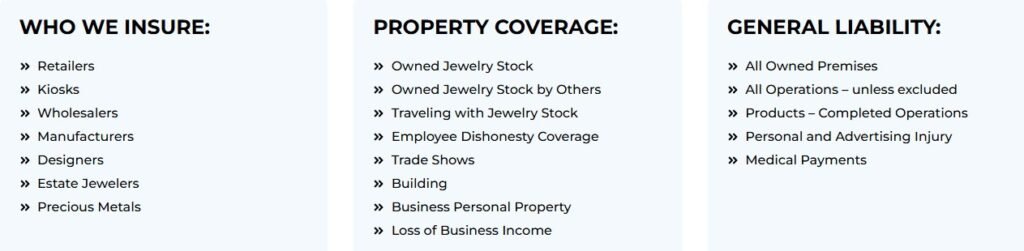
For a jewelry business, a top-tier central station alarm monitoring service isn't just a smart security upgrade—it's the absolute foundation of your entire insurance strategy. Think of it as a non-negotiable requirement for getting a comprehensive Jewelers Block insurance policy. It’s the critical link that connects your store’s security system to a real, verified emergency response.
Why Insurers Insist On Central Station Alarm Monitoring
When you're trying to secure the right insurance for a jewelry store, the conversation always starts with security. Underwriters for Jewelers Block policies see your business for what it is: a high-value, high-risk target. Before they’ll even consider covering you, they need total confidence that a break-in will trigger an immediate, professional response.
Here’s a simple way to look at it. A standard, unmonitored local alarm is like a car horn blaring in an empty parking lot at 3 a.m. Sure, it's making noise, but who's around to hear it? Who’s going to call for help? You're banking on pure chance.
In sharp contrast, central station alarm monitoring is a direct line to a 911 dispatcher. That dispatcher already has your address, knows the nature of the emergency, and has a clear protocol to follow. It’s a system that replaces chance with a process.
That single distinction means everything to an insurer. They aren't just insuring your diamonds and watches; they're underwriting your entire approach to managing risk. Having a professionally monitored system proves you’ve got a reliable process in place to stop a loss in its tracks.
The High Stakes of Jewelry Store Security
The threats a jewelry store faces are in a league of their own. We’re talking about everything from sophisticated overnight vault breaches to brazen daytime smash-and-grab robberies. Insurers are intimately familiar with these scenarios, and they know the only effective counter is a system with a verified response.
This is why they demand a system that guarantees:
- 24/7 Professional Oversight: Real, trained operators are always on watch, ready to act the second a signal comes from your store.
- Immediate Verification: The central station follows a strict playbook to confirm if a threat is real, which slashes false alarms and gets you a priority response from law enforcement.
- Guaranteed Dispatch: Once a threat is confirmed, the authorities are sent immediately. This dramatically boosts the odds of catching criminals and, more importantly, recovering your assets.
The Direct Line to Your Insurance Policy
At the end of the day, central station monitoring is the system that underwriters trust. Without that trust, you can't even get in the door to be considered for an insurance for jewelry business. There's a reason the global alarm monitoring market has exploded into a USD 59.46 billion industry—it provides precisely this kind of verified security that businesses and insurers rely on.

Having a UL-certified monitoring service is concrete proof to your insurer that you're a serious partner in protecting your own assets. It's why top underwriters, like those represented at Lloyd's of London, make it a core, unbreakable requirement for their policies. Without it, in their eyes, you're simply uninsurable.
How a Monitored Alarm Signal Protects Your Inventory
So, what happens when a sensor in your jewelry store trips in the dead of night? If you’re relying on a self-monitored system, you get a notification on your phone. Then it’s up to you to figure out what’s going on and call the police. That delay is exactly what criminals are banking on.
With central station alarm monitoring, the whole process is different. It’s less like getting a text message and more like having an air traffic controller dedicated solely to your store's security. A trained human operator receives, analyzes, and acts on every signal. This is the professional response your Jewelers Block insurer expects.
The instant an alarm is triggered, a highly structured chain of events kicks off, all designed to verify the threat and get help on the way with speed and precision.
The Signal's Journey From Store to Station
It all starts with a trigger—a pressure sensor on your vault, a motion detector after hours, or a glass-break sensor on a display case. That’s the first link in a critical communication chain.
- Sensor Activation: A specific sensor detects an unauthorized event and immediately fires off an alert to your alarm panel.
- Secure Transmission: Your panel instantly encrypts and sends that signal over secure lines to the central monitoring station. This isn't your standard Wi-Fi; it's a hardened connection, often with cellular backup, built to resist tampering.
This transmission happens in a flash. The signal doesn't just say "alarm"—it carries specific data identifying your store, the exact sensor that was triggered, and its location. For your insurer, that level of detail is non-negotiable.
The Human Element: Verification and Dispatch
Once the signal hits the central station, a trained operator takes over. This is where professional monitoring really shows its value. The operator doesn't just blindly call the police; they follow a strict protocol to verify the threat.
The operator’s first job is to weed out false alarms, which make up a huge number of alarm signals. By quickly verifying a real threat, they ensure that when law enforcement is called, the dispatch is treated with the urgency it deserves.
This protocol usually looks something like this:
- Instant Analysis: The operator sees the data on their screen, noting which zone was breached. A vault door sensor is going to get a much more urgent response than a back-room motion detector.
- Verification Call: They immediately start calling the contacts on your pre-approved list. This is a crucial step to check if an employee accidentally set off the alarm.
- Confirmed Threat Dispatch: If they can't reach anyone, if the wrong passcode is given, or if a duress code is used, they dispatch the police immediately. They give law enforcement all the critical info: your address, business type, and the specific entry point, so officers know what they’re walking into.
This simple diagram shows the stark difference between a local alarm just making noise and a monitored alarm that gets a professional response.
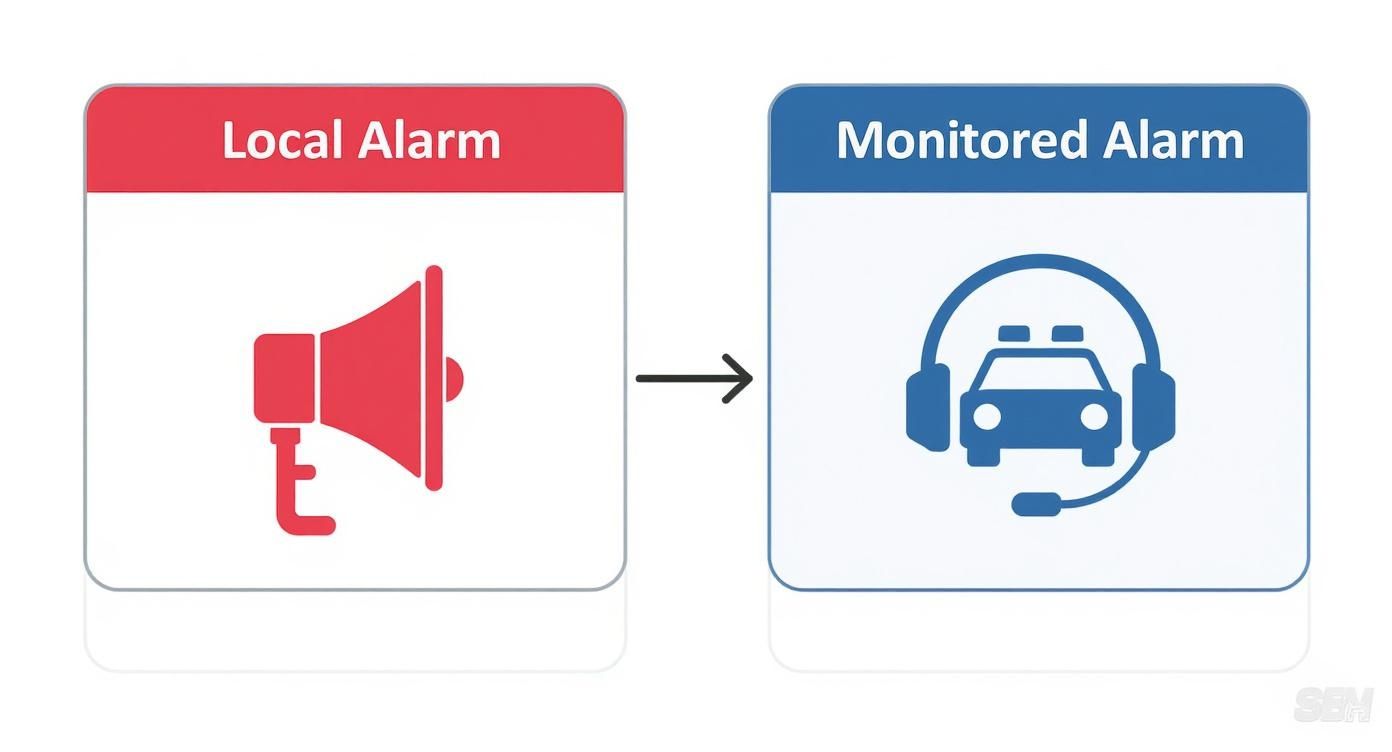
The image makes it crystal clear: one system makes a racket, while the other launches a verified emergency response. That distinction is everything when you're protecting high-value inventory like the stunning jewelry seen here.

Central station monitoring is a fundamental part of all comprehensive theft protection strategies, especially for a business built on irreplaceable assets. It’s not just an alarm—it’s a managed emergency service that protects your inventory, satisfies your insurer, and gives you peace of mind.
Decoding UL Certification for Jewelers Block Insurance
Talk to any insurance broker about your security, and you'll quickly learn two letters by heart: UL. An underwriter won't just ask if you have central station alarm monitoring—they'll want to see proof that it's UL-certified. This isn't about picking a favorite brand; it's the absolute gold standard for verifying security in the insurance world.
Think of UL certification as a promise that’s been independently and brutally tested. Underwriters Laboratories (UL) is a third-party organization that acts as a stern, impartial judge of your entire security setup. They don't just glance at a single piece of equipment; they validate every single link in the chain, from the sensors in your store all the way to the operators at the monitoring facility.
For a provider of Jewelers Block insurance, this certification is non-negotiable. It gives them hard proof that your security system isn't just for show. It's a guarantee that it is resilient, reliable, and can actually perform under the intense pressure of a real-life burglary.
What Does UL Certification Actually Guarantee?
When a central station earns a UL certification, it means they've passed a grueling series of tests covering every aspect of their operational integrity. And this isn't a one-and-done deal; it's an ongoing commitment.
UL inspectors are looking for very specific things, including:
- Physical Security: The central station itself needs to be a fortress. That means strict access control and surveillance to stop both internal and external threats.
- Power Redundancy: The facility must have multiple backup power sources, like generators and battery arrays, to ensure it never goes dark—even during a city-wide blackout.
- Communication Line Integrity: The lines that transmit signals from your store have to be secure, with multiple backup pathways (like cellular and internet) to prevent criminals from cutting or jamming them.
- Operator Training and Staffing: UL mandates specific training protocols and ensures the station is always staffed with enough skilled professionals to handle every alarm without a single second of delay.
This laser focus on reliability is precisely why insurers for jewelry businesses depend on the UL mark. A UL certificate tells them that an expert third party has already done the heavy lifting and confirmed your system is up to the task.
Understanding Key UL Grades for Your Jewelry Business
Not all UL certifications are created equal. They come in different grades, and your insurance policy will specify the exact level you need to have. For a high-value jewelry store insurance policy, the requirements are some of the toughest out there.
The most common grades you’ll run into are all about the security of the communication path—the link between your alarm panel and the central station. This is a favorite target for sophisticated criminals.
Let's break down what these grades mean for you and your insurer.
| UL Grade | Key Features | Transmission Security | Typical Insurer Requirement |
|---|---|---|---|
| Grade B | Basic line security, single transmission path. | Moderate. The connection is checked every 24 hours. Vulnerable if the primary line is cut. | Often insufficient for high-value jewelry stores. May be acceptable for lower-risk businesses. |
| Grade A | Encrypted line security with a single transmission path. | High. The connection is supervised every few hours, making it more tamper-resistant than Grade B. | A common minimum for some jewelers, but may not meet requirements for higher-value inventories. |
| Grade AA | Encrypted line security with dual transmission paths (e.g., internet + cellular). | Highest. The connection is supervised every 90-200 seconds. If one path fails, the backup takes over instantly. | The gold standard and most common requirement for Jewelers Block insurance policies. |
For most jewelers, Grade AA is the only one that matters. It represents the pinnacle of security and gives underwriters the confidence they need to cover your high-value inventory.
A UL certificate isn't just a piece of paper; it's a legal document that validates your compliance with your insurance policy's security warranties. In the event of a major theft, the presence and accuracy of this certificate can be the single deciding factor in whether your claim is approved or denied.
This level of redundancy and constant supervision assures your underwriter that even a skilled criminal will have a hell of a time trying to defeat your alarm before a signal gets through. Without that third-party validation from UL, an insurer is just taking your word for it—and that’s a risk they simply won't take when millions of dollars are on the line.
Choosing the Right Monitoring Partner for Your Business
Picking a central station alarm monitoring service is one of the biggest security decisions a jeweler will ever make. This isn't just about hiring a company to watch over your store; it's about bringing on a trusted partner, one your insurance carrier will depend on to protect your high-value inventory. The wrong choice can create dangerous gaps in your coverage, slow down an emergency response, and lead to catastrophic financial losses.
Let's be clear: not all monitoring services are created equal, and most aren't built to handle the unique threats a jewelry store faces. The right partner won't just tick the boxes on your Jewelers Block insurance policy. They'll act as a vigilant, 24/7 guardian for your assets, because they understand just how high the stakes are.
To make the right call, you have to ask the right questions and demand solid, verifiable proof. This puts you in the driver's seat when talking to your alarm company and your insurance broker, making sure your security investment truly counts.
The Essential Vetting Checklist
When you're sizing up a potential monitoring partner, use this checklist as your guide. Their answers will tell you everything you need to know about their ability to protect a business like yours and keep your insurer happy. Think of this as an interview for one of the most critical roles in your business.
-
Is Your Central Station UL-Listed? This is the first and most important question. Don't just take "yes" for an answer. Ask for their UL certificate number and the specific grade of service, like Grade AA. If they hesitate or can't provide the documentation, walk away. They aren't a viable option for a serious jewelry business.
-
What Are Your Average Operator Response Times? This is the clock that starts ticking the second a signal hits their station and stops when an operator takes action. A top-tier station should be moving in under 30 seconds. Any longer, and you're giving criminals a window of opportunity they shouldn't have.
-
Do You Have Redundant Monitoring Stations? What happens if a hurricane or a massive power outage takes their primary facility offline? A professional service will have multiple, geographically separate, UL-listed stations. If one goes down, your monitoring is seamlessly switched to a backup location without missing a beat.
Digging Deeper into Protocols and Experience
Beyond the basics, you need to know exactly how they'll react to scenarios unique to our industry. A one-size-fits-all approach is a recipe for disaster when millions of dollars are on the line.
A central station's experience with other jewelers is a powerful indicator of their expertise. They will already be familiar with the unique threats you face and the stringent protocols that insurers and law enforcement expect.
Ask them to walk you through their standard operating procedures for a jewelry store alarm. What's their verification process for an after-hours signal? How do they handle a duress or panic alarm during business hours? What specific information do they give to police dispatchers to ensure a priority response? While knowing the features of the best home security systems can be a good starting point, remember that the requirements for a commercial jeweler are in a completely different league.
Verifying Their Reputation and Track Record
Finally, don't just take their marketing materials at face value—make them prove it. Any reputable central station will be transparent and ready to back up their claims with real-world evidence.
-
Request References: Ask to speak with other jewelry store owners they currently serve. A quick chat with a fellow jeweler can give you invaluable, unfiltered insight into their day-to-day performance and customer service.
-
Consult Your Insurance Broker: Your broker lives and breathes this stuff. An agency like First Class Insurance Jewelers Block Agency knows which monitoring companies the underwriters trust and, more importantly, which ones create headaches when it’s time to file a claim.
Choosing the right monitoring partner comes down to doing your homework. By asking these tough questions, you ensure your central station is a true security asset—one that strengthens your defenses, satisfies your insurer, and helps protect the future of your business.
The ROI of Premium Security Monitoring
It’s easy to look at top-tier central station alarm monitoring as just another monthly expense. That’s a common—and very costly—mistake. A better way to see it is as a strategic business investment with a clear and substantial return. The monthly fee for a UL-certified monitoring service is a tiny fraction of the catastrophic costs it helps you avoid.
When you frame it that way, the value becomes impossible to ignore. A major theft isn't just about lost inventory; it's a cascading financial disaster. The direct loss is often followed by painfully higher Jewelers Block insurance premiums. In severe cases, your insurer might even refuse to renew your policy, leaving your business completely uninsurable.
The true return on investment isn't just measured in prevented losses. It's found in your ability to secure comprehensive insurance, deter criminals, and maintain the operational stability that comes from knowing your business is protected by a system your insurer trusts.
This investment is the absolute backbone of a successful insurance for jewelry business strategy. Without it, you’re exposed to risks that can easily put you out of business overnight.
Calculating the True Value of Monitoring
The ROI of professional monitoring goes far beyond just preventing a break-in. It directly impacts your bottom line and your ability to stay in business. The global market for these central monitoring services is currently valued at USD 17.5 billion and growing, which shows just how essential they've become. You can dig into the research on central monitoring station market growth to see where the industry is headed.
This growth is fueled by the real, tangible benefits that jewelry businesses see every day:
- Insurance Eligibility and Discounts: Many carriers, like those at First Class Insurance Jewelers Block Agency, won't even offer a quote without a UL-certified system in place. Having one not only makes you eligible for the best coverage but can also unlock premium discounts that help offset the monitoring cost.
- Enhanced Theft Deterrence: Professional thieves know what they're looking for. They can spot the signs of a professionally monitored facility from a mile away. The presence of a serious system often convinces them to move on to an easier, less protected target, saving you from a loss before it even happens.
- Reputational Security: A major theft can shatter customer confidence and tarnish your brand's reputation for years. Maintaining a secure environment protects your most valuable intangible asset—your good name.
A Small Cost for Invaluable Protection
Ultimately, the cost of premium monitoring is an investment in stability. It ensures you can get the right jewelry store insurance and protects everything in your inventory, from everyday pieces to the high-end valuable watches in your collection.
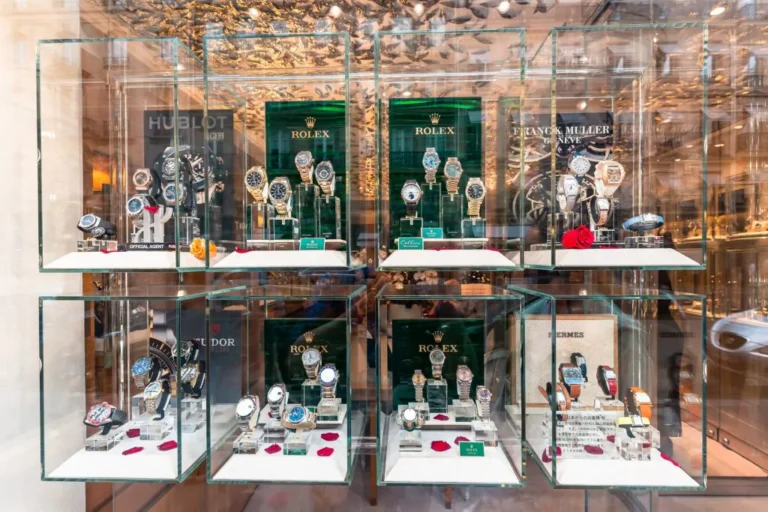
That monthly fee is a predictable, manageable expense that secures your entire operation against an unpredictable, catastrophic loss. It’s one of the wisest financial decisions a jeweler can make.
Common Questions About Monitoring and Insurance
Sorting through the security requirements for a Jewelers Block insurance policy can feel like a maze. But it doesn't have to be. Getting a handle on the key terms and what your insurer expects from the get-go makes all the difference, helping you protect your business and keep it insurable.
Let's break down the most common questions we hear from jewelers.
Clarifying Key Insurance Requirements
Getting the right security in place is your first move toward locking in the right insurance for a jewelry store. The questions below hit the most critical points, from decoding certifications to proving you've done your part.
My broker says I need a UL-certified alarm. What does that even mean?
Think of a UL certification as a stamp of approval from an independent expert, Underwriters Laboratories. They've checked everything: your equipment, the quality of the installation, and the central station alarm monitoring service itself. For a jeweler, this tells your insurer your system isn't just a noisemaker—it has secure communication lines, backup power, and is watched over by a facility that meets its own set of tough standards. It's a third-party guarantee that your alarm will actually work when you need it most, which is why it's a non-negotiable for most policies.
What's the difference between a local alarm and central station monitoring?
A local alarm is just a loud siren on your building. It’s designed to scare someone off and hope a neighbor calls the police. That’s a lot of hope.
Central station alarm monitoring is the professional-grade solution insurers require. When your alarm is triggered, it sends a signal to a secure, 24/7 facility staffed by trained operators. They verify the alarm and immediately dispatch the police or fire department. That direct line to emergency services is the critical difference and precisely why it's a must-have for any high-value insurance for jewelry business.
Proving Compliance and Making Smart Choices
Once your system is up and running, you'll need to show your insurance carrier that you've met their requirements. This is also where you need to avoid a few common mistakes that could put your coverage at risk.
How do I prove to my insurance company I have the right service?
Your alarm company will give you a UL Certificate for your specific system. This isn't just a receipt—it's an official document detailing your system's grade (like Grade AA) and the central station's credentials. You’ll need to send a copy of this certificate to your broker to prove you’re in compliance. It’s a key step to finalize a new policy or process a renewal.
Always keep a copy of your UL certificate on file and be ready to provide an updated one to your insurer at every renewal. It's the primary piece of evidence they'll ask for to confirm your security is up to snuff.
Can I save a few bucks with a non-UL certified monitoring station?
You might see a lower monthly fee from a non-certified station, but it’s a classic case of being penny-wise and pound-foolish. Any reputable Jewelers Block insurance carrier will likely do one of two things: refuse to insure you altogether or hit you with much higher premiums.
Worse yet, if that non-certified system fails you during a break-in, your claim could be denied outright. That kind of shortcut could lead to a financial loss so catastrophic it could sink your business.
Protecting your high-value inventory starts with having the right security and the right insurance partner. At First Class Insurance, we specialize in building insurance solutions that meet the unique needs of the jewelry industry.