
Picture this: a long-time client sues you, claiming a flawed appraisal cost them thousands. Or maybe a custom design has a structural issue, and the piece falls apart. Your Jewelers Block insurance is great for protecting your physical inventory from theft or damage, but it’s completely powerless in these situations.
This is where you’re exposed, and it's precisely this gap that errors & omissions insurance is designed to fill.
Why Jewelers Need More Than Just Inventory Insurance

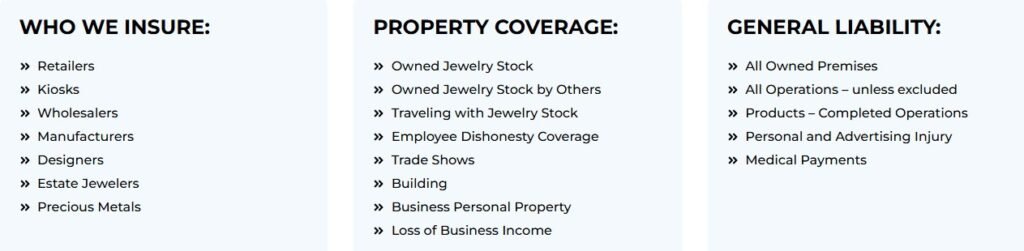
It’s a common mistake for jewelers to think their main policy is an all-in-one shield. A standard jewelry store insurance plan, like Jewelers Block, is fantastic at what it does: protecting tangible assets. It's the policy that steps in to cover the gold, diamonds, and gemstones when they're stolen, damaged, or lost to a fire.
But what about the most valuable asset you have that isn't locked in a vault—your expertise?
Every appraisal you conduct, every repair you complete, and every custom piece you design is built on your professional judgment. That's where a huge, and often ignored, liability risk lives. A simple human error in any of these services can lead to a client's major financial loss, sparking a lawsuit that your inventory policy won't even touch.
The Limits of Physical Asset Protection
Policies built to cover physical goods have hard-and-fast boundaries. While your inventory is protected, and other policies like content insurance for storage cover physical assets in other scenarios, they do nothing to address the professional risks you face every single day.
Here's the simplest way to think about it: Jewelers Block protects what you have. Errors & Omissions insurance protects what you do and what you know. It’s your defense against claims of negligence, honest mistakes, or failing to deliver on your professional promise.
Ignoring this distinction leaves a dangerous hole in your financial armor. All it takes is one upset client to rack up legal fees and settlement costs big enough to threaten the future of your business.
Building a Complete Safety Net
Think of your insurance coverage as a layered security system for your business. Relying only on an inventory policy is like bolting the front door but leaving all the windows wide open for anyone to crawl through.
Errors & omissions insurance is what locks those windows. It secures your professional reputation and protects your bottom line from the risks that come with being an expert.
A truly solid risk management strategy for any insurance for jewelry business needs all three of these pillars:
- Jewelers Block: Covers your physical stock and customer property in your care.
- General Liability: Handles things like a customer slipping and falling in your showroom.
- Errors & Omissions (E&O): Defends you against lawsuits that stem directly from your professional services.
Without E&O, you’re gambling with the very real risks that come with giving expert advice and offering specialized services. You can also explore how to protect specific high-value items in our guide on insuring diamond rings.

Understanding Errors & Omissions Insurance Coverage
So, what exactly does errors & omissions insurance cover? Let’s get straight to it: think of it as professional liability insurance built specifically for the risks you face every day in the jewelry world. This policy is designed to protect your jewelry store insurance plan from financial disaster when a client claims your advice or services caused them a loss.
This isn’t about a stolen necklace or a broken showcase—that’s what your Jewelers Block insurance is for. E&O is all about the intangible side of your business: your expertise, your appraisals, your designs, and your craftsmanship. It's the policy that kicks in when a client decides to sue you over the work you did.
Put simply, errors & omissions insurance is your financial backstop against human error. In a high-stakes profession like ours, one unintentional mistake can have devastating consequences.
The Core Pillars of E&O Protection
At its core, this type of insurance for a jewelry business covers three main kinds of professional missteps. Grasping the difference between them makes it much clearer when and how your policy would actually protect you.
- Errors: These are the active mistakes, the things you did wrong. An error is when you do something incorrectly, plain and simple.
- Omissions: This is about what you didn't do. An omission is a failure to disclose something or take a necessary action you should have.
- Negligence: This is a bit broader. It’s a failure to meet the professional standard of care expected in the jewelry industry, which ends up costing your client money.
Let's ground these ideas in some real-world situations you might face.
Real-World Claim Examples
- Incorrect Appraisal (Error): You appraise a family heirloom diamond ring at $10,000 for a client's insurance policy. A year later, it's stolen. An independent expert brought in by the insurance company values its replacement at $18,000. Your client could come after you for the $8,000 difference, claiming your bad appraisal left them underinsured.
- Failure to Disclose (Omission): You sell a gorgeous sapphire but forget to mention it underwent a very common heat treatment to improve its color. The customer finds out later and sues you, arguing that you omitted a crucial fact that influenced their decision and the stone's value.
- Flawed Custom Design (Negligence): A client hires you to create a one-of-a-kind platinum bracelet. Because of a small flaw in your CAD design, a clasp is too weak. The bracelet fails, falls off, and gets damaged. The client sues you for the full cost of the piece, claiming professional negligence in your design work.
In every one of these scenarios, your E&O policy would be your first line of defense.
An E&O policy’s most important job is to pay for the massive costs that come with a lawsuit. That means attorney fees, court costs, expert witnesses, and any settlements or judgments against you—even if the lawsuit is completely frivolous.
Who and What Is Covered
A good errors & omissions insurance policy is built to protect your entire business, not just the front door. Coverage is designed to extend to:
- The Business: Your company itself is shielded from the financial liability of a claim.
- Owners and Partners: Your personal assets are protected from lawsuits aimed at the business.
- Employees: Your whole team, from the sales associate to the bench jeweler, is covered for mistakes they make while on the job.
This wide net of protection is absolutely essential for any insurance for a jewelry store. Without it, one mistake from a single employee could put the entire company—and its owners—in financial jeopardy. The policy defends your business's bottom line so you can keep your focus on your craft, not on the constant fear of a professional misstep turning into a financial catastrophe.
For a specialized agency that lives and breathes these risks, the First Class Insurance Jewelers Block Agency can help you weave E&O into a complete protection plan. You can also Get a Quote for Jewelers Block and talk to an expert about adding this crucial coverage.
Jewelers Block vs. Errors & Omissions Insurance
Many jewelers believe their Jewelers Block insurance is an all-encompassing shield. That’s a dangerous and potentially very expensive assumption. The reality is, Jewelers Block and Errors & Omissions policies protect you from entirely different kinds of disasters. They aren’t interchangeable—they're essential partners in a truly secure protection plan.
Think of it this way: a Jewelers Block policy is the fortress protecting your physical, tangible assets. Its job is to respond when there's physical loss or damage to your inventory, a customer's piece in for repair, or your raw materials. It's the guard at the vault door.
Errors & Omissions insurance, on the other hand, guards your professional expertise and advice. It kicks in when a client suffers a financial loss because of a mistake you made or something you forgot to do. E&O is what defends your reputation and your bank account when your expertise itself comes under attack.
Defining The Boundaries Of Coverage
To make it crystal clear, you need to think in two separate categories of risk. One is about physical things you can touch; the other is about the professional service you provide. A solid jewelry store insurance plan is dangerously incomplete if it only covers one.
Physical Risk (Jewelers Block): This covers theft, fire, damage during shipping, and other incidents that directly harm your physical stock. If a diamond is chipped while being set by a third party or a tray of rings is stolen, Jewelers Block is the policy that responds.
Professional Risk (E&O Insurance): This covers claims of negligence, a flawed appraisal, a bad custom design, or failing to disclose a crucial detail about a stone. If a client sues you because your professional advice cost them money, E&O is your line of defense.
This diagram gives you a great visual breakdown of what E&O is designed to protect.

As you can see, an E&O policy acts as a shield against the professional risks—errors, omissions, and negligence—that can easily lead to a devastating lawsuit.
Adding The Third Layer: General Liability
There’s one more piece to this puzzle: General Liability. This policy covers third-party bodily injury or property damage that happens on your premises. For instance, if a customer slips on a freshly mopped floor in your showroom and breaks their arm, General Liability is what covers their medical bills and your legal costs.
It does not cover your professional mistakes (that's E&O's job) or loss of your inventory (that's Jewelers Block's job). Understanding how these three policies work together is non-negotiable for anyone needing insurance for a jewelry business.
Think of your protection like a three-legged stool. Jewelers Block protects your stuff, General Liability protects your space, and Errors & Omissions protects your services. Take away any one of those legs, and your business is left wobbly and at risk of collapsing from a single mishap.
To really drive home how different these coverages are, let's look at a few scenarios.
Comparing Jewelers Block and Errors & Omissions Coverage
The following table lays out a few real-world situations to show which policy would step in. Notice there's absolutely no overlap.
| Scenario | Covered by Jewelers Block? | Covered by Errors & Omissions? |
|---|---|---|
| A fire damages your display cases and melts several gold chains. | ✅ Yes | ❌ No |
| You appraise a ring for $5,000, but its true value is $15,000. The client sues after a theft. | ❌ No | ✅ Yes |
| A traveling salesperson is robbed of their sample line while on the road. | ✅ Yes | ❌ No |
| You fail to disclose that a gemstone was clarity-enhanced, and the customer sues. | ❌ No | ✅ Yes |
| A customer's child knocks over a statue in your store, causing damage. | ❌ No (General Liability) | ❌ No |
This comparison makes it obvious: relying on one policy to do the job of another leaves your business dangerously exposed.
At First Class Insurance Jewelers Block Agency, our specialists live and breathe this stuff. We know how these policies must work in concert to create a seamless shield. When you Get a Quote for Jewelers Block, we analyze your entire risk profile to make sure there are no gaps between your physical and professional protections.
Real-World Claims Scenarios for Jewelers

It’s one thing to talk about professional liability in the abstract. It’s another thing entirely when it walks through your door. To really get why errors & omissions insurance is so essential, you have to look past the policy definitions and see how these situations play out in the real world.
These aren't far-fetched scenarios; they happen every day in the jewelry business. A simple, honest mistake can spiral into a legal nightmare that puts everything you’ve built at risk. Without the right coverage, one angry client could mean financial ruin.
The Appraisal Mistake
Let's say a long-time customer asks you to appraise a family heirloom, an antique diamond ring. You do your due diligence and give it a replacement value of $12,000. She takes your appraisal, updates her homeowner's policy, and thinks she's fully protected.
A few months later, the ring is stolen in a break-in. When she files a claim, her insurance company's expert values the ring at $22,000 in today's market. The insurer cuts her a check for the $12,000 on your appraisal, leaving her short $10,000.
Now she’s furious, and she’s suing you for professional negligence. Your Jewelers Block policy won't touch this, but an errors & omissions policy is built for it. It steps in to handle your legal defense and any potential settlement, protecting your business from a devastating financial blow. You can learn more about how to handle high-value heirlooms in our guide to protecting antique jewelry.
The Custom Design Conflict
A client commissions a one-of-a-kind platinum engagement ring. You go through the entire process—CAD renderings, approvals, the works. You deliver a stunning piece, but a few weeks later, he's back and he's not happy.
He claims the prongs aren’t as delicate as the design he signed off on and the center stone looks crooked. He wants a full refund, plus money for his "emotional distress," and he’s threatening to trash your reputation online. A lawsuit lands on your desk, claiming you failed to deliver what was promised.
In a "he said, she said" fight over custom work, legal bills pile up fast—even when you're sure you did everything right. E&O insurance is designed for exactly this kind of mess, covering your defense so you can focus on finding a resolution.
The Repair Gone Wrong
A customer hands you her treasured emerald pendant for a simple fix: just tighten the bezel. But during the repair, a tiny bit too much pressure from your bench jeweler turns a microscopic internal fracture into a very visible crack. The stone's value just plummeted.
This isn't just property damage; it's a claim of professional negligence. The client sues your insurance for jewelry business for the full diminished value of the gem—a figure that could easily run into the tens of thousands. Your E&O policy is made for this exact risk, covering the settlement for the damaged stone and every dollar of the associated legal fees.
The Sourcing Error
You're a wholesale gem dealer, and your name is your bond. You buy a parcel of what you believe are natural, unheated rubies from a source you trust. You then sell them to several retailers. The problem? Your supplier was wrong, and the stones were actually heat-treated—a critical detail you unknowingly left out.
When one of your retail clients sends a stone to a lab, the truth comes out. They sue you for misrepresentation, demanding a full refund and damages for the harm you caused their reputation. One mistake by your supplier has now put your business and your relationships on the line. This is where your errors & omissions insurance kicks in to manage the legal and financial fallout.
What Goes Into the Price of Your E&O Insurance?
Let's get one thing straight: there's no flat rate for errors & omissions insurance. When an underwriter looks at your business, they're not just pulling a number out of a hat. They are meticulously calculating your specific risk profile to land on a premium that makes sense.
Getting a handle on these factors does more than just explain your quote—it gives you the power to influence your costs over the long haul. Think of it like looking at your business through an underwriter's lens. Once you see what they see, you can spot opportunities to tighten up your operations and potentially lower your rates.
The Services You Offer and the Size of Your Operation
The biggest single factor driving your E&O cost is the kind of work you actually do. A jeweler who only sells finished pieces from a case has a much lower professional liability risk than a business that's constantly doing high-dollar appraisals, complex repairs, or one-of-a-kind custom designs. Those expert services are where the money is, but they also open the door to claims if a client believes your mistake cost them money.
Of course, the scale of your business matters, too. Underwriters will look at a few key metrics:
- Annual Revenue: More sales means more client interactions. It's a simple numbers game—the more transactions you have, the higher the statistical chance of a claim popping up.
- Number of Employees: Every person on your team, from the sales floor to the bench, is another potential source of an E&O claim. A larger staff naturally increases that exposure.
Your Track Record and How You Manage Risk
Nothing speaks louder to an insurer than your claims history. It's the clearest indicator of future risk. If you have a clean record with no E&O claims, it tells them you run a tight ship, and you'll be rewarded with better premiums. On the flip side, a history of claims suggests a pattern, and your rates will reflect that higher risk.
But you're not just a passenger here. You can actively steer your rates in the right direction by showing you have solid risk management in place.
When an underwriter sees you have strong, documented procedures, they don't just see good business practices. They see a tangible reduction in the odds they'll ever have to pay out a claim. Things like clear client communication and documented sign-offs are your best leverage for better terms.
Simple, documented steps—like requiring a client's signature on all CAD renderings before casting a custom piece or using a standardized checklist for every single appraisal—can directly translate into a better insurance rate. You're proving you're serious about preventing the very errors this policy is designed to cover.
How You Structure Your Policy
The policy details you choose will obviously affect your premium. If you want higher coverage limits, your cost will go up. If you're willing to take on a higher deductible (the amount you pay out-of-pocket before insurance kicks in), your premium will come down. It's a balancing act between the amount of protection you need and the level of risk you're comfortable covering yourself.
The wider insurance market plays a role, too. The US Insurtech Errors and Omissions Insurance Market is booming, hitting a value of USD 1.15 billion and growing at an incredible 29.6%. With North America owning over 36.1% of that market, it means there’s healthy competition among insurers. For a well-run jewelry business, this competition can lead to better pricing and more favorable policy options. You can read more about the growth in the Insurtech E&O market to understand the trends.
How to Get the Right E&O Protection for Your Jewelry Business
Getting the right errors & omissions insurance isn’t just about checking a box. It’s about building a shield that fits your specific business like a custom-made setting. A generic, one-size-fits-all policy can leave you with dangerous gaps, exposing you to the very risks you thought you were covering. Your first and most important step is always to partner with a specialist.
An expert in jewelry store insurance gets it. They understand that a retail showroom faces entirely different risks than a custom designer or a third-party appraiser. They know how to make sure your E&O coverage works seamlessly with your other essential policies, especially your Jewelers Block, creating a safety net without any holes.
Partnering with a Specialist Agency
Here at First Class Insurance Jewelers Block Agency, we bring over 30 years of hands-on experience directly to the jewelry industry. We don't just sell policies—we build comprehensive protection plans.
Our process is straightforward and laser-focused on your needs:
- Deep Dive into Your Operations: We start by getting a complete picture of your business, from every service you offer to the fine print in your client contracts.
- Pinpoint Your Exposures: We identify precisely where your professional liability risks lie. Is it in high-value appraisals, complex repairs, or gemstone sourcing? We’ll find it.
- Build Your Custom Solution: We then tap into our network of top-rated underwriters, like the experts at Lloyd's of London, to craft an E&O policy that covers your unique vulnerabilities without making you pay for things you don’t need.

The world of insurance for jewelry business is constantly shifting. The market for Technology Errors and Omissions insurance is growing fast, and for good reason—think about the risks tied to your POS systems, inventory software, and e-commerce platform. As the lines between a simple professional mistake and a serious cyber risk get blurrier, having an expert who understands these complex, overlapping threats is more critical than ever. You can learn more about these growing E&O market trends on cyberresilience.com.
Don’t gamble with your business’s future. Protecting your reputation is just as vital as protecting your inventory. A specialist insurance partner makes sure a single professional mistake can’t threaten everything you've worked so hard to build.
Because we’re so focused, we can typically deliver a comprehensive quote within 24 hours. Get in touch with our team today and get the peace of mind that comes from knowing your expertise is as well-protected as your diamonds.
E&O Insurance: Your Questions Answered
If you're asking questions about errors & omissions insurance, you're already on the right track. It means you’re thinking seriously about how to protect every part of your business. Let's get into a few of the most common questions we hear from jewelers.
Do I Really Need E&O Insurance if I’m Just a Small, Independent Jeweler?
Yes, absolutely. In fact, you might need it more than anyone. For a small shop, a single lawsuit over a professional mistake can rack up enough legal fees to put you out of business for good.
You might have fewer customers, but every single repair, appraisal, or custom job you take on carries the risk of a claim. Errors & omissions insurance is that crucial financial backstop. Think of it as a foundational piece of your insurance for a jewelry business, protecting you when you have less cash on hand to fight a legal battle.
Does E&O Insurance Cover an Employee Stealing from Me?
No, it doesn't. E&O is built to handle claims of unintentional mistakes, negligence, or professional oversights—not outright criminal acts like theft or fraud by an employee.
That’s a completely different kind of risk. Protection against employee dishonesty is handled by a separate Crime policy or a Fidelity Bond. Our experts at First Class Insurance Jewelers Block Agency can help you figure out if this is a necessary addition to your risk management plan.
What Does "Claims-Made" Mean on My Policy?
This is a critical detail. Most E&O policies are "claims-made," which means that for a claim to be covered, your policy has to be active when the claim is filed, not just when the mistake happened.
This is the opposite of an "occurrence" policy (like you see with General Liability), which covers an incident that happens during the policy period, no matter when someone decides to sue. Because of this, it's vital to keep your E&O coverage continuous without any breaks. A lapse could leave all your past work completely exposed.
How Much E&O Coverage Should I Get?
There's no one-size-fits-all answer here; it comes down to the specifics of your business. We look at factors like your annual revenue, the average value of the pieces you're handling, and what kind of services you offer. Appraising high-value items, for instance, naturally demands higher limits.
A $1 million limit is a common starting point for many small to mid-sized jewelers, but that can go up or down. The only real way to know for sure is to talk to a specialized agent who gets the jewelry industry. They can analyze your specific risks and recommend a policy limit that actually protects your assets and lets you sleep at night.
Your reputation is your most valuable asset. At First Class Insurance, we specialize in crafting protection plans that shield both your inventory and your expertise. Don't leave your professional services exposed. Get a Quote for Jewelers Block and discuss adding essential E&O coverage with an expert today.