
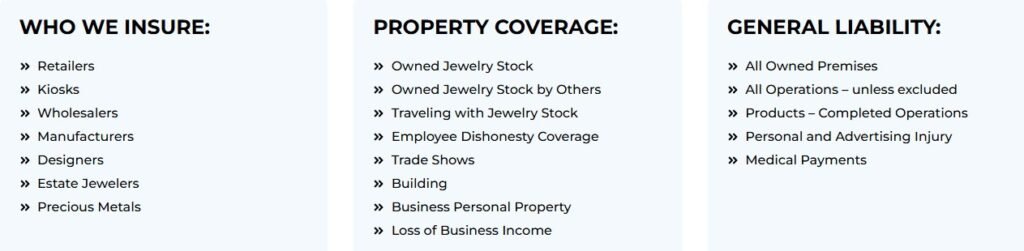
Yes, you can absolutely walk into a local jewelry store and get a free jewelry appraisal, but it's critical to know exactly what you're getting. These are almost always informal, verbal estimates of value—not the detailed, certified documents your insurance company requires.
Think of it as a great first step. It’s perfect for satisfying your curiosity about a piece, sorting through an inherited collection, or getting a ballpark figure before you decide to sell.
What a Free Jewelry Appraisal Really Means
When a jeweler offers a free appraisal, they’re giving you their professional opinion based on a quick, hands-on inspection. It’s a conversation starter, an educated guess to give you a general idea of your item's worth.
But here’s the most important distinction: this verbal assessment is a world away from a formal, written appraisal report. That formal report is a detailed, multi-page document essential for getting the right insurance coverage, especially for something as comprehensive as a Jewelers Block insurance policy.
The Purpose Behind the Valuation
The "value" of a piece of jewelry isn't a single, fixed number; it changes entirely based on why you're asking. A quick, free look is typically focused on one of two things:
- Fair Market Value: This is the price a willing buyer would likely pay a willing seller on the open market. It's the number you want if you're thinking about selling.
- Liquidation Value: This is often a lower figure. It reflects what a dealer might pay on the spot to buy your item for their inventory, factoring in their need to resell it for a profit.
On the other hand, a paid appraisal for insurance for a jewelry store or a personal collection calculates the retail replacement value. This is the full price it would cost to buy a brand-new, comparable item from a retail jeweler today. This figure is almost always higher than the other two values, and getting it right is crucial for making sure your jewelry store insurance will actually cover a loss.
The demand for this kind of professional valuation is growing fast. The global jewelry appraisal market hit about USD 1.6 billion in 2023, which just goes to show how vital accurate appraisals are for protecting assets. As the market keeps expanding, this becomes non-negotiable for any insurance for jewelry business. You can dig deeper into these jewelry appraisal market trends on DataHorizzon Research.
A free appraisal tells you what you might get if you sell today. A paid insurance appraisal documents what it would cost to replace tomorrow. Understanding this difference is the key to protecting your assets.
To make this crystal clear, let's break down the fundamental differences between a casual, free appraisal and a formal, paid one.
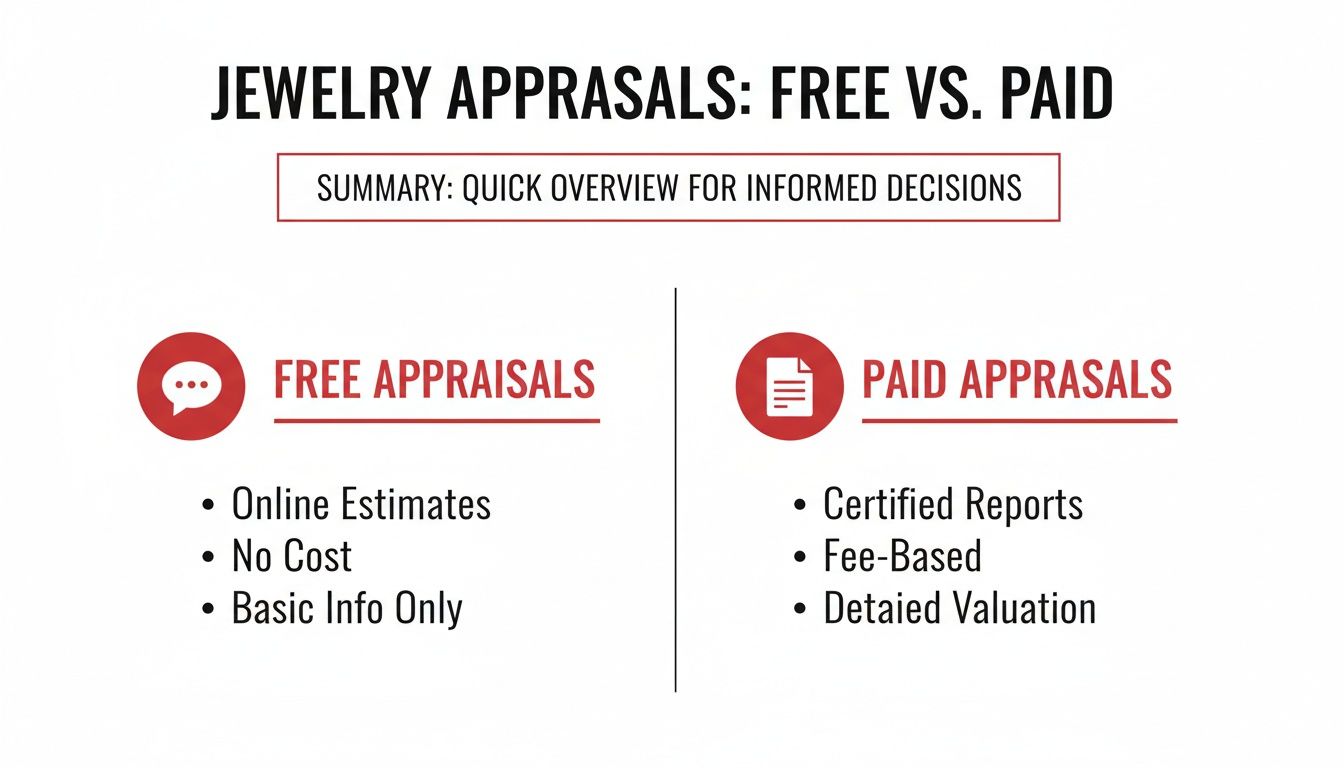
Free vs Paid Certified Appraisals at a Glance
The table below lays out the key distinctions between the quick, verbal estimate you get for free and the comprehensive, written report required for insurance.
| Feature | Free Verbal Appraisal | Paid Certified Appraisal Report |
|---|---|---|
| Cost | Typically free | $75 – $150+ per item, or hourly |
| Format | Verbal, informal | Written, detailed, multi-page document |
| Purpose | Curiosity, resale estimate, initial assessment | Insurance coverage, estate planning, legal matters |
| Valuation Type | Fair Market Value or Liquidation Value | Retail Replacement Value |
| Documentation | None, or a simple note at most | Formal report with photos, descriptions, and value |
| Legal Standing | None | Legally recognized by insurers and courts |
| Time Commitment | A few minutes | Hours of research and documentation |
The bottom line is simple: a free appraisal is a fantastic tool for getting an initial, informal estimate. But when it's time to protect your jewelry with proper insurance, only a paid, certified appraisal provides the detailed, legally recognized documentation you need.
Finding Trustworthy Jewelers for Free Appraisals
Getting a reliable free jewelry appraisal all starts with knowing where to look. While plenty of jewelers offer this service as a courtesy, let's be honest—not all opinions hold the same weight. You need to find a true expert whose credentials you can trust, even for a quick, preliminary look.
Your best bet is to start with reputable, independent jewelry stores in your area. Many of them host special appraisal events throughout the year, which are fantastic opportunities to get a professional opinion without any pressure. It's a smart way for them to meet new clients, and a great way for you to get valuable insight.
Auction houses are another goldmine for this. When you bring in a piece for a consignment consultation, their specialists evaluate it to see if it’s right for an upcoming sale. That process is essentially a free appraisal, giving you a real-world estimate of its market value. The same goes for estate buying events, which are perfect for getting an expert eye on inherited pieces.
Vetting Appraiser Credentials
Here’s the bottom line: an appraisal is only as good as the person giving it. It doesn’t matter where you go; the appraiser’s qualifications are everything. You should always be on the lookout for professionals with certifications from the industry’s most respected organizations.
The single most important factor in any appraisal—free or paid—is the gemologist's training and certification. An uncertified opinion is just a guess. A certified one is based on standardized, expert knowledge.
These are the credentials that truly matter:
- Gemological Institute of America (GIA): A GIA Graduate Gemologist (GG) diploma is the undisputed gold standard. It means they’ve gone through some of the most rigorous training in the world on gem identification and grading.
- American Gem Society (AGS): If an appraiser holds an AGS title like Certified Gemologist Appraiser (CGA), you know they’ve met incredibly high ethical standards and have proven expertise, especially in diamond grading.
- American Society of Appraisers (ASA): An ASA-accredited appraiser has demonstrated deep knowledge in valuation theory and operates under a strict code of ethics, which ensures their assessments are both professional and unbiased.
Questions to Ask Any Appraiser
Even when the service is complimentary, you have every right to ask a few questions. Don't be shy. A true professional will be more than happy to talk about their background and their process. This builds trust and gives you a much better understanding of their valuation.
Fire off these essential questions:
- What are your credentials? Be direct. Ask if they hold a GIA, AGS, or ASA certification.
- How much experience do you have with pieces like mine? Someone who specializes in modern engagement rings might not be the right person to evaluate your grandmother’s Victorian brooch.
- What tools will you be using? At a bare minimum, they should be pulling out a jeweler's loupe, a microscope, and other gemological testing equipment.
- Is this value for insurance replacement or fair market value? These are two very different numbers. You need to know exactly which one you're getting to decide your next steps.
By focusing on these key areas, you can walk away from a free jewelry appraisal with confidence. The advice you get will be credible, whether you're just curious about a family heirloom or need a quick valuation for your jewelry business inventory. Many professionals also show their commitment to the industry by belonging to trade groups like the Southern Jewelry Travelers Association. You can see the SJTA membership logo that members often display as a sign of their dedication.
How to Prepare for Your Appraisal
Walking into an appraisal unprepared is a missed opportunity. If you want to get the most out of your consultation—especially a free jewelry appraisal—a little prep work goes a long way. It shows the appraiser you're serious and helps them give you a valuation that's insightful and accurate.
This is about more than just showing up with a ring in your pocket. It means gathering its history and presenting the piece in its best light. Taking these steps makes for a much smoother process, whether you’re getting a family heirloom checked out or documenting inventory for your Jewelers Block insurance policy.
Gather Your Essential Documents
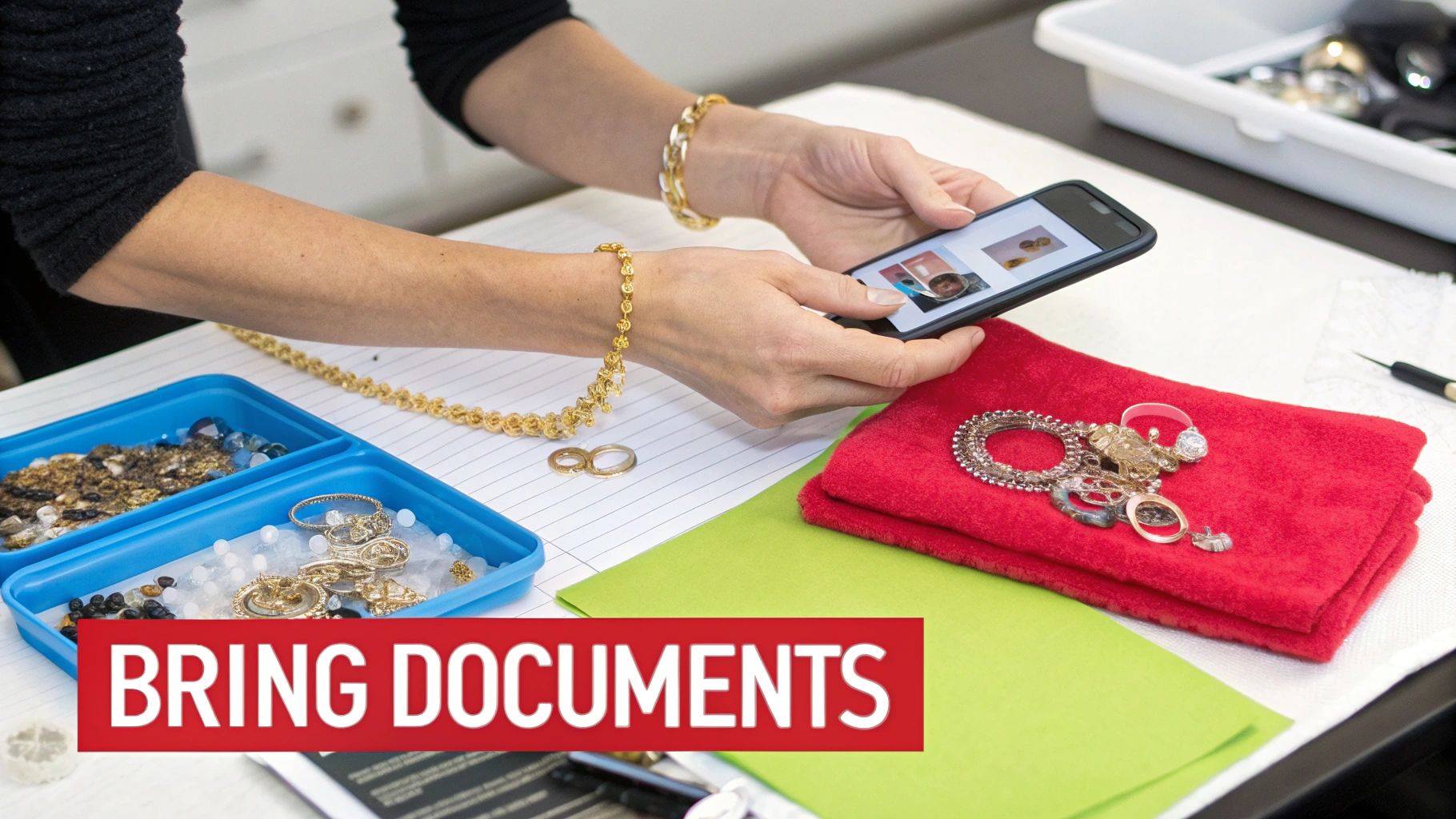
Think of yourself as a historian for your own jewelry. Every piece of paper you can provide gives the appraiser critical context about the item's provenance and technical specs. It's the difference between a guess and an informed assessment.
Start by digging up any related paperwork. This simple step can shave a surprising amount of research time off the appraiser's plate, letting them zero in on the physical evaluation.
Here's what you should look for:
- Original Sales Receipts: These are fantastic for establishing a baseline value and purchase date.
- Previous Appraisal Reports: Old appraisals create a timeline, showing how the item's value has changed over the years.
- Diamond or Gemstone Certificates: Lab reports from places like GIA or AGS are gold. They spell out the stone's quality characteristics (the 4 Cs) in black and white.
An appraisal without documentation is like a story without a beginning. Providing receipts, certificates, and old reports gives the appraiser crucial context, leading to a more thorough and reliable valuation.
Prepare the Jewelry Itself
Before you head to your appointment, take a few minutes to give your jewelry a gentle cleaning. A clean piece makes it much easier for the appraiser to spot important details like hallmarks, subtle engravings, and the true quality of the gemstones without grime getting in the way.
A soft cloth is perfect for wiping down metals. For most gemstones, a soft-bristled brush with a bit of mild soap and water works wonders. Just be sure to avoid harsh chemicals that can damage delicate stones or antique settings.
It’s also smart to snap a few photos of your own before you go. These act as a personal record of the item's condition. If you want to get really detailed for your records or an online submission, it's worth learning how to photograph jewelry professionally. Having your own crisp images, like this stunning diamond ring on a black background, is an excellent move for personal inventory management.
Why a Free Appraisal Falls Short for Insurance
While a free jewelry appraisal is a fantastic way to get a quick idea of what something is worth, it’s critical to understand its limits—especially when insurance comes into play. A quick, verbal estimate simply doesn't have the detail or authority needed to properly insure your valuable pieces.
Think of it this way: insurance underwriters work with documented facts, not casual opinions. For them to cover your assets, they need irrefutable proof of value, and that’s where a formal, paid appraisal becomes non-negotiable. It’s the official, legally recognized document that outlines every critical detail of a piece.
What an Insurance Underwriter Needs to See
When you apply for a policy—whether for a single engagement ring or a comprehensive Jewelers Block insurance plan—the underwriter’s job is to assess the exact financial risk they are taking on. A casual chat with a jeweler gives them zero verifiable data.
They need a formal, written report that includes:
- High-Quality Photos: Clear, detailed images from multiple angles that document the item's appearance and current condition.
- Detailed Descriptions: A complete breakdown of metal types, weight, measurements, distinct markings, and manufacturing style.
- Full Quality Grading: The essential 4 Cs (Cut, Color, Clarity, Carat Weight) for all significant gemstones, as determined by a certified gemologist.
- Stated Retail Replacement Value: A firm dollar amount reflecting what it would cost to buy a new, comparable piece in today's retail market.
Without this level of detail, an insurer simply can’t confirm an item’s value, making it impossible to write a policy that truly protects you. This standard is especially high for any insurance for a jewelry store, where an entire business's future is on the line.
The Real-World Risk of Getting it Wrong
Let’s imagine a jewelry store owner who uses informal "free appraisals" to value their showcase inventory. Based on these rough estimates, they believe their total stock is worth around $300,000 and secure insurance for jewelry business based on that number.
But what if a formal appraisal would have revealed the true retail replacement value was actually closer to $450,000?
If a major theft occurs and the entire inventory is lost, the policy will only pay out up to the $300,000 limit. That leaves the owner with a devastating $150,000 shortfall—a financial hole big enough to potentially sink the business. This is exactly the kind of disaster that formal appraisals and solid Jewelers Block insurance are designed to prevent.
An informal guess creates a dangerous gap between what you think your jewelry is worth and its actual replacement cost. For an insurance claim, that gap translates directly into an out-of-pocket loss that a certified appraisal report could have easily prevented.
With the global jewelry market valued at an immense USD 366.79 billion in 2024, the sheer scale of assets in circulation is staggering. It’s precisely why major insurers, including those represented by this familiar Lloyd's of London logo, demand such meticulous documentation. You can learn more about this growing market on Grand View Research.

At the end of the day, a free valuation is for your curiosity; a certified appraisal is for your protection.
Putting Your Certified Appraisal to Work
Okay, you've done the work and now have a formal, certified appraisal report in your hands. This isn't just about satisfying your curiosity anymore—this is about serious asset protection. Think of that detailed document as more than just paper; it's the tool that turns your inventory's value into a rock-solid financial safety net.
Your very next move is to get that appraisal to your insurance agent. It doesn't matter if you're applying for a new Jewelers Block insurance policy or just updating your current one. That report is the bedrock of your coverage, giving your agent the precise details they need to protect your assets properly.

How Insurers Use Your Appraisal Information
When an underwriter gets your appraisal, they're looking at more than just the final number. They dig into the specifics to calculate their risk, which ultimately determines your premium.
Here's what they're zeroing in on:
- Retail Replacement Value: This is the big one. It sets your total coverage limit—the absolute maximum your policy will pay out if you have a covered loss.
- Item-Specific Details: Any particularly high-value pieces will likely get special attention. They might be "scheduled" separately on the policy, which means they get their own specific documentation and coverage limits.
- Gemstone and Metal Quality: The breakdown of materials gives them a clear picture of your value concentration. An inventory full of large, high-clarity diamonds is a completely different risk profile than one made up of gold chains and semi-precious stones.
This valuation has a direct line to your jewelry store insurance costs. A higher total value means a higher premium, but it also means you have the funds to actually rebuild your inventory after a disaster like a theft or fire. Trying to save a few bucks by being underinsured is a gamble that can put you out of business for good.
Your certified appraisal is the definitive proof of value an insurer needs. It takes the abstract idea of "inventory" and turns it into a concrete, verifiable asset list, letting them write a policy that truly fits your business.
Smart Questions for Your Insurance Provider
That appraisal also doubles as your script for a vital conversation with your insurance agent. It’s your chance to ask sharp, targeted questions to make sure you know exactly what’s covered and what’s expected of you. A little proactive communication now can prevent major headaches later.
Walk into that meeting ready to ask:
- How often do I need to get my inventory reappraised to keep the policy in force? Market values shift. Most insurers will want an update every two to three years.
- Does this policy cover items when they're off-site? Think trade shows or when a piece is out with a client. Standard insurance for a jewelry store might not cover this without a specific rider.
- Are there specific security requirements tied to my inventory's value? Higher values often mean stricter rules for safes, alarm systems, and video surveillance.
- What is the exact process for filing a claim if an item from my appraised inventory is lost or stolen? You want to know the playbook before you're in a stressful situation.
Beyond your appraisal, it's also smart to get familiar with other key insurance documents, like a Certificate of Insurance Template, to have a full picture of your coverage. When you actively use your appraisal this way, it stops being a static document and becomes the cornerstone of your entire risk management strategy.
Common Questions About Jewelry Appraisals
Even after you’ve got the appraisal in hand, a few questions always seem to pop up. It doesn't matter if you're a seasoned pro managing your jewelry business inventory or just someone trying to protect a family heirloom—getting the right answers is what lets you make smart decisions.
Let's cut through the confusion. Here are the most common questions we hear about jewelry appraisals, with straightforward answers to help you protect what matters.
How Often Should My Jewelry Be Reappraised for Insurance?
Think of it this way: the market for precious metals and gems is always moving. For your personal high-value pieces, getting an updated appraisal every two to three years is a solid rule of thumb. This keeps your coverage in sync with current market values.
If you're a business owner, you need to be a little more vigilant. An annual review of your Jewelers Block insurance policy against your current inventory is non-negotiable. It’s the only way to be sure your coverage limits are where they need to be, so you don't get caught underinsured after a claim.
A valuation from three years ago reflects a completely different market. Keeping your appraisals current closes the gap between what you're insured for and what it would actually cost to replace your pieces today—a gap that could otherwise cost you thousands.
Will a Free Appraisal Affect My Jewelry Resale Value?
Not really. A free jewelry appraisal is almost always focused on one thing: retail replacement value. That's the number your insurance company needs to know. It has very little to do with what you could actually sell the piece for.
Resale value, or "fair market value," is a different beast entirely. It’s what a buyer would realistically pay you for the item right now, and it's typically much lower than the full retail price. A free look is great for insurance purposes, but if you're planning to sell, you need to specifically ask for a fair market valuation.
Can I Use an Old Appraisal from a Previous Owner?
While that old appraisal is a nice piece of history, your insurance company won't accept it. They almost always require a fresh report, in your name, dated within the last one to two years.
Why? Because the values of gems and metals are constantly shifting. An old appraisal just doesn't reflect an item's current replacement cost, which makes it useless for setting up a new policy. Getting a new appraisal isn’t just a suggestion; it's a critical step to ensure your personal policy or insurance for a jewelry store is actually adequate. An outdated document simply won't cut it.
Navigating the world of appraisals and insurance is key to protecting your assets. At the First Class Insurance Jewelers Block Agency, we live and breathe this stuff, providing tailored coverage that lines up perfectly with your certified valuations. Don't leave your protection to chance. Get a Quote for Jewelers Block today and get the peace of mind you deserve.