
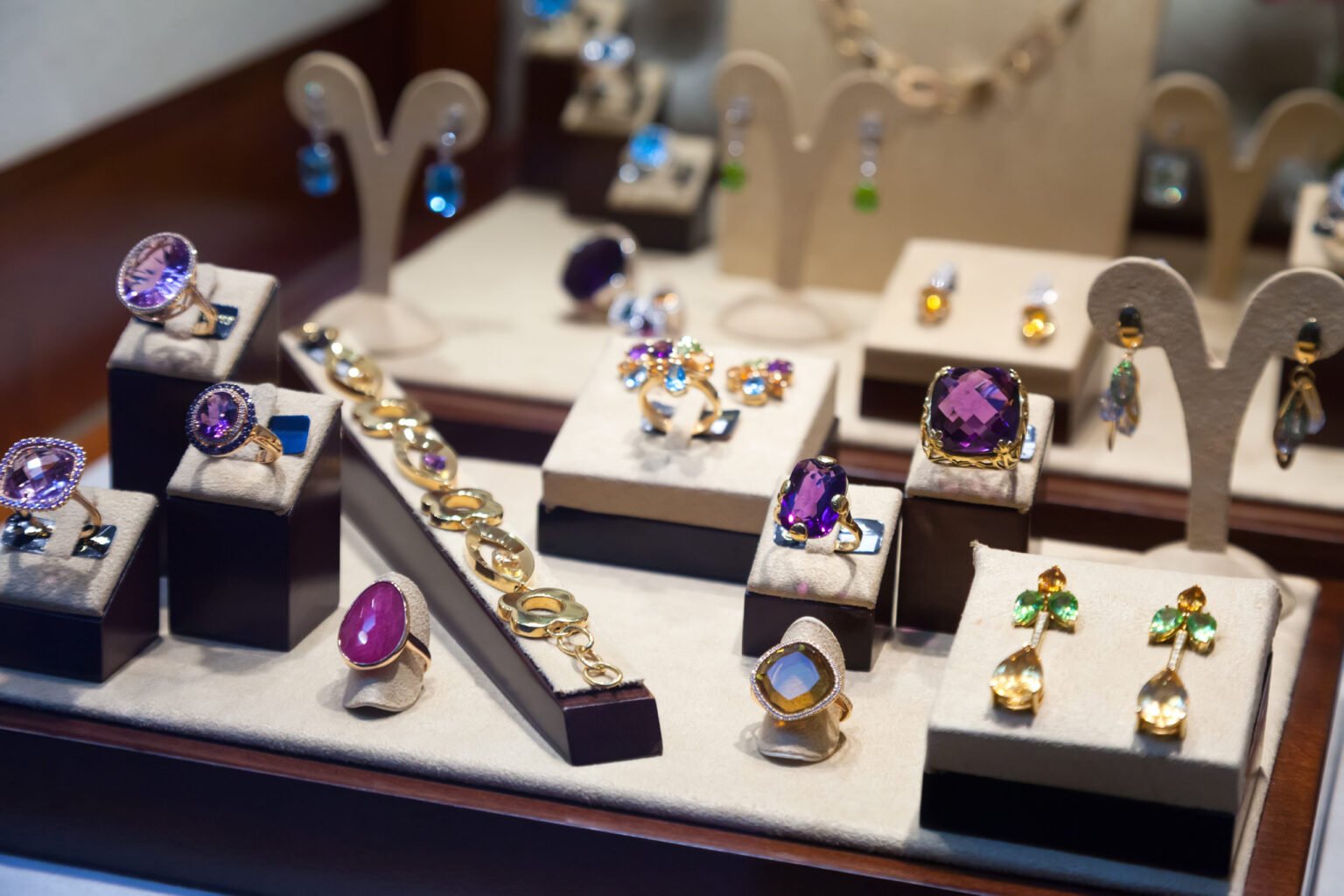
Think your homeowners insurance has you covered? That’s a dangerous assumption when it comes to your most precious jewelry. Your standard policy is a safety net, sure, but for things like an engagement ring or a family heirloom, it’s a very, very small one.
The Hidden Gaps in Homeowners Insurance for Jewelry

It’s a truly awful surprise: after a theft, you discover that your most valuable items are worth far more than your insurance will ever pay out. This happens all the time. People assume their policy provides total protection, but the reality is that standard homeowners insurance for jewelry is riddled with major limitations that create a false sense of security.
The biggest problem comes down to something called sub-limits. Your policy might cover your personal property up to, say, $100,000, but it carves out a much smaller, separate limit just for valuables.
For example, with gold prices constantly on the move, it’s critical for homeowners to recheck their jewelry coverage. It's not uncommon for a standard policy to cap jewelry theft at just $1,500 to $2,500 for the entire incident. That’s barely enough to cover a single nice ring, let alone a whole collection. You can learn more about how market fluctuations impact jewelry coverage and see why staying on top of this is so important.
Understanding Your Policy's Limitations
Beyond shockingly low theft payouts, standard policies have other huge gaps you need to know about. They often exclude common scenarios that you’d absolutely expect to be covered.
- Mysterious Disappearance: That gut-wrenching moment when a ring is just… gone. It wasn’t obviously stolen, it just vanished. Your policy most likely won't cover that.
- Accidental Damage: You drop your diamond bracelet and crack a stone. Sorry, that’s another situation typically excluded from basic coverage.
- Business Use: If you run a jewelry business from home—even a tiny one—your personal homeowners policy will not touch your inventory. For that, you need specialized insurance for a jewelry business.
Relying on a standard homeowners policy to protect valuable assets is like using a small umbrella in a hurricane—it provides a little bit of cover, but it’s completely useless when you really need it.
To help you see the difference clearly, let's compare a standard policy with specialized coverage side-by-side.
Standard Homeowners Policy vs Specialized Jewelry Coverage
This table breaks down the critical differences between the default coverage you likely have and the robust protection you actually need.
| Feature | Standard Homeowners Insurance | Specialized/Scheduled Jewelry Insurance |
|---|---|---|
| Coverage Limit | Low, often capped at $1,500-$2,500 for theft. | Covers the full appraised value of each item. |
| Covered Perils | Limited to specific events like fire and theft. | "All-risk" coverage, including theft, damage, loss, and mysterious disappearance. |
| Deductible | Subject to your standard home policy deductible (often $1,000+). | Often has a $0 deductible option. |
| Geographic Scope | Typically limited to your home or within your country. | Provides worldwide coverage, perfect for travel. |
| Claims Process | Can be slow; may not cover full replacement cost. | Streamlined process focused on repair or replacement at current market value. |
| Business Items | No coverage for any business-related inventory. | N/A (Business requires a separate Jewelers Block policy). |
As you can see, the difference isn't just a matter of degree; it's a completely different level of security.
The Need for Specialized Coverage
These hidden gaps make one thing crystal clear: your standard homeowners policy is not the right tool for the job. For personal collections, scheduling your items is an absolute must. And for anyone in the jewelry trade, a powerful Jewelers Block insurance policy is the only responsible choice.
Understanding these limitations is the first step toward getting real protection. Whether you're a homeowner with a treasured family heirloom or a store owner protecting your entire inventory, seeing the shortcomings of a generic policy is the key to finding a specialized solution that gives your valuables the comprehensive coverage they truly deserve.
Scheduling Jewelry to Protect Your Personal Collection
After seeing the massive gaps in a standard homeowners policy, you know you need a better solution. Relying on default coverage for a valuable piece of jewelry is like using a generic, one-size-fits-all jacket in a blizzard—sure, it offers a tiny bit of protection, but it’s nowhere near what you actually need.
For your high-value personal pieces, the answer is scheduling.
Think of it this way: scheduling is like getting a custom-tailored suit made just for your most cherished items. Instead of a low, blanket limit, you’re insuring a specific piece for its exact, professionally appraised value. This add-on to your homeowners insurance is often called a rider, floater, or endorsement.
By scheduling your jewelry, you’re closing the dangerous loopholes a standard policy leaves wide open, giving you real peace of mind.
The Power of a Jewelry Rider
A scheduled jewelry rider transforms your coverage from restrictive to genuinely robust. It gives you a much broader level of protection, often called “all-risk” coverage, meaning your piece is protected against a far wider range of potential disasters.
Here are the key benefits you get:
- Coverage for Mysterious Disappearance: This is how most jewelry gets lost. A rider covers you even if you simply can't explain where the item went—no evidence of theft is required.
- Protection Against Accidental Damage: If you accidentally chip a diamond or break a clasp, a rider can cover the cost of repair or replacement.
- Worldwide Coverage: Unlike a standard policy that might only cover you at home, a scheduled item is protected anywhere in the world, whether you're on vacation or just running errands.
- No Deductible (Usually): Most jewelry riders come with a $0 deductible. If your $15,000 engagement ring is lost, you get the full $15,000 back without paying a dime out of pocket.
Scheduling an item isn't just about getting more money in a claim; it's about getting the right kind of coverage. It protects you from the real-world scenarios that standard homeowners insurance for jewelry simply ignores.
The Critical First Step: A Professional Appraisal
You can't schedule an item without knowing its precise value. That’s why getting a professional appraisal from a certified gemologist is a non-negotiable first step. An appraisal gives your insurance company the official documentation it needs to create the rider.
This document does more than just list a dollar amount. It includes a detailed description of the piece—noting the cut, color, clarity, and carat weight of any stones, the metal used, and any identifying marks. That level of detail is crucial for ensuring you can get an exact replacement if the worst happens. For a stunning piece like a diamond ring on a black background, you can see why that professional assessment is so important.

Market data shows that more and more people are realizing the importance of proper coverage. The personal jewelry insurance market is projected to grow at a 7.5% CAGR and hit $7,500 million by 2025. This trend is a clear signal that savvy consumers are demanding better protection than a generic homeowners policy can offer. Discover more insights about the global jewelry insurance market on insights150.com.
Protecting Your Business with Jewelers Block Insurance
When jewelry is your entire livelihood, not just a personal treasure, the insurance conversation changes completely. For any jewelry business owner—whether you’re running a retail store, a wholesale operation, or a small repair shop—a standard homeowners policy is worse than useless. You need specialized armor. In the jewelry world, that armor is Jewelers Block insurance.
Trying to secure a fortress with a simple padlock is the perfect analogy for relying on anything less. This isn't just another policy; it's a comprehensive security system built from the ground up to protect your business from the unique and relentless risks you face every day.
This coverage bundles multiple protections into one seamless package, safeguarding your assets from nearly every angle imaginable. It's the industry standard for a reason, offering a level of security that general business policies just can't touch.
What Does Jewelers Block Insurance Cover?
Unlike a standard property policy that only covers a specific list of named perils, Jewelers Block insurance is usually an "all-risk" policy. That means it’s designed to cover losses from any cause that isn't explicitly excluded. It’s built to protect the lifeblood of your business: your inventory.
This specialized jewelry store insurance protects your stock whether it is:
- In your store: This covers everything from items locked in the safe overnight to pieces in your display cases during business hours.
- In transit: Your inventory is protected while being shipped to customers, suppliers, or other locations.
- Off-premises: Coverage extends to items at trade shows, out with a traveling salesperson, or on memo with a potential buyer.
Jewelers Block is the essential shield for any jewelry business. It anticipates the complex risks of the trade, from a smash-and-grab theft at your storefront to the mysterious disappearance of a diamond parcel in transit.
This broad protection is non-negotiable. The jewelry business is fluid, with high-value assets constantly on the move. A policy that only covers what’s inside your four walls leaves you dangerously exposed to a catastrophic financial loss.
Beyond Inventory Protection
While protecting your stock is its main job, a robust insurance for jewelry business policy goes much further. It’s designed to cover the full spectrum of your operational assets and liabilities, creating a financial safety net for scenarios you might not have even considered.
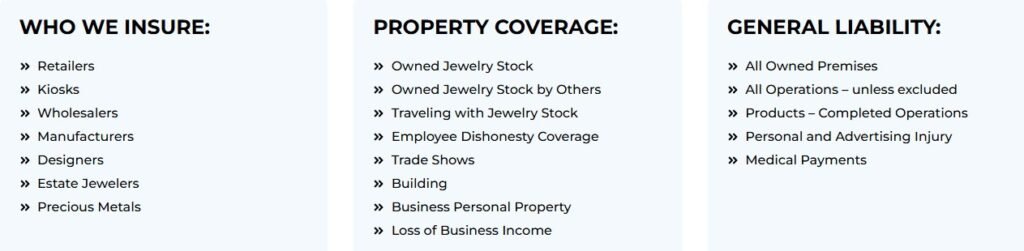
A well-designed policy from a specialist like First Class Insurance Jewelers Block Agency will also cover:
- Raw materials and components: This includes loose stones, precious metals, and the findings you use for custom work or repairs.
- Customers' property: When a customer trusts you with their heirloom ring or luxury watch for repair, you're responsible for it. This covers their items while in your care, custody, and control.
- Work in progress: Pieces that are currently being designed, repaired, or manufactured are also protected.
- Employee dishonesty: This provides coverage against losses from theft by an employee—a risk that is unfortunately more common than many owners want to believe.
These aren't just add-ons; they are fundamental parts of a policy that understands the realities of the jewelry trade. Without them, a single incident—like a dishonest employee or a damaged customer piece—could cause devastating financial and reputational harm.
Why This Specialized Coverage Is Non-Negotiable
Running a jewelry business means managing high-value, portable assets that are a constant target for criminals. A standard Business Owner's Policy (BOP) is simply not built to handle this level of risk. They are riddled with the same critical weaknesses as homeowners insurance, like low sub-limits and specific exclusions for jewelry.
For any serious professional, getting the right protection is a foundational business decision. It’s about more than just replacing stolen goods; it’s about ensuring business continuity, protecting your hard-earned reputation, and keeping the trust of your clients. The next step is clear: Get a Quote for Jewelers Block from an agency that lives and breathes this industry. It’s the only way to build a resilient business that can withstand the challenges of the trade.
Navigating the Jewelry Insurance Claims Process

When a cherished piece of jewelry goes missing, the first feeling is a pit in your stomach. The emotional hit is instant. But what comes next—the financial recovery—depends entirely on how you handle the insurance claim.
Let’s be clear: navigating the claims process can feel overwhelming, but a calm, methodical approach is your best friend. It can make the difference between a frustrating dead end and a smooth, successful outcome.
Your First Moves After a Loss
The moments right after you discover a loss are absolutely critical. Your immediate actions set the tone for the entire claim.
If you even suspect theft, your very first call isn't to your agent—it's to the police. You need to file a report immediately. This isn't just a formality; it's a non-negotiable piece of evidence your insurance company will need to even begin processing a theft claim.
Once the authorities are notified (if it’s a theft), then you call your insurance agent. Don't wait. Policies have strict timelines for reporting a claim, and acting fast shows you’re serious and gets the gears turning right away.
To keep things moving smoothly, follow these initial steps:
- File a Police Report (for theft): Get a copy of the official report and the report number. This is your objective, third-party proof of the incident.
- Contact Your Insurance Provider: Call your agent or the claims department. Be ready with the date, time, and a clear story of what happened.
- Gather Your Documents: This is where all your prep work pays off. Pull together your appraisals, sales receipts, photos, and any diamond or gemstone grading reports.
The single most powerful tool you have in a jewelry insurance claim is organized documentation. It removes guesswork and provides concrete proof of value, turning a subjective loss into an objective financial recovery.
The Decisive Role of Documentation
Think about it from the adjuster's perspective. You could try to describe a one-of-a-kind engagement ring from memory, or you could hand them a professional appraisal with high-res photos and a GIA report. The difference is night and day.
Good records become your best advocate. They prove not just what you lost, but exactly what it will cost to make you whole again.
Here's a breakdown of the paperwork you'll need to have ready. Think of this as your claims success checklist.
Essential Documentation for a Smooth Jewelry Claim
| Document/Information | Why It's Critical | Pro Tip |
|---|---|---|
| Professional Appraisal | This establishes the official replacement value and gives a detailed description for an accurate replacement. | Make sure your appraisal is less than three years old. Metal and gem prices fluctuate, and you need current values. |
| Original Sales Receipt | It’s your proof of ownership and purchase price, backing up the details in your appraisal. | Keep digital copies in the cloud. A fire or theft that takes your jewelry could also take your paper records. |
| Photographs or Videos | This provides undeniable visual proof of the item's existence, condition, and specific design features. | The best photos are of you wearing the jewelry. They help establish a clear timeline of ownership. |
| Police Report Number | It's the official, third-party validation that a theft occurred. Most insurers won't move forward without it. | Jot down the report number and the responding officer's name to give to your adjuster. |
Having these items organized and ready to go will dramatically speed up the process and strengthen your case.
Understanding Your Payout
Once you've filed your claim, an adjuster will review everything and determine your settlement. Here's a critical detail you need to know from your policy: does it offer Replacement Cost Value (RCV) or Actual Cash Value (ACV)?
ACV pays you what the item was worth at the moment it was lost—that’s the replacement cost minus depreciation. For fine jewelry, this is rarely a good deal.
What you want is RCV. It provides the funds to replace your item with a new, similar piece at today's prices. For jewelry, RCV is far superior and is the only way to ensure you can get a true replacement without having to pay out of pocket. With the right documentation and a clear understanding of your policy, you can confidently navigate the claims process and get the full value you deserve.
Why Your Jewelry Coverage Needs to Evolve
An insurance policy that was set up years ago and then forgotten is a disaster waiting to happen. The world changes, values fluctuate, and risks shift. A static insurance plan for your jewelry is like trying to navigate today’s traffic with a vintage paper map—it’s hopelessly outdated and leaves you dangerously exposed.
Your protection needs to be as dynamic as the world around you.
The global jewelry market is constantly moving. The prices for precious metals like gold and platinum are always in flux, which means a ring appraised five years ago could be worth a whole lot more today. If your coverage is still pegged to that old valuation, you're already underinsured. A fixed policy just can't keep up.
This problem gets bigger when you consider our mobile, connected lives. With e-commerce booming, high-value pieces are shipped all over the world every single day. On top of that, international travel is back in full swing, meaning your most precious items are exposed to new risks far from the safety of your home. Your coverage has to be built to travel with you. This is especially true when you're dealing with unique pieces like antique jewelry, which often come with their own set of risks.
The Global Market and Your Local Policy
It’s easy to think of your personal collection as being separate from global economic trends, but they're deeply connected. The value of what you own is directly tied to worldwide supply and demand.
Just look at the boom in global jewelry insurance. The Asia Pacific region has exploded, now holding 20% of the market share. This surge is driven by a growing middle class in places like China, India, Japan, and South Korea, and it creates ripple effects everywhere, pushing prices up and shining a spotlight on the need for better protection. It’s a wake-up call for both collectors and jewelers to finally address the huge gaps in standard homeowners policies.
The bottom line is clear: your assets are more valuable and more mobile than ever before. Relying on an insurance policy you haven't looked at in years isn't just a mistake; it's a massive financial gamble.
A "set it and forget it" approach to jewelry insurance is one of the most common and costly mistakes a collector or business owner can make. Regular policy reviews aren't just good practice; they are absolutely essential for maintaining real financial security.
Adapting Your Protection Strategy
Because the risks and values are always changing, your insurance strategy has to change with them. This means you need to stop thinking of insurance as a passive expense and start actively managing it as a key part of your financial plan.
Here are the key areas you need to focus on:
- Updated Appraisals: Get your high-value pieces re-appraised every two or three years. This is the only way to ensure your coverage limits actually match their current replacement cost.
- Policy Reviews: Sit down with your insurance specialist once a year. Talk about any changes to your collection, your travel habits, or how your business operates.
- Understanding Market Trends: Keep a casual eye on how fluctuations in metal and gemstone prices are affecting the total value of your collection.
As you think about how to keep your coverage current, it's also smart to explore broader financial tools like smarter risk management solutions. The most critical step is partnering with a specialized agent who truly understands the nuances of protecting high-value assets. They can give you the expert guidance needed to ensure your policy evolves right alongside your valuable collection.
How to Get the Right Jewelry Insurance Today
Knowing where the gaps are in your coverage is one thing. Actually closing them is what protects your assets. This final section is your roadmap for getting the right homeowners insurance for jewelry or specialized business coverage. Whether you’re trying to protect a family heirloom or an entire store’s worth of inventory, the process is simple once you break it down.
For individuals, protecting what you own is a straightforward, four-step process. This checklist turns what you've learned into real security for your most prized pieces.
Your Personal Jewelry Protection Checklist
- Inventory Your Collection: Start by making a detailed list of every valuable piece you own. Write down descriptions, when you bought them, and any unique marks. This document is your starting point for everything else.
- Get Current Appraisals: Find a certified gemologist to appraise any item you want to insure. This is a must-do for high-value jewelry and is the only way to establish its true replacement value for the insurance company.
- Review Your Existing Policy: With your list and appraisals in hand, pull out your current homeowners policy. Find the sub-limit for jewelry theft and pay close attention to the exclusions. This is where you'll see the gaps.
- Decide on the Right Coverage: Based on what your collection is actually worth, you can now make an informed choice. Is simply scheduling your items on your current policy enough, or does a standalone jewelry policy make more sense?
For jewelry store owners, the game is entirely different. Your business needs a serious, specialized solution, and that means getting a quote for Jewelers Block insurance.
Securing Your Jewelry Business
When it comes to protecting a jewelry business, working with a specialist is non-negotiable. An agency that lives and breathes insurance for a jewelry store understands the unique risks you face—from employee theft and travel exposure to mysterious disappearance.
Finding the right coverage isn't just about comparing prices; it's about partnering with a specialist who understands the intricate risks of the jewelry industry. An expert can structure a policy that truly protects your livelihood.
A specialist agency like First Class Insurance Jewelers Block Agency makes the process painless. With years of industry experience and solid relationships with top underwriters, they can often get a quote secured within 24 hours. They know the difference between covering loose stones and finished pieces in transit, making sure nothing gets missed. You can see the caliber of underwriters they work with, like those represented by the logo of Lloyd's of London, which is a mark of quality and trust in the industry.

This flowchart shows how the decision-making process for jewelry coverage is always in motion, influenced by market shifts and the changing value of your assets.
It's a great visual reminder that you constantly need to keep an eye on market trends and the current value of your pieces to make sure your policy is still doing its job.
Don't wait until you have a claim to find out you're underinsured. The time to act is now. Take the next step and get a professional consultation and a quote to protect your valuables today.
Jewelry Insurance: Your Questions Answered
When it comes to insuring jewelry, the details can feel a bit overwhelming. Whether you're trying to protect a family heirloom or the entire inventory of your business, getting clear answers is the first step. Let's tackle some of the most common questions we hear every day.
To really get a handle on securing the right coverage, it helps to understand how the broader insurance industry works. Knowing the basics helps you ask the right questions and spot the policy that truly fits your needs.
Does My Homeowners Insurance Cover a Mysteriously Lost Ring?
Here's the hard truth: probably not. A standard homeowners policy almost never covers what's called a "mysterious disappearance"—that sinking feeling when a ring is just gone, with no evidence of theft.
This is one of the single biggest gaps in basic coverage. It's also the main reason why adding a scheduled jewelry rider or buying a separate, dedicated policy is so critical. Those policies are specifically designed to cover these heartbreaking, real-world scenarios.
How Often Should I Get My Jewelry Appraised for Insurance?
Think of your appraisal as a financial check-up for your jewelry. We strongly recommend getting your high-value pieces re-appraised every two to three years.
Why? The market values for gold, platinum, and gemstones are constantly shifting. An appraisal from five years ago might leave you severely underinsured today, meaning your policy won't cover the full cost to replace the item if it's lost or stolen. Keeping your valuations current is the only way to make sure your coverage actually matches your item's true worth.
The gap between what your policy pays and the actual cost to replace your piece comes directly out of your pocket. Regular appraisals are your best defense against that kind of financial shock.
Do I Need Special Insurance for a Home-Based Jewelry Business?
Yes, absolutely. This isn't a gray area. A standard homeowners policy is built for personal belongings, and it almost always excludes coverage for business property or any professional activities.
If you run an insurance for jewelry business from your home—even a small one on the side—you need a commercial policy like Jewelers Block insurance. This isn't just an upgrade; it's a completely different type of coverage built for the unique risks of the jewelry trade, protecting your inventory, tools, and even your customers' items.
What Is the Difference Between Replacement Cost and Actual Cash Value?
Understanding this distinction is one of the most important things you can do to protect yourself financially. It's a game-changer when it comes time to file a claim.
- Replacement Cost Value (RCV): This is the good stuff. It pays to replace your lost or damaged item with a brand new, similar one of the same kind and quality. Crucially, there's no deduction for depreciation.
- Actual Cash Value (ACV): This pays you the replacement cost minus a deduction for age, wear, and tear. You get what the item was worth the second before it was lost, not what it costs to replace it today.
For any valuable jewelry, you should always, always insist on Replacement Cost coverage. It's the only way to be sure you can truly replace what you've lost without having to dig into your own savings.
Don't leave your most valuable assets to chance. The experts at First Class Insurance have the specialized knowledge to protect everything from a single engagement ring to an entire jewelry store. Secure your peace of mind and get the right coverage today. Get a Quote for Jewelers Block.