
A customer walks in with a tangled tray from an estate buyout. A wholesaler sends over a parcel that looks better than the price suggests. A repair client drops off a chain with no paperwork and wants a value confirmation before authorizing work. Those are the moments when knowing how to tell if jewelry is gold stops being a bench skill and becomes a business control.
If you buy wrong, you overpay for plated goods. If you tag wrong, your inventory values drift. If you document wrong, a theft or mysterious disappearance claim gets harder to support. On paper, a piece can look like gold. At the counter, it has to prove it.
The Jeweler's Dilemma Gold or Gilt
Most jewelers have handled the same scene in different forms. A ring carries a clean-looking stamp, the color is convincing, and the seller is confident. Then you check the shoulders, the sizing seam, and the underside of the shank. Suddenly the story changes.
The commercial risk starts before the item ever reaches the showcase. A buyer decides what to pay. A store manager decides how to book it. A bench jeweler decides whether heat, solder, or refinishing is appropriate. If the metal is misidentified, every decision downstream gets worse.
Hallmarking laws require purity stamps on over 90% of fine jewelry in major markets, but marked pieces still need verification because a GIA analysis found up to 15-20% deviation between stamped and actual content in underkarated samples. That matters even more in the US market because 14K gold items make up 60% of the market, and wear on those pieces can complicate valuation and claims handling, as summarized in this discussion of gold hallmarks and actual jewelry content.
Why the risk sits at the counter
A gold identification mistake usually shows up in one of four places:
- Purchasing errors: You pay solid-gold money for plated or underkarated goods.
- Repair liability: You quote and work on a piece under the wrong assumptions about metal behavior.
- Inventory distortion: Your stock ledger carries a value the piece can't support.
- Claims friction: After a loss, the file depends on what you recorded before the loss happened.
Practical rule: If a piece matters enough to buy, consign, insure, appraise, or repair, it matters enough to test.
A lot of walk-in goods also come with mixed signals. The hallmark looks right, but the finish is uneven. The chain tests one way, while the clasp raises questions. The front of a pendant looks rich, and the back looks tired. Professionals don't get in trouble because they never test. They get in trouble because they stop after the first clue.
For estate, antique, and mixed-lot work, I always treat appearance as a lead, not a conclusion. A visual pass can narrow the field fast, especially with older pieces like those shown in this antique jewelry example, but visual confidence shouldn't become purchasing confidence without verification.

What a good testing habit really protects
It protects margin, but that's only half the story. It also protects your file. If a customer later disputes your buy offer, if a supplier return turns contentious, or if an insurer asks how you established composition, you need more than memory.
That is why professional gold identification isn't one trick. It's a workflow. Start with what the eye can catch. Move to quick screening. Use chemistry carefully. Use instruments when the stakes justify certainty.
Reading the Signs Visual Inspection and Hallmarks
The first pass should happen before you reach for acid, meters, or XRF. A disciplined visual inspection catches a surprising amount of trouble. It also tells you where to test, which matters because the wrong test spot can produce the right answer for the wrong part of the piece.

Start with wear patterns
Look at the places that take friction first. On rings, check the bottom of the shank, the shoulder edges, and around sizing seams. On bracelets and chains, inspect links near the clasp, hinge points, and jump rings. On earrings, the posts and backs usually tell the truth faster than the decorative front.
You're looking for contrast. Solid gold tends to wear consistently. Plated goods often reveal a different color underneath, especially where contact, heat, or polishing has thinned the surface.
A quick visual checklist helps:
- Edge wear: Look for base metal showing through on corners and high points.
- Color breaks: Compare hidden surfaces to exposed ones. Backside discoloration often appears first.
- Construction clues: Mismatched solder color, rough seams, and cheap findings can signal mixed-metal assembly.
- Clasp behavior: A chain may be gold while the clasp contains non-gold components. Test assumptions carefully.
If the color only looks convincing where nobody touches it, I start suspecting surface treatment before I start trusting the stamp.
Read the hallmark correctly
The karat system defines pure gold as 24K (99.9%). Common alloy marks include 18K as 750 (75.0%) and 14K as 585 (58.5%). Recognizing these marks, and distinguishing them from plating codes like GP or HGE, matters because plated goods make up up to 70-80% of affordable jewelry in retail markets, according to this overview of gold purity marks and plating codes.
That means the stamp isn't just about authenticity. It's about category.
Use this at the counter:
| Mark you see | What it usually indicates |
|---|---|
| 24K / 999 / 999.9 | Near-pure gold |
| 22K / 916 | High-karat gold alloy |
| 18K / 750 | Fine jewelry standard alloy |
| 14K / 585 | Common US fine jewelry alloy |
| 10K / 417 | Lower-karat solid gold alloy |
| GP / GE / HGE / RGP | Plated or non-solid gold indication |
The distinction is important. 14K alone points in one direction. 14K GP points in another. A rushed intake can miss the suffix and book the piece wrong.
Where stamps hide and what they don't tell you
Hallmarks usually sit where the maker could place them without ruining the design. Rings often carry them inside the shank. Chains and bracelets usually hide them on or near the clasp tag. Earrings often place them on the post or back. Lockets, bangles, and imported pieces can be less predictable.
Use a loupe and good bench lighting. Don't glance and guess. Read the full stamp, including adjacent letters.
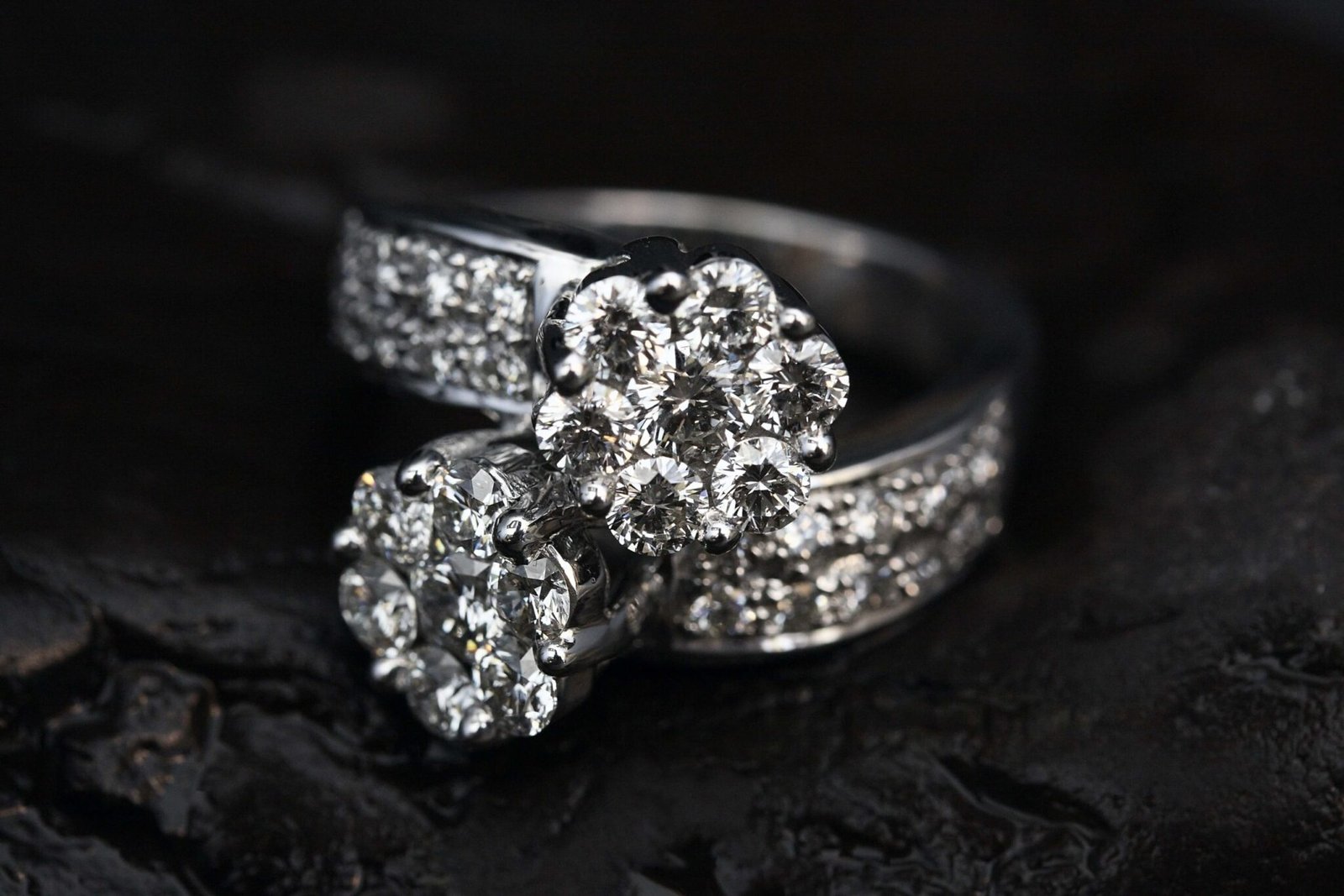
A clean product shot like this diamond ring on black background also shows why intake photography matters. When you can enlarge a high-resolution image later, you can often confirm whether you recorded the stamp accurately.
What visual inspection cannot settle
Visual assessment is excellent for triage. It's poor as final proof. A forged hallmark can look sharp. A thick plate can look honest. A worn antique can look suspicious even when it's genuine.
That is why I treat visual inspection as a sorting tool:
- likely solid gold
- likely plated
- mixed signals
- worth escalation
The professionals who avoid expensive mistakes don't fall in love with the first impression. They let the visual pass tell them where to test next.
Quick In-Store Screening Tests
Counter screening should be fast, non-destructive, and honest about its limits. The goal isn't to produce a courtroom answer. The goal is to separate obvious problems from pieces that deserve better testing.

The magnet test
Gold itself isn't magnetic. That makes a strong magnet useful, but only as a filter. If a piece snaps firmly to the magnet, something in the item is raising a red flag. That doesn't tell you the whole composition, and it doesn't tell you whether the entire piece is fake.
Clasps complicate this. Some chain clasps contain spring components that can react even when the rest of the chain is precious. Earrings can do the same. Findings are where people overcall fakes.
Use the magnet test this way:
- Strong attraction across the main body: Treat it as suspicious.
- Reaction only at clasp or finding: Isolate the result. Don't condemn the whole piece.
- No reaction at all: Keep going. Non-magnetic doesn't prove gold.
The density check
If the magnet test is a rough sort, density is a smarter screen. Gold alloys feel different because they are different. A lightweight piece with a big visual presence deserves scrutiny. A compact piece with convincing heft usually earns a closer look.
In practice, density works best when the piece is simple. Hollow forms, stone-set jewelry, and mixed assemblies muddy the result fast. Plain bands, plain chains, and uncomplicated pendants are better candidates.
Here's how I use it in-store:
- Weigh the piece accurately. Remove obvious non-metal components when possible.
- Measure water displacement carefully. Consistency matters more than speed.
- Compare the result to what the design should reasonably feel like.
- Treat odd results as a reason to escalate, not a final verdict.
A density result is especially helpful when the visual and hallmark story don't agree. If a ring is marked as a higher-karat item but feels off in hand, density gives you a second opinion without harming the piece.
A good screening test saves you time. A bad screening habit creates false confidence.
The density concept also matters because advanced workflows often pair compositional testing with density cross-checks on important pieces. That combination is one reason experienced stores can process walk-ins quickly without treating every item as either obvious treasure or obvious junk.
A short demonstration can be useful for staff training and intake consistency:
Which screening test earns bench time
If I had to compare the two for counter work, the magnet is faster and the density test is more informative.
| Screening method | Best use | Main limitation |
|---|---|---|
| Magnet | Immediate red-flag check | Non-magnetic pieces can still be fake |
| Density | Better screening for simple solid forms | Hollow, stone-set, or mixed pieces distort results |
Where screening fits in the workflow
Screening matters because it protects your labor. If every questionable piece goes straight to a full verification process, intake slows down and staff start cutting corners. If screening replaces verification, expensive mistakes creep in.
The right use is simple. Screen first. Sort second. Verify the pieces that affect buying, repair decisions, resale value, or insurance documentation.
The Acid Touchstone Test for Chemical Verification
The acid touchstone test is still one of the most practical verification methods available at the bench. It doesn't require a major capital purchase, it works quickly, and it gives useful answers when the operator respects the procedure. It also punishes sloppy habits.
The method involves a fine-grained black touchstone and karat-specific acids. When performed correctly, the acid touchstone test has a success rate exceeding 90-95% for distinguishing solid gold from platings. But there are real failure points. Operator error can lead to 15% false positives in novices, and outdated acid can cause 20% misreads, according to the GIA methodology paper on determining gold content of jewelry metals.

Setup matters more than people think
A rushed acid test is worse than no acid test. You need a clean touchstone, fresh acids, known comparison needles, gloves, eye protection, and ventilation. If your acids have been sitting too long, you may be reading chemistry that's already gone stale.
Before I trust the result, I want three things true:
- The stone is clean
- The streak is deliberate and even
- The acid matches the karat range I'm testing
The bench procedure
Use a minimal, discreet contact point on the jewelry. You're not gouging the piece. You're laying down enough metal on the stone to read the reaction.
A reliable sequence looks like this:
- Prepare the touchstone and test needles. Known 10K, 14K, 18K, and 22K references help anchor your read.
- Draw the sample streak. Keep it even.
- Bracket it with known streaks. This gives you a visual comparison before the acid ever hits.
- Apply the corresponding acid. Start where the piece most likely belongs if the hallmark and visual evidence suggest a range.
- Watch the reaction window carefully. The change usually shows within seconds, not after a long wait.
How to read the result
The interpretation is where staff training shows. A matching karat streak should hold its appearance under the corresponding acid. A lower-karat or non-gold sample tends to dissolve faster or shift in color. Green or milky responses often point toward base-metal content rather than solid gold.
Use this reaction guide at the bench:
| Touchstone reaction | What it suggests |
|---|---|
| Streak holds cleanly | Material is consistent with the tested karat |
| Streak fades quickly | Lower karat or plated surface |
| Green or brown shift | Base metal influence |
| Uneven survival across the streak | Mixed composition or inconsistent contact |
Bench advice: Test the least visible area, but test the most honest area. A perfect-looking exterior can hide a very different story at a worn edge or serviced seam.
What acid testing does well and where it falls short
Acid shines in the middle of the workflow. It is far more decisive than a magnet and much more accessible than XRF. For intake, trade, and lot sorting, it's often the best practical verification method available in-house.
Still, acid has trade-offs:
- It is not ideal for every finish. Delicate surfaces and some plated pieces can be affected.
- It reads what you put on the stone. If you only sample a heavy plated layer, you may overestimate the piece.
- It depends on operator judgment. Two people can see the same fading line differently if they aren't trained the same way.
That makes acid testing a professional skill, not just a kit purchase. The stores that use it well build a repeatable process, replace chemicals on schedule, and train staff to compare, not guess.
Advanced Electronic and XRF Testing
There comes a point where the piece is too valuable, the documentation burden is too high, or the customer dispute is too serious to rely on visual work and chemistry alone. That's where electronic testers and XRF move from nice-to-have tools to operational controls.

Electronic testers
Electronic gold testers, often called karat meters in the trade, estimate purity through conductivity-related readings. They are fast, clean, and useful when you need a quick read without applying acid. They also make staff more willing to test because the setup feels simpler.
But they are not magic. Surface condition matters. Intricate plating can still complicate interpretation. If a store starts treating a handheld electronic readout as final proof in every situation, problems follow.
I like electronic testers for intake support, not for sole authority. They work best when paired with trained visual inspection and a second verification method for anything that affects buying, resale, or claims documentation.
XRF is the confidence tool
X-Ray Fluorescence spectrometry is the non-destructive method that changes the conversation. Instead of asking whether the piece seems right, you ask the analyzer what elements are present. The device scans and reports alloy composition directly.
According to the cited summary on how XRF is used to verify gold, XRF offers 99.5%+ accuracy for determining gold purity non-destructively. The same source notes that 30% of disputed jewelry insurance claims are resolved via XRF, and that it can reduce erroneous payouts by up to 40% by providing verifiable proof of composition.
That is why XRF belongs in any serious conversation about risk management, not just gemological curiosity.
When the investment makes sense
You don't buy XRF because it's impressive. You buy it because uncertainty is expensive.
For many jewelry businesses, XRF makes the most sense in these situations:
- High-value intake: Estate buying, consignment acceptance, and larger trade purchases
- Inventory audits: Verifying broad categories of stock without destructive methods
- Claims support: Producing defensible composition records after theft, disappearance, or dispute
- Supplier quality control: Checking whether incoming goods match invoices and stated purity
The higher the value of the piece, the less tolerance there is for a “probably.”
What XRF still doesn't replace
Even XRF has operational limits. Surface conditions still matter, and a good operator knows when multiple spots should be scanned. Geometry can complicate readings on irregular pieces. Mixed construction can require interpretation, not just button-pushing.
That means the strongest workflow still looks layered:
| Tool | Best role |
|---|---|
| Visual inspection | Finds clues and chooses test points |
| Electronic tester | Fast non-destructive estimate |
| Acid touchstone | Bench-level chemical verification |
| XRF | Defensible, high-confidence composition proof |
The strongest stores don't ask one tool to do every job. They assign each tool the job it does best.
From Test Results to Business Actions
A test result only has value if it changes what you do next. Too many stores test well and document poorly. That's how avoidable losses turn into avoidable disputes.
Recent FTC data cited in this overview of gold jewelry scams and falsified karat marks states that plated “gold” jewelry scams rose 22% in major US markets in Q1 2026, and a Jewelers Board of Trade report noted 15% of tested retail jewelry bore falsified karat marks. Even if your staff can spot many of these pieces at the counter, the business issue is whether your procedures can prove what you found and how you handled it.
If the piece fails or raises doubt
When a customer is standing in front of you, wording matters. Don't accuse. Don't speculate about intent. Don't overstate certainty if you've only screened the item.
A professional script is simple: the piece's observed characteristics don't currently support representation as solid gold, and further testing would be needed for a definitive determination. That protects the customer relationship and reduces legal friction.
Use a response framework like this:
- State the finding narrowly: “The hallmark and the test result don't align.”
- Describe the limit: “This result means I can't represent it as solid gold based on today's examination.”
- Offer the next step: “If you want, we can move to higher-level verification.”
Turn every important piece into a file
For buying, consignment, repair intake, and high-value customer property, I want a record that another person could review later without me in the room.
That file should include:
- Clear photographs from front, back, sides, and hallmark location
- Weight and basic dimensions
- Recorded hallmark exactly as stamped
- Observed wear notes, especially plating exposure or repairs
- Test method used
- Result of that test
- Who performed the test and when
Routine discipline pays off. A missing photo or vague note doesn't seem important until a claim depends on it.
Good testing protects the transaction. Good documentation protects the business after the transaction.
Why insurance files rise or fall on documentation
When a loss happens, the issue isn't just whether the item existed. The issue is whether the description, composition, and value you assigned can be supported. A chain listed as solid gold but documented only by a quick glance creates unnecessary friction. A chain listed with hallmark notes, weight, photos, and test record is easier to defend.
That is one reason serious jewelers keep intake and inventory procedures tied to claims readiness. The operational side and the insurance side are the same discipline. If your records are weak before the loss, they will still be weak after the loss.
For stores reviewing their risk posture, insurer reputation and market support matter too. Many jewelers pay attention to specialist-market relationships and established carriers, including names such as Lloyd's of London, because claim handling quality often matters as much as policy language.

The practical standard
If the item affects money, liability, or customer trust, record enough that your future self can explain the decision. That's the standard. Not memory. Not instinct. Not “we've always done it that way.”
Frequently Asked Questions for Jewelry Professionals
Does white gold test differently than yellow gold
The testing workflow is the same, but white gold can be more deceptive visually because plating and alloy color can blur what your eye expects. Don't let the color alone drive your call. Use the same layered process and put more weight on verification than appearance.
Can I rely on an electronic tester by itself
For low-stakes sorting, it can be useful. For buying, high-value intake, or any file that may later support valuation or a claim, I wouldn't rely on it alone. Pair it with visual inspection and another verification method.
If a hallmark looks clean, is that enough to book the item as gold
No. Hallmarks help classify the piece, but they don't eliminate the need for verification. The cleaner the stamp, the more disciplined you should be about confirming the metal if the transaction matters.
What's the safest test point on a customer piece
Choose the least visible area that is also representative of the piece. Hidden spots are good, but only if they reflect the actual construction. Avoid assuming the entire item matches a decorative outer surface.
What if I already bought a counterfeit piece
Isolate it from sale inventory, document every observed issue, preserve supplier or seller records, and retest using a higher-confidence method if the value justifies it. Then decide whether the right action is return, internal write-down, or formal dispute.
How many tests should a store use
Enough to match the stakes. A quick counter sort might start with visual inspection and screening. A purchase, repair risk, or claim-sensitive item should move to stronger verification and stronger documentation.
If your business buys, repairs, consigns, manufactures, or carries valuable jewelry inventory, the insurance side needs to be as disciplined as the testing side. First Class Insurance helps jewelers secure specialized coverage for stock, transit, mysterious disappearance, and broader jewelry business risks, with Jewelers Block programs built around how jewelry operations work.