
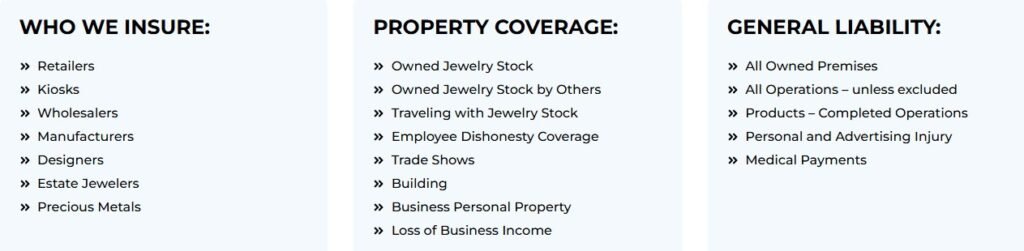
A lot of jewelers run into the same moment. A good opportunity lands on the desk, often a custom order, a municipal project, a mall lease requirement, or an import arrangement, and the paperwork asks for a bond. The owner already carries Jewelers Block insurance, maybe general liability too, so the first reaction is simple: isn't that enough?
Usually, it isn't.
In a jewelry business, insurance and bond issues sit side by side, but they solve different problems. One responds when covered property is lost or damaged. The other backs a promise you've made to someone else. If you mix them up, you can overpay, miss a contract requirement, or discover during a claim that the protection you counted on was aimed at the wrong risk.
After years advising retail jewelers, wholesalers, designers, and repair shops, I've found that the strongest programs are never built around one policy in isolation. They're built around how inventory moves, how staff handle stock, how contracts are written, and who bears the financial pain when something goes wrong.
When Insurance Is Not Enough
A jeweler wins a contract to produce commemorative pieces for a corporate client. The order is large enough to matter. Materials have to be ordered, labor scheduled, and delivery dates hit. Then the contract package arrives, and buried in the requirements is a demand for a performance bond.
That's when confusion starts.
The owner already has insurance for a jewelry store. Inventory is covered. Showcases are covered. Transit may be covered, depending on how the policy is written. But the client isn't asking whether the diamonds are insured. The client wants a guarantee that the work will be completed as promised.
That's the dividing line many businesses miss. Your Jewelers Block insurance protects your stock and other covered property exposures. A bond protects the party relying on your performance.
Here's how this plays out on the shop floor:
- A showcase burglary is an insurance problem.
- Failure to deliver a contracted order on time and to specification is a bond problem.
- Employee dishonesty may trigger either a bond or an insurance response, depending on how your program is structured.
- Licensing or permit requirements often call for a bond even when your insurance package is excellent.
Practical rule: If the issue is loss to your business property, start with insurance. If the issue is a promise you made to a customer, government body, landlord, or supplier, ask whether a bond is required.
This is why a single policy never tells the whole story for a jeweler. A business that manufactures custom work, imports goods, handles consignments, employs multiple staff members, or bids on public or institutional work often needs more than one layer of protection.
The mistake isn't buying insurance. The mistake is assuming insurance solves every risk that matters to your business relationships.
Insurance vs Bonds The Fundamental Difference
The cleanest way to understand this is to think of insurance as a shield and a bond as a promise backed by a surety.
Insurance is designed to protect you against covered loss. You pay a premium, and if a covered event happens, the insurer responds under the policy terms. Bonding works differently. A bond is typically a three-party arrangement involving you, the surety, and the party requiring the bond.
What each one is built to do
A useful historical example comes from the bond market itself. The municipal bond insurance industry began in 1971 and was built to secure AAA ratings and lower interest rates for issuers, showing how insurance-style credit support can create stability in financial transactions, much like specialty insurance protects high-value jewelry inventory from loss for business owners, as outlined in this municipal bond insurance industry chronology.
That broader market example matters because jewelry transactions also run on trust. A client trusts you to deliver. A landlord trusts you to meet lease obligations. A customs authority trusts that duties will be paid. Insurance and bonds support that trust, but in different ways.
For a visual reference to how established specialty markets think about protection and underwriting presentation, some jewelers also recognize legacy insurance branding such as Lloyd's market imagery.
Insurance vs. Bond at a Glance
| Attribute | Insurance | Bond |
|---|---|---|
| Primary purpose | Protects your business from covered loss | Guarantees your obligation to another party |
| Who is being protected | Usually your business, or an insured party under the policy | The obligee, meaning the party requiring the bond |
| Typical trigger | Theft, fire, transit loss, mysterious disappearance, property damage, depending on policy terms | Failure to perform, failure to pay, noncompliance with a legal or contractual requirement |
| Claim direction | Insurer pays according to policy terms if the loss is covered | Surety pays a valid claim to the obligee, then may seek recovery from the bonded party |
| Underwriting focus | Property values, controls, loss history, operations | Financial strength, credit, and ability to perform |
| Best use in a jewelry business | Protecting stock, showcases, tools, premises, shipments, and related exposures | Backing contracts, employee honesty exposures, licenses, permits, or customs obligations |
Insurance replaces covered loss. A bond answers for failed obligation.
Why the distinction matters to jewelers
If you confuse the two, you can end up with the wrong expectation at the worst time. I've seen jewelers assume a property policy would satisfy a contract requirement. It won't. I've also seen owners buy a bond believing it protects their inventory from theft. It doesn't do that job.
Once you understand that difference, coverage decisions get much easier. You stop asking which one is better and start asking which business promise or loss exposure needs its own tool.
Key Bond Types Every Jeweler Should Know
Most jewelers don't need to memorize every bond in the marketplace. They need to understand the few that show up in jewelry operations.

Surety bonds
This is the category that catches jewelers when a contract gets larger and more formal. A surety bond guarantees performance or payment to a third party.
A common example is a custom production agreement. If a hotel group, city authority, or luxury retailer hires your firm to produce a run of items and wants assurance that you'll complete the order according to contract terms, a surety bond may be required.
Underwriting here is disciplined. Surety underwriting relies on the three Cs, character, capacity, and capital, and strong financials can lead to 15-20% lower premiums according to this IRMI explanation of surety bonds.
That matters in practice:
- Character means your track record. Have you honored commitments, handled disputes responsibly, and maintained a clean reputation?
- Capacity means operational ability. Can your shop complete the work with current staffing, suppliers, and production timelines?
- Capital means financial strength. Can the business absorb surprises without collapsing mid-project?
Fidelity bonds
Fidelity bonds focus on employee dishonesty. If a staff member steals finished jewelry, loose stones, cash, or other business assets, this type of bond may respond, depending on wording and facts.
Jewelers often make assumptions in this area. They think all internal theft issues are automatically handled by one coverage form. In reality, internal dishonesty is one of the areas where policy structure matters most. The way the loss happened, who had custody, and which form was intended to respond all become important.
If employees touch inventory every day, ask specifically how internal theft is handled. Don't accept a vague answer.
License and permit bonds
These are less dramatic, but they can stop a deal cold. Some jurisdictions require a bond before a license, permit, or operating authority is issued or renewed.
If you're expanding into a new municipality, opening a second showroom, or adding a regulated service line, this is one of the first items to check. The bond isn't there to insure your inventory. It exists to support compliance with legal or regulatory obligations.
Customs bonds
If you import jewelry, components, findings, or finished goods, customs bonding can become part of the conversation. This is especially relevant for wholesalers and retailers with international sourcing.
A customs bond generally guarantees the payment of duties and compliance obligations tied to import activity. If your business is new to cross-border movement, this guide to CBSA customs bond compliance gives a useful operational overview of how customs bonds fit into importing.
What works and what doesn't
What works is preparing for bond underwriting before the requirement lands in your inbox. Keep financial statements organized, document major contracts, and be ready to explain how work gets completed.
What doesn't work is treating bond applications like simple insurance quote requests. Sureties want to know whether you can fulfill the obligation, not just whether you want the bond issued quickly.
How Bonds and Jewelers Block Insurance Work Together
A smart jewelry risk program doesn't ask insurance and bonds to do the same job. It assigns each one a clear lane.
Your Jewelers Block policy is usually the foundation. It's built around tangible exposure: inventory, finished pieces, memo items if scheduled appropriately, showcases, tools, and goods in transit, all subject to the actual policy wording. It deals with physical loss and property-related damage.
Bonds sit on another side of the operation. They deal with obligations, compliance, and trust relationships.

The easiest way to separate the roles
Take the same tray of diamond rings.
If an outsider smashes a front case and steals that tray, you're looking at a property loss scenario. That points toward your Jewelers Block policy.
If an employee with authorized access removes pieces over time and conceals the shortage, you may be dealing with a fidelity exposure or a crime-related coverage issue instead.
That's why a jeweler can't evaluate insurance and bond needs in separate silos. The stock is the same. The legal and financial cause of loss is different.
Where overlap creates trouble
One of the most common issues in high-value asset protection is unintentional overlap between bonds and insurance, which can create unnecessary costs and slow down claims. That problem is especially acute for jewelers carrying both crime coverage and employee dishonesty bonds without a clear understanding of claim priority, as discussed in this piece on bonds, insurance, and overlapping risk management.
I see this most often in growing businesses that added coverage in layers over time. One broker handled the store package. Another placed a fidelity bond. A third helped with a contract bond. No one compared the wording together.
A cleaner setup looks like this:
- Jewelers Block handles physical stock loss exposures
- Crime or fidelity protection addresses internal dishonesty if that's how the program is structured
- Surety bonds support contract obligations
- License or customs bonds satisfy regulatory requirements
For retailers thinking about physical controls, alarms, cameras, and access management, it also helps to combat fragmented security setups so the insurance file, security plan, and staff procedures all point in the same direction.
A practical audit method
When I review a jeweler's program, I look at each exposure by asking four questions:
Who suffers the financial harm first?
Your business, your client, a landlord, or a government authority?Did property disappear or did a promise fail?
Those are different triggers.Was the actor internal or external?
Employee misconduct often leads to different coverage analysis than burglary or robbery.Is there any other policy or bond that appears to answer the same event?
If yes, resolve that before a claim happens.
You should also review how your business presents stock and value exposures internally. Even visual documentation of inventory profile and display style can help frame underwriting discussions, whether through schedules, appraisals, or operational materials such as this jewelry inventory presentation example.

Good programs don't just insure losses. They prevent arguments over which instrument should respond.
Real-World Scenarios For Your Jewelry Business
Theory matters less than day-to-day use. Here are three situations that come up in actual jewelry operations.

The municipal commission
A city selects your shop to create ceremonial pins and presentation items for a public event. The award is valuable, but the contract terms are strict. Before work begins, the city requires a performance bond.
Your Jewelers Block insurance doesn't satisfy that requirement because the city isn't asking whether your goods are insured. The city wants assurance that the contract will be fulfilled. This is the same broad logic seen in capital markets, where the rise of CAT bonds after Hurricane Andrew showed how risk could be transferred through structured instruments, later evolving into a significant risk management tool, as described by the Chicago Fed on catastrophe bonds. In a jewelry business, the scale is smaller, but the principle is familiar. Different tools handle different forms of risk.
The new hire problem
A sales associate seems reliable. Over time, small items go missing. The losses are subtle enough that they look like paperwork errors at first. Eventually, a pattern appears.
If your coverage was designed thoughtfully, fidelity or employee dishonesty protection may become critical. Your Jewelers Block policy remains important, but not every internal theft situation should be expected to flow through the same channel as a smash-and-grab loss.
A specialist broker will want details about access, inventory counts, camera coverage, and who had authority over stock movement.
The expansion into a second location
You sign a lease in a new retail district. Build-out begins. Then the licensing process reveals a bond requirement tied to local operation or permit compliance.
This isn't unusual. Expansion often creates bond needs before it creates insurance claims. You still need insurance for jewelry business property, stock, and liability at the new location, but the bond solves a different gatekeeping problem. It helps you qualify to operate.
For a visual reminder of what's at stake in retail jewelry protection, even a simple product-focused image like this diamond ring showroom asset example points back to the fact that every contract and every staffing decision ultimately touches inventory value.

Steps to Secure the Right Coverage
A jeweler can have a strong Jewelers Block policy and still get blindsided by a contract requirement, a license bond, or an employee dishonesty exposure that was never lined up properly. Good coverage starts with seeing where insurance pays for loss and where a bond is required to keep the business operating, bidding, importing, or signing leases.
Start with an exposure map
Map the business you run on a normal Tuesday, not the version that fits neatly into an application.
Review how inventory moves from intake to sale, who touches it, where it leaves the premises, and which promises the business has made to landlords, municipalities, customers, or vendors. That process usually shows where Jewelers Block stands alone and where a bond has to sit beside it.
Include:
- Inventory movement across showroom, safe, transit, repair intake, consignment, and trade shows
- Contract commitments for custom orders, institutional jobs, tenant requirements, and vendor obligations
- Employee access to keys, safes, memo goods, repairs, and after-hours handling
- Licensing and import activity that could trigger bond requirements
A clean map prevents a common mistake. Owners often insure the stock well but miss the obligation that allows the deal, location, or shipment to go forward in the first place.
Get your financial file ready
Bond underwriting is closer to a credit decision than a property insurance submission. A surety wants to know whether the business can meet the obligation behind the bond. Jewelers Block underwriters focus more heavily on stock values, security controls, transit procedures, and loss history.
An overview of bond underwriting explains that credit scores are heavily weighted, which can be a challenge for jewelers with sound operations but weaker credit, as explained in this article on how bonding underwriters evaluate creditworthiness.
Prepare these before you apply:
Current financial statements
Sureties look for financial stability, liquidity, and signs that the business can complete the obligation tied to the bond.A short business narrative Explain what you sell, how inventory is controlled, and why the bond is needed. That helps an underwriter connect the financial file to the actual operation.
Ownership and management background
Experience matters. A seasoned bench jeweler opening a second store presents differently than a first-time owner taking on a large custom contract.Details on the obligation
Provide the bond form, contract terms, obligee name, and deadline early. Small errors here can slow approval more than the financials do.
Use a broker who understands both sides
A broker who only handles standard business insurance may place the policy and miss the bond requirement until a lease, permit, or contract stalls the transaction. A bond-only shop can miss how an employee dishonesty issue, a transit loss, or memo stock exposure should connect back to Jewelers Block and crime coverage.
A specialist can identify where the policy and the bond program should meet and where they should stay separate.
Bring contracts, lease requirements, import details, and staffing responsibilities into the same discussion as inventory protection. In practice, that is how gaps get found before they become expensive.
Your Broker Checklist Questions About Insurance and Bonds
A good broker conversation should sound less like shopping and more like planning. The right questions expose gaps fast.
Questions for Your Insurance Broker
| Category | Question |
|---|---|
| Jewelers Block | Does my policy clearly address showroom stock, goods in transit, repair items, and off-premises exposures? |
| Internal theft | If an employee steals inventory, which policy or bond is intended to respond first? |
| Overlap | Do I have any duplicate protection between crime coverage, employee dishonesty coverage, and fidelity bonds? |
| Surety needs | Are any of my current customer contracts likely to require a performance or payment bond? |
| Licensing | Does my city, state, landlord, or trade activity require a license or permit bond? |
| Imports | If I import goods or components, do I need a customs bond or related trade compliance support? |
| Underwriting readiness | What financial documents should I prepare before applying for a bond? |
| Credit concerns | If my credit profile is challenged, what options exist to improve bond approval chances? |
| Claims handling | If a loss involves both a property issue and an employee issue, how will the claim be directed? |
| Growth planning | If I open another location or add custom contract work, what should be reviewed first? |
A broker who knows the jewelry trade should answer those questions plainly. If the answers stay vague, keep asking.
The point isn't to buy more coverage than you need. The point is to make sure each exposure has the right instrument attached to it. That's the difference between a jeweler who is merely insured and a jeweler whose business is built to withstand contract demands, theft problems, expansion, and operational surprises.
If you need help sorting out where Jewelers Block insurance ends and a bond requirement begins, First Class Insurance can help review your operation, identify potential gaps or overlaps, and quote protection designed for jewelry stores, wholesalers, and other high-value inventory businesses.