
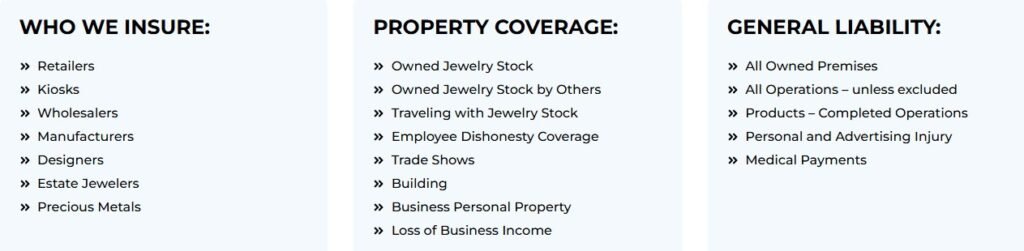
When you hear the term "insurance loss control," don't think of it as just another industry buzzword. It’s a complete shift in how you protect your jewelry business. Instead of simply reacting to a theft or disaster after it happens, you're getting ahead of it—actively preventing losses before they ever have a chance to occur.
For a jeweler, this means building a fortress around your assets through specific, deliberate actions that dramatically cut down on risks like theft, damage, or the dreaded "mysterious disappearance." Get this right, and you'll find yourself in a much stronger position when it's time to talk insurance.
What Is Insurance Loss Control for Jewelers

Think of loss control not as a rigid checklist, but as the master blueprint for your store’s security. It’s about moving from a reactive mindset—filing claims after a catastrophe—to a proactive one that stops threats in their tracks. This isn't something you do alone; it's a partnership between you and your insurance provider, designed to fortify every corner of your operation.
This proactive approach is absolutely essential when you're looking for comprehensive Jewelers Block insurance. Insurers don't just see a storefront; they see a risk profile. And a business that actively manages its vulnerabilities through a well-designed loss control program is a far more appealing partner.
More Than Just Security Hardware
While top-of-the-line cameras and heavy-duty safes are crucial, real loss control goes much, much deeper. It’s a whole ecosystem of practices working in concert to create a secure environment.
Key pieces of a jeweler's loss control program include:
- Physical Security: This is your hard defense. We're talking UL-rated safes and vaults, reinforced display cases, and layered alarm systems that create multiple barriers for any would-be thief.
- Procedural Controls: These are the daily habits that quietly reduce risk. Think strict opening and closing protocols, meticulous inventory management, and iron-clad practices for transporting merchandise.
- Personnel Policies: Your team is your first line of defense, and arguably your most important one. This covers thorough background checks, continuous security training, and clear, enforced policies for handling high-value pieces.
When done right, loss control turns your security from a simple business expense into a powerful strategic asset. It’s how you build a resilient insurance for a jewelry business foundation that protects your inventory, your team, and your hard-earned reputation.
The heart of loss control is simple: identify, analyze, and eliminate the root causes of potential losses. For a jeweler, that means learning to think like a thief. You have to spot the weaknesses in your store's layout, your daily routines, and your employee habits before someone else does.
The Direct Impact on Your Insurance
A detailed, well-documented loss control program is the single best tool you have when it's time to Get a Quote for Jewelers Block. Insurers reward proactive risk management with better terms and more competitive premiums—it's that simple.
When an underwriter from a First Class Insurance Jewelers Block Agency reviews your application for jewelry store insurance, their primary job is to calculate the odds of you filing a claim. By showing a serious, demonstrable commitment to loss control, you give them tangible proof that your business is a lower risk.
This proactive stance is what unlocks the best possible insurance for a jewelry store, ensuring your business can operate securely and thrive for years to come.
Why Proactive Loss Control Is Your Best Investment
Think of insurance loss control less as a line item on your expense sheet and more as one of the smartest investments you can make in your business. It's about fundamentally shifting your mindset from reacting to losses after they happen to actively preventing them from ever occurring. For a jeweler, this isn't just good practice; it's a powerful strategy for protecting your bottom line.
When you show an underwriter that you're serious about minimizing risk, they see a responsible, lower-risk partner. A solid loss control program sends a clear signal that you’re not leaving things to chance. That perception almost always translates into better terms, more comprehensive coverage options, and, most importantly, lower premiums for your Jewelers Block insurance.
Let's talk numbers. The financial fallout from a single major theft can be catastrophic, easily dwarfing the cost of security upgrades like high-grade safes or modern surveillance systems. We see it all the time in the industry—jewelers with disciplined loss control programs file significantly fewer claims. A clean claims history is one of the most critical factors driving your insurance costs down year after year.
Beyond Premiums: Protecting Your Reputation
The real value of loss control goes far beyond your insurance policy. In the world of fine jewelry, your reputation is everything. A brazen robbery doesn't just mean lost inventory; it can shatter the trust you've built with your clients and tarnish your brand for years to come.
Imagine the news of a smash-and-grab at your store spreads through the community. The incident immediately creates the impression that your store isn't safe, scaring off both loyal customers and potential new ones. By investing in visible, effective security, you're also investing in public confidence. It tells everyone that you value their future heirlooms as much as you do your own.
A proactive loss control strategy isn't an expense. It's an investment in business continuity, brand integrity, and the safety of your team. It protects your assets today while securing your reputation for tomorrow.
This commitment also creates a safer, more stable environment for your team. When employees feel secure, they're more focused and effective. Having clear security protocols and regular training empowers them to respond correctly during a threat, protecting themselves and your inventory.
Real-World Scenarios and ROI
Let’s put this into a practical context. A jeweler decides to invest in a state-of-the-art, multi-layered alarm system and enforces a strict two-person closing rule. Six months down the line, a thief tries to break in overnight. The layered alarms trip instantly, alerting the authorities and triggering deafening sirens that send the thief running with nothing.
What’s the return on that investment?
- Zero Inventory Loss: The attempted burglary failed, leaving all merchandise untouched.
- Minimal Business Disruption: Instead of being closed for days for a police investigation and inventory count, the store is open for business the very next morning.
- Stable Insurance Premiums: No major claim was filed, keeping the store’s excellent loss history intact.
- Enhanced Team Morale: The system worked exactly as promised, reinforcing the staff's confidence in their safety and procedures.
In this case, the cost of the security upgrade was a tiny fraction of the financial and reputational disaster it prevented. This is the power of proactive insurance loss control. It turns your insurance for a jewelry business from a simple safety net into a core part of a resilient business framework that actively creates value.
Building Your Loss Control Program From the Ground Up
Building a solid insurance loss control program is a lot like constructing a fortress. You can't just build one big wall and hope for the best; you need layers of defense that work together. If there's a single weak spot, the entire structure is at risk. For any jeweler who wants the best possible insurance for a jewelry store, this isn't just a suggestion—it's the absolute foundation of a secure, insurable business.
This isn't about just buying a fancy camera system and calling it a day. It's a thoughtful approach that weaves together physical hardware, disciplined daily procedures, and a well-trained team. Every piece has a job to do in defending against the unique risks that come with handling high-value inventory.
Let's break down the essential pillars you need to build a loss control strategy that actually works.
The Physical Security Foundation
Your physical security is your most obvious line of defense. It's the steel and concrete that deters criminals and protects your assets around the clock. When underwriters for Jewelers Block insurance review your application, they scrutinize these elements because they're a direct measure of your commitment to stopping a catastrophic burglary.
Essential physical security components include:
- UL-Rated Safes and Vaults: Not all safes are created equal, and insurers know the difference. An underwriter needs to see that your most valuable inventory is kept in a UL-rated safe (like a TRTL-30×6). That rating is proof it's been brutally tested to resist sophisticated attacks for a specific amount of time. This is non-negotiable.
- Layered Alarm Systems: A single point of failure is a thief’s best friend. A layered system should combine door/window contacts, motion detectors, glass-break sensors, and hold-up alarms. Critically, these must be monitored 24/7 by a UL-listed central station.
- Advanced Surveillance: Modern high-definition cameras do more than just record a crime. Their presence is a powerful deterrent, they provide indispensable evidence for law enforcement, and they let you keep an eye on things remotely. You need total coverage—no blind spots inside the store, at entry points, or near the safe.
Think of these as your castle's walls, moat, and watchtowers. Each one makes an intruder's job exponentially harder, and that's exactly what an underwriter is looking for.
Comparing Essential Security Measures for Jewelers
Deciding where to invest in security can be tough. The right choices not only protect your inventory but can also have a real impact on your insurance premiums. This table breaks down some of the most common security measures to help you prioritize.
| Security Measure | Primary Risk Mitigated | Potential Insurance Premium Impact | Key Implementation Notes |
|---|---|---|---|
| UL-Rated Safe/Vault | Burglary (Overnight) | High | The UL rating (e.g., TL-30, TRTL-30×6) is critical. Must be professionally installed and large enough for all high-value stock. |
| Central Station Alarm | Burglary, Robbery | High | Must be a UL-listed central station. System should have layers: contacts, motion, glass-break, and panic buttons. |
| HD Surveillance System | Robbery, Internal Theft | Moderate | Coverage must be comprehensive with no blind spots. Digital recording with sufficient storage is standard. |
| Access Control System | Internal Theft, Burglary | Moderate to Low | Limits access to sensitive areas (safe, back office). Creates an audit trail of who went where and when. |
| Display Case Security | Grab-and-Run Theft | Moderate to Low | Includes high-security locks, shatter-resistant glass, and procedural controls for showing high-value items. |
Ultimately, a truly secure store uses a combination of these measures. No single piece of hardware can do it all. The goal is to create overlapping fields of protection that make your business an unattractive and difficult target for criminals.
Ironclad Procedural Controls
Hardware is crucial, but it's your daily routines that really lock things down against both outside and inside threats. Procedural controls are simply the rules and habits your team follows when handling inventory and managing the store. In insurance loss control, consistency is everything.
These procedures are the lifeblood of a secure business. Best of all, they cost almost nothing to implement but deliver a massive return by slashing your risk profile.
The most expensive security system in the world can be defeated by a single unlocked door. Strong procedures are the human element of security that ensures your technological investments are never undermined by simple oversight.
Key procedural controls to put in place are:
- Meticulous Inventory Management: If you don't know what you have, you'll never know what's missing. Regular, detailed inventories are the only way to spot a discrepancy quickly, whether it’s an internal theft problem or a "mysterious disappearance."
- Strict Opening and Closing Procedures: These need to be written down and followed to the letter, every single day. This includes things like two-person openings/closings, a full inspection of the premises, and locking every showcase and safe without fail.
- Secure Transportation Protocols: How you move merchandise from point A to B is a huge vulnerability. Whether you’re going to a trade show or another store, you need strict rules for secure transport that minimize exposure and keep someone accountable at every step.
- Key and Combination Control: Access to keys and safe combinations should be on a strict need-to-know basis. Limit it to a small number of trusted people, and always change combinations the moment an employee with access leaves the company.
The Human Element: Personnel Policies
At the end of the day, your employees are your most important security asset. A well-trained and trustworthy team can spot a threat long before it turns into a disaster. On the flip side, a poorly screened or careless employee can become your single biggest liability.
It all starts with thorough background checks. This should be standard practice for any employee who will have access to your merchandise. But it doesn't stop at hiring. Ongoing training is just as important. Your team needs to be drilled on security protocols, taught how to recognize suspicious behavior, and know exactly how to react in an emergency.
This focus on people transforms your staff from passive bystanders into active defenders of your store. When you apply for a quote from a specialist like First Class Insurance Jewelers Block Agency, showing that you have these strong pillars in place will make all the difference in the world.
How to Conduct a Security Risk Assessment
If you want to truly secure your jewelry business, you have to stop thinking like an owner and start thinking like a thief. That’s the entire point of a security risk assessment. It’s a hands-on process for spotting the vulnerabilities you’d normally miss during the day-to-day grind. You’re literally walking through your store and procedures to find the weak spots before a criminal does.
This isn’t some theoretical exercise; it’s one of the most important steps in building a real insurance loss control program. When you document your risks and create a smart plan to fix them, you’re showing underwriters that you’re a serious partner in managing your own security.
Thinking Like a Thief
First things first: change your perspective. Stop seeing your store as your livelihood and start seeing it as a target.
Walk the perimeter of your building. Check every single door, window, and potential entry point. Are there dark corners or overgrown bushes that offer perfect cover? Are your locks old, flimsy, or easy to pick? This is your first line of defense.
Now, head inside and run through two scenarios: one for when you’re open and one for after-hours. During business hours, a thief is looking for a quick grab-and-run. How solid are your showcases? Are your most valuable pieces sitting a little too close to the front door? After you’ve closed up, a burglar is looking for holes in your alarm system, your safe, and any physical barriers you have in place.
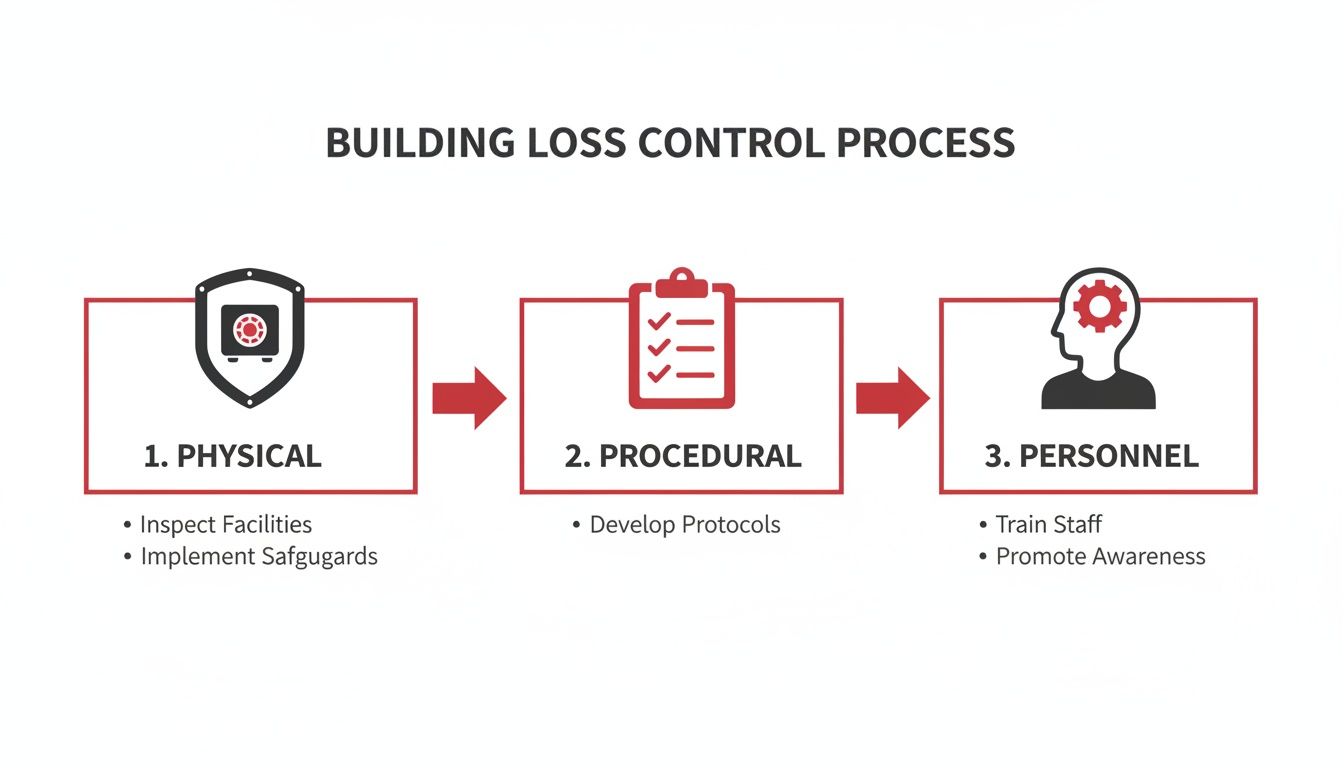
This process shows that real security isn’t just about one thing. It’s a layered strategy where your hardware, your daily routines, and your team all have to work together.
Identifying Key Threats and Vulnerabilities
A solid assessment goes way beyond just looking for signs of a break-in. You have to evaluate risks from the outside and the inside to get the full picture of your security. This is how you build a strong foundation for your business.
Break down your assessment into a few key areas:
- External Threats: This is the obvious stuff—burglary, smash-and-grab robberies, and vandalism. Take a hard look at your storefront’s resilience, the quality of your locks, and how effective your alarm and camera systems really are.
- Internal Threats: Employee theft is still one of the biggest risks in our industry. It’s crucial to review your inventory control procedures, how you handle background checks, and who has access to the safe and other secure areas.
- Procedural Gaps: These are the weak spots created by sloppy or inconsistent daily habits. Think about your opening and closing protocols, how you control keys, and your rules for showing high-value pieces to customers. You can find some great examples of merchandise that demands strict handling protocols in this gallery of antique jewelry.

The goal of a risk assessment isn't to find fault; it's to find opportunities to get better. Every single vulnerability you find and fix is another layer of protection for your assets, your team, and the future of your business.
Documenting and Prioritizing Your Findings
Once you've spotted the potential weak points, you need to write it all down. A simple checklist or spreadsheet works perfectly. For every vulnerability, note where it is, the specific risk it creates, and what a potential fix might be. For a great overview of physical defenses and smart tech, you can learn how to improve security in simple steps.
With everything documented, it’s time to prioritize. Not all risks carry the same weight. Rank each vulnerability using a simple system:
- Likelihood: How likely is this to actually happen?
- Impact: If it does happen, how bad will the damage be?
Tackle the high-likelihood, high-impact problems first. This creates a clear roadmap for security upgrades and becomes a powerful document to share with your insurance agent. It proves you’re not just passively buying a policy; you're actively working to be a better, more secure risk.
Putting Your Loss Control and Prevention Plan Into Action

Running a security assessment is a great first step, but the real work begins when you turn those findings into action. This is the moment you shift from simply knowing your risks to actively shutting them down. The best way to do this is with a formal, written loss control plan that becomes a non-negotiable part of your daily rhythm.
This document isn’t just for you and your team. It's a powerful statement to your insurance provider, proving that you’re serious and organized about managing risk. When underwriters see this level of detail, it makes a real difference when you Get a Quote for Jewelers Block.
Creating and Enforcing Strict Procedures
The heart of any strong insurance loss control plan is consistency. All the tech in the world can’t make up for human error, so your written plan has to lay out the hard-and-fast rules of your operation, day in and day out.
Start with the most vulnerable moments: opening and closing. Your procedures here need to be documented with military precision, leaving zero room for interpretation.
- Opening Protocol: Always have a two-person entry. The first order of business is a complete sweep of the premises for any signs of tampering, followed by a systematic check of the alarm before it's disarmed.
- Closing Protocol: Every single piece of merchandise goes into the safe. Every display case is locked. Two staff members do a final walkthrough to confirm all entry points are secure and the alarm is armed correctly.
A formal, written plan transforms security from a vague idea into a tangible, enforceable standard. It ensures every team member understands their role in protecting the business, creating a culture of shared responsibility and vigilance.
These aren't suggestions—they're policies that have to be enforced every single time. When followed religiously, these simple habits become your single best defense against both casual thieves and determined criminals.
Locking Down High-Value Items and Shipments
Your plan also needs specific protocols for your most valuable inventory. High-end pieces, like the rare watches and luxury goods you might see in this gallery of fine timepieces, demand their own strict set of handling rules. For instance, establish a firm policy of showing only one high-value item at a time and never, ever leaving it unattended on the counter.

Shipping and receiving are two other major weak points that need to be locked down. Your plan should detail secure packaging methods, mandate the use of armored transport, and require meticulous documentation of the chain of custody for every package. An insecure shipping process is a gaping hole that criminals love to find. Your security thinking should cover every corner of your property; for broader ideas, including parking lot safety, check out these comprehensive property protection strategies.
Training Your Team as the First Line of Defense
At the end of the day, it's your people who hold the entire security plan together. A formal training program is the only way to make sure every employee understands not just what the rules are, but why they exist.
This can’t be a one-and-done onboarding session. You need regular drills covering robbery response, how to spot suspicious behavior, and what to do in an emergency. This keeps your team sharp and ready. A well-trained employee is empowered to be your first line of defense, able to spot a threat and react correctly to stop a loss before it happens. This commitment to ongoing staff education is the hallmark of a truly secure insurance for jewelry business program.
Partnering with First Class Insurance for Better Protection
Choosing a provider for your Jewelry store insurance isn't just a transaction. It’s about building a partnership with a team that gets the unique risks you face every single day. Real protection comes from working with specialists who do more than just sell you a policy—they help you build a stronger, more secure business from the ground up.
This kind of teamwork is the whole point of effective insurance loss control. Instead of just showing up after a claim, a true partner helps you stop losses before they ever happen. They work with you to fortify your defenses and make your operation more resilient.
At First Class Insurance, our deep roots in the jewelry industry mean we bring something more to the table than a standard insurance policy. We become your dedicated risk management consultants, giving you the expert guidance needed to protect your business from the inside out.
More Than Just a Policy
When you Get a Quote for Jewelers Block, it should be the start of a conversation, not the end of one. Our specialists work directly with you, digging into a detailed review of your current security measures. We look at your store through the same critical lens as an underwriter, spotting potential gaps you might have easily missed.
We help you see exactly what underwriters are looking for. This includes:
- Evaluating your physical security: We’ll assess the strength of your safes, alarms, and camera systems against today’s toughest industry standards.
- Reviewing procedural controls: We’ll analyze your opening and closing protocols, inventory management, and staff training to find any weak links.
- Recommending practical improvements: We suggest smart, cost-effective upgrades and simple procedural changes that deliver the biggest impact on your risk profile.
A Partnership That Pays Off
This hands-on guidance from a dedicated First Class Insurance Jewelers Block Agency gives you a clear advantage. By helping you put specific loss control measures in place, we don't just lower your risk of theft or damage. We also position your business to lock in better terms and pricing on your insurance for a jewelry store. You can see the kinds of high-value assets we’re committed to protecting, like this stunning diamond ring.

An insurer who truly understands your business is an asset. They can translate your security investments into tangible benefits, making sure your proactive efforts are recognized and rewarded during the underwriting process.
Ultimately, our goal is to build a long-term relationship. We provide the support and industry knowledge you need to strengthen your business and ensure your insurance for jewelry business evolves right along with you. Let our team give you a comprehensive review and show you how a proactive partnership can fortify your operations and sharpen your coverage.
Common Questions About Jewelers Insurance Loss Control
Getting a handle on insurance loss control can feel complicated. Let's break down a few of the most common questions jewelers ask, connecting the dots between your security choices and your insurance.
Will a New Alarm System Lower My Premium?
Not directly, but it’s a huge factor underwriters look at. Installing a new, UL-certified alarm system is a powerful signal that you’re serious about protecting your store. It’s one of the strongest positive moves you can make, and it often results in better terms when you Get a Quote for Jewelers Block.
The key is providing the complete specs to your insurance agent. That documentation is proof of your investment, helping ensure you get the maximum credit possible for your jewelry store insurance.
What Is the Most Overlooked Aspect of Loss Control?
It’s almost always the human element. You can have the best high-tech safes and cameras in the world, but if your employee procedures are sloppy, none of it matters. The biggest gaps in any insurance for a jewelry store plan usually come from a lack of consistent, ongoing training.
Your most valuable loss control asset is a well-trained, alert staff. Most weaknesses don't come from hardware failures; they come from poor enforcement of daily rules like dual-person closings or strict key control.
This is why making staff education a constant priority is the cornerstone of any solid loss control strategy for your insurance for jewelry business.
How Often Should I Review My Loss Control Plan?
Think of your loss control plan as a living document, not something you file away and forget. A full, deep-dive review should happen at least once a year. But you also need to revisit it immediately anytime your business changes in a big way.
It's time for an immediate review after events like:
- A major store renovation or a change in your layout.
- A significant jump in your total inventory value.
- Changes in key staff who have access to secure areas.
- Any security incident at your store or even one nearby.
Regular reviews are the only way to make sure your defenses are keeping up with your risks. A proactive approach is what keeps your First Class Insurance Jewelers Block Agency partnership strong and your coverage rock-solid.
Ready to tighten up your defenses and find the right protection for your business? The specialists at First Class Insurance are here to help you build a smarter loss control program and lock in the ideal coverage. Get a Quote for Jewelers Block by visiting us at https://firstclassins.com to start the conversation.