
When you inherit a jewelry collection or need to handle one as part of an estate, a formal appraisal is one of the most critical first steps. A jewelry estate appraisal is a detailed, legally sound valuation of a collection's fair market value, prepared specifically for settling an estate or for other financial and legal purposes.
This isn't just about getting a ballpark figure. It’s a formal process that produces a legally defensible document spelling out the true worth of the jewelry for very specific situations.
Why a Jewelry Appraisal Is More Than a Price Tag
Think of a jewelry estate appraisal less like a price check and more like a crucial financial health report for your most treasured assets. It's a deep dive that goes far beyond a casual "what do you think this is worth?" guess. This formal valuation is what protects your wealth, ensures heirs get their fair share, and makes certain you have the right insurance coverage.
For anyone who owns a jewelry store, inherits a collection, or is a serious collector, understanding this process is step one in protecting significant assets. A good appraisal acts as a 'provenance passport'—a detailed log that documents an item's history, unique characteristics, and official value. It's an absolutely essential tool for any insurance for a jewelry business.
Securing Your Financial Legacy
At its heart, an appraisal delivers clarity and protection. Think about it: without one, settling an estate can quickly devolve into a messy, contentious process filled with guesswork. Heirs might argue over the value of different pieces, leading to bitter family disputes and an unfair division of assets.
A professional jewelry estate appraisal cuts through all that ambiguity. It provides an objective, unbiased valuation that will hold up under legal scrutiny.
Primary Reasons for a Jewelry Estate Appraisal
To put it plainly, this formal document is non-negotiable for several key reasons. Here’s a quick breakdown of why you absolutely need one.
| Appraisal Purpose | Key Benefit |
|---|---|
| Estate Settlement | Establishes fair market value for probate court, ensuring assets are divided equitably among beneficiaries. |
| Tax Compliance | Provides accurate valuations required for federal and state estate tax filings, helping you avoid IRS penalties. |
| Insurance Coverage | Forms the basis for securing adequate insurance, whether it's specialized Jewelers Block insurance or a personal policy. |
Essentially, the right appraisal is what turns an unknown asset into a documented, protected part of your financial portfolio.
It’s the difference between just owning a beautiful object and truly safeguarding a tangible asset.
The Scale of the Matter
The sheer size of the market highlights just how important a formal appraisal is. We're talking about a global jewelry market—which includes vast estates and private collections—that hit roughly $348 billion. The U.S. alone carves out a massive 25% of that, at $78 billion.
Now, imagine trying to liquidate or divide an estate full of fine jewelry without a rock-solid valuation. You’re not just making a small mistake; you're gambling with potentially huge financial assets. For a closer look at the numbers, you can read the full report about global jewelry trends.
Decoding the Different Types of Jewelry Valuations
One of the most confusing things about a jewelry estate appraisal is learning that a single piece can have several different, completely valid values. It’s not a mistake. The "value" of an item is all about its purpose, and getting this right is key to making smart financial moves for your collection or jewelry store insurance.
The valuation method an appraiser uses can massively swing the final number on the report. A valuation for your insurance company will look totally different from one done for estate taxes. Using the wrong one can land you in some serious financial or legal hot water.
Fair Market Value for Estates and Taxes
When settling an estate, the most common type of valuation you'll encounter is Fair Market Value (FMV). Think of it this way: it's the price a piece would sell for on the open market between a knowledgeable buyer and a seller, where neither person is desperate to make a deal. It's a real-world, practical value reflecting what someone would actually pay for the item right now.
To get a handle on this, it's helpful to understand the basics of what is fair market value, as it’s the foundation for so many appraisals. The IRS insists on this value for calculating estate taxes because it represents the true, transferable worth of an asset when the owner passes away—not some inflated retail price tag.
This concept map breaks down how appraisals pull double or even triple duty, protecting assets, ensuring fair distribution, and locking in the right insurance coverage.
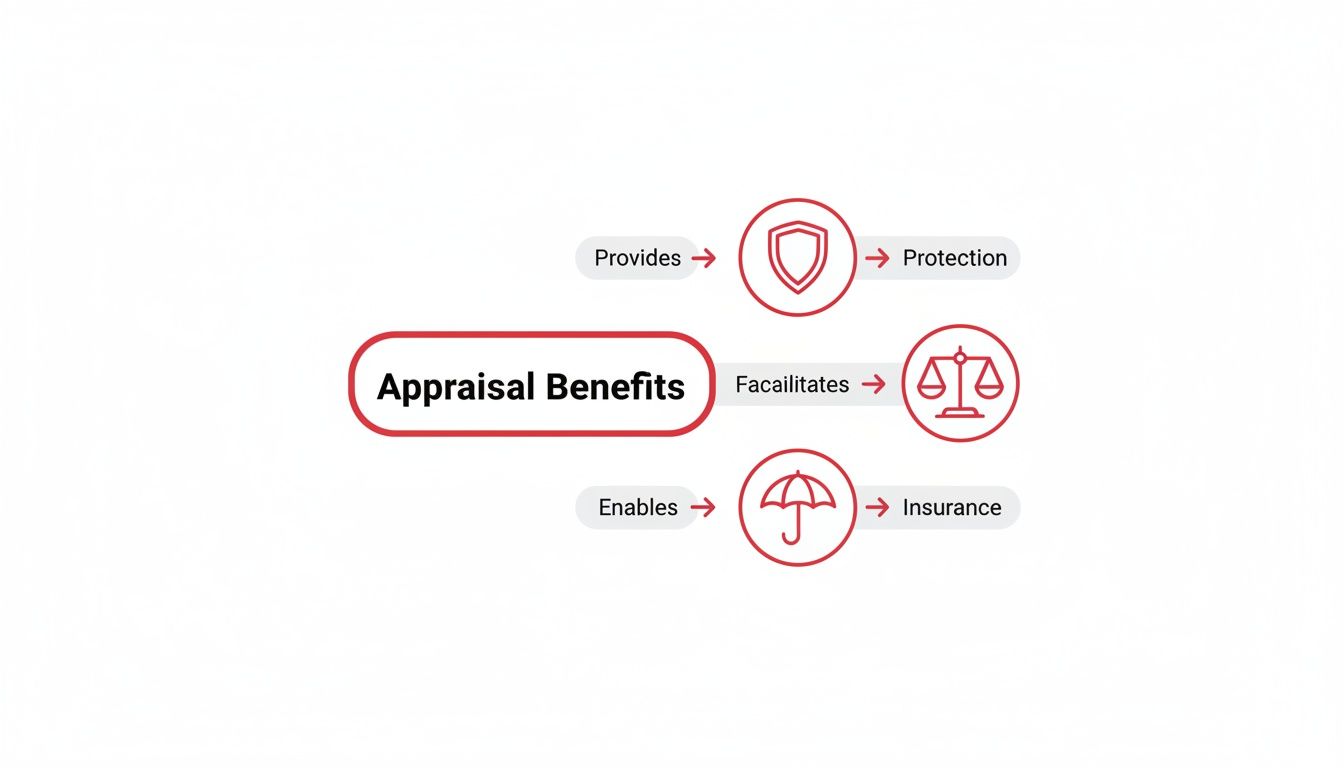
As you can see, a proper appraisal is a multi-tool, essential for protecting your assets from both a legal and financial standpoint.
Replacement Value for Insurance Coverage
On the flip side, Replacement Value is almost exclusively for insurance. This number represents the full retail cost to replace a lost, stolen, or damaged piece with a brand new one of the same kind and quality. This value is nearly always higher than Fair Market Value because it has to account for retail markups, the jeweler's labor, and the current market price of gold, diamonds, and other materials.
For a jewelry business owner, an accurate replacement value is the absolute bedrock of a solid insurance for a jewelry store policy. It guarantees that if a thief makes off with a high-value piece, your Jewelers Block insurance will cover what it costs to recreate or replace it, protecting your inventory and your entire business.
Without an up-to-date replacement value appraisal, you’re flying blind. You risk being underinsured, leaving a huge, costly gap between what your policy pays out and what it actually costs to recover from a loss.
A Real-World Comparison
Let’s look at a quick example to see just how different these values can be. Imagine you've inherited an antique sapphire necklace. Here’s how its valuation journey might play out:
- Fair Market Value (For the Estate): An appraiser might set its FMV at $8,000. This is what it could realistically fetch at an auction or from a dealer who specializes in antique pieces. This is the number that goes on the estate tax return.
- Replacement Value (For Insurance): That same necklace could have a Replacement Value of $15,000. This much higher figure reflects what it would cost a modern jeweler to source a similar antique sapphire, meticulously recreate the platinum setting, and factor in their own retail overhead.
That huge difference makes it crystal clear why you can't just use an insurance appraisal for estate taxes, or the other way around. Using the $15,000 insurance value for taxes would lead to a painfully high estate tax bill. But insuring it for only $8,000 would leave you $7,000 short if you ever needed to replace it. Choosing the right appraisal isn't just a technicality—it's a critical financial decision. For anyone dealing with historical pieces, you can learn more about the unique challenges of valuing antique jewelry in our detailed guide.
Your Step-by-Step Guide to the Appraisal Process
Getting a jewelry estate appraisal can feel like a huge, complicated task, but it’s actually a very methodical process. Once you understand the steps, the whole thing feels much less intimidating. It’s a logical journey from start to finish.
Let's walk through what you can expect, from gathering your collection to getting that final report in your hands. Knowing the roadmap helps you work with your appraiser like a pro.
Phase 1: The Initial Consultation and Inventory
It all starts with a simple conversation. In this first meeting, you’ll tell the appraiser exactly why you need the valuation. Is it for settling an estate? Filing taxes? Or maybe you’re updating your insurance for a jewelry store? This is the most important question because the answer determines the entire approach.
Next, the appraiser will do a preliminary inventory, logging each piece in your collection and noting its general condition. Think of it as creating the master list for the entire project.
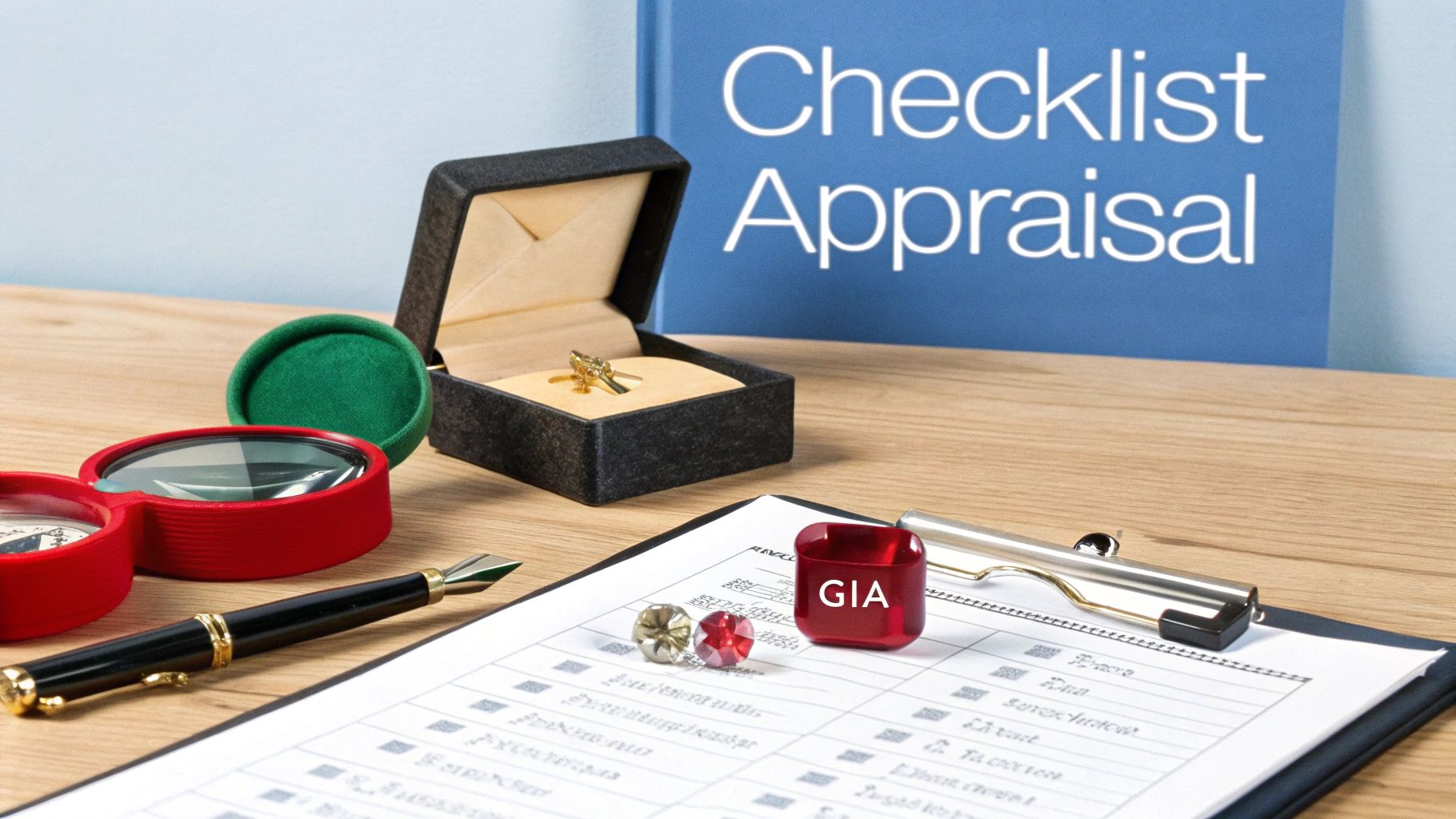
You can make this part go so much smoother by coming prepared. The more paperwork you can bring, the better.
- Previous Appraisals: Old valuations provide a great historical reference point.
- Sales Receipts or Invoices: These often have critical details about where a piece came from and its original cost.
- Gemological Certificates: Lab reports, especially from places like GIA (Gemological Institute of America), are gold. They give the exact specs of a stone.
- Repair Records: Any documentation of work done tells the story of the piece's current condition and history.
Having this info ready gives the appraiser a head start and a much clearer picture.
Phase 2: The Deep Dive Gemological Analysis
With the inventory set, the real hands-on work begins. This is where the appraiser puts each piece under the microscope—literally. It’s a detailed, scientific examination, not just a quick look.
Using specialized tools, they'll identify every gemstone, grade diamonds on the 4Cs (cut, color, clarity, and carat weight), and evaluate the quality of any pearls. This is where a true expert's training really pays off.
At the same time, they'll test all the precious metals to confirm their purity—whether it’s 14k gold, 18k, or platinum. They also hunt for any maker’s marks or hallmarks, which can reveal the designer, the era it was made, and its origin. For a better sense of how an expert breaks down a high-value piece, you can see a classic diamond ring in our resource gallery.
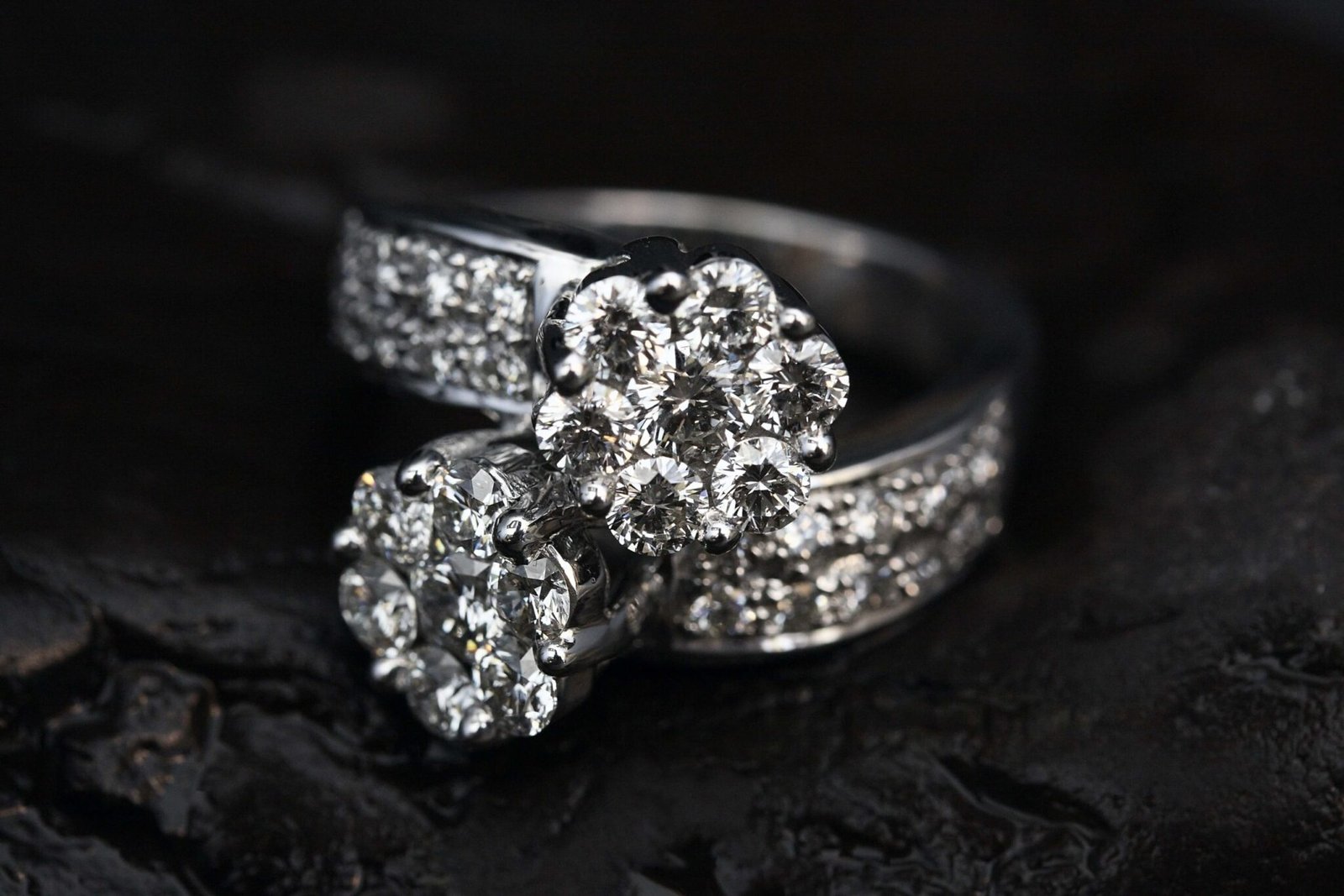
Phase 3: Market Research and Nailing Down the Value
Once the physical inspection is done, the appraiser becomes a detective. They take all the gemological data and cross-reference it with the current market. This means digging into industry databases, recent auction results, and wholesale price guides.
The goal here is to land on the right type of value for your specific needs. For an estate, that’s almost always Fair Market Value. But for a jewelry store insurance policy, it needs to be the much higher Replacement Value.
This research ensures the final number isn't just a guess; it's a value backed by hard, real-world data.
Phase 4: Timelines and How You'll Be Billed
Let’s be realistic about timing and cost. A thorough jewelry estate appraisal, especially for a larger collection, isn’t done overnight. The detailed analysis can take anywhere from a few days to several weeks, depending on how many pieces there are and how complex they are.
When it comes to fees, appraisers usually charge in one of two ways:
- Hourly Rate: Most professionals charge for their time. You can expect to see rates anywhere from $50 to over $200 per hour, based on their credentials and location.
- Per-Piece Fee: For a handful of items, some appraisers might just charge a flat fee for each one.
Here’s a critical red flag: a reputable appraiser will never charge a percentage of the jewelry's value. That’s a massive conflict of interest. Always ask for a clear fee structure right at the start so there are no surprises. Transparency is the sign of a true professional.
How to Choose a Qualified and Trustworthy Appraiser
Let’s be honest: the final appraisal report is only as credible as the expert who signs it. Choosing the right appraiser is single-handedly the most critical decision you'll make in the entire jewelry estate appraisal process. Get this right, and you'll have a valuation that courts, insurance companies, and tax authorities will actually respect.
Think of it this way: you wouldn’t let an unlicensed advisor manage your life savings. So why would you hand over a valuable jewelry collection to just anyone? A truly qualified appraiser isn't just looking at stones; they're ensuring the entire process is accurate, ethical, and legally airtight.
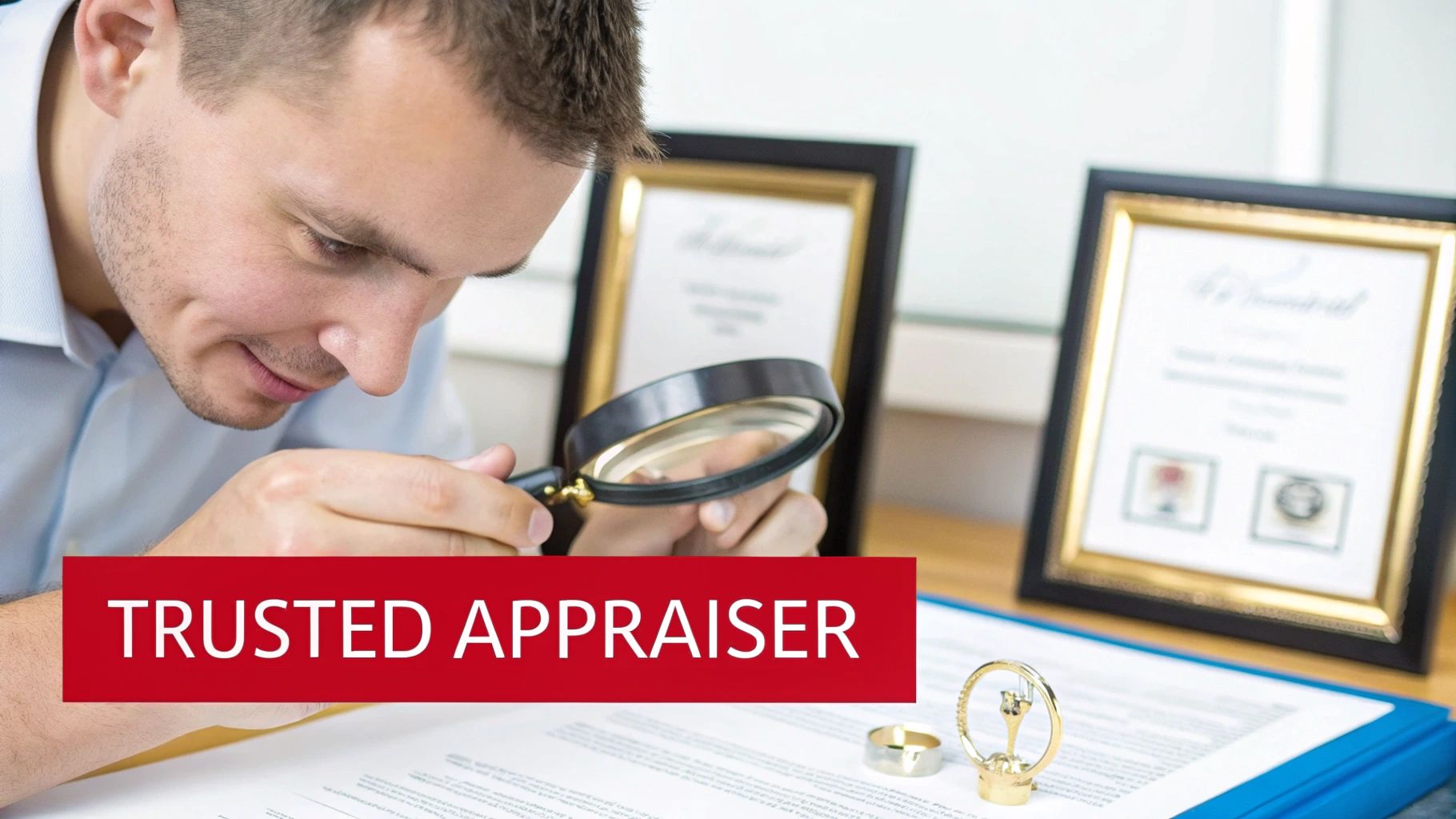
Essential Credentials and Professional Designations
When you start vetting appraisers, their credentials are your best first filter. These aren't just fancy letters after their name; they represent years of intense training, tough exams, and a real commitment to professional ethics. They are your proof of expertise.
Keep an eye out for these key qualifications to weed out the amateurs:
- Graduate Gemologist (GIA): This is the gold standard. A GG from the Gemological Institute of America has proven they know how to accurately identify and grade diamonds and colored gemstones. It’s a must-have.
- American Society of Appraisers (ASA): Membership here means the appraiser has specialized training in valuation theory and is bound by a strict code of professional conduct.
- National Association of Jewelry Appraisers (NAJA): This is another top-tier organization that’s all about maintaining high standards and education in the jewelry appraisal field.
Seeing these credentials tells you an appraiser has seriously invested in their craft and is dedicated to getting it right.
Why USPAP Compliance is Non-Negotiable
Beyond memberships, there's one standard that is absolutely essential: USPAP compliance. USPAP stands for the Uniform Standards of Professional Appraisal Practice, and it’s the official rulebook for the appraisal profession in the United States.
Think of USPAP as the appraiser's code of conduct. It dictates exactly how they must research, develop, and report their findings in an ethical, unbiased way. An appraisal that isn't USPAP-compliant is basically useless for any official purpose like estate settlement or tax filings.
Hiring a USPAP-compliant appraiser is your guarantee that the report you get will be objective, legally defensible, and prepared with professional integrity. It's your ultimate protection from a shoddy or biased valuation.
Independent Appraiser Versus a Retail Jeweler
A common question is whether to use an independent appraiser or just go to a local jewelry store. While many retail jewelers are very knowledgeable, their main business is selling jewelry. That can create a conflict of interest, whether they intend it to or not.
When you're dealing with something as important as a jewelry estate appraisal or getting the right insurance for a jewelry business, you need total impartiality. An independent appraiser has no skin in the game. Their only job is to give you an accurate, unbiased assessment.
The current market makes this even more critical. Gold demand, for instance, shot up 1% year-on-year to 1,206 tonnes in Q1 alone, pushing estate values higher and making precise valuations more important than ever. With the global jewelry market expected to hit $343.90 billion by 2032 and the Asia-Pacific region holding a 39.28% share, pieces from those areas need a sharp, culturally-aware eye to land on a fair market price. You can dive deeper into the evolving jewelry market and its global trends to see why this expertise matters.
At the end of the day, an independent, credentialed, and USPAP-compliant appraiser is the only smart choice. Their impartiality is what makes the final report reliable and defensible—exactly what you need for any insurance, tax, or legal situation.
Turning Your Appraisal into Action for Insurance and Estates
Getting a jewelry estate appraisal done is a huge step, but the report itself is just the beginning. Think of it like a blueprint—its real value comes when you use it to build something solid. This is where you turn those carefully calculated numbers into real-world protection for your assets.
Whether you're running a jewelry store or managing a family collection, that appraisal is your new roadmap. For a business, it's the key to locking in the right insurance for a jewelry business. For families, it’s what keeps things fair and clear when it’s time to settle an estate.
Securing the Right Insurance Coverage
One of the most immediate and critical uses for an appraisal is getting your insurance coverage right. It’s a scary truth, but underinsurance is a massive problem. It leaves countless collection owners exposed to devastating financial loss. An old or inaccurate valuation means your policy simply won't cover the full cost to replace a piece if it's stolen, lost, or damaged.
Your new appraisal, with its current replacement values, is the exact document your insurance provider needs. It gives them the hard numbers to write a policy that mirrors the true worth of your items, closing any dangerous gaps in your coverage.
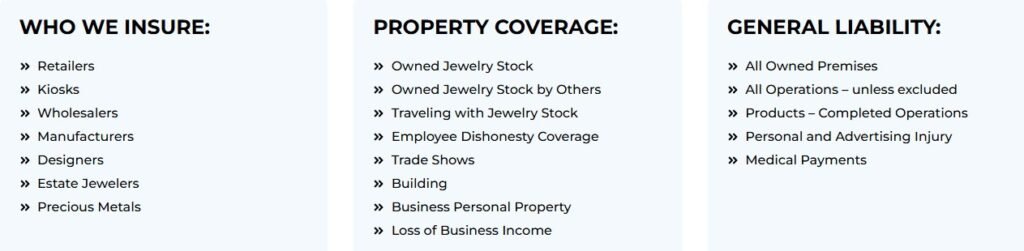
For any retail jeweler, this is absolutely non-negotiable. The appraisal is the bedrock of a solid Jewelers Block insurance policy. This is highly specialized coverage built to protect a jeweler’s entire inventory from a huge range of risks that your standard commercial policy would never touch.
This kind of policy is the industry gold standard for a reason. You can see how First Class Insurance Jewelers Block Agency partners with specialized underwriters to protect jewelers.

An up-to-date appraisal also completely changes the game if you ever have to make a claim. In the unfortunate event of a loss, having a detailed report on file makes everything faster. It provides immediate, undeniable proof of value and ownership to the insurer, turning a potentially stressful, drawn-out fight into a much more straightforward process.
Navigating Estate Settlement with Confidence
The other major role for your jewelry estate appraisal is to guide the entire estate settlement process. When a collection needs to be divided among heirs or valued for tax season, the appraisal provides an objective, legally sound valuation. This is absolutely crucial for maintaining fairness and heading off family disputes before they start.
Without an impartial document, heirs are left to argue over the perceived value of different pieces, which can breed resentment during an already emotional time. The appraisal strips away the guesswork and emotion, ensuring everyone gets a fair shake based on established fair market value.
This professional valuation is also a cornerstone of smart estate planning. Accurate appraisals are vital for any strategy focused on minimizing estate taxes, as they provide the official numbers required for tax filings.
Here’s exactly how an appraisal helps with the estate process:
- Equitable Distribution: It guarantees each beneficiary gets their fair share of the estate’s total value, even if the individual items have wildly different price tags.
- Tax Compliance: The appraisal gives you the paperwork needed to calculate and file federal and state estate taxes, helping you avoid potential audits or penalties from the IRS.
- Informed Decisions: It empowers the estate's executor to make clear-headed choices, whether that means selling certain pieces to cover expenses or distributing heirlooms directly.
At the end of the day, putting your appraisal to work is what gives it purpose. It transforms a simple report into a powerful tool for protecting assets, managing risk, and planning for the future with true peace of mind.
Taking the Next Step: From Appraisal to Real-World Protection
Okay, so we've pulled back the curtain on the jewelry estate appraisal. You now see it's not just a piece of paper with a number on it, but a powerful financial tool. We've walked through the different valuation types, the nitty-gritty of the appraisal process, and how to spot a true expert. The goal was to get you from a place of not knowing to a place of real security.
So, what’s the next logical move? It’s time to put that appraisal to work and get your collection properly insured against loss, theft, or damage. This is where you get genuine peace of mind.
Securing Your Business or Your Personal Treasures
If you're a jewelry business owner, an up-to-date appraisal is your golden ticket to getting the right insurance for a jewelry store. Don't make the mistake of thinking your standard business policy has you covered—it's almost certainly full of holes, leaving your most valuable assets completely exposed.
This is exactly why specialized coverage like Jewelers Block insurance exists. It was built from the ground up to handle the unique risks that come with running a jewelry business.
A solid insurance for jewelry business policy doesn't just cover what's locked away in the vault. It protects the pieces in your showcases, the ring you're shipping to a client, or the necklace at the repair shop. It’s the only real way to shield your entire operation.
For a private collector, the story is much the same. Your appraisal is what allows you to properly schedule high-value pieces on a personal policy, making sure you're covered for their full replacement value, not just a token amount.
Get a Quote and Lock In Your Protection
Look, you’ve done the hard work of getting the appraisal. Now it's time to take action on it. Taking that final step to safeguard your assets is the most important part of this whole process. We can’t stress this enough for both business owners and serious collectors.
At First Class Insurance Jewelers Block Agency, this is exactly what we do. We help you take that detailed appraisal and turn it into an ironclad policy that protects your inventory, your reputation, and your livelihood. Get a Quote for Jewelers Block and take that final step to truly secure your collection.
Answering Your Top Jewelry Appraisal Questions
When you're dealing with jewelry estate appraisals, a lot of questions come up. It's completely normal. Here are some quick, straightforward answers to the most common things people ask.
How Often Should I Get My Jewelry Re-Appraised?
For insurance, you really need to get your collection re-appraised every three to five years. It’s not just a suggestion—it’s a necessity. The market values for gems and precious metals are constantly in flux, and an old appraisal can leave you dangerously underinsured.
If your valuation is out of date, your policy simply won't cover the full replacement cost if a piece is lost or stolen. Keeping your Jewelers Block insurance or personal policy updated ensures your coverage is strong enough to actually protect you.
Think of an outdated appraisal like an old, blurry photograph. It doesn't accurately represent what you have anymore. Keeping it current ensures your protection is crystal clear and matches today's reality.
Does an Appraisal Guarantee a Sales Price?
Absolutely not. An appraisal value and a realistic sales price are two very different numbers, and confusing them is a common mistake.
An insurance appraisal gives you the "Retail Replacement Value"—what it would cost to walk into a store and buy a brand-new equivalent today. But an appraisal for an estate settlement uses "Fair Market Value," which is a much more realistic picture of what a willing buyer would actually pay a willing seller. The final price you get always comes down to who's buying, current market demand, and good old-fashioned negotiation.
What Is the Difference Between a Lab Certificate and an Appraisal?
This is a big one. A lab certificate and an appraisal are not the same thing, but they work together.
- Lab Certificate (from a place like GIA): This is the stone's technical resume. It's a scientific report detailing the 4Cs—cut, color, clarity, and carat weight—and other key identifiers. Critically, it assigns zero monetary value.
- Appraisal: This is the document from a qualified expert that puts a dollar figure on the entire piece. The appraiser uses the lab certificate as a crucial piece of the puzzle, but it's just one part of their overall valuation.
Here’s a simple way to think about it: the lab certificate is the car's official spec sheet from the factory. The appraisal is the Kelley Blue Book value.
Can I Use an Old Appraisal for a New Insurance Policy?
Trying to use an old appraisal for a new insurance for a jewelry store or personal policy is a recipe for disaster. Insurance companies need a current valuation to write a policy that actually protects you. It's not just red tape; it's about accuracy.
If your appraisal is more than five years old, you're taking a huge risk of being underinsured. A current jewelry estate appraisal is the only way to make sure your coverage—whether it’s a full Jewelers Block policy for your insurance for jewelry business or a personal rider—is enough to cover a loss without any painful surprises.
At First Class Insurance Jewelers Block Agency, we take that professional appraisal and turn it into real, reliable protection. We know the unique risks your jewelry business faces and build policies that safeguard your most valuable assets. Get a Quote for Jewelers Block today and get the peace of mind you deserve.