
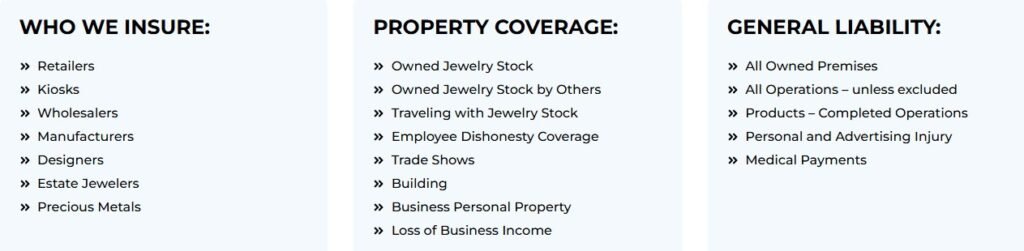
Think of Jewelers Block insurance as the ultimate security detail for your jewelry while it’s on the move. It's a specialized policy designed to protect your high-value pieces from the moment they leave your hands until they’re safely signed for at their destination. For any jeweler, this isn't just an add-on; it's a core part of your insurance for a jewelry business, shielding you from theft, damage, or the dreaded "mysterious disappearance" during transit.
Protecting Your Assets Beyond the Store Walls
The second a high-value item leaves the security of your vault, its risk level goes through the roof. Standard carrier liability is notoriously thin, often paying out pennies on the dollar and leaving you to absorb a catastrophic loss. This is the exact gap a proper Jewelers Block insurance policy was built to fill.
And don't get hung up on the old term "marine cargo insurance." It's a nod to the old days of shipping by sea. Today, a modern policy covers every leg of the journey, whether it's by:
- Air Freight for those urgent international orders.
- Land Transit in an armored truck or even with trusted carriers like FedEx.
- Ocean Freight for larger overseas shipments.
This transit coverage is a fundamental piece of any solid Jewelers Block insurance policy, which is truly the gold standard of insurance for a jewelry store.
Why Standard Carrier Liability Fails Jewelers
Relying on the shipping carrier’s built-in coverage is one of the biggest—and most expensive—mistakes a jeweler can make. Carriers are legally allowed to limit their liability, and their base coverage is a drop in the bucket compared to the actual value of your goods. Beyond just marine cargo, it's worth it to explore various insurance options for international shipping to see just how limited these options really are.
A dedicated Jewelers Block insurance policy ensures you're covered for the agreed value of your jewelry, not some tiny fraction determined by the carrier's fine print. That difference is what protects your bottom line.
A good way to see this is to compare the two side-by-side. It becomes crystal clear why a real policy from a specialist like First Class Insurance Jewelers Block Agency is non-negotiable for anyone in the trade.
Standard Carrier vs Specialized Jewelers Block Coverage
Here's a breakdown of what you're really getting—or not getting—when you ship valuable goods.
| Coverage Aspect | Standard Carrier Insurance | Specialized Jewelers Block Insurance |
|---|---|---|
| Coverage Basis | Limited by tariffs and weight; often just a few hundred dollars. | Covers the full, agreed-upon value of the jewelry. |
| Covered Perils | Only covers loss if the carrier is proven negligent. | Typically "All-Risks" coverage, protecting against far more scenarios. |
| Claim Process | Slow and adversarial; the burden of proof is on you. | Streamlined and direct with your insurer for a faster resolution. |
| Exclusions | Full of them, often specifically for high-value goods like jewelry. | Tailored to the jewelry trade, with fewer relevant exclusions. |
At the end of the day, a robust jewelry store insurance plan with strong transit protection is the only way to operate. It replaces uncertainty with security, giving you the confidence to ship high-value inventory knowing you’re backed by coverage crafted by specialists—the modern-day equivalent of the legendary underwriters at

. To put this essential protection in place, it's always a smart move to Get a Quote for Jewelers Block from an agency that lives and breathes this industry.
All Risks vs. Named Perils Coverage Explained
When you start digging into Jewelers Block insurance, you’ll run into two very different types of policies. Getting the distinction right isn't just semantics—it's the key to making sure your high-value inventory is actually protected when something goes wrong. The two frameworks are "All Risks" and "Named Perils" coverage.
Think of a "Named Perils" policy as a very strict "what's covered" list. It only pays out for losses that come from a specific, pre-approved list of events—or perils—that are spelled out in the policy. This list might include things like fire, shipwreck, collision, or theft from a forced entry.
If your loss happens because of something not on that list, you're out of luck. Plain and simple. This kind of policy puts the burden of proof entirely on you to show that your loss was caused by one of those listed events.
The Superiority of All Risks Coverage
For anyone shipping high-value goods, especially jewelers, an "All Risks" policy isn't just better; it's the industry standard for a good reason. It completely flips the script. Instead of listing what is covered, it covers every possible risk unless it's specifically excluded.
An "All Risks" policy acts like a protective bubble around your shipment. It's built on the assumption that anything and everything is covered, giving you a much wider, more reliable safety net for your valuable inventory.
This means you're protected from the weird, the unpredictable, and the completely unexpected. If some bizarre, one-in-a-million event causes a loss, you’re covered as long as that specific event isn't on the exclusions list. For a jeweler, whose shipments face a whole world of sophisticated threats, this is the only approach that makes sense. The global market for marine cargo insurance is massive, with premiums recently hitting USD 22.64 billion. You can dig into the full report on these global marine insurance statistics.
Real-World Scenarios Illustrating the Difference
Let’s play this out with a real-world example. Say you ship a custom-made engagement ring worth $50,000. On its way to the client, a chemical drum from another company's cargo leaks and contaminates your package, completely destroying the ring's delicate setting and metalwork.
- With a Named Perils policy, you'd have to scan that list of covered events. If "damage from chemical contamination" isn't specifically on there, your claim is almost certainly getting denied.
- With an All Risks policy, the loss is automatically covered unless "chemical contamination" is explicitly listed as an exclusion. This completely changes the game in your favor.
This flowchart breaks down the big-picture risks every jeweler faces when shipping goods, driving home why you need coverage that can handle anything.
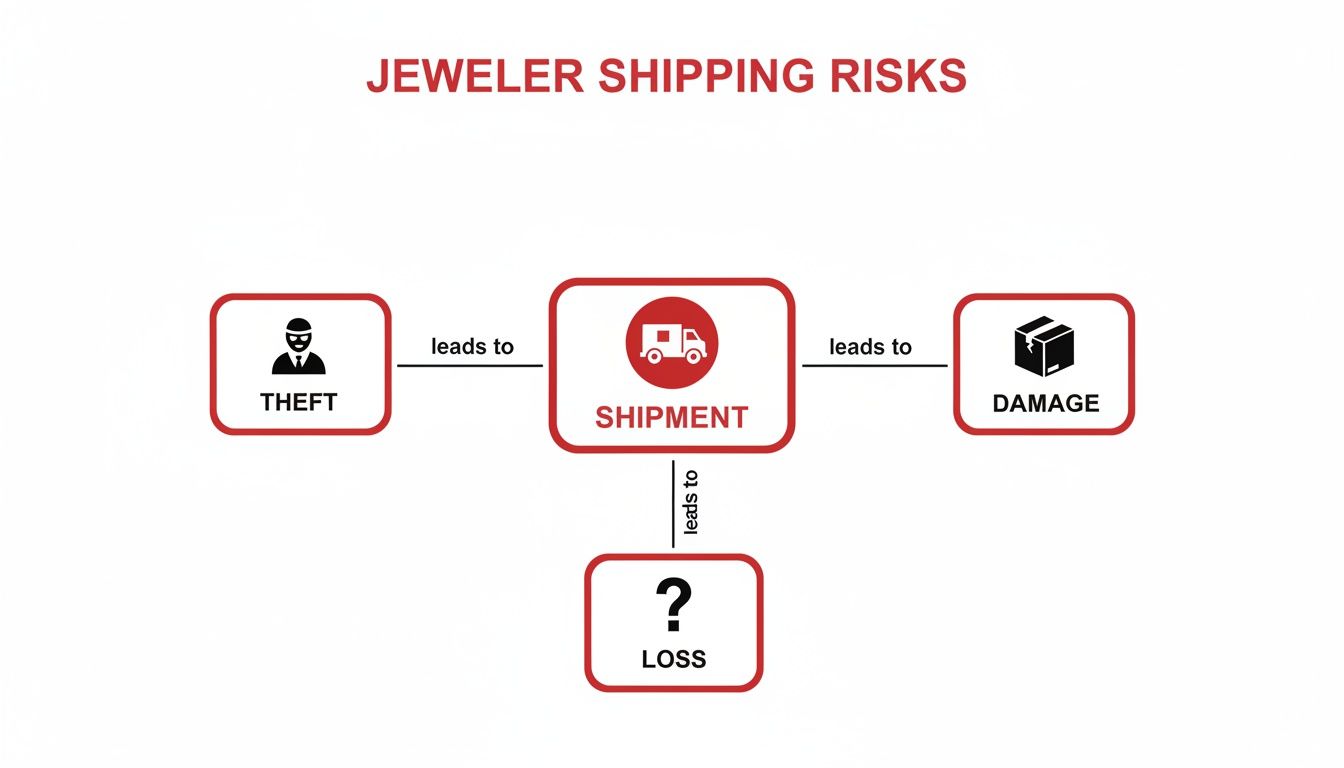
As you can see, a single shipment is vulnerable to theft, damage, and just straight-up disappearing. The right insurance for a jewelry store starts by protecting the assets that are most exposed—the ones in transit. Opting for "All Risks" coverage is the first, most critical step in building a secure shipping plan for your jewelry business that prepares you for almost anything.
Navigating Critical Policy Clauses and Exclusions
The real test of your Jewelers Block insurance isn't found in the big, bold promises on the first page. It’s buried in the fine print. That's where you find the clauses and exclusions that truly define what’s covered—and what’s not. For a jeweler, overlooking a single sentence can be the difference between a paid claim and a devastating financial loss.
Think of your policy as a contract, because that’s exactly what it is. Every word has weight. When your inventory is both incredibly valuable and highly portable, a small oversight in the policy language can create a massive vulnerability. Key provisions spell out exactly what happens in situations ranging from geopolitical conflicts to simple, unexplained losses.

Knowing how to read between the lines empowers you to work with your broker and build coverage that’s genuinely airtight. No expensive surprises, no loopholes.
Common but Critical Clauses You Must Know
While policies can feel dense, a few key clauses pop up again and again in transit insurance, and they have a huge impact on your protection. Think of them as the most important chapters in your policy’s rulebook. It's vital to know what they do before you ever have to use them.
Two of the most common are the "War Clause" and the "Strikes, Riots, and Civil Commotions (SR&CC)" clause.
- War Clause: This clause steps in to cover losses from acts of war, whether it's officially declared or not. In a world with growing global instability, it’s critical protection if your shipment is seized or damaged due to military conflict.
- SR&CC Clause: This handles losses that come from civil unrest. If your shipment gets caught up in strikes, riots, or other public disturbances that lead to theft or damage, this is the clause that kicks in.
Don't assume these are standard. They often require a specific add-on (an endorsement) and an extra premium. Given what's at stake with fine jewelry, making sure these are included in your policy is a fundamental risk management step.
The Most Dangerous Exclusion for Jewelers
Out of all the fine print, one exclusion is uniquely dangerous for the jewelry industry: "Mysterious Disappearance." This term describes a scenario where a package just… vanishes. There’s no sign of a break-in, no report of a holdup, no concrete proof of theft—the item is simply gone.
It's every jeweler's worst nightmare. A package gets scanned into a carrier's system, then somewhere along the route, it disappears off the grid. Without clear evidence of theft, a standard policy will likely point to the mysterious disappearance exclusion and deny the claim.
Mysterious disappearance is a silent business killer. It exploits the one scenario where you have no evidence to prove a loss, leaving you with a gaping hole in your inventory and finances.
This is a perfect example of why generic transit insurance just doesn't cut it for a jewelry business. The risk of a package simply vanishing without a trace is too high. You have to close this coverage gap, and that’s where specialized insurance becomes non-negotiable. A properly written Jewelers Block insurance policy from an expert like First Class Insurance is designed to remove this exclusion, providing coverage even when you can’t prove exactly what happened.
Criminals are getting smarter. In fact, cargo theft has jumped by 27%, with the average loss now hitting $202,000 per incident as organized crime rings refine their tactics. This trend highlights the urgent need for coverage that understands and addresses these complex, modern risks. You can dig deeper into these emerging cargo theft trends and insurance insights.
At the end of the day, you need a policy that protects your assets in every realistic scenario, not just the obvious ones. Working with a specialist who lives and breathes the jewelry trade ensures your policy turns complex jargon into a reliable financial shield. When it’s time to protect your business, don’t leave it to chance—Get a Quote for Jewelers Block and secure the right protection.
How to Properly Value Your Shipments for Full Coverage
Getting your Jewelers Block insurance right boils down to one critical step: proper valuation. It’s a common mistake, but underinsuring a shipment—even by a little bit—can be as devastating as having no insurance at all. One wrong number can turn a covered loss into a huge financial headache right when you can least afford it.
The whole point of insurance isn't just to have a policy; it's to make sure you are made completely whole after a total loss. That means the payout needs to cover the item’s full value, your lost profit, and any other costs that came with the shipment. If you get this wrong from the start, you’re gutting the very protection you’re paying for.
Agreed Value: The Gold Standard for Jewelers
When insuring high-value items like jewelry, you’ll run into two main valuation methods: "Actual Cash Value" (ACV) and "Agreed Value." For any jeweler, this is an easy choice. You have to insist on an Agreed Value policy.
ACV policies are designed to pay the replacement cost minus depreciation. That model works fine for things that lose value over time, like a fleet of delivery vans. But it's a disaster for jewelry, where value is tied to craftsmanship, rare materials, and artistry—things that don't depreciate like a used car.
An Agreed Value policy is a different world. Before the policy is even written, you and your insurer agree on the exact value of your items. If a loss happens, that’s the exact amount you get paid. There’s no last-minute haggling over depreciation or what the market looks like today.
For unique, custom, or antique jewelry, an Agreed Value policy is non-negotiable. It wipes away any ambiguity and guarantees you receive the full, documented worth of your piece in a claim, protecting you from nasty financial surprises.
Documenting Value and Insuring for Profit
To lock in that agreed value, solid documentation is your best friend. Your insurer is going to need proof to back up the number you want to cover. This isn’t just red tape; it’s the very thing that makes the Agreed Value framework hold up.
Here’s what you’ll need:
- Detailed Invoices: The invoice cost is your starting point for any wholesale or newly made pieces.
- Professional Appraisals: A current appraisal from a certified gemologist is the gold standard for proving the value of custom work, one-of-a-kind pieces, or antique jewelry.
- High-Quality Photographs: Visual proof is absolutely vital. Clear photos of items, like this stunning antique jewelry, help establish their existence and condition before they ever left your hands.

But once you’ve nailed down the base value, you’re not done. If you only insure for your cost, you're leaving money on the table. The smart move in insurance for a jewelry business is to insure for your invoice cost plus a percentage—usually around 10% to 20%. This "plus up" acts as a crucial financial buffer.
This extra amount is there to cover all the other costs tied to a loss that go beyond just the item, like:
- Shipping and handling fees
- Customs duties and taxes you already paid
- Your lost profit margin on the sale
By insuring for cost-plus, you make sure the claim payout reflects the true financial impact of the loss, not just the raw cost of your inventory. It's a small adjustment that makes a massive difference—and it’s a hallmark of a properly structured Jewelers Block insurance policy built to protect your bottom line.
Proven Best Practices for Shipping High-Value Jewelry
While a solid Jewelers Block insurance policy is your financial backstop, your first line of defense is always a smarter shipping strategy. Getting proactive with proven best practices doesn’t just lower the odds of a loss—it shows your insurer you're a serious partner, which can lead to better terms and premiums down the road. These risk management techniques are straightforward, effective, and absolutely essential for any jewelry business.
It all starts with the box. Your entire goal is to make your package look as boring and unappealing as possible to a potential thief. Never, ever use packaging that even hints at the valuable contents inside.
Master Discreet and Secure Packaging
Discretion is your greatest weapon here. Avoid using your company name, logos, or any branding that could peg you as a jeweler. Criminals are incredibly good at spotting shippers of high-value goods, so making your package blend into the crowd is a critical first step.
Follow these fundamental packaging rules:
- Use Plain, Unmarked Boxes: Stick with sturdy, generic cardboard boxes that give absolutely no clue what’s inside.
- Adopt a "Box-Within-a-Box" Method: Place the jewelry in a small, secure container, then pack that inside a larger shipping box with plenty of padding. This adds an extra security layer and protects the item from damage in transit.
- Employ Tamper-Evident Tape: This special tape makes it obvious if a package has been opened and resealed, giving you clear evidence of tampering for an insurance claim.
For more detailed advice on protecting your precious cargo, check out these essential tips for packing jewelry. These techniques aren't just suggestions; they are crucial for protecting your assets and making sure your insurance coverage holds up.
Implement Smart Shipping Protocols
Beyond the box itself, your internal procedures play a massive role in cutting down risk. Choosing the right shipping partners and methods can dramatically reduce your exposure to theft and loss.
A strict chain of custody is non-negotiable. This means you have a documented paper trail of every single person who handles the package from the moment it leaves your hands. That documentation becomes priceless if a shipment vanishes. Another powerful move is using split shipments for very high-value orders; sending items in multiple, separate packages limits the financial damage if one goes missing.
A rookie mistake is shipping at predictable times, especially late on a Friday. This almost guarantees your package will sit in a warehouse over the weekend, making it a much more attractive target for organized thieves.
Finally, vet your shipping carriers relentlessly. Only work with companies that have a proven track record and rock-solid security protocols for moving high-value goods. Ask them directly about their security measures, how they screen employees, and their specific procedures for handling valuable items. Proper handling of merchandise like these exquisite watches requires a carrier who truly understands the unique risks involved.

When you combine these best practices with a comprehensive Jewelers Block insurance policy, you create a formidable defense against losses in transit.
Integrating Transit Coverage with Jewelers Block Insurance
While a standalone transit policy is a good start, it’s not the whole story. For any jewelry business, the only truly effective way to protect your inventory is to weave that shipping coverage into one seamless safety net: a **Jewelers Block insurance** policy.
This isn’t just about convenience; it’s about eliminating the dangerous gaps that can exist between different policies.
Instead of trying to patch together separate policies for your store inventory, your pieces at a trade show, and every shipment moving in or out, a Jewelers Block policy covers it all. It’s built from the ground up to provide continuous, unbroken protection for your high-value assets, no matter where they happen to be. That unified approach is the gold standard for insurance for a jewelry store because it reflects the reality of your business—your inventory is always on the move.
The Power of a Single, Unified Policy
Think of it this way: covering your business with separate, disconnected policies is like building a security fence with panels that don't quite meet. Sooner or later, a major risk is going to slip right through one of those gaps.
A standard marine cargo policy, for example, might not cover your goods while they’re sitting in a shipping facility overnight between legs of a journey. But a well-crafted Jewelers Block policy, designed by a specialist like First Class Insurance Jewelers Block Agency, closes those gaps for good. It ensures the handoff from your on-premise coverage to your in-transit coverage is absolutely flawless.
A properly integrated policy delivers true end-to-end protection. It follows your valuable assets from the vault to your customer’s hands and all the way back again, without a single moment of lapsed coverage. In the high-stakes jewelry industry, this holistic approach is the only way to achieve real peace of mind.
Why a Specialist Agency Matters Most
A general insurance agent just doesn’t get the unique rhythm and risks of the jewelry trade. They might offer you a standard transit insurance add-on, but it will likely be riddled with dangerous exclusions—like mysterious disappearance—that could leave you exposed.
An expert agency, on the other hand, builds your policy around your specific operations.
This kind of specialized approach guarantees your insurance for jewelry business actually covers the risks you face every day. They know the right questions to ask, have relationships with the right underwriters, and can deliver a policy that functions as a true financial shield for your business.
Securing this level of comprehensive protection is the single most important step you can take to safeguard your life's work. For a policy built by experts who truly understand your industry, the next step is clear: Get a Quote for Jewelers Block.
Frequently Asked Questions
When you're trying to lock down your insurance, especially for high-value goods, you're bound to have questions. This is particularly true when fitting transit coverage into a broader Jewelers Block insurance plan. Getting the details right is what separates good coverage from airtight protection.
Here are some of the most common questions we hear from jewelers, answered straight.
How Is Shipping Coverage Different from My Jewelers Block Policy?
Think of it this way: your Jewelers Block insurance is the fortress protecting your entire business. The transit coverage within it is the armored car that protects your assets when they leave that fortress.
A Jewelers Block policy is an all-in-one package built specifically for the risks jewelers face every day. It’s designed to cover everything, bundling several key protections:
- On-Premises Coverage: This covers the inventory sitting in your store or vault.
- Off-Premises Coverage: Protects items when they're at a trade show, with a traveling salesperson, or out on memo.
- In-Transit Coverage: This is the shipping insurance piece of the puzzle, safeguarding your goods while they’re being shipped.
A truly solid insurance for a jewelry store doesn't treat these as separate things. It weaves strong transit coverage directly into the Jewelers Block policy, creating one seamless shield. This closes the dangerous gaps that can pop up when you try to patch together separate policies.
Does Transit Insurance Only Cover Shipments by Sea?
Not at all. This is probably the biggest point of confusion, stemming from the old term "marine insurance." It’s completely understandable. The name is a holdover from centuries ago when the only way to move goods across the world was by ship.
Today, the term "transit insurance" has a much broader meaning. It really just refers to the movement of property, no matter how it gets there.
A modern policy is built for today's supply chain, which means it covers transit by:
- Air
- Land (truck or rail)
- Sea
Any well-designed policy from a specialist like First Class Insurance Jewelers Block Agency will provide true door-to-door coverage, regardless of the mode of transport. It’s still critical to check the fine print, but comprehensive transit protection is the benchmark for any proper insurance for jewelry business.
What Should I Do Immediately If a Package Is Lost or Damaged?
You have to act fast. What you do in the first few hours sets the entire tone for your claim. If a shipment goes missing or shows up damaged, follow these three steps right away to protect your interests.
The first few hours after a loss are the most critical. Your immediate actions establish the official record and set the stage for a smooth claims process, ensuring you can recover your losses as quickly as possible.
Here's the exact protocol to follow:
- Notify the Carrier Immediately: The very first call you make should be to the shipping company (FedEx, UPS, etc.). Report the incident officially. This creates a paper trail and is a non-negotiable first step for any claim.
- Contact Your Insurance Broker: Once you're off the phone with the carrier, call your broker at First Class Insurance. We'll walk you through what comes next and get the claims process started on your behalf.
- Preserve All Evidence: Do not throw anything away. Keep every bit of the original packaging, the damaged items themselves, and all shipping paperwork like invoices and tracking numbers. This evidence is absolutely vital for the adjuster's investigation.
Protecting high-value assets is a complex game, and you need an expert partner in your corner. At First Class Insurance, we build robust Jewelers Block policies that provide end-to-end security for your business. To make sure your inventory is protected without any gaps, Get a Quote for Jewelers Block.