
Every jeweler knows that gut-wrenching feeling of watching a tracking number, holding your breath until a high-value piece gets where it’s going. That anxiety is part of the job, right? Your most precious assets are often at their most vulnerable the second they leave your hands.
This is where marine cargo insurance coverage comes in. Think of it as your financial shield, built specifically to protect those assets in transit and turn that uncertainty into solid security.
Why Your Jewelry Shipments Need Specialized Protection
Let's get one thing straight: despite the name, this coverage isn't just for sea voyages. It’s a dedicated security detail for your inventory from the moment it leaves your sight, whether it’s traveling by air, ocean, truck, or courier. This is true "warehouse to warehouse" protection, and for a jeweler with items constantly on the move, it's absolutely essential.
Too many business owners make the costly mistake of assuming their general business policy or the carrier's provided liability has them covered. This is a dangerous misconception. Those generic policies are riddled with gaps when it comes to high-value goods in transit.
A carrier's liability is designed to limit their financial exposure, not to make you whole. Their payout is often based on weight, meaning a lost package with a $50,000 diamond ring might only get you a check for a few hundred dollars.
The Gaps in Standard Insurance Coverage
Standard insurance policies just weren't built for the unique risks of the jewelry trade. Understanding where they fall short is the first step toward getting the right protection in place for every single shipment.
Here are a few key areas where general policies leave you exposed:
- Theft and Mysterious Disappearance: What happens when a package arrives perfectly sealed, but the item inside is gone? Standard policies often won't touch this, yet it's a huge risk for small, valuable goods.
- Valuation Issues: Carrier liability is never going to cover the full invoice value of your jewelry, let alone your retail price or lost profit.
- Transit Exclusions: Many general business policies have fine print that specifically excludes coverage for your property once it's in the hands of a shipping carrier. It creates a massive, uninsured gap right when you need protection most.
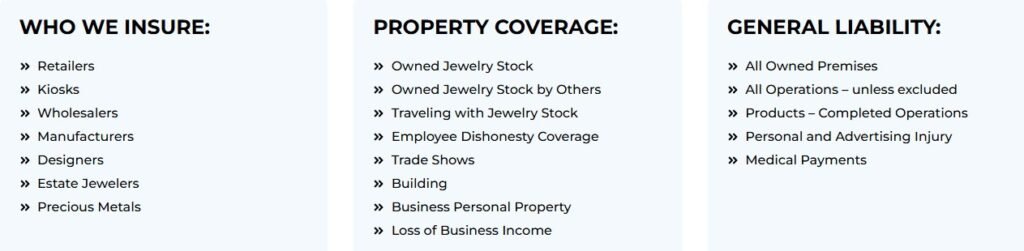
This is exactly why specialized insurance for a jewelry business isn't a luxury—it’s a necessity. A properly structured Jewelers Block insurance policy integrates marine cargo insurance, making sure there are no weak links in your security chain. It’s about peace of mind, knowing your assets are protected at their true value from your vault to your customer’s hands.
To see what's at stake, you can look at examples of high-value jewelry pieces that demand this level of coverage. This guide will show you how to build an insurance program designed for the real-world challenges of our industry.

Understanding Your Core Coverage Options
Navigating insurance policies can feel like trying to read a different language. But getting a handle on the core types of marine cargo insurance coverage is the first real step in building a solid defense for your jewelry. The choices you make here set the entire foundation for your protection.
It all boils down to two fundamental ways that policies look at risk. One is broad and comprehensive; the other is specific and limited. For a jewelry business, where your inventory is high-value and highly desirable, picking the right one isn't just a detail—it's everything. Let's break down what you'll be looking at.
All-Risks vs Named Perils Coverage
Think of All-Risks coverage as a complete fortress built around your shipment. It's designed to cover any and every possible cause of loss or damage, unless a specific peril is explicitly excluded in the policy's fine print. This approach puts the burden of proof squarely on the insurance company to prove that the loss was caused by something they specifically said they wouldn't cover.
Named Perils coverage, on the other hand, is more like hiring a security guard who only protects against a specific list of threats. This policy only covers losses from perils that are explicitly listed—things like fire, collision, or theft. If your shipment gets ruined by something not on that list, say, water damage from a leaky container that wasn't involved in a crash, you’re out of luck. Here, the burden of proof falls on you to show the loss was caused by a covered event.
When it comes to insuring high-value jewelry, the difference between these two approaches is night and day.
Comparing All-Risks vs Named Perils Coverage
| Feature | All-Risks Coverage | Named Perils Coverage |
|---|---|---|
| Scope of Protection | Covers everything except for specifically listed exclusions. Very broad. | Only covers losses from the specific perils listed in the policy. Very narrow. |
| Burden of Proof | The insurance company must prove the loss was caused by an excluded peril. | The policyholder must prove the loss was caused by a listed peril. |
| Common Exclusions | Wear and tear, intentional acts, inherent vice, war, nuclear hazards. | Anything not explicitly named is automatically excluded. |
| Best For | High-value, sensitive goods like jewelry, where unexpected risks are common. | Lower-value, standard commodities where risks are predictable and limited. |
| Typical Cost | Higher premium due to broader protection. | Lower premium due to more restrictive coverage. |
For any jewelry store insurance program, the choice is clear. All-Risks coverage is almost always the right call. The sheer number of things that can go wrong in transit and the immense value of your items demand the widest possible net of protection.
For a jewelry store insurance program, All-Risks coverage is almost always the superior choice. The unpredictable nature of shipping and the high value of your items make it essential to have the broadest protection possible, minimizing the chances of an unexpected and uninsured loss.
Open Policies for Ongoing Protection
Just as there are different types of coverage, there are also different ways to structure the policy itself, depending on how often you ship. If you only send valuable items once or twice a year, a Specific-Voyage Policy (also called a single-transit policy) might work. It covers one individual shipment, from point A to point B. Simple.
But for most active jewelers, that’s a slow, inefficient way to do things. That's where an Open Cargo Policy comes in. It’s designed for businesses with regular, ongoing shipments. Instead of the hassle of buying a new policy for every single package, an Open Cargo Policy gives you automatic, continuous coverage for all shipments that fit the policy's terms. You just report your shipments to the insurer on a set schedule, like once a month.
This setup is the backbone of effective insurance for a jewelry business. It eliminates the administrative headache and, more importantly, the risk of human error—like forgetting to insure a shipment. This is a core component that's integrated into a comprehensive Jewelers Block insurance plan, giving you seamless protection from the moment an item leaves your vault until it’s in your customer’s hands.
At First Class Insurance Jewelers Block Agency, we design these programs so your coverage is automatic and ironclad. It lets you focus on your business, not on endless paperwork. If you're shipping goods regularly, you should Get a Quote for Jewelers Block and see how this integrated approach can safeguard your entire operation.
Decoding Key Clauses and Common Exclusions

The real muscle of any marine cargo insurance coverage isn’t in the broad promises on the first page—it’s tucked away in the fine print. Understanding the specific clauses and exclusions that define your policy is the only way to know if your protection is as strong as you think it is.
This is where a single sentence can make the difference between a paid claim and a devastating financial hit. You have to read your policy with a critical eye, especially when shipping high-value goods like jewelry. Certain phrases dictate exactly when your coverage starts and stops, while others can unexpectedly render it useless.
Let's unpack the most important ones you'll run into.
Key Clauses That Define Your Protection
Think of clauses as the operating system for your insurance. They set the rules and define how the policy actually works in a real-world scenario. For any jeweler, a few are absolutely non-negotiable.
-
Warehouse to Warehouse Clause: This might just be the most critical clause for any insurance for a jewelry store. It ensures your coverage kicks in the moment your goods leave the originating warehouse and stays active until they are safely delivered to the final destination. It closes those dangerous gaps that exist when a policy only covers the time your items are on a ship or plane.
-
General Average Clause: This is a centuries-old maritime principle that can come as a nasty shock. If a ship faces a major threat (like a fire) and the captain has to sacrifice some cargo to save the entire vessel, the owners of the surviving cargo must help pay for the loss. A policy with this clause covers your share, protecting you from a massive, unexpected bill for something you had no control over.
Understanding Common Policy Exclusions
Just as important as knowing what’s covered is knowing what’s not. Exclusions are the specific situations or types of damage your policy won't pay for. Knowing these limitations upfront helps you manage your risks and avoid simple mistakes that could get a claim denied.
Cargo theft trends, for instance, directly impact how insurers view risk. One recent industry report noted a staggering 27% increase in theft incidents in just one year, with the average loss soaring past $202,000. This reality has forced insurers to scrutinize shipment security, often leading to rate hikes of 5% or more for businesses with a spotty loss history. It’s a perfect example of why understanding what isn't covered is so crucial. You can discover more insights on the state of the marine insurance market and how it impacts your business.
The true test of an insurance policy is when you file a claim. A broad, reassuring phrase like "from any cause" can be completely wiped out by a single, specific exclusion. We've seen cases where spoilage due to shipping delays was denied, even when the policy seemed to cover everything.
Here are some of the most common exclusions to watch out for in the jewelry business:
-
Improper Packing: If your goods are damaged because they weren't packed securely enough to handle the journey, the insurer can deny the claim. This is entirely on you and highlights why professional, tamper-evident packaging is so important.
-
Inherent Vice: This is a tricky one. It refers to a loss caused by the natural quality of the goods themselves. For example, if a delicate gemstone cracks from an internal flaw during transit—with no external impact—it could be considered inherent vice and excluded from coverage.
-
Deliberate Damage or Willful Misconduct: It goes without saying, but your policy won't cover losses that stem from intentional acts by you or your team.
-
Losses Due to Delay: Unless you have a specific endorsement added to your policy, standard cargo insurance often excludes losses caused directly by a shipment delay, even if that delay results in damage.
At the end of the day, navigating these clauses and exclusions is a core part of managing your insurance for jewelry business. A specialized agency like First Class Insurance Jewelers Block Agency can help you dissect the policy language and build a program that plugs these gaps, ensuring your coverage is there when you actually need it.
Specialized Insurance Endorsements for Jewelers
A standard marine cargo policy is a good starting point, but for anyone in the jewelry business, it's rarely enough. Your risks are unique—a mix of high values, tiny package sizes, and sophisticated threats. Relying on a generic policy is like trying to protect a vault with a simple padlock.
This is where endorsements come in. Think of them as specialized add-ons to your main policy. If your base policy is the secure building, endorsements are the laser grids, pressure plates, and high-def cameras you install to guard against specific threats. Without them, you're leaving gaping holes in your security.
Covering the Unseen Risks
For jewelers, the biggest losses often don't come from a sinking ship or a truck accident. They happen quietly, without a trace, in ways a standard policy was never designed to cover. That’s why adding the right endorsements isn’t a luxury—it's a fundamental part of managing your risk.
Two endorsements are absolutely critical when it comes to insurance for a jewelry store, as they address these very specific, and very real, threats.
-
Mysterious Disappearance: Picture this: a package arrives at your client's door, sealed and secure. The security tape is perfectly intact, no signs of tampering whatsoever. But when they open the box, the $20,000 diamond tennis bracelet that was supposed to be inside is just… gone. A standard policy would likely deny that claim because there's no proof of theft. A Mysterious Disappearance endorsement covers you in exactly this scenario, when an item vanishes without a clear, logical explanation.
-
Infidelity Coverage: Trust is everything in our industry, but unfortunately, internal theft is a painful reality. Also known as employee dishonesty coverage, an Infidelity endorsement protects you if an employee steals an item while packing or shipping it. It’s a tough thing to think about, but it's a necessary layer of protection.
An endorsement isn't just extra paperwork; it’s a targeted solution for a specific, known risk. Failing to add coverage for something like mysterious disappearance is like locking the front door but leaving the back window wide open for the most clever thieves.
Addressing High Values and Unique Situations
Beyond theft and loss, jewelers constantly deal with shipments that blow past the limits of a standard policy. A single piece can easily be worth more than the automatic coverage limit, creating a dangerous financial gap.
This is where a High-Value Shipments clause is essential. This endorsement lets you declare and insure individual shipments that exceed your policy's standard limits, making sure your most precious pieces are fully covered from door to door.
For example, if your policy has a per-shipment limit of $100,000, but you need to send a bespoke necklace valued at $250,000, this endorsement ensures you’re not underinsured. It’s a flexible tool that adapts to the high-stakes nature of your inventory. Insurers, like our team at First Class Insurance Jewelers Block Agency, work with underwriters from trusted markets, including those at

, to structure these crucial protections.
By working with an expert in Jewelers Block insurance, you get a policy that’s more than just generic marine cargo insurance coverage. You get a fortified plan, built for the realities of the jewelry trade. These endorsements turn a standard policy into a precision shield, giving you the confidence that your assets are truly protected.
What to Do When a Shipment Is Lost or Damaged
Let’s be honest—that sinking feeling when you realize a shipment is missing or damaged is one of the worst parts of this business. Panic is a natural reaction, but it’s also your enemy. The moves you make in the first 24 to 48 hours are absolutely crucial and can be the difference between a paid claim and a major financial hit.
First things first: immediately notify the shipping carrier. Do it in writing. This isn't just a courtesy; it's a formal "protest" that officially preserves your right to hold them accountable. Don't wait, and don't brush it off, even if the damage seems minor at first glance.
Right after you’ve done that, your next call should be to your insurance agent. This is not the time for a DIY approach. An expert from a specialized firm like First Class Insurance Jewelers Block Agency becomes your most valuable player here, guiding you through the maze of your marine cargo insurance coverage and steering you away from common mistakes that can get a claim denied.
Your Essential Claims Documentation Checklist
Once the initial alerts are out, it's time to switch gears and gather your paperwork. Think of it this way: a solid insurance claim is built on a rock-solid paper trail. The insurer needs to see the whole story—the item's value, its journey, and exactly what went wrong.
Having these documents ready will make the entire claims process smoother and faster:
- Original Bill of Lading or Air Waybill: This is your proof of contract, showing the carrier accepted your goods.
- Commercial Invoice: This establishes the value of what was inside the package.
- Packing List: A detailed rundown of every single item that was supposed to be in the shipment.
- Survey Report or Damage Report: An independent expert’s assessment of the damage is powerful evidence.
- Written Claim Against the Carrier: Your formal letter outlining the loss and why you're holding the carrier responsible.
- Photos and Videos: Don't underestimate this. Clear images of damaged goods and messed-up packaging can speak volumes.
The Role of a Specialized Agent in a Claim
This is where having a dedicated agent truly pays off. While you're busy running your insurance for jewelry business, your agent steps in to manage the entire claims headache for you. They aren't just a paper-pusher; they're your advocate.
Having an expert navigate the claims process is crucial. They understand the language of insurers, anticipate requests for additional information, and relentlessly follow up to ensure your claim doesn't get stuck in a bureaucratic logjam. Their job is to work toward a fair and prompt settlement.
A specialist agent from a Jewelers Block insurance agency takes the weight off your shoulders. They will:
- Organize and Submit Documents: They make sure every 'i' is dotted and every form is submitted correctly and on time.
- Communicate with the Insurer: They become the main point of contact, handling all the back-and-forth with the claims adjuster.
- Advocate for Your Interests: They fight to get you a settlement that actually reflects your loss, protecting your bottom line and your reputation.
At the end of the day, a great insurance for a jewelry store plan isn't just a policy in a drawer. It's a partnership with an expert who's there to turn a crisis into a closed case.
Proactive Risk Management to Protect Your Shipments
Let’s be honest: the best insurance claim is the one you never have to file. While having solid marine cargo insurance coverage is your financial safety net, a smart, proactive risk management strategy is your first line of defense. Taking the right steps to reduce risk before a package ever leaves your hands not only protects your precious assets but can actually help you get better insurance terms.
Think of it as shifting from simply having financial protection to actively preventing a loss in the first place. Insurers love to see clients with strong security protocols because it means you're less likely to file a claim. In a market where high-value shipments are always under the microscope, this can make a real difference.
Fortifying Your Shipping Process
Good risk management isn't complicated; it starts with the basics. First, vetting your shipping carriers is an absolute must. Don't just look at price and delivery speed—dig into their security protocols, how they screen employees, and their track record with high-value goods. A carrier's reputation for security is a direct reflection on your own risk strategy.
Packaging is another spot where you have a ton of control. Best practices include:
- Discreet Packaging: Never use branded boxes that scream "expensive jewelry inside!" A plain, tough box is always the way to go.
- Tamper-Evident Solutions: Use special security tape or seals. They make it immediately obvious if someone has tried to open or mess with the package during its journey.
- Dual-Control Procedures: For your most valuable pieces, have two employees present during packing and sealing. This confirms the contents and ensures the package is secured properly, which is a common requirement in many Jewelers Block insurance policies.
The global marine cargo insurance market is huge, with premiums recently hitting USD 22.64 billion. That massive number tells you just how much value is moving around the world. It also means underwriters are being more selective, giving better rates and capacity to businesses that can show they have strong, documented risk controls in place. Proving you're proactive can make your insurance for jewelry business more affordable and accessible.
The flowchart below walks you through the immediate steps to take if a shipment goes wrong, proving just how critical a clear, practiced response plan is.

As the chart shows, fast communication with both the carrier and your insurance agent is the key to a successful claim.
And don't forget, most shipments spend time on the road. Beyond ships and planes, a complete risk strategy also considers ground transport. Looking into commercial trucking insurance can help protect your goods on that final, and often riskiest, leg of the journey. Joining industry groups, like those represented by this SJTA logo, is another great way to access resources on best practices.

At First Class Insurance Jewelers Block Agency, we do more than just sell policies. We help you build a risk management program that protects your assets and makes your business a much more attractive risk to insurers.
Got Questions? We've Got Answers
When it comes to the nitty-gritty of marine cargo insurance coverage, a few questions pop up time and time again. We've compiled the most common ones from jewelers just like you, with straight-shooting answers to clear things up.
Is My Jewelry Covered by the Shipper's Insurance?
This is one of the biggest, and most costly, misconceptions in the jewelry business. Relying on the carrier's insurance is like using a bandage for a broken arm—it just won't cut it.
Their coverage is bare-bones, often calculated by weight, and it's really there to limit their liability, not to make you whole. A dedicated marine cargo insurance coverage policy, usually rolled into a Jewelers Block insurance plan, values your pieces correctly at your selling price. That’s the only way to get real financial protection when the carrier's liability inevitably falls short.
How Is the Value of My Shipment Determined for Insurance?
This is a critical conversation you need to have before the policy is locked in. For most jewelers, the go-to method is insuring goods for their invoice cost, plus freight charges, and tacking on an extra 10-20% to cover the profit you would have made.
You'll often hear this called "CIF + 10%" (Cost, Insurance, Freight + 10%). It's an industry standard for a reason. But for those one-of-a-kind custom pieces, you absolutely need to set an "agreed value" with your insurer. This ensures there's no debate about what a piece was worth if the worst happens.
Does Marine Cargo Insurance Cover Domestic Shipments Too?
Yes, it absolutely does. Don't let the "marine" part fool you. A modern cargo policy isn't just for ocean voyages; it's designed to protect your goods whether they're moving by land, air, or sea.
The key here is the "Warehouse to Warehouse" clause, a true cornerstone of any solid jewelry store insurance. This clause protects your inventory from the second it leaves your hands until it’s safely signed for at its destination. It doesn't matter if it's going across town or across an ocean—you’re covered, with no gaps in protection.
Protecting your high-value inventory while it's on the move demands more than just a standard policy. At First Class Insurance, we don’t just sell insurance; we build comprehensive programs specifically for the unique risks jewelers face every day.