
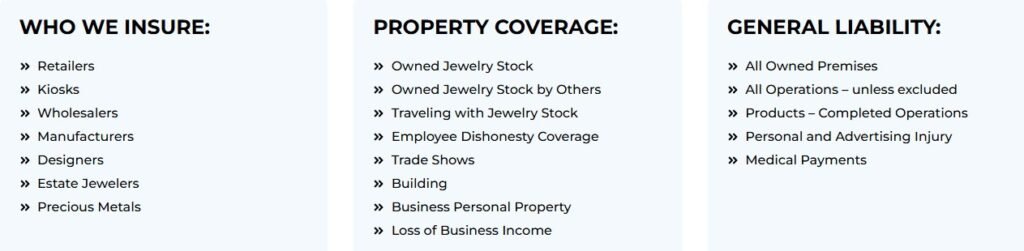
Political risk insurance is a highly specialized coverage that shields your business from financial losses stemming directly from government actions or political instability. It’s a crucial safety net for any company with international operations, investments, or cross-border supply chains.
This type of policy kicks in where your standard insurance—like property or transit coverage—stops cold.
Why Jewelers Need Protection Beyond Standard Insurance
Picture this: a flawless diamond shipment, fully covered against theft under your Jewelers Block insurance policy, is suddenly seized at a foreign port because of an unexpected government embargo. Your standard policy won't pay a dime. This is exactly where political risk insurance becomes indispensable, acting as a critical shield for jewelers navigating today's volatile global market.
Think of it as a specialized extension of your existing coverage. Instead of protecting against common crime, it guards your jewelry business against the unpredictable, often disruptive, actions of governments. For any jeweler, from a local store to a major wholesaler, the global supply chain is its lifeblood. But that same supply chain can also be a source of profound vulnerability.

Navigating Global Uncertainties
The journey of a single gemstone from a mine in a developing country to a velvet-lined showcase in the United States crosses multiple borders, currencies, and political systems. Each one of those handoffs introduces a unique set of risks that standard jewelry store insurance simply isn't built to handle.
These aren’t your typical business hurdles. We're talking about major geopolitical events that can instantly transform a profitable venture into a catastrophic loss. The modern jewelry business has to be prepared for these scenarios.
A standard insurance policy might cover a shipment lost in a storm, but it offers zero protection if a government freezes a company’s assets or makes it impossible to move money out of the country. This gap is precisely what political risk insurance is designed to fill.
Specific Threats to the Jewelry Industry
For anyone in the jewelry trade, the stakes are exceptionally high. Your assets are valuable, portable, and often located in or moving through politically sensitive regions. Key threats that fall well outside the scope of typical coverage include:
- Asset Seizure: A foreign government could confiscate your inventory sitting at a port or even nationalize a mine you've invested in. When that happens, you’re left with little to no recourse.
- Currency Inconvertibility: Imagine you close a huge sale abroad, but the local government suddenly restricts your ability to convert your earnings back into U.S. dollars. The money is yours, but it's trapped.
- Political Violence: Civil unrest, riots, or even a full-blown revolution can lead to the destruction or looting of your international workshops or retail locations—perils often explicitly excluded from standard property policies.
- Export Restrictions: A newly imposed embargo could prevent a critical shipment of sourced gems from ever leaving its country of origin, stranding millions of dollars of your capital indefinitely.
Events like these can bring your entire operation to a screeching halt, from sourcing raw materials to finalizing international sales. By understanding these specific dangers, it becomes clear why a specialized financial safety net is not just a luxury, but a necessity for surviving and thriving in the global marketplace.
Understanding Your Core Political Risk Protections
Political risk insurance isn't some abstract concept; it offers real, tangible protection against specific actions a government might take that could cripple your business. Think of your Jewelers Block insurance as the first line of defense for your insurance for a jewelry business. It's fantastic for standard risks like theft or damage. But PRI steps in to cover the dangerous gaps left open when politics enter the picture.
Getting a handle on these core protections is the key to building a truly resilient global operation. Let's walk through the five main types of coverage. Each one tackles a different threat that could upend your finances, using scenarios any jeweler operating internationally can easily imagine.
This visual shows exactly where political risk insurance fits in—it’s the missing piece that connects your standard coverage to a world of unpredictable government actions.

Simply put, while one policy handles commercial risks, the other is absolutely essential for guarding against political ones. Together, they create a comprehensive shield for your business.
Expropriation, Confiscation, and Nationalization
This is the big one. This coverage kicks in if a foreign government simply takes your physical assets. It’s one of the most direct and devastating forms of political risk, capable of wiping out millions in inventory, equipment, or even an entire foreign operation overnight.
Imagine you've invested heavily in a diamond-cutting facility abroad. A new regime sweeps into power and, with the stroke of a pen, nationalizes all foreign-owned manufacturing plants. Suddenly, your entire investment—the building, the specialized equipment, the vault full of rough stones—is gone. Without political risk insurance coverage, it's a total loss. This protection is designed to pay you for the value of those seized assets.
Currency Inconvertibility and Transfer Risk
What good are profits if you can't bring them home? This crucial coverage protects you when a foreign government stops you from converting your local currency into your home currency (like U.S. dollars) or blocks you from transferring those funds out of the country.
Here’s a classic scenario: your boutique in an emerging market has a fantastic sales quarter. But just as you're ready to transfer the profits, the host country's economy destabilizes, and the government imposes strict capital controls. Your money is now trapped in a foreign bank, its value getting eaten away by local inflation. This coverage reimburses you for the funds you can no longer access.
Political Violence
Most standard property insurance, including many Jewelers Block insurance policies, explicitly excludes damage from events like war, riots, or civil unrest. Political violence coverage is specifically designed to fill that dangerous gap. It covers the loss of your physical assets due to politically charged violence.
Imagine your high-end store in an international capital is looted and vandalized during a massive anti-government protest. Your standard policy likely won't respond. This is exactly where political violence coverage steps in, protecting your inventory and property from destruction caused by strikes, riots, civil strife, revolution, or war.
It's no surprise that demand for this protection is soaring. The global political risk insurance market, valued at USD 1.24 billion in 2024, is expected to nearly double to USD 2.20 billion by 2034. This spike is a direct result of rising geopolitical tensions, which you can learn more about from industry market reports.
Contract Frustration and Repudiation
This protection is absolutely vital if you're doing business with government-owned entities. It covers your losses if a foreign government body breaks or unlawfully cancels a contract with you. This is a very real risk for jewelers who might be sourcing directly from state-owned mines or fulfilling a large order for a government agency.
Say your company lands a lucrative contract to supply custom-designed pieces for a government's official state functions. Halfway through, there's a coup. The new administration arbitrarily cancels your contract, refusing to take delivery or pay for the work you've already done. Contract frustration coverage would compensate you for the major financial hit.
Sovereign Non-Payment
Finally, there's sovereign non-payment. This is a bit different from contract frustration because it's purely about a government or state-owned entity failing to pay an undisputed debt. They aren't canceling the contract; they're just not paying their bills.
If you sell a collection of investment-grade gems to a government-run museum on credit and the payments just stop coming, this coverage is your safety net. It ensures you get paid even when a sovereign buyer defaults, protecting your cash flow from what could otherwise be a catastrophic write-off.
To make these concepts even clearer, here’s a quick-reference table breaking down each coverage type with a specific scenario you might face in the jewelry trade.
Key Political Risk Coverages Explained for Jewelers
| Coverage Type | What It Protects Against | Jewelry Business Scenario |
|---|---|---|
| Expropriation | A foreign government seizing your physical assets (inventory, equipment, facilities). | A new government nationalizes your overseas polishing factory and confiscates all the diamonds inside. |
| Currency Inconvertibility | The inability to convert local currency into your home currency or transfer funds out of the country. | You have a highly profitable quarter at your retail store in a foreign capital, but the government freezes all USD transfers. |
| Political Violence | Loss or damage to your assets due to war, riots, civil strife, or terrorism. | During a political uprising, your showroom is looted and your high-value inventory is stolen or destroyed. |
| Contract Frustration | A government entity unlawfully breaks or repudiates a contract with your business. | You are commissioned to create a state gift, but a new administration cancels the signed contract mid-project. |
| Sovereign Non-Payment | A government or state-owned entity fails to honor its financial obligations for goods delivered or services rendered. | A government-owned mining company buys equipment from you on credit and simply refuses to pay the invoices. |
Understanding these distinctions is the first step toward securing the right protection. Each coverage is a tool designed for a specific type of political event, ensuring you're not left exposed when a government's actions threaten your bottom line.
How PRI Fills the Gaps in Your Jewelers Block Policy
Many jewelers feel secure with their Jewelers Block policy, thinking it’s an all-encompassing safety net. But that's a dangerous assumption, one that can leave your business exposed to devastating financial loss. It's critical to understand what your policies actually do, where one stops, and where another must take over.
Think of it like this: your Jewelers Block insurance is the guard inside your store, an expert at handling things like theft, mysterious disappearance, or damage. It's the absolute foundation of any good insurance for a jewelry store. Political risk insurance, on the other hand, is the specialist you post at the border, trained specifically to handle fallout from government actions and political chaos.
Crime vs. Politics: A Crucial Line in the Sand
The easiest way to see the difference is to ask one simple question: where did the loss come from?
Jewelers Block insurance policies are built for commercial perils—risks that are either criminal or accidental. In contrast, political risk insurance coverage is designed for political perils—risks that stem directly from the actions of a government or from widespread political instability.
For instance, your Jewelers Block insurance would absolutely cover a shipment of sapphires hijacked by a criminal gang. But it would be useless if that same shipment was legally confiscated by customs officials under a surprise trade embargo. One is a crime, the other is a political act.
Your Jewelers Block policy protects your assets from the public. Your political risk policy protects your assets from the government. They aren’t competitors; they're essential partners.
This isn't just a minor detail; it's everything. Insurers are incredibly specific about the risks they cover. Events like war, insurrection, coups, and government seizures are almost always listed as exclusions in standard commercial policies like Jewelers Block insurance. Without PRI, you're on your own against these massive, unpredictable threats.
Real-World Scenarios: Where One Policy Stops and the Other Starts
Let's walk through a few real-world examples to see how these two policies work together. A smart approach to insurance for jewelry business operations needs both.
Scenario 1: The Seized Warehouse
Imagine a fire sweeps through your overseas warehouse, destroying millions in inventory. Your Jewelers Block or property policy should step in. But what if a new military regime takes power and seizes the warehouse and everything in it? Only a PRI policy with expropriation coverage would respond.Scenario 2: The Blocked Payment
A cybercriminal hacks your system and steals a large payment from a client. Your crime or cyber insurance policy would likely cover this. But if that same client's government suddenly imposes new capital controls, freezing the funds so they can't be sent out of the country? Only PRI with currency inconvertibility coverage will get your money back.Scenario 3: The Destroyed Boutique
A flash flood damages your international showroom. Your property insurance would apply. Now, imagine that showroom is ransacked and burned during a violent anti-government riot. Your property policy’s "civil unrest" exclusion would almost certainly kick in, leaving PRI’s political violence coverage as your only hope for recovery.
Closing a Dangerous—and Often Invisible—Gap
These examples make it clear that Jewelers Block insurance and PRI don't overlap. They fit together, with one picking up right where the other leaves off. Relying only on a Jewelers Block policy for your international business is like building a fortress but leaving one wall completely open. It protects you from the threats you expect but leaves you defenseless against others.
Adding political risk insurance coverage to your insurance program isn't about doubling up on protection; it’s about making it whole. When you understand how these policies complement each other, you can close dangerous financial gaps you might not have even known were there. It's about strategic layering, ensuring that whether the threat comes from a common thief or a trade war, your business can survive.
Real-World Scenarios: When Political Risk Insurance Becomes Essential
Theory is one thing, but seeing how political risk insurance (PRI) plays out in the real world is what truly matters. When your assets are on the line in a foreign country, abstract definitions don't help.
Let’s walk through three all-too-common scenarios that any international jeweler could face. These stories show the massive difference between being covered and being completely exposed. Each one ties directly to a specific PRI coverage, highlighting how this insurance can be the only thing that stands between your business and a catastrophic loss.

Scenario One: The Trapped Payment
Imagine this: a U.S. diamond wholesaler closes a seven-figure deal with a fantastic new client in an emerging market. The payment comes through in the local currency and lands in a local bank, all set for conversion and transfer back to the States.
Then, disaster strikes. Facing a sudden economic crisis, the country's government slams on the brakes and imposes strict capital controls. All foreign currency transfers are frozen to stop money from flooding out of the country. Suddenly, the wholesaler’s payment is trapped, inaccessible, and bleeding value by the day as local inflation skyrockets.
Their standard business insurance is useless here.
The Solution: A political risk policy with currency inconvertibility coverage is the lifeline. After a set waiting period, the wholesaler files a claim and is paid the full value of their trapped funds. The insurance company then takes over the messy, long-term fight to eventually recover the money from the foreign bank.
Without PRI, that wholesaler would have been forced to write off the entire sale—a devastating hit to their bottom line.
Scenario Two: The Ransacked Boutique
A luxury jewelry brand, known for its stunning antique collections, opens a flagship boutique in the bustling capital of a foreign nation. The store is a massive success, becoming a landmark for wealthy buyers. (Protecting such unique assets requires a special approach, which you can learn more about in our guide to insurance for antique jewelry.)
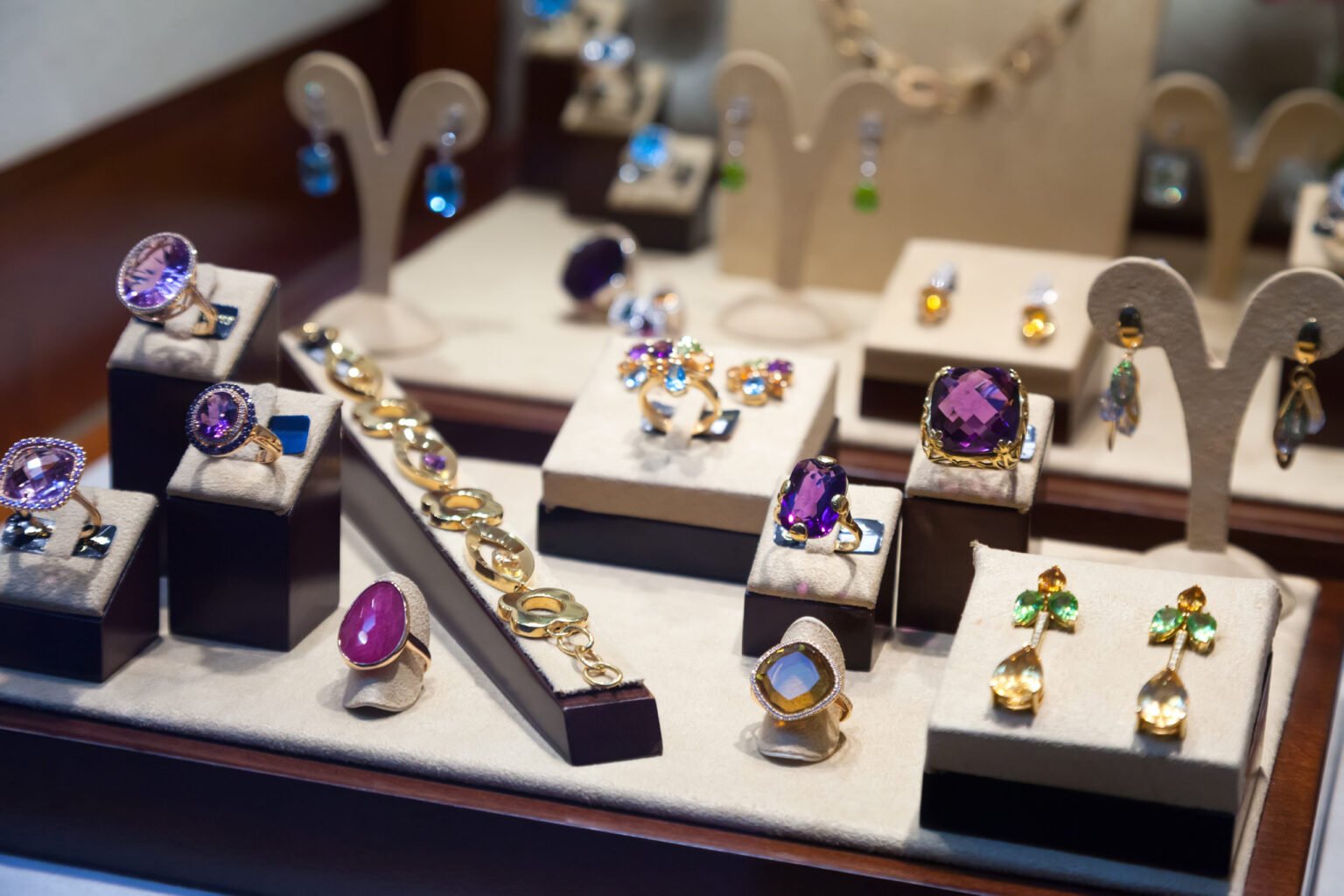
One day, long-simmering political tensions boil over into city-wide civil unrest. Protests turn violent, and mobs begin targeting high-profile foreign businesses. The boutique is ransacked, its windows smashed, and millions of dollars in one-of-a-kind inventory is stolen or destroyed.
When the brand files a claim, their standard property policy carrier points to a fine-print exclusion for losses from riots, civil commotion, or insurrection. The claim is denied.
The Solution: A PRI policy with political violence coverage would have been the answer. This specific coverage is designed for exactly these situations, covering property damage and inventory loss caused by politically motivated violence. With it, the brand could have recovered its financial losses and started to rebuild.
Scenario Three: The Seized Mine
A seasoned gem sourcer has spent years building a relationship with a mine in a stable country known for its rare colored gemstones. To secure a major allocation, the sourcer prepays the mining company for a large shipment of rough stones.
Before the gems can be exported, a military coup overthrows the government. The new regime immediately nationalizes all natural resources, seizing the mines. The new state-run entity declares all previous private contracts void, refusing to honor the sourcer’s prepayment or ship the gems.
The sourcer's capital has vanished, and the stones are gone for good. Their standard cargo or business insurance won't cover it because the loss wasn't theft or damage in transit—it was a deliberate act by a government. This is a huge driver for the PRI market; between 2018 and 2022, PRI insured around USD 150 billion in projects across developing nations.
The Solution: Expropriation coverage in a political risk policy would have saved the gem sourcer. This provision is built specifically to cover losses from government seizure of assets or the cancellation of contracts. The policy would have reimbursed the sourcer for their lost prepayment, turning a business-ending disaster into a manageable, insured loss.
How To Get Political Risk Insurance That Actually Protects You
So, how do you go about getting political risk insurance? It's not like buying a standard off-the-shelf policy. Think of it more like commissioning a custom-built suit of armor for your business. The process is meticulous because the goal is to create coverage that fits your specific international operations perfectly.
First things first, you need a crystal-clear picture of your vulnerabilities. Where are your pressure points? This means mapping out every international touchpoint in your business, from the mine where you source rough diamonds to the overseas boutique where you sell a finished necklace. Working with a specialist broker is non-negotiable here; they have the experience to spot risks you might overlook.

What Underwriters Want To See
Once you and your broker have a detailed risk map, they’ll approach specialized insurance markets, like the syndicates at Lloyd's of London, that handle this kind of complex coverage.
Underwriters will dig deep. They’re not just insuring your assets; they're analyzing the political and economic fabric of the countries where you do business. The more unstable the region or the higher the values at stake, the more granular their questions will be.
The following table breaks down what underwriters are looking at and why it’s so important.
Underwriting Factors for Political Risk Insurance
| Underwriting Factor | Why It Matters to Insurers | Example for a Jeweler |
|---|---|---|
| Country Risk Profile | This is the big one. Insurers analyze the host country's political stability, economic health, legal system, and history of foreign asset seizures. | A jeweler sourcing gems from a nation with a history of nationalizing mines will face much higher premiums than one sourcing from a stable, business-friendly country. |
| Transaction Structure | Are you making a direct investment, extending credit to a foreign partner, or just shipping goods? The nature of your financial exposure dictates the type of risk. | A direct investment in a local cutting and polishing facility is a very different risk from simply shipping a finished piece to a customer overseas. |
| Contractual Agreements | Underwriters will want to read your contracts with foreign partners. They’ll scrutinize payment terms, dispute resolution clauses, and which country's law governs the deal. | A strong contract with clear arbitration clauses in a neutral country can significantly reduce the perceived risk and lower your insurance costs. |
| Your Internal Controls | Insurers want to see that you aren’t relying solely on insurance. They'll ask about your own risk management, like supplier diversification or contingency plans. | Showing that you have alternative sourcing routes or secure storage arrangements in place demonstrates you are a proactive and lower-risk client. |
Ultimately, underwriters are paid to assess stability. Providing them with clear, well-documented information about your operations and your own risk mitigation efforts is the single best way to secure favorable terms and pricing.
The Most Important Questions to Ask Your Broker
Before you sign on the dotted line, you need to be absolutely sure you know what your policy does—and doesn’t—cover. A great broker will welcome these questions and act as your advocate, fighting for terms that truly meet your needs. Think of this as your final pre-flight check.
And don't worry, there's a healthy market for this kind of coverage. The capacity for political risk and structured credit insurance is robust, hovering around USD 3.5 billion per risk. This shows that insurers are well-equipped to handle even the largest international ventures. For a deeper dive, you can explore detailed market updates and trends.
Here are the critical questions to run through with your broker:
What specific events trigger my coverage? Don't accept vague language. Ask for precise definitions of "expropriation," "political violence," or "currency inconvertibility." The devil is always in the details.
Is there a waiting period for claims? Most policies have a "waiting period"—often 90 to 180 days—before a loss can be formally claimed. This is common for issues like currency inconvertibility, so you need to know how long you have to wait.
Does this policy cover acts of terrorism? This is a crucial distinction. Some policies separate "political violence" (like riots or civil commotion) from "terrorism." Make sure your coverage aligns with the real threats in your areas of operation.
What are the biggest exclusions? Every policy has them. Find out what's not covered. Common exclusions include losses from broad international sanctions, nuclear events, or your own failure to comply with local laws.
How will my loss be valued? You need to understand the math behind a potential payout. Will the loss be based on the book value of your assets, their current market value, or the cost to replace them? This can make a huge difference in the final claim amount.
Navigating this process with an expert broker transforms a potentially confusing exercise into a powerful strategic advantage. They translate your business realities into a rock-solid policy, giving you the peace of mind to pursue opportunities anywhere in the world.
Your Top Questions About PRI for Jewelers, Answered
As you think about protecting your business from geopolitical shocks, you're bound to have questions. Let's walk through some of the most common ones we hear from jewelers when they first explore political risk insurance. The goal here is to give you the practical clarity you need to decide if this coverage is right for your operation.
How Do Insurers Figure Out the Premium?
Pricing a political risk policy is a world away from quoting a standard jewelry store insurance policy. There’s no simple rate sheet. Instead, underwriters put on their financial analyst hats and dig deep into a whole range of factors to build a risk profile that’s unique to you.
The two elements that move the needle most on cost are:
- Country Risk Ratings: Insurers live and breathe data. They maintain sophisticated, constantly updated ratings for every country, looking at everything from political stability and economic health to the integrity of the legal system and past instances of government meddling. A shipment heading to a country with a shaky government will always cost more to insure than one going to a stable, predictable nation.
- Coverage Limits and Scope: It's a simple equation: the more protection you need, the more it will cost. A multi-million dollar policy that covers expropriation in a volatile region is a much bigger risk for an insurer to take on than a smaller policy just for currency inconvertibility in a more developed market.
They'll also look at you. Your business's track record, the strength of your contracts, and the contingency plans you have in place all matter. A well-prepared business that has its ducks in a row often looks like a better risk and might earn more favorable terms.
Will This Insurance Cover Losses from a New Tariff or Trade War?
This is a fantastic question and a point of frequent confusion. The short answer is no, a standard political risk policy typically does not cover the act of imposing new tariffs, sanctions, or embargoes. Insurers generally see these as broad acts of trade policy, and they're usually excluded.
But here’s where it gets interesting. While PRI won't cover the tariff itself, it can often cover the damaging consequences that flow from it.
Let's say a sudden embargo makes it illegal for you to re-export your gems from a foreign country. A policy with "forced abandonment" coverage could kick in. Or, imagine new sanctions cause a government-owned partner to suddenly break their contract with you. That’s where contract frustration coverage could be your lifeline.
The bottom line: PRI doesn't cover the trade war itself, but it’s designed to cover specific perils that often result from one, like a government seizing your assets or breaking a promise. You have to talk this through with your broker to know exactly where your policy draws the line.
What’s the Claims Process Really Like?
Filing a political risk claim is definitely a more deliberate process than what you might be used to with a Jewelers Block insurance claim. It’s structured, with specific steps and timelines designed to confirm that a political event was the direct cause of your financial loss.
Here's how it usually unfolds:
- Notification: The second you sense trouble, you need to let your insurer know. Don't wait.
- Waiting Period: This is a key feature. Most policies have a mandatory waiting period, often somewhere between 90 and 180 days. This built-in pause allows time for the situation to hopefully resolve itself—maybe that blocked currency transfer gets released, or a decree is reversed.
- Documentation: Get ready to build your case. You'll need to supply a mountain of evidence: contracts, invoices, official government orders, and proof that you did everything you could to minimize the damage.
- Investigation and Payment: The insurer’s team will then conduct a thorough investigation to verify the loss was a direct result of a covered political peril. Once they approve it, the claim is paid out based on the valuation terms you agreed to in your policy.
Can I Just Get Coverage for One High-Value Shipment?
Absolutely. One of the great things about the political risk market is its flexibility. You can buy annual policies for your ongoing global operations, but you can also secure coverage for a single, specific transaction.
This is perfect for jewelers. A single-shipment policy can be a smart, cost-effective way to protect a major consignment moving through a country where you don't normally do business. It lets you buy the precise insurance for jewelry business needs you have for that one-off risk, without having to commit to a full-blown annual program.
Navigating global risks takes more than just a standard insurance policy; it requires deep expertise. At First Class Insurance, we sit at that unique intersection where the jewelry trade meets international politics. We can help you layer the right political risk protection on top of your Jewelers Block insurance to make sure your assets are secure, no matter where they are in the world.
Get a Quote for Jewelers Block from our First Class Insurance Jewelers Block Agency and let's build an insurance program that’s truly resilient.