
Let's get straight to it. You’ve probably heard the rule of thumb: ring insurance price is about 1-2% of your ring's appraised value annually. For a jewelry business, the calculation is more complex, but the principle is the same: a predictable premium for comprehensive protection.
How Much Should You Expect to Pay for Jewelry Insurance
Protecting a valuable ring isn’t just about sentiment; it’s a smart financial move. The good news is that the cost is surprisingly low compared to the staggering price of replacing it. By securing the right coverage, you ensure that a single moment of bad luck—a thief, a loose prong, a slip down the drain—doesn't turn into a massive financial hit.
That small annual premium buys you an incredible amount of peace of mind. For a relatively minor cost, you can wear your jewelry without a constant knot in your stomach, knowing it's protected from the most common disasters. This holds true whether you're an individual with a cherished engagement ring or a business owner managing an entire vault with Jewelers Block insurance.
A Quick Look at Annual Premiums
So, what does that 1-2% rule actually look like in the real world? It's a pretty reliable benchmark for figuring out what you'll pay each year for a personal piece.
It all comes down to simple math. You're paying a small, predictable premium to guard against a huge, unpredictable loss. Surveys in the U.S. show you have about a 1 in 50 chance of losing jewelry. When you weigh a $200-$400 yearly premium for a $20,000 ring against that risk, the value becomes crystal clear. If you want to dive deeper into the numbers, Global Growth Insights offers a great overview of the market.
To make it even simpler, here’s a quick breakdown of how that premium scales with your ring’s value.
Estimated Annual Ring Insurance Premiums
This table gives you a ballpark idea of what you can expect to pay each year based on how much your ring is worth.
| Appraised Ring Value | Estimated Annual Premium (Low End) | Estimated Annual Premium (High End) |
|---|---|---|
| $5,000 | $50 | $100 |
| $10,000 | $100 | $200 |
| $25,000 | $250 | $500 |
| $50,000 | $500 | $1,000 |
| $100,000 | $1,000 | $2,000 |
As you can see, the annual cost is just a tiny fraction of the ring's total value, making it an incredibly sensible investment.
Coverage for Individuals and Businesses
The way you insure a ring really depends on who owns it and why. Insurance isn't one-size-fits-all, and the industry has two main paths for protection:
- Personal Jewelry Insurance: This is what you need for your personal collection—engagement rings, family heirlooms, or that watch you splurged on. It’s a dedicated policy designed to protect specific, high-value pieces from loss, theft, and damage.
- Jewelers Block Insurance: This is the commercial-grade solution for any insurance for a jewelry business. It's a comprehensive policy that covers a jeweler's entire inventory, property belonging to customers, and pieces being shipped or transported.
Whether you're protecting a single beloved ring or an entire jewelry store, insurance is more than an expense—it's a critical asset for your financial stability. The first step is figuring out which policy type fits your situation. At First Class Insurance, we have specialized programs for both personal pieces and commercial operations, including our expert First Class Insurance Jewelers Block Agency services.
The Key Factors That Determine Your Premium
An insurance quote isn't just a number pulled from a hat. It's a carefully calculated figure based on your specific risk profile, which is why there's no flat-rate ring insurance price. Every ring, every owner, and every situation brings a unique set of variables to the table.
Think of an insurer as a professional risk assessor. They look at a handful of key factors to figure out the odds of you making a claim and what it would cost them if you did. This isn't just an arbitrary list; it's a direct look into how an underwriter sees your risk and connects it to your wallet.
This simple diagram shows how it all flows together: your ring's value sets the baseline for the annual premium, which buys you priceless peace of mind.

It all comes down to balancing a tangible number—the appraisal—with the intangible but essential feeling of being protected.
Your Ring's Appraised Value
By far, the biggest driver of your premium is the ring’s official appraised value. This number is the foundation for every other calculation. It makes sense: a $50,000 ring will naturally cost more to insure than a $5,000 one because the insurer’s potential loss is ten times higher.
This is exactly why a professional, detailed appraisal is non-negotiable. It gives the insurer a documented replacement cost, which makes sure you aren't overpaying for coverage you don’t need or, even worse, underinsuring a priceless heirloom. We'll dive into how to get a proper appraisal later in this guide.
Your Geographic Location
Where you live, work, and travel plays a surprisingly big role in what you'll pay. Insurers use location data, especially local crime rates for theft and burglary, to gauge the risk tied to your zip code. If you're in an area with a higher rate of property crime, you can pretty much always expect to see higher premiums.
For business owners needing insurance for a jewelry store, this factor is even more critical. The security of the neighborhood, how close you are to police and fire services, and even regional weather risks like hurricanes all get factored into a Jewelers Block insurance policy.
The Trade-Off With Your Deductible
Think of a deductible as your stake in the game. It's the amount of money you agree to pay out of pocket before your insurance coverage swoops in to handle the rest of a claim.
The relationship between your deductible and your premium is a simple seesaw:
- Higher Deductible: You take on more of the initial risk. In return, the insurance company gives you a lower annual premium.
- Lower Deductible: You shift more risk to the insurer by opting for a lower (or even $0) out-of-pocket cost. This results in a higher annual premium.
Finding the right deductible is all about striking a balance. You want a premium that feels affordable year-to-year, but also an out-of-pocket expense you could actually handle if something went wrong.
Key Takeaway: A higher deductible is one of the easiest ways to lower your premium. By agreeing to cover the first $1,000 of a loss yourself, for instance, you can often significantly cut your annual cost.
While these factors are a great start, there are broader strategies for managing costs. For a good overview, you can learn how to reduce insurance premiums across almost any type of policy.
Security Measures and Claims History
For both individuals and businesses, your track record matters. If you have a clean personal claims history, it shows you’re a lower risk, which often helps you lock in a better rate.
When it comes to insurance for a jewelry business, this expands to include the physical security you have in place. Insurers give significant premium credits for jewelers who invest in serious protection.
- Advanced Safes: A UL-rated safe (like a TRTL-30×6) tells an underwriter that your inventory is incredibly well-protected from even the most determined criminals.
- Surveillance Systems: 24/7 monitored CCTV cameras are a huge deterrent and provide rock-solid evidence if something happens.
- Alarm Systems: You need a central station-monitored alarm that covers motion, all entry points, and your vaults.
- Physical Barriers: Things like security gates, storefront bollards, and reinforced glass all make a successful smash-and-grab far less likely.
By investing in these measures, you’re not just protecting your inventory—you’re proving to underwriters that you're a lower-risk partner, which translates directly into a better ring insurance price. If you're curious about the unique challenges of insuring one-of-a-kind pieces, check out our guide on insuring antique jewelry.
Protecting Your Business with Jewelers Block Insurance
When you're running a jewelry business, thinking about the ring insurance price for a single piece is just the tip of the iceberg. Protecting one ring is important, but safeguarding your entire livelihood—from loose diamonds in the safe to a customer's heirloom on the workbench—requires a completely different level of coverage.
This is where the gold standard of insurance for a jewelry business comes in: Jewelers Block insurance.
This isn't just another policy; it's a specialized shield designed for the unique, high-stakes risks jewelers face every single day. Trying to protect your business with a standard policy is like guarding a fortress with a single padlock. A personal policy is that padlock, but Jewelers Block is the entire security system—the walls, the guards, and the surveillance—all working together.

It’s built to provide wall-to-wall protection for your inventory in all its forms, whether it’s on-site, in transit, or anywhere in between.
What Jewelers Block Actually Covers
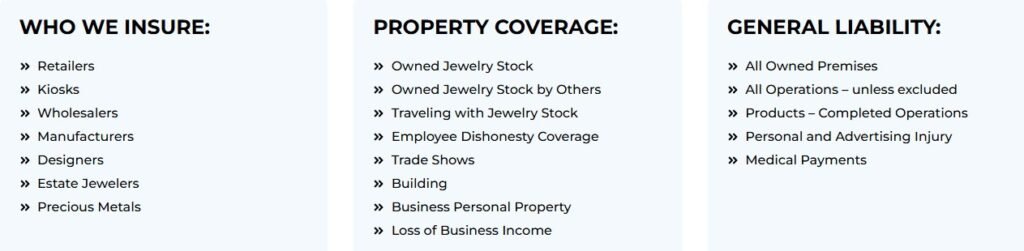
A true Jewelers Block policy is an all-in-one solution. It's designed to cover your assets in every scenario, not just when they're sitting in the display case.
That coverage typically includes:
- Main Inventory: Every piece of jewelry, watch, and precious stone you hold for sale.
- Customers' Property: Items left with you for repair, appraisal, or consignment. This is absolutely critical for maintaining trust and protecting your reputation.
- Raw Materials: Loose gems, precious metals, and other components used for custom designs or manufacturing.
- Items in Transit: Crucial protection for when you ship merchandise, receive it from suppliers, or travel to trade shows.
The risks in the jewelry trade don't stop at your front door. A loss during shipping or at a trade show can be just as financially devastating as a smash-and-grab robbery, which is why this broad protection is so essential.
How Premiums Are Calculated for a Jewelry Business
The price of insurance for a jewelry store is the result of a detailed risk assessment. Underwriters look at your entire operation to get a clear picture of your potential for loss, and your premium is directly tied to what they find.
Several key factors will influence your final cost:
- Total Inventory Value: This is the single biggest factor. The higher the value of your stock, the higher the premium.
- Security Protocols: The quality of your safe, alarm system, and surveillance cameras can earn you significant premium discounts.
- Business Location: Proximity to emergency services and local crime statistics play a major role.
- Travel and Transit: How often you ship goods or travel with inventory will absolutely impact your rate.
For wholesalers and store operators, commercial policies like Jewelers Block are a vital cost of doing business. While these plans can average $1,500-$5,000 annually for $1 million in inventory, that cost is a tiny fraction of the potential losses from the 5-7% annual theft rate in retail settings. To understand more about these industry risks, you can discover more insights about the global jewelry insurance market.
Why a Specialized Agency Is Crucial
You wouldn't ask a general family doctor to perform heart surgery. So why would you rely on a general insurance agent for a highly specialized policy like Jewelers Block insurance? The nuances of the jewelry industry demand an expert who lives and breathes its specific vulnerabilities.
A specialized agency acts as your advocate, navigating the complex market to find underwriters who offer the best terms and most competitive pricing for your specific business model. They know which security measures underwriters value most and how to present your business as a low-risk partner.
This is where a dedicated firm like First Class Insurance makes all the difference. We work with top-tier underwriters, including those associated with world-renowned markets like Lloyd's of London, to build policies that truly fit your operation. You can see some of our valued connections to learn more.

A specialist helps turn your insurance from a necessary expense into a powerful business asset. By securing the right coverage, you can operate with confidence, knowing your hard-earned business is protected from the unexpected. When you’re ready to secure your business, the first step is to Get a Quote for Jewelers Block from a team that knows your industry inside and out.
Scheduled vs Unscheduled Coverage for Your Ring
When it comes to insuring your ring, you’ll run into two very different approaches: scheduled and unscheduled coverage. Getting this wrong can lead to a world of disappointment if you ever have to file a claim, because they offer completely different levels of protection and directly impact your ring insurance price.
Here's a simple way to think about it. Unscheduled coverage is like a big, general-purpose umbrella trying to keep everything you own mostly dry in a storm. Scheduled coverage, on the other hand, is a custom-fitted, waterproof jacket made specifically for your most valuable item—your ring. One gives you broad but shallow protection; the other offers specific, dedicated security.
Understanding Unscheduled Coverage
Unscheduled personal property coverage is the standard protection that comes with most homeowner's or renter's insurance policies. It’s designed to cover all your belongings—furniture, clothes, electronics—up to a single, total limit.
While your ring is technically one of those belongings, there are some serious catches. Most policies put a very low sub-limit on jewelry, often just $1,500 to $2,500. So if your $10,000 engagement ring is stolen, your policy will only pay out that tiny capped amount, and that's after you pay your deductible. You’d be on the hook for the remaining $7,500+ yourself. It’s a safety net with some very big holes.
The Power of Scheduled Coverage
This is where scheduling an item changes the game entirely. A scheduled personal property policy is an add-on (an endorsement) or a completely separate policy written just for your ring. You provide a recent appraisal, and the insurer agrees to cover the ring for its exact, documented value. No guesswork, no surprises.
This approach brings some huge advantages to the table:
- Agreed Value: You and the insurer agree on the ring’s value from day one. This eliminates any arguments over its worth when you file a claim.
- No Deductible: Many scheduled policies come with a $0 deductible. If you have a total loss, the insurer covers the full replacement cost, period.
- Broader Protection: These policies almost always cover "mysterious disappearance"—that sinking feeling when you realize your ring is just gone, but you don't know how or when. Standard homeowner's plans almost never cover this.
Scheduling essentially gives your ring its own personal bodyguard, ensuring it’s fully protected against a much wider range of risks without the frustrating limits of a general policy.
A scheduled policy transforms your ring from just another item under a broad homeowner's plan into a specifically protected asset. This precision is why it's the gold standard for any high-value jewelry, providing true peace of mind that a basic rider simply cannot match.
For business owners managing a whole showroom of rings, this same concept is the foundation of Jewelers Block insurance. This type of insurance for a jewelry business essentially "schedules" your entire inventory, providing the itemized, agreed-value protection that is absolutely critical for financial stability. Whether for one special ring or a thousand, the first step is to Get a Quote for Jewelers Block or a personal policy.
A Head-to-Head Comparison
To make the choice crystal clear, let's put these two coverage types side-by-side. Seeing the differences laid out like this really highlights why one is meant for general belongings and the other is essential for something as valuable as an engagement ring.
Comparing Scheduled and Unscheduled Jewelry Coverage
| Feature | Scheduled Jewelry Insurance | Unscheduled Coverage (Homeowner's Rider) |
|---|---|---|
| Coverage Limit | Covers the full, appraised value of the ring. | Subject to a low sub-limit (e.g., $1,500). |
| Deductible | Often has a $0 deductible option available. | Requires you to pay your homeowner's deductible. |
| Covered Perils | Typically "all-risk," including mysterious disappearance. | Usually limited to named perils like fire and theft. |
| Claim Process | Straightforward; based on the agreed-upon value. | Can be complicated, with depreciation factored in. |
| Impact on Premium | Adds a specific, separate premium for the ring. | Included in your overall homeowner's premium. |
The right choice here is critical. It’s what determines whether a loss is a minor inconvenience or a major financial setback.
Why an Accurate Appraisal Is Your Best Tool
Your insurance policy is only as strong as the documents backing it up. When it comes to setting a fair ring insurance price, nothing is more important than a professional, up-to-date appraisal. It’s the official playbook you and your insurer agree on, making sure there are no surprises when you need your coverage most.
Think of the appraisal as the foundation of your policy. Without a detailed, accurate valuation, the whole structure is shaky. An old or vague appraisal can create two huge problems: you might overpay for coverage you don’t need, or worse, you could be seriously underinsured. That leaves a massive financial gap if you ever have to file a claim.

This single document is the bedrock of a fair insurance agreement and a smooth claims process.
What a Professional Appraisal Must Include
A legitimate appraisal is so much more than a price tag. It's a detailed report from a certified gemologist that creates a complete profile of your ring, leaving zero room for argument.
To be taken seriously by an insurer, it must always include:
- Detailed Stone Specifics: This means the 4 Cs (cut, color, clarity, carat weight) for diamonds, plus precise measurements and descriptions for all other gemstones.
- Metal Information: The type of metal used (like 18k gold or platinum), its weight, and any special markings or engravings.
- High-Resolution Photos: Clear pictures of the ring from multiple angles, documenting its exact condition and unique features.
- The Appraiser’s Credentials: The name and certification of the gemologist (from an institution like the Gemological Institute of America or GIA) who did the evaluation.
This level of detail is absolutely critical for unique pieces. For instance, properly insuring an antique platinum wedding ring requires expert documentation to capture its true character and value.
Keeping Your Valuation Current
Let's be clear: the values of precious metals and gemstones are always changing. A diamond worth $15,000 five years ago might easily be worth $18,000 today. If your policy is still based on that old value, you’re shortchanging your own protection.
We strongly recommend having your high-value jewelry reappraised every two to three years. This simple step ensures your coverage keeps up with its current replacement cost, protecting you from inflation and market shifts.
Having the right paperwork ready from the start makes getting a quote straightforward. Along with your appraisal, keep your GIA report and the original receipt handy. These documents tell the complete story of your ring, allowing an agency like First Class Insurance to give you an accurate and competitive quote. You can also see more of our insights by checking out our visual guide to fine jewelry.

Get Expert Guidance on Your Ring Insurance Price
Figuring out the right insurance for a valuable ring, let alone an entire store, can feel like navigating a maze. With so many variables in play—from appraisals to deductibles—it’s natural to wonder if you’re actually getting the best protection for your money.
But you don’t have to guess or go it alone.
Working with a specialized insurance agency is like having an expert guide by your side. Instead of getting a one-size-fits-all quote from a massive carrier, you get a partner who actually understands the unique risks of the jewelry world. A seasoned agent knows exactly what underwriters are looking for and can present your situation in the best possible light.
The Advantage of a Specialist Agency
A specialist like First Class Insurance brings deep industry knowledge to the table. We don't just sell policies; we build comprehensive protection plans. For a jewelry store owner, that means crafting a Jewelers Block insurance policy that covers every angle of your business, from the inventory in your showroom to pieces traveling to a trade show.
For individuals with personal collections, it means finding a policy that delivers true peace of mind—think worldwide coverage and protection against mysterious disappearance. This focused approach ensures you aren’t paying for coverage you don’t need or, worse, missing critical protections that could save you from financial ruin.
Partnering with a firm that lives and breathes jewelry protection means you gain an advocate. We're dedicated to finding the most competitive rates and the most robust coverage out there. We handle the complex stuff so you can get back to your business or simply enjoy wearing your jewelry without a second thought.
Finding the Best Coverage and Price
The market for insurance for a jewelry business is a niche world. Businesses like First Class Insurance thrive here by offering tailored Jewelers Block policies that bundle your inventory protection with transit coverage, often at rates 10-20% below what standard carriers can offer. This comes from over 30 years of expertise and strong partnerships with top underwriters. If you want to dig deeper, you can learn more about the jewelry insurance market.
That kind of specialized experience translates directly into better terms and better pricing for you.
How to Get Your Personalized Quote
Getting the right protection is much simpler than you might think. We’ve designed a straightforward process to get you the clarity and coverage you need, fast.
- Submit Your Information: It all starts by giving us the basic details about your personal ring or your jewelry store insurance needs.
- Consult with an Expert: Our team will review your situation, ask a few clarifying questions, and pinpoint your specific risks.
- Receive Your Custom Quote: We’ll come back to you with a clear, competitive quote that lays out all your coverage options, your premium, and your deductible.
This simple process takes the headache out of securing top-tier protection. Whether you need a personal policy or it’s time to Get a Quote for Jewelers Block, our First Class Insurance Jewelers Block Agency is ready to help you protect what matters most.
Still Have Questions? Let’s Clear Things Up.
Even after you’ve crunched the numbers, a few practical questions always seem to pop up. Let's tackle some of the most common ones we hear from clients. Getting these details straight is key to feeling confident about the protection you choose.
Is It Really Worth Insuring a Ring Under $5,000?
Let's get straight to it: absolutely. You might think that a $5,000 ring with a low annual premium of $50 to $100 isn't a huge financial risk, but that’s a dangerous assumption.
Here’s why: your standard homeowner's policy is a safety net with some pretty big holes in it. Most have a strict sub-limit for jewelry, often just $1,500, and that’s before you pay a hefty deductible. In a real-world scenario, you could easily end up with next to nothing. A dedicated policy ensures you get back on your feet without a massive out-of-pocket hit, making it a no-brainer for peace of mind.
Does Ring Insurance Cover “Mysterious Disappearance”?
This is a make-or-break question for any policy. Many basic homeowner's riders will only cover you for specific, named events like a fire or a documented theft. But what about that gut-wrenching moment when you look down and your ring is just… gone?
That’s what we call "mysterious disappearance," and a comprehensive, standalone jewelry policy is built for exactly that scenario. This "all-risk" coverage is one of the single biggest advantages of specialized insurance—it protects you from what’s most likely to happen, not just what’s dramatic.
Mysterious disappearance is one of the most common types of jewelry loss. Ensuring your policy includes it means you're protected against the most likely real-world scenarios, not just the dramatic ones like theft.
Can I Insure an Antique or Custom-Designed Ring?
Yes, and you absolutely should. In fact, for unique pieces like these, a specialized policy isn't just a good idea—it's essential. The appraisal process becomes even more critical here. You need an expert who understands estate or custom jewelry to capture its true replacement value, which often goes far beyond the simple cost of its gold and gems.
For a one-of-a-kind ring, a scheduled policy is the only way to go. It documents every specific detail and guarantees you’re covered for its agreed-upon value, not just some generic substitute.
What Happens If I Lose My Ring While Traveling Internationally?
This is where the fine print can really trip you up. Many standard homeowner's policies stop working the second you leave the country, leaving your most valuable possessions completely exposed.
In sharp contrast, a robust, standalone jewelry policy from a specialist like First Class Insurance almost always provides worldwide coverage. It means you’re protected whether you’re on a beach halfway across the world or in your own backyard. When you get a quote, make sure you confirm this feature so your coverage travels right along with you.
Ready to protect your most valuable assets with confidence? The experts at First Class Insurance can provide a clear, competitive quote tailored to your exact needs, whether for a personal heirloom or a complete business inventory. Get the peace of mind that comes from working with a specialist.