
In the high-stakes world of jewelry and high-value goods, the journey from mine to showcase is filled with unique and significant risks. A single disruption, such as a lost shipment, a compromised supplier, or a geopolitical tremor, can trigger devastating financial and reputational consequences. Traditional security measures, while important, are often insufficient to protect against the complexities of a modern global supply chain. To thrive, jewelers, wholesalers, and distributors must adopt robust supply chain risk management strategies that protect every link, from sourcing raw materials to final delivery.
This guide moves beyond generic advice to provide a comprehensive, practical roundup of 10 essential strategies designed to fortify your operations. We will explore actionable steps tailored to the jewelry industry, covering everything from vendor vetting and secure transit controls to contingency planning and implementing specialized insurance for a jewelry store. At the heart of a resilient supply chain lies effective logistics management, ensuring the smooth and secure flow of high-value goods.
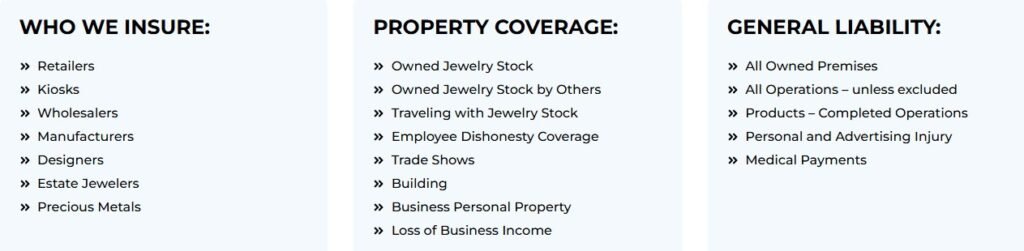
The following list provides a blueprint for building a secure and resilient supply chain. Whether you're seeking to refine your existing processes or are building an insurance for jewelry business from the ground up, these insights will help you safeguard your valuable assets. We'll delve into the specifics of risk transfer, including the critical role of Jewelers Block insurance, offering a clear path to protect your inventory and ensure your business remains brilliant, no matter the challenge. For specialized coverage, consider getting a quote for Jewelers Block from an experienced agency like First Class Insurance Jewelers Block Agency.
1. Strategy 1: Fortify Your Foundation with a Diversified Supplier Network
Relying on a single supplier for critical components like diamonds, precious metals, or custom findings is one of the most significant yet common vulnerabilities for a jewelry business. A diversified supplier network is a foundational supply chain risk management strategy that mitigates this vulnerability. It involves deliberately sourcing materials from multiple, independent vendors, often located in different geographic regions. This approach protects your business from disruptions that could cripple a single-source operation, such as a supplier's bankruptcy, a political embargo, a natural disaster affecting a mining region, or even a sudden quality control failure.

This strategy isn't just a backup plan; it's a proactive method to build operational resilience and agility. For instance, major retailers like Tiffany & Co. strategically source gemstones from various global hubs, including Sri Lanka, India, and parts of Africa, insulating them from localized issues. Similarly, many independent jewelers cultivate relationships with at least three to five different precious metals vendors to ensure consistent supply and competitive pricing. By spreading your procurement across a portfolio of trusted partners, you maintain a steady flow of inventory and gain significant negotiating power, preventing any one vendor from holding your business hostage.
Key Implementation Steps
To effectively diversify your network, focus on these actionable steps:
- Formalize Agreements: Establish clear, written contracts with each supplier. These should detail quality standards (e.g., GIA grading requirements), delivery timelines, payment terms, and protocols for handling defects or returns.
- Conduct Regular Audits: Periodically vet your suppliers, especially for high-stakes materials. This includes verifying certifications for conflict-free sourcing (like the Kimberley Process) and, if possible, conducting site visits to assess their operational security and quality control.
- Develop a Supplier Scorecard: Create a simple system to track and evaluate vendor performance quarterly. Key metrics should include on-time delivery rates, quality consistency, pricing stability, and communication responsiveness. This data-driven approach helps you identify your strongest and weakest links.
- Cultivate Backup Relationships: Don't wait for a crisis. Identify and pre-qualify secondary and tertiary suppliers before you need them. Place small, occasional orders to keep the relationships active and ensure they can meet your standards when called upon.
2. Just-In-Time (JIT) Inventory Management with Safety Stock and Demand Forecasting
Holding excess high-value inventory ties up significant capital and increases security risks, yet running out of popular items means lost sales. A hybrid inventory model that blends lean Just-In-Time (JIT) principles with strategic safety stock and accurate demand forecasting offers a powerful solution. This approach allows you to maintain minimal on-hand stock of fast-moving items, reducing carrying costs, while a calculated buffer of "safety stock" protects you from sudden demand spikes or supplier delays for critical components and best-selling pieces.
This balanced inventory strategy is one of the most effective supply chain risk management strategies for jewelers. For example, a retailer might use its point-of-sale (POS) data to forecast high demand for engagement rings from October to December and proactively align orders with suppliers. Simultaneously, they would maintain a lean inventory of less common fancy-cut diamonds, ordering them only as needed for custom work. This method optimizes cash flow, minimizes the amount of high-value goods needing protection under a Jewelers Block insurance policy, and ensures you have the right products available when customers are ready to buy.
Key Implementation Steps
To implement this hybrid inventory model effectively, focus on these actionable steps:
- Integrate Technology: Use an inventory management system that integrates directly with your POS. This provides real-time visibility into stock levels and sales velocity, enabling data-driven reordering and accurate forecasting.
- Calculate Safety Stock Levels: Don't guess. Use historical sales data and supplier lead time variability to calculate the optimal safety stock for your A-list items. The goal is to cover potential demand during the time it takes to receive a new order.
- Segment Your Inventory: Classify items based on sales volume and value (ABC analysis). Apply JIT principles to slower-moving "C" items, ordering them on demand, while maintaining carefully calculated safety stock for your best-selling "A" items.
- Refine Demand Forecasts Regularly: Review and adjust your forecasts quarterly. Incorporate quantitative data (past sales, market trends) and qualitative insights (feedback from sales staff, upcoming fashion trends) to improve accuracy and adapt to changing customer preferences.
3. Supply Chain Visibility and Real-Time Tracking
In the high-stakes world of jewelry, ignorance is not bliss; it’s a liability. Lacking visibility into your supply chain means you're blind to emerging threats until they've already caused significant damage. Implementing technological solutions for end-to-end visibility is a powerful supply chain risk management strategy that transforms how you track valuable assets. This involves using GPS, blockchain, or integrated supplier portals to monitor gemstones from the mine, precious metals through refinement, and finished pieces all the way to your vault, providing a clear line of sight at every stage.

This strategy allows for the rapid identification of disruptions, delays, or security breaches, turning reactive problem-solving into proactive intervention. For example, blockchain platforms like Everledger provide an immutable record of a diamond's provenance, boosting consumer confidence and simplifying compliance. On a logistical level, using premium tracking services from carriers like FedEx for high-value shipments provides real-time location data, which is often a requirement for robust insurance for a jewelry business. This detailed tracking data not only protects against loss but also provides the necessary documentation to support claims under a comprehensive Jewelers Block policy, demonstrating due diligence and secure custody.
Key Implementation Steps
To effectively enhance your supply chain visibility, focus on these actionable steps:
- Integrate with Capable Suppliers: Prioritize working with suppliers who have adopted modern tracking systems or are willing to integrate with yours. Ask potential partners about their ability to provide real-time production status dashboards or order tracking through a shared portal.
- Implement Automated Alerts: Configure your tracking systems to send automatic notifications for key events. Set alerts for shipment departures, customs clearance, delivery milestones, and any unexpected delays or deviations from the planned route.
- Start with High-Value Assets: Begin your tracking implementation by focusing on your most valuable and critical items, such as large diamonds, rare gemstones, or significant precious metal orders. This allows you to refine your process before expanding it across your entire inventory.
- Audit Tracking Data: Don't just collect data; use it. Regularly compare your digital tracking records against physical inventory counts and shipping manifests to identify discrepancies, expose potential security gaps, and find systemic bottlenecks in your supply chain.
4. Supplier Risk Assessment and Qualification
Engaging a new supplier without proper vetting is like handing over a tray of diamonds without checking credentials; it introduces unacceptable risk. A structured supplier risk assessment and qualification process is one of the most critical supply chain risk management strategies. It involves a systematic evaluation of potential and current vendors based on their financial stability, operational security, compliance adherence, and quality control. For a jeweler, this means going beyond just price and availability to scrutinize a supplier’s entire business integrity.
This proactive approach prevents crippling issues before they arise. For example, De Beers requires its sightholders to adhere to stringent Best Practice Principles, covering everything from conflict-free sourcing to anti-corruption. Similarly, major retailers like Signet Jewelers implement comprehensive annual audits to ensure their partners meet specific ethical and operational standards. By establishing a formal qualification gateway, you ensure that every link in your supply chain is as secure and reliable as your own vault, protecting your reputation and your bottom line.
Key Implementation Steps
To build a robust assessment process, focus on these actionable steps:
- Develop a Weighted Scorecard: Create an assessment rubric that prioritizes your most critical risk factors. Assign higher weights to non-negotiables like Kimberley Process certification, verifiable insurance coverage (such as adequate product liability), and documented security protocols for their facilities.
- Verify Certifications Directly: Do not take certifications at face value. Contact the issuing organizations, such as GIA or the Responsible Jewellery Council (RJC), to confirm the validity and status of a supplier’s credentials.
- Require Proof of Insurance: Mandate that all critical suppliers provide certificates of insurance for policies like product liability or errors and omissions. This is a key part of your own risk transfer strategy, complementing your jewelry store insurance coverage.
- Conduct Financial Due Diligence: For significant partnerships, request credit references or redacted financial statements to gauge a supplier's stability. A financially distressed partner is an unreliable one.
- Schedule Regular Re-assessments: Risk is not static. Implement a schedule for re-evaluating key suppliers annually or semi-annually to ensure they continue to meet your standards.
5. Implement Inventory Segmentation with ABC Analysis
Not all inventory carries the same value or risk, and treating it all identically is an inefficient and dangerous oversight. Inventory segmentation, often executed using the ABC analysis method, is one of the most effective supply chain risk management strategies for a jewelry business. This approach involves categorizing inventory into segments (A, B, C) based on value and importance. This allows you to apply the most rigorous security and controls where they are needed most, optimizing resource allocation and minimizing exposure.

For a jeweler, A-items are your highest-value assets like loose diamonds, rare gemstones, and finished haute couture pieces. B-items represent your mid-range, steady-selling stock such as gold chains and standard engagement ring settings. C-items include low-value consumables like cleaning supplies, display materials, or sterling silver findings. A jewelry store might keep its A-items in a UL-rated vault with dual-access controls, while B-items are secured in high-grade display cases, and C-items are kept in a standard stockroom. This targeted approach ensures your most critical assets receive maximum protection without over-investing in security for lower-risk goods. It is a cornerstone of a robust insurance for a jewelry business plan, as it demonstrates due diligence to underwriters.
Key Implementation Steps
To effectively implement ABC analysis in your inventory management, focus on these actionable steps:
- Establish Clear Protocols for Each Segment: Formally document handling, storage, and access rules for each category. For instance, A-items require dual-person sign-out from a vault, B-items can be accessed by authorized staff from locked showcases, and C-items are available with general stockroom access.
- Align Insurance Coverage with Segmentation: Work with your broker to ensure your Jewelers Block insurance limits accurately reflect the concentrated value in your A-item category. This prevents being underinsured for a catastrophic loss of your most precious inventory.
- Conduct Segmented Audits: Increase the frequency and rigor of audits for high-value items. A-items might require daily or weekly reconciliation, while B-items are audited monthly, and C-items quarterly. This helps detect discrepancies faster where the financial impact is greatest.
- Use System-Based Access Controls: If you use an inventory management system, configure user permissions to mirror your ABC segments. Only senior staff should be able to view or transact A-items, while a broader team can manage B and C inventory.
6. Contractual Risk Transfer and Insurance Requirements
While internal controls are vital, one of the most effective supply chain risk management strategies involves transferring risk externally to your partners. Contractual risk transfer uses legally binding agreements to shift financial responsibility for specific losses to suppliers, carriers, and service providers. This strategy mandates that your partners maintain adequate insurance, effectively creating a financial backstop that protects your business from losses caused by their negligence, errors, or operational failures. For a jewelry business, this is a non-negotiable layer of defense against everything from shipping losses to receiving counterfeit materials.
This approach makes your partners accountable for their role in your supply chain. For instance, a luxury watch dealer might contractually require their international shipping partner to carry cargo insurance explicitly covering the full declared value of each timepiece, protecting against theft or damage in transit. Similarly, a high-volume jeweler could include indemnification clauses in supplier contracts, holding the supplier liable for any damages arising from the delivery of conflict diamonds. This transforms a standard business relationship into a shared-risk partnership, where your partners have a vested financial interest in maintaining security and quality standards, complementing your own insurance for jewelry business.
Key Implementation Steps
To effectively transfer risk through contracts, focus on these actionable steps:
- Develop Standardized Contract Templates: Work with legal counsel to create master agreements for different partner types (suppliers, carriers, refiners). These templates should include robust indemnification clauses and clearly define insurance requirements.
- Specify Coverage Minimums: Mandate specific insurance types and limits. For example, require a precious metals refiner to carry at least $1 million in coverage for materials in their possession or a diamond supplier to hold product liability insurance.
- Verify Proof of Insurance: Always request a Certificate of Insurance (COI) before finalizing an agreement. The COI should name your business as an "additional insured" when appropriate, granting you direct rights under their policy.
- Require Policy Change Notifications: Your contracts must obligate partners to provide immediate written notice if their insurance policies are canceled or materially changed. This prevents you from unknowingly operating with an uninsured partner. You can learn more about specialized coverage options from top-rated providers like those associated with Lloyd's of London.
7. Strategy 7: Implement Geographic and Geopolitical Risk Mitigation
For a jewelry business sourcing globally, your supply chain is exposed to risks far beyond your direct control, such as political instability, trade wars, or natural disasters. Geographic and geopolitical risk mitigation is one of the most critical supply chain risk management strategies, involving the deliberate diversification of sourcing locations and active monitoring of international events. This strategy prevents your entire operation from being halted by a crisis in a single country, whether it's a new tariff on diamonds from a specific region, a cyclone disrupting gemstone mining in Sri Lanka, or political unrest impacting precious metal exports from South Africa.
This proactive approach builds a resilient business model that can absorb regional shocks. For example, a savvy wholesaler might source similar-quality emeralds from both Colombia and Zambia. If a trade embargo affects Colombian imports, they can seamlessly increase their orders from Zambia to maintain inventory levels. Similarly, after witnessing the impact of US-China trade tensions on component costs, many jewelry manufacturers have started cultivating relationships with domestic suppliers as a hedge against tariff volatility. This strategic foresight ensures business continuity and protects you from sudden, crippling disruptions that can arise from global events.
Key Implementation Steps
To effectively mitigate these external risks, integrate these actions into your planning:
- Map Your Supply Chain: Create a visual map of your supply chain, identifying the country of origin for all critical materials. Pinpoint any single-country dependencies that represent a significant vulnerability.
- Monitor Geopolitical Intelligence: Actively follow news from sources like the Jewelers' Security Alliance, trade publications, and government advisories. Stay informed about elections, trade policy shifts, and environmental events in your key sourcing regions.
- Establish Regional Backups: Identify and vet at least one alternative supplier in a completely different, stable geographic region for each of your essential materials. This ensures you have a pre-approved partner ready to engage if your primary source is compromised.
- Review Your Insurance Coverage: Ensure your Jewelers Block insurance policy provides adequate coverage for goods in transit internationally and addresses perils like civil unrest or confiscation. Discuss specific geopolitical scenarios with your insurance broker to understand policy limitations and endorsements.
8. Business Continuity and Disaster Recovery Planning
A supply chain disruption is not a matter of if, but when. Business continuity and disaster recovery (BCDR) planning is a critical set of strategies for maintaining essential operations when faced with emergencies like natural disasters, security breaches, or major supplier failures. For jewelers, this means having a documented, tested plan to protect high-value inventory, secure critical data, and resume operations as quickly as possible to minimize financial loss and reputational damage. It moves beyond simple reaction to a proactive state of readiness.
This strategy is about ensuring your business can survive a catastrophic event. For example, a jewelry retailer in a hurricane-prone area might pre-arrange a secure, temporary retail space in an unaffected town. A wholesaler might establish an emergency credit line specifically for rapid inventory replenishment if their primary vault is compromised. These proactive measures are essential supply chain risk management strategies that ensure the business can continue to serve customers and generate revenue even when its primary operational framework is disrupted. A robust plan demonstrates resilience to insurers and financial partners, potentially improving terms for policies like Jewelers Block insurance.
Key Implementation Steps
To build a BCDR plan that protects your high-value assets, focus on these actionable steps:
- Establish a Response Team: Form a cross-functional team including leadership, operations, finance, and security. Assign specific roles and responsibilities for each person during an emergency, from inventory evacuation to client communication.
- Map Dependencies and Weaknesses: Identify every critical process, supplier, and technology system. Pinpoint single points of failure, such as relying on one shipping carrier or having all your client records on a single local server without cloud backup.
- Create Emergency Protocols: Develop clear, step-by-step procedures for various scenarios (e.g., fire, theft, flood, cyberattack). This includes contact lists for staff, suppliers, and emergency services, as well as protocols for communicating with customers.
- Test and Refine the Plan: A plan is useless if it's not tested. Conduct annual tabletop exercises or simulations where your team walks through a disaster scenario. This practice reveals gaps and ensures everyone understands their role, making the response more effective when a real crisis occurs.
9. Security and Loss Prevention in Transit
A piece of jewelry is never more vulnerable than when it is outside the secure confines of a vault or showroom. For jewelry businesses, transit represents one of the highest-risk phases in the supply chain, creating significant exposure to theft, loss, and damage. Implementing a comprehensive strategy for security and loss prevention in transit combines robust physical safeguards, adequate insurance, and strict procedural controls to protect high-value assets from the moment they leave your hands until they are safely received at their destination.
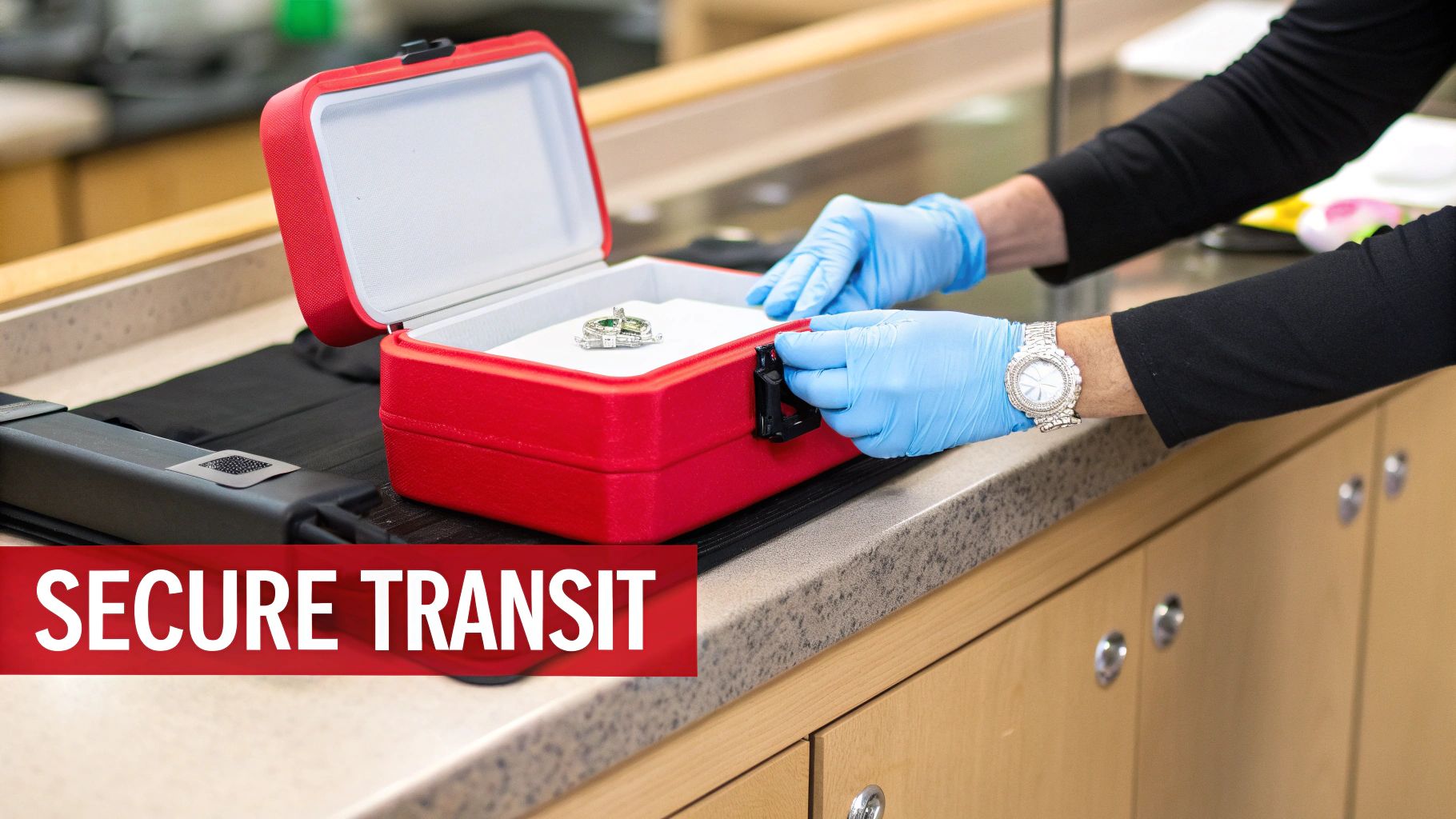
This essential component of supply chain risk management strategies is not just about choosing a carrier; it's a holistic approach to safeguarding your inventory. For example, major diamond wholesalers exclusively use armored carriers like Brinks for shipments exceeding a certain value threshold, while many retailers leverage specialized jewelry shipping services from FedEx or UPS that include mandatory signature confirmation and enhanced tracking. By treating transit security as a non-negotiable part of your operations, you protect your assets, maintain client trust, and ensure the financial stability of your business. Having the right insurance for a jewelry store is critical, as it acts as a final backstop against catastrophic loss during shipment.
Key Implementation Steps
To effectively secure your inventory in transit, focus on these actionable steps:
- Establish Tiered Shipping Protocols: Define clear, value-based thresholds for shipping methods. For instance, shipments under $5,000 may use a standard insured carrier, while anything over $50,000 must go via an armored vehicle. This formalizes your risk tolerance.
- Leverage Technology for Oversight: Use GPS tracking devices on high-value shipments and enable automated delivery alerts for both your team and the recipient. Real-time visibility is a powerful deterrent and recovery tool.
- Verify Insurance Coverage: Before shipping, confirm that your Jewelers Block insurance policy covers goods in transit and that the shipment's value is within your policy limits. An inadequate insurance for jewelry business policy can leave you dangerously exposed. You can get a quote for Jewelers Block to understand your options.
- Train Staff on Secure Procedures: Your team must be trained on proper packaging to conceal the nature of the contents, accurate completion of shipping documents and customs declarations, and the importance of never disclosing shipment details over unsecured channels.

10. Implement Robust Quality Control and Counterfeit Prevention
In the high-stakes world of jewelry, the authenticity and quality of your materials are non-negotiable. Implementing robust quality control and counterfeit prevention protocols is a critical supply chain risk management strategy to protect your reputation and financial stability. This involves establishing rigorous verification procedures to ensure gemstones, precious metals, and finished pieces meet exact specifications, while actively preventing counterfeit or misrepresented items, such as undisclosed lab-grown diamonds or conflict materials, from infiltrating your inventory.
This strategy acts as a critical firewall, safeguarding your business from fraud, compliance penalties, and irreversible brand damage. For example, many reputable jewelry businesses require GIA (Gemological Institute of America) grading reports for all significant diamonds and maintain in-house gemological labs for initial screening. Similarly, adherence to certifications like those from the Responsible Jewellery Council (RJC) demonstrates a commitment to conflict-free sourcing. These measures are not just about compliance; they are essential for maintaining customer trust and securing comprehensive insurance for jewelry business, as insurers often review quality control practices when underwriting a Jewelers Block policy.
Key Implementation Steps
To build an effective quality control and counterfeit prevention program, focus on these actionable steps:
- Establish Documented Inspection Protocols: Create a formal, written procedure for inspecting all incoming materials. This should specify the tests to be performed (e.g., thermal conductivity for diamonds, acid testing for gold), the required documentation (e.g., GIA reports, supplier warranties), and the criteria for acceptance or rejection.
- Invest in and Train on Gemological Equipment: Equip your business with the necessary tools, such as microscopes, refractometers, and diamond testers. Crucially, ensure that key staff receive proper training from recognized organizations to use this equipment effectively and interpret results accurately.
- Mandate Supplier Certifications and Warranties: Require all suppliers to provide verifiable certifications for their materials. Contracts should include clauses that guarantee authenticity and adherence to standards like the Kimberley Process, with clear indemnification terms if materials are found to be misrepresented.
- Conduct Random Third-Party Verification: Periodically select a sample from a supplier’s shipment and send it to an independent, certified gemological laboratory for verification. This practice keeps suppliers accountable and provides an unbiased assessment of the quality you are receiving, reinforcing your internal supply chain risk management strategies.
10-Point Supply Chain Risk Strategy Comparison
| Strategy | 🔄 Implementation Complexity | ⚡ Resources & Cost | 📊 Expected Outcomes | 💡 Ideal Use Cases | ⭐ Key Advantages | ⚠️ Main Trade-offs |
|---|---|---|---|---|---|---|
| Diversification and Multiple Supplier Strategy | Medium — requires vendor onboarding and contracts | Moderate — multiple supplier accounts, travel/audits | Improved supply resilience and negotiating leverage | Businesses sourcing high-value gems/metals from multiple regions | Reduces single-point failures; competitive pricing pressure | Higher admin costs; potential quality inconsistencies |
| Just-In-Time (JIT) with Safety Stock & Forecasting | High — needs systems and accurate models | High — inventory systems, forecasting tools, frequent logistics | Lower inventory carrying costs with balanced availability | Retailers aiming to optimize cash flow and seasonal demand | Frees capital; reduces storage/insurance costs when accurate | Vulnerable to supply delays; forecasting errors risk stockouts |
| Supply Chain Visibility & Real-Time Tracking | High — tech integration and supplier cooperation | High — tracking tech, blockchain/RFID, ongoing maintenance | Faster detection of delays/theft and proof of provenance | Companies managing high-value shipment routes and provenance needs | Rapid alerts; stronger insurance claims and theft prevention | Significant upfront cost; supplier integration hurdles |
| Supplier Risk Assessment & Qualification | Medium — structured processes and periodic reviews | Moderate — audits, credit checks, certification verification | Lower supplier-related disruption and compliance risk | Businesses onboarding new or high-volume suppliers | Reduces fraud/non-compliance; protects brand reputation | Time-consuming; may exclude smaller suppliers |
| Inventory Segmentation & ABC Analysis | Low–Medium — classification and policy updates | Low — process setup and system tagging | Targeted controls and optimized insurance coverage | Retailers with mixed value SKUs wanting focused security | Allocates resources by value; improves audit focus | Requires accurate valuation; lower-tier risks may be overlooked |
| Contractual Risk Transfer & Insurance Requirements | Medium — legal drafting and monitoring | Low–Moderate — legal fees, certificate verification | Financial risk shifted to suppliers; clearer recourse | Transactions with high-value suppliers/carriers | Reduces own liability; may lower premiums | Enforcement complexity; suppliers may increase prices |
| Geographic & Geopolitical Risk Mitigation | Medium — monitoring and alternative sourcing plans | Moderate — supplier diversification, hedging costs | Reduced region-specific disruption risk | Sourcing from politically or climatically volatile regions | Enables rapid supplier pivoting; tariff resilience | Increased complexity and potential cost; limited sources |
| Business Continuity & Disaster Recovery Planning | Medium — cross-functional planning and testing | Moderate — reserves, backup sites, training exercises | Faster recovery and maintained customer service during crises | Firms needing operational continuity under disruption | Protects revenue and reputation; improves stakeholder confidence | Time-consuming to maintain; reserve costs impact cash flow |
| Security & Loss Prevention in Transit | Medium — carrier selection and procedures | High — armored carriers, tracking, insurance | Significant reduction in transit theft and validated delivery | High-value shipments and international logistics | Strong theft deterrence; supports insurance claims | High shipping costs; customer convenience may be reduced |
| Quality Control & Counterfeit Prevention | Medium — testing protocols and lab partnerships | Moderate — testing equipment, third-party labs, training | Lower counterfeit risk and stronger compliance evidence | Businesses selling certified/high-value gems and branded pieces | Protects reputation; reduces returns and legal exposure | Testing costs and intake delays; requires specialist skills |
Integrating Your Strategies for Ultimate Protection
Navigating the intricate world of high-value supply chains is not about implementing a single, magic-bullet solution. As we've explored through these ten comprehensive supply chain risk management strategies, true resilience is built by weaving individual tactics into a cohesive, multi-layered defense system. The real power isn't found in choosing one strategy over another; it's in the synergy they create when working in concert.
Your efforts to diversify suppliers (Strategy 1) become exponentially more effective when combined with a rigorous supplier risk assessment process (Strategy 4). Similarly, achieving end-to-end supply chain visibility with real-time tracking (Strategy 3) directly fortifies your in-transit security and loss prevention measures (Strategy 9). This interconnected approach transforms a collection of good ideas into a formidable, proactive risk management framework that can adapt to unforeseen challenges.
From Strategy to Fortification: The Holistic View
Think of your business as a fortress. Each strategy represents a different layer of defense:
- The Outer Walls: Geographic diversification and robust contractual agreements with suppliers act as your first line of defense, keeping many risks at a distance.
- The Watchtowers: Advanced visibility, real-time tracking, and sophisticated demand forecasting are your watchtowers, giving you the foresight to spot potential threats before they reach your gates.
- The Armory: Detailed business continuity plans, rigorous quality control processes, and meticulously vetted security protocols are the tools and preparations you have ready to deploy when a threat materializes.
- The Inner Keep: Your segmented, carefully managed inventory is the treasure within, protected by all the outer layers of defense.
This integrated mindset shifts your posture from reactive damage control to proactive risk mitigation. You're no longer just responding to disruptions; you are anticipating and deflecting them. Mastering these supply chain risk management strategies is not merely an operational exercise; it is a fundamental pillar of long-term profitability and brand reputation in the high-stakes jewelry industry.
The Ultimate Safety Net: Specialized Insurance
Even the most impeccably designed fortress needs a final, unbreakable line of defense. For a jewelry business, that is a specialized insurance policy designed to cover the unique and substantial risks you face daily. Standard business insurance policies often contain critical gaps and exclusions when it comes to high-value, portable assets like gems and precious metals.
This is where a dedicated Jewelers Block insurance policy becomes indispensable. This type of coverage is specifically crafted for the jewelry industry, providing a seamless blanket of protection that standard policies simply cannot match. It addresses the precise risks inherent in your supply chain, from "mysterious disappearance" and employee dishonesty to losses during shipment or at a trade show.
Protecting a jewelry business is a complex undertaking, and your insurance for a jewelry store should be just as sophisticated as your operational strategies. A comprehensive Jewelers Block policy is the financial backstop that underpins all your physical and procedural security efforts. It ensures that if a risk penetrates your defenses, the financial fallout will not be catastrophic. Partnering with a specialist like First Class Insurance Jewelers Block Agency means you aren't just buying a policy; you are gaining an expert risk management partner who understands the nuances of your supply chain and can help tailor coverage to fortify your weakest links.
Don't leave your legacy to chance. Embrace these strategies, integrate them into the fabric of your operations, and secure your ultimate peace of mind with the right financial protection.
Ready to build an unbreakable financial shield around your high-value assets? The experts at First Class Insurance specialize in crafting bespoke Jewelers Block policies that align perfectly with your unique supply chain risk management strategies. Visit First Class Insurance to get a quote and partner with a team that truly understands the complexities of protecting your jewelry business.