
You've lined up the business entity, picked a location, and started thinking about inventory, dealer plates, and signage. Then the licensing packet stops you cold with one requirement that doesn't feel as straightforward as rent, flooring, or general liability coverage: the surety bond.
New dealers often treat the bond like one more form to complete. That's a mistake. Among surety bonds for auto dealers, the bond is one of the few licensing items that directly connects your compliance habits to your future cash flow. If you manage it well, it stays quiet in the background. If you ignore it, it can hold up a license, complicate renewals, and create reimbursement obligations that hit the business at the worst time.
Your First Step to Getting Licensed
A lot of dealers hit the same moment. They're moving fast, the lot is nearly ready, and they assume the biggest hurdles will be financing inventory or meeting facility rules. Then the state licensing checklist requires a bond before the license can move forward.
That requirement isn't random. The state wants proof that if a dealer violates dealer-law obligations, there's a financial backstop for valid consumer or regulatory claims. In practice, the bond becomes part of the state's gatekeeping system. It helps separate businesses that are prepared to operate under dealer rules from those that aren't.
Why this requirement shows up early
A dealer bond usually appears near the front of the licensing process because the state doesn't want to issue a license first and ask compliance questions later. The bond signals that a surety company has reviewed the applicant and is willing to extend a financial guarantee tied to lawful dealership conduct.
That matters even if you're small, starting with a narrow niche, or planning a limited inventory model. The state still expects the same basic discipline around titling, registration, disclosures, and transaction handling.
If you're still shaping your dealership model, it helps to look at adjacent startup guidance too. A practical example is this set of tips for opening a golf cart dealership, which is useful because it highlights the same real-world startup issues dealers face before licensing is complete, including planning for compliance instead of treating it as an afterthought.
A bond requirement feels administrative until it delays opening day. Then it becomes a business problem.
What works at this stage
The dealers who move cleanly through licensing usually do three things well:
- They verify the exact license class first. Bond requirements often depend on what type of dealer you are, not just the fact that you sell vehicles.
- They ask what must be filed and when. Some states want the bond in a specific form or sequence with the license packet.
- They treat the bond as active compliance. That means tracking renewal dates, cancellation rules, and filing details from day one.
What doesn't work is assuming the bond is a generic purchase you can solve at the last minute. That's how dealers end up with the wrong bond form, the wrong amount, or a timing problem that stalls the license.
What Is an Auto Dealer Surety Bond
You can pay your bond premium on Monday and still owe the surety real money later if a claim hits. New dealers miss that point all the time, and it is why dealer bonds affect cash flow, not just licensing paperwork.
An auto dealer surety bond is a three-party financial guarantee tied to your license. The bond protects the state and the public if you violate dealer-law obligations such as mishandling title work, registration funds, payoffs, or required disclosures. In major U.S. markets, the structure works this way: the dealer, called the principal, posts a bond payable to the state, called the obligee, and if a valid claim is made, the surety pays up to the bond penal sum and then seeks reimbursement from the dealer. That basic structure is outlined in this overview of the California auto dealer bond structure.

How the bond works in practice
A dealer bond works a lot like a credit backstop. The surety is putting its balance sheet behind your promise to follow dealer laws, but it expects repayment if that promise breaks.
That is why a bond is different from standard business insurance. Insurance expects covered losses as part of the product. A surety bond expects you to prevent the loss, and if the surety has to step in, the bill can come back to you.
For dealers, that distinction matters operationally. A claim can lead to reimbursement demands, legal costs, tighter underwriting at renewal, and more pressure on working capital right when the business can least afford it.
The three parties
| Party | Role | What they care about |
|---|---|---|
| Principal | The auto dealer | Getting licensed, keeping the license, and avoiding claim costs |
| Obligee | The state licensing authority | Protecting the public and enforcing dealer laws |
| Surety | The bonding company | Assessing your risk and recovering any claim payments it makes |
A simple way to read this relationship is: the state sets the rules, the surety backs your promise to follow them, and you remain financially responsible if that promise fails.
Why the bond exists
Vehicle deals create multiple points where money and paperwork can go wrong. A title delay, unpaid lien, payoff error, or disclosure problem can hurt a buyer fast and pull regulators in just as quickly. The bond gives the state a financial remedy short of chasing every bad dealer act one case at a time.
From a business standpoint, the bond also acts as borrowed credibility. It helps you get licensed, but it also puts your operations under a financial microscope. Dealers who treat the bond as a one-time filing often react too late to title exceptions, customer complaints, or accounting gaps. Dealers who treat it as an active risk item usually tighten deal jackets, track payoff timelines, and resolve disputes before they turn into bond claims.
That same paperwork discipline shows up in related title problems. If you want an example from the title side, this guide to bonded titles in Florida helps show why missing ownership documentation can become a financial issue, not just an administrative one.
Key takeaway: a dealer bond gives you access to a license by putting your future balance sheet on the line. Run the dealership with that in mind, and the bond stays inexpensive. Ignore that reality, and a low annual premium can turn into a much larger obligation.
State-by-State Dealer Bond Requirements
Many new dealers often find themselves tripped up. They hear one number from a dealer in another state, assume the process is basically the same everywhere, and build their budget around the wrong standard.
State bond requirements are not uniform. Bond amounts vary materially by jurisdiction and license class, which changes both the dealer's compliance burden and the surety's exposure. Examples include Ohio's $25,000 used motor vehicle dealer bond tied to the Title Defect Rescission fund, California's $50,000 standard dealer bond versus $10,000 for wholesalers and motorcycle/ATV dealers, and Arizona's continuous dealer bonds with 60 days' prior written notice required for cancellation. Those differences matter because a missed renewal or lapse can trigger immediate license action or denial, as outlined by Ohio dealer guidance on motor vehicle dealer surety bond requirements.

The real issue isn't just amount
Most dealers focus on the bond amount first. That's understandable, but it's only one variable.
A state can make the bond harder to manage through filing rules, cancellation notice rules, renewal timing, and license-class distinctions. Operationally, those details often create more trouble than the premium itself.
Here's what to check before you bind anything:
- License classification: Retail, wholesale, used, motorcycle-only, ATV-only, and other categories may not share the same requirement.
- Term structure: Some bonds align tightly with renewal cycles, while others are continuous unless canceled under state rules.
- State filing mechanics: The bond may need to be filed with a DMV, licensing board, or another agency in a specific format.
- Lapse consequences: In some jurisdictions, a gap can lead straight to license denial, suspension, or interruption.
Why dealers should avoid borrowed assumptions
A dealer in California may be dealing with one set of thresholds and a specific class distinction. A dealer in Texas may face a different requirement entirely, including a bond tied to a multi-year period. An Arizona dealer also has to care about cancellation notice mechanics.
Those aren't technical footnotes. They affect opening timelines, renewal calendars, and whether a dealer can continue operating without disruption.
If your work touches title issues in Florida, it also helps to understand adjacent title-cure processes. This guide to bonded titles in Florida gives useful context on how bonding intersects with vehicle ownership documentation in that state.
Don't ask, “What do auto dealer bonds cost?” Ask, “What bond does my exact license class in my exact state require, and what happens if it lapses?”
That question produces better decisions. It also prevents the classic problem of solving the wrong compliance issue quickly and the right one too late.
How Bond Amounts and Premium Costs Are Determined
The first cost question usually comes out wrong. Dealers ask what the bond costs, when they really need to separate two different numbers.
One number is the bond amount, often called the penal sum. That's the maximum amount the surety may have to pay on valid claims under the bond. The other number is your premium, which is the amount you pay the surety for issuing the bond.
Bond amount versus premium
Those two figures are not the same, and confusing them leads to bad budgeting.
A state sets or requires the bond amount based on its licensing rules. Your premium is then influenced by underwriting factors. Dealer-facing guidance also notes that requirements can change by license type, transaction volume, and state-level tightening. California uses $10,000 and $50,000 tiers for certain categories depending on activity, while Texas requires a $50,000 bond for a two-year period, as discussed in this overview of auto dealer bond requirements and pricing factors.
What underwriters usually evaluate
Even when the state sets the required bond amount, the surety still decides how risky you are as an applicant. In practice, underwriters commonly look at:
- Personal credit profile: This often matters because many new dealerships don't yet have deep operating history.
- Business financial condition: Clean financials, organized records, and realistic capitalization help.
- Industry experience: Experience can help reassure the surety that you understand transaction controls and dealer-law obligations.
- License type and operating model: A wholesale-only applicant may present a different profile than a retail dealer handling direct consumer transactions.
- Past claims or compliance issues: If you've had prior bond problems, expect heavier scrutiny.
The hidden cost isn't always the invoice
The premium gets attention because it's the line item you pay. But the larger burden is often operational.
A dealer who misses a renewal date, files the wrong form, or misunderstands notification rules can create a licensing problem even if the premium itself wasn't especially painful. That's why experienced dealers don't manage the bond from memory. They calendar it, assign responsibility, and keep the bond tied to the broader licensing file.
Here's the practical breakdown:
| Cost factor | Why it matters |
|---|---|
| Required bond amount | Sets the scale of the surety's exposure |
| Credit-based pricing | Affects how favorably the surety views the application |
| Renewal timing | A late renewal can create bigger costs than the premium |
| State filing rules | Incorrect filing can delay issuance or renewal |
| License type | Different classes may carry different bond obligations |
The best way to keep costs under control is simple. Apply with clean paperwork, protect your credit, and avoid claims. Dealers who treat the bond as a living compliance item usually spend less time and money fixing preventable problems.
The Application and Underwriting Process
The bond application process is usually straightforward when your documents are organized. It becomes slow and expensive when ownership details, license information, and business records don't match from one form to the next.

Step one, gather the file before you apply
Before you fill out anything, collect the documents and facts the surety is likely to review. Most applications move faster when you have a consistent package that includes:
- Business entity details: Legal name, address, and formation records.
- Ownership information: Names of owners, percentages, and background details where requested.
- License information: The exact dealer license type and state filing requirements.
- Financial records: Business financials if available, and any supporting information that shows the operation is real and prepared.
- Personal credit authorization: Many sureties use this as part of risk review.
The quality of the application matters more than dealers think. A sloppy application signals future claim risk.
For context on established specialty underwriting brands in the broader insurance market, some dealers also recognize names like Lloyd's of London, though your dealer bond will be handled through the surety channel and filing process required for your license.

Step two, expect underwriting to look for consistency
Underwriting isn't mystery math. It's a risk review.
The surety wants to know whether the applicant is likely to create claim exposure, paperwork issues, or reimbursement trouble. If the ownership structure on the application doesn't match the business registration, or the license class is unclear, the surety may pause the file until that's fixed.
Underwriting responds well to clean facts. It reacts poorly to patched-together explanations.
A quick educational overview can help if you want a visual explanation of how bond issuance works in practice:
Step three, review the issued bond before filing
Once approved, don't just sign and send.
Check the dealer name, address, bond amount, license classification, and obligee details against the licensing paperwork. Small mismatches can create outsized delays if the state rejects the filing.
A practical workflow looks like this:
- Confirm the bond form matches the state requirement
- Verify all business identifiers
- Check signatures and seals
- File it in the required way
- Save a copy with your renewal calendar
What works is treating the bond like part of your licensing record set. What doesn't work is viewing it as a one-time purchase that disappears after issuance.
Understanding Claims and Your Indemnity Obligation
The biggest misunderstanding about surety bonds for auto dealers shows up when a claim happens. Dealers often assume the surety will handle the loss the way an insurer would handle a covered claim under a normal insurance policy.
That's not how this works.
A bond claim starts with an allegation that the dealer violated an obligation covered by the bond. The surety investigates. If the claim is valid and the surety pays, the dealer owes that money back under the indemnity agreement.
A practical claim scenario
Take a common type of problem. A dealer completes a sale, but title handling is botched, delayed, or misrepresented, and the buyer suffers a loss tied to that failure. The buyer or another injured party may file a complaint against the bond.
From there, the sequence usually looks like this:
- A complaint is submitted
- The surety requests documents and an explanation
- The surety evaluates whether the claim fits the bond obligation
- If the claim is valid, payment may be made up to the bond limit
- The dealer must reimburse the surety
That last step is the one that catches people off guard.
Indemnity is the real financial exposure
When you sign for the bond, you're usually agreeing to indemnify the surety. In plain English, that means you promise to repay the surety for valid losses, along with related costs the agreement allows.
This is why a bond claim can damage a dealership in more than one way:
| Problem | Effect on the dealership |
|---|---|
| Cash repayment duty | The surety expects reimbursement |
| Licensing trouble | Claims can trigger extra scrutiny at renewal |
| Future bond pricing pressure | New bond terms may become less favorable |
| Operational distraction | Staff time gets pulled into document production and response |
A claim is never just a claims event. It's usually a records problem, a cash-flow problem, and a licensing problem at the same time.
What actually reduces claim risk
Dealers lower claim risk with boring habits, not heroic fixes.
- Clean title and registration workflows: Most trouble starts where paperwork discipline breaks down.
- Accurate deal jackets: If you can't document what happened, you can't defend it well.
- Fast complaint handling: Small disputes are easier to solve before they harden into formal claims.
- Clear advertising and disclosures: Misunderstandings often begin before the customer ever signs.
The bond doesn't protect your balance sheet from your own mistakes. It gives the public a way to recover when those mistakes cross the line into a valid bond claim. That's why ethical process and accurate paperwork matter so much.
Your Checklist for Getting Bonded and Saving Money
Most dealers don't need a complicated system. They need a repeatable one. The dealers who save money on their bond over time usually do the same small things consistently and avoid preventable compliance mistakes.

The bonding checklist
Use this as a working list before you apply and again before every renewal.
- Confirm your exact license class. Don't rely on a friend's experience in another state or another dealer category.
- Verify the state's filing rules. Make sure you know where the bond goes, how it must be filed, and what timing rules apply.
- Build one clean application file. Keep entity records, ownership details, and financial documents consistent.
- Review the issued bond carefully. Check names, addresses, and classifications before filing.
- Calendar renewal and notice dates. Put reminders in more than one place, and assign ownership inside the business.
- Store copies with licensing records. If the state asks for proof, you shouldn't have to scramble.
What usually lowers your long-term cost
The surety doesn't reward wishful thinking. It rewards lower risk.
Here are the habits that tend to help over time:
- Protect your credit. Credit-based pricing is part of the underwriting picture, so personal financial discipline still matters.
- Run a claims-light operation. Good title handling, clean disclosures, and documented complaint response all help.
- Stay organized at renewal. Last-minute renewals weaken your position and increase the chance of mistakes.
- Ask whether your bond still fits your license type. If your business model changes, your bond requirement may change too.
- Compare options when renewal comes around. Don't assume your existing arrangement is automatically the best one.
What does not save money
Some dealers try to cut corners in ways that backfire fast.
Bottom line: The cheapest bond is usually the one that stays compliant, renews on time, and never gets a claim.
Skipping document review, missing notices, or treating the bond as “handled” after the first year creates hidden costs. Even if the premium looks manageable, operational sloppiness can produce licensing interruptions and reimbursement exposure that dwarf the original savings.
A bond is a cost item on paper. In practice, it's a management item. Dealers who treat it that way usually get fewer unpleasant surprises.
Frequently Asked Questions About Dealer Bonds
Can I get an auto dealer bond with bad credit
Yes, many dealers can still get bonded with credit challenges, but the terms may be less favorable. The practical issue isn't just approval. It's what the surety decides your risk profile looks like.
If your credit isn't strong, help the file in other ways. Submit complete information, keep business records organized, and avoid inconsistencies. Underwriters can work with imperfect credit more easily than they can work with unclear facts.
Is a surety bond the same as general liability insurance
No. They solve different problems.
A surety bond protects the state and the public if the dealer violates covered obligations. General liability insurance is designed to protect the business against certain liability exposures, subject to policy terms and exclusions. If you mix those up, you'll misunderstand what financial protection you have.
Do I pay the full bond amount upfront
Usually, no. Dealers generally pay the premium for the surety to issue the bond rather than depositing the entire penal sum themselves. But that doesn't mean the larger amount is irrelevant.
If a valid claim is paid, your indemnity obligation can bring the financial exposure back to your doorstep.
How do I renew my dealer bond
Start early and treat renewal like a compliance task, not a billing task. Confirm that your license class hasn't changed, review the bond details for accuracy, and file any renewal paperwork the state requires before the current bond term ends or before any notice deadline becomes a problem.
Late renewals are expensive in all the wrong ways. They create stress, reduce options, and can interfere with licensing.
Can I cancel my dealer bond whenever I want
Not always in a way that protects your license. State rules matter, and some jurisdictions have specific notice requirements tied to cancellation. If you're changing sureties or closing the business, make sure the cancellation process aligns with the state's licensing rules so you don't create an unintended lapse.
What's the best way to avoid bond claims
Run the dealership like every deal may need to be defended later.
That means accurate records, disciplined title and registration handling, clean advertising, and prompt response to customer complaints. Claims often start where paperwork discipline ends.
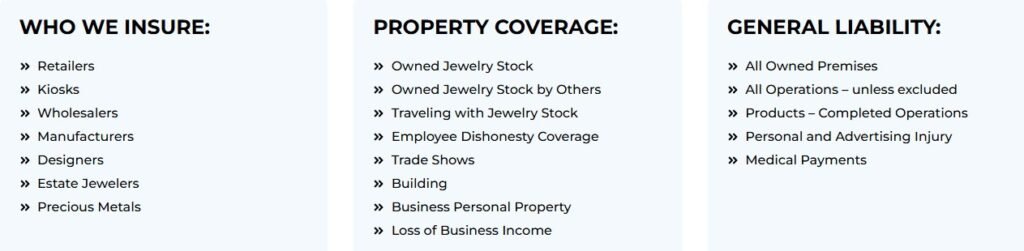
If your business also needs specialized protection for high-value inventory, retail premises, or collector assets, First Class Insurance is worth a look. The agency focuses on jewelers, valuable property, and specialty risks, with programs that can help owners protect stock, operations, and reputation with specialized coverage.