
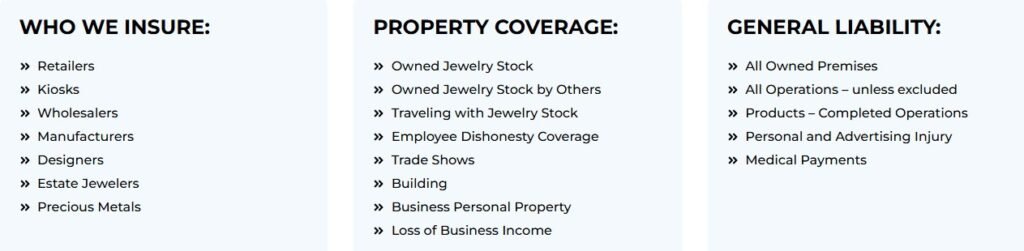
Running a successful jewelry business requires protecting more than just your physical inventory. While robust insurance, like a Jewelers Block insurance policy, safeguards against theft and damage, what protects your contractual obligations, employee integrity, and client trust? This is where surety bonds come in. They are essential three-party agreements that guarantee you will fulfill specific commitments, from completing a custom order to paying import duties. A bond acts as a financial promise, ensuring other parties are not left with losses if you fail to meet your obligations.
Understanding the different types of surety bonds is crucial for mitigating financial risks and unlocking growth opportunities. For instance, a fidelity bond protects against employee theft, which is a different risk than the one covered by a consignment bond for inventory on loan. This guide provides a practical roundup of the essential bonds every jeweler should know.
We will explain how each bond works, who needs them, and how they fit into a complete risk management strategy alongside specialized insurance for your jewelry store. By learning how these financial tools operate, you can build a more secure and reputable business, distinguishing yourself from competitors and building lasting confidence with clients and partners. We'll explore the key bonds you need to know, from contract and customs bonds to those specific to jeweler liability and appraisals.
1. Bid Bond (Construction and Supply Contracts)
A bid bond is a type of surety bond that protects a project owner (obligee) during a competitive bidding process. It provides a financial guarantee that the winning bidder (principal) will honor their bid and sign the contract at the proposed price. If the bidder backs out, the bond covers the project owner's losses, typically the difference between the defaulted bid and the next-lowest bid, up to the bond's penal sum. These are common in construction but also apply to large-scale supply contracts, making them one of the most frequently encountered types of surety bonds.

While seemingly outside the jewelry world, bid bonds are essential for jewelry businesses aiming for large institutional or government work. A jewelry wholesaler bidding on a $500,000 project to supply custom-made lapel pins for a national organization would likely need a bid bond. Similarly, a high-end custom jeweler competing to restore historical flatware for a government entity might be required to secure one.
Actionable Tips for Securing a Bid Bond
- Prepare Your Financials: Have organized financial statements, a detailed project portfolio, and resumes of key personnel ready before you even look at a bid. The surety company will underwrite your business's stability.
- Engage a Surety Early: Don't wait until the last minute. Start working with a surety provider early in the bidding process to get pre-qualified. This demonstrates seriousness and avoids delays.
- Price Accurately: Ensure your bid price includes all potential costs, including materials, labor, and a contingency. A low-ball bid you can't honor will lead to a bond claim and damage your reputation.
- Maintain Surety Relationships: A strong, ongoing relationship with your surety agent can simplify the process for future bids, as they will already be familiar with your business's financial health and capabilities.
2. Performance Bond (Contract Completion and Quality Assurance)
A performance bond is a type of surety bond that guarantees a contractor (principal) will complete a project according to the terms and conditions of their contract with the client (obligee). If the principal fails to deliver on their contractual obligations, the surety company steps in to either find another contractor to finish the job or compensate the obligee for the financial loss, up to the bond's full amount. This bond essentially insures the principal's performance, making it a critical tool for risk management in high-value projects.

For jewelry businesses, performance bonds provide assurance on significant orders and custom work. A jeweler contracted for a $100,000 antique restoration project for an estate would use a performance bond to assure the client of their ability to complete the delicate work as specified. Likewise, a wholesaler fulfilling a large, six-month supply agreement with a luxury retail chain might be required to secure one, guaranteeing consistent delivery and quality. This is different from standard jewelry store insurance, which covers theft or damage rather than contractual fulfillment.
Actionable Tips for Securing a Performance Bond
- Document Project Specifications: Before bonding, create a detailed contract that outlines every project specification, from material grades and stone clarity to timelines and finishing standards. Ambiguity is the enemy of a successful bond.
- Maintain Detailed Progress Records: Keep meticulous records, including photographs and written logs of project progress. This documentation is invaluable if a dispute or claim arises.
- Communicate Proactively: Inform both the client and the surety provider immediately about any potential delays or significant changes. Proactive communication builds trust and prevents minor issues from escalating.
- Ensure Adequate Cash Flow: The surety will assess your financial stability. Maintain sufficient cash flow to cover project costs without interruption, as this demonstrates your capacity to perform. Consider performance bonds for contracts exceeding $50,000 in value to protect both your business and your client.
3. Payment Bond (Subcontractor and Supplier Protection)
A payment bond is a type of surety bond that guarantees a project's prime contractor (principal) will pay their subcontractors, laborers, and material suppliers. It is a critical safeguard, often required alongside a performance bond on government projects (under the Miller Act) and many large private projects. This bond protects the project owner (obligee) from liens filed by unpaid parties and ensures that everyone who contributes to the project gets compensated, maintaining project harmony and supply chain integrity.
In the jewelry industry, a payment bond is vital for complex, multi-vendor projects. For instance, a jewelry manufacturer securing a $500,000 contract to produce wedding bands might need a payment bond to assure their gold refiners, diamond suppliers, and casting specialists of timely payment. Similarly, a custom jeweler subcontracting intricate setting and finishing work would use this bond to build trust with high-value artisan partners, ensuring the project proceeds without financial disputes.
Actionable Tips for Securing a Payment Bond
- Maintain Detailed Records: Keep meticulous records of all supplier agreements, invoices, and payments. This documentation is essential for the bonding application and for defending against potential claims.
- Communicate Payment Terms Clearly: Ensure all subcontractors and suppliers have a written agreement detailing payment schedules and terms. Transparency prevents misunderstandings that could lead to a bond claim.
- Track Lien Waivers: As you pay vendors, collect signed lien waivers. This proves payment and protects your business and the project owner from future claims of non-payment.
- Choose Projects Wisely: Consider payment bonds for any large project involving multiple external vendors or subcontractors. It’s a mark of professionalism and financial stability that can make you a more attractive prime contractor.
4. Maintenance Bond (Warranty and Post-Delivery Obligations)
A maintenance bond is a type of surety bond that guarantees a contractor, like a custom jeweler or repair specialist, will correct defects in workmanship or materials for a specified period after project completion. It functions as a financial warranty, assuring the client (obligee) that the artisan (principal) will uphold their post-delivery obligations. If the artisan fails to make necessary repairs under the warranty, the bond will cover the client's cost to hire someone else to fix the work, up to the bond's value. These are critical for building trust in high-value, intricate work.
For jewelry businesses, this bond directly addresses client concerns about long-term quality. A custom designer creating a complex engagement ring might secure a two-year maintenance bond to guarantee the setting's integrity. Likewise, a watchmaker specializing in restoring vintage timepieces could offer a one-year maintenance bond to assure clients that their intricate repair work is warrantied. This protection is a powerful marketing tool, distinguishing a business from competitors.
Actionable Tips for Securing a Maintenance Bond
- Define Warranty Parameters: Clearly outline in your client contract what the warranty covers (e.g., loose stones, faulty clasps) and what it excludes (e.g., normal wear and tear, accidental damage). This prevents disputes and clarifies the bond's purpose.
- Document Original Quality: Before delivery, take high-resolution photographs and write detailed descriptions of the finished piece. This documentation serves as a baseline to assess future claims for defects.
- Establish Clear Claim Procedures: Create a simple, documented process for customers to follow if they need to make a warranty claim. This shows professionalism and ensures issues are handled efficiently.
- Bond High-Value Work: Consider securing maintenance bonds only for projects exceeding a certain value threshold. This manages costs while still providing a premium guarantee for your most significant and complex creations.
5. Fidelity Bond (Employee Dishonesty and Theft Protection)
A fidelity bond is a specialized insurance product that protects a business (obligee) from financial losses resulting directly from fraudulent or dishonest acts committed by its employees (principals). Unlike many other types of surety bonds, it functions more like insurance, paying the employer for losses from theft, embezzlement, or fraud. For businesses handling high-value, portable inventory like jewelry, a fidelity bond is a critical layer of defense against internal threats. It covers everything from missing cash and stolen merchandise to forged documents and fraudulent electronic transfers.

The jewelry industry is particularly vulnerable to employee dishonesty. For instance, a retail jewelry store might discover an employee sold a $50,000 diamond ring without recording the sale, pocketing the cash. A fidelity bond would cover this loss. Similarly, a wholesale distributor could use a bond to protect against a manager systematically embezzling inventory over several months. While often included as a key part of a comprehensive Jewelers Block insurance policy, it can sometimes be secured as a standalone bond.
Actionable Tips for Securing a Fidelity Bond
- Opt for Blanket Coverage: If your budget allows, choose a "blanket" fidelity bond that covers all employees automatically rather than bonding specific individuals or positions. This avoids gaps in coverage as staff changes.
- Implement Strong Internal Controls: A bond is not a substitute for good practices. Implement dual-control procedures for cash handling, conduct regular and surprise inventory audits, and separate duties to reduce opportunities for theft.
- Report Suspicions Promptly: Most fidelity bond policies require immediate reporting of any suspected dishonest act. Delaying a report can jeopardize your ability to file a successful claim.
- Review Coverage Annually: Your risk exposure changes as your business grows. Review your bond's coverage limits each year to ensure they align with your current inventory value and number of employees.
6. Customs Bond (Import/Export Compliance and Tariff Guarantee)
A customs bond is a contract between three parties: the principal (importer), the surety company, and U.S. Customs and Border Protection (CBP). It guarantees that the importer will comply with all customs regulations and pay all applicable duties, taxes, and fees associated with imported goods. This type of surety bond is essential for businesses bringing merchandise into the United States, especially for high-value items like jewelry, gemstones, and precious metals. If the importer fails to pay required tariffs or penalties, the surety company pays CBP, and then seeks reimbursement from the importer.
For the jewelry industry, customs bonds are a daily necessity. A diamond wholesaler importing a multi-million dollar shipment from Antwerp, a brand bringing in finished watches from Switzerland, or a refiner importing raw gold for processing will all need a customs bond. Without it, shipments can be delayed or seized, disrupting the supply chain. This is distinct from a broader insurance for jewelry business policy, like Jewelers Block insurance, which covers physical loss or damage, not regulatory compliance.
Actionable Tips for Securing a Customs Bond
- Work with an Expert Broker: Partner with a customs broker who has deep experience in jewelry and precious metal import regulations. They can help navigate complex rules and ensure you have the right bond type.
- Know Your HS Codes: Understand the specific Harmonized Tariff System (HS) codes for your products. Incorrect classification is a common reason for fines and delays.
- Maintain Meticulous Records: Keep detailed documentation of product origins, valuations, weights, and quality appraisals. Accurate records are your best defense against compliance issues.
- Choose the Right Bond Type: If you import frequently (more than a few times a year), a "continuous bond" is more cost-effective than getting a "single entry bond" for each shipment.
7. Notary Bond (Document Authentication and Fraud Protection)
A notary bond is a type of surety bond required for individuals commissioned as a notary public. It protects the public from financial harm resulting from a notary's negligence or intentional misconduct. If a notary improperly authenticates a signature or violates notarial law, leading to a financial loss for a third party, the injured party can file a claim against the bond to recover their damages up to the bond's penal sum. Unlike many other types of surety bonds, notary bonds are typically inexpensive and carry a low penal sum, as they are mandated by state law to ensure a minimum level of public protection.
For a jewelry business, having an in-house notary can streamline many operations, but it also introduces risk. A notary bond is essential if an employee is notarizing high-value documents. For instance, an appraiser notarizing an authentication certificate for a rare gemstone or a manager authenticating ownership transfer papers for a $100,000 diamond must be bonded. This protects both the client and the jewelry business from claims of fraud or error in the notarization process.
Actionable Tips for Managing Notary Bonds
- Ensure All Notaries are Bonded: Verify that every commissioned notary public on your staff maintains a current, active notary bond as required by your state. This is a non-negotiable legal requirement.
- Train Staff on Proper Procedures: Conduct thorough training on correct notarial acts, including witness requirements, proper ID verification, and record-keeping. Mistakes can lead directly to claims.
- Maintain a Clear Audit Trail: Keep a detailed, secure log of every document notarized. This journal is often legally required and is your first line of defense against a claim of misconduct.
- Consider Higher Coverage: If your business regularly notarizes documents related to high-value transactions, consider purchasing errors and omissions (E&O) insurance in addition to the state-mandated bond for greater protection.
8. Jeweler's Liability Bond (Professional Liability for Custom Work)
A jeweler's liability bond is a specialized type of surety bond designed to protect clients (obligees) from financial loss resulting from a jeweler's (principal's) professional errors or faulty workmanship. Unlike general liability insurance that covers bodily injury or property damage, this bond addresses claims tied directly to the jeweler’s craft, such as design flaws, incorrect sizing, or damage during a repair. It acts as a financial guarantee of professional competence, reassuring clients that their custom projects are protected against specific workmanship failures.

For jewelry businesses focused on custom design or high-value restoration, this bond is a critical tool for building client trust. For instance, a custom designer creating a $50,000 engagement ring might secure a bond to cover potential claims of stone-setting defects. Likewise, a bench jeweler specializing in antique restoration could use one to guarantee the quality of their delicate repair work. This specific type of surety bond directly addresses the unique risks associated with handcrafted jewelry. While a Jeweler's Liability Bond addresses specific professional responsibilities, comprehensive protection often requires broader professional liability coverage to protect against malpractice claims.
Actionable Tips for Securing a Jeweler's Liability Bond
- Document Everything: Maintain meticulous records, including detailed photographs and notes, for every stage of a custom project, from initial design to final delivery.
- Get Written Approval: Before starting fabrication, obtain the client's signed approval on final designs, material specifications, and quality standards to prevent misunderstandings.
- Set Clear Expectations: Communicate openly with clients about project timelines, potential challenges, and what can be realistically achieved, especially with delicate restoration work.
- Consider Project Value: As a best practice, consider securing a bond for all individual projects valued over a certain threshold, such as $5,000, to protect both your client and your business's reputation.
9. Consignment Bond (Inventory Consignment and Agent Accountability)
A consignment bond is a specific type of commercial surety bond that guarantees a business (the principal) receiving goods on consignment will properly account for them. It protects the owner of the goods (the obligee), such as a designer or wholesaler, against financial loss if the consigned items are lost, stolen, sold without payment, or otherwise mishandled by the consignee. This bond ensures the consignor is compensated for their property, making it a critical tool for building trust in consignment relationships, especially when dealing with high-value items.

For the jewelry industry, where consignment is a common practice, this bond is invaluable. A high-end boutique holding $200,000 in inventory from several local designers could be required to secure a consignment bond to protect those artists. Similarly, a jewelry wholesaler accepting rare collections of antique jewelry for distribution would use this bond to assure collectors of their financial responsibility. It provides a formal guarantee that goes beyond a simple handshake agreement. While essential, this bond often complements a comprehensive Jewelers Block insurance policy, which provides broader coverage for the entire inventory.
Actionable Tips for Managing Consignment Inventory
- Establish Detailed Agreements: Create a written consignment agreement for every transaction. It should specify the items, their values, the consignment period, and the exact terms for payment and return.
- Maintain Meticulous Records: Keep precise inventory records with detailed descriptions, photographs, and condition reports for all consigned items upon receipt and return. Separate these records from your owned inventory.
- Conduct Regular Audits: Perform frequent physical inventory audits to reconcile your records with the actual items on hand. This helps identify discrepancies early.
- Report Issues Immediately: If any consigned item is lost, damaged, or stolen, report it to the consignor and the surety company without delay. Prompt communication is key to a successful claim process and maintaining trust.
10. Appraisal Bond (Gemstone and Jewelry Valuation Accuracy)
An appraisal bond guarantees the accuracy and integrity of jewelry and gemstone valuations provided by a certified appraiser (principal). It protects the appraiser's clients (obligees) against financial losses resulting from negligent or fraudulent valuations that might be used for insurance coverage, estate settlements, or high-value sales. If an appraisal is proven to be inaccurate due to professional misconduct, the bond provides a financial recourse for the affected client, ensuring trust and accountability in the valuation process.

For the jewelry industry, this bond is a mark of professionalism. A certified gemologist appraiser might be bonded for $100,000 to provide confidence when valuing estate jewelry, or an appraiser specializing in high-net-worth collections could hold a $250,000 bond. This type of surety bond is critical for building a reputation for reliability, a key asset for anyone offering valuation services or requiring them as part of their insurance for a jewelry store.
Actionable Tips for Securing an Appraisal Bond
- Earn Formal Certifications: Obtain gemology credentials from respected institutions like the GIA or AGS. This is often a prerequisite for bonding and can lead to more competitive rates.
- Document Your Methodology: Thoroughly document every step of your appraisal process, including photos, testing results, and market research. Clear documentation is your first line of defense against claims.
- Use Standardized Forms: Employ standardized appraisal forms with detailed item descriptions. Consistency and detail reduce the risk of misinterpretation and disputes.
- Maintain Professional Liability Insurance: An appraisal bond protects your clients, while professional liability insurance (Errors & Omissions) protects you. Having both is a sound risk management strategy.
- Update Your Coverage: As your appraisal volume and the value of items you assess grow, regularly review and increase your bond coverage to match your exposure.
Comparison of 10 Surety Bond Types
| Bond Type | 🔄 Implementation Complexity | ⚡ Resource Requirements | ⭐ Expected Outcomes | 📊 Ideal Use Cases | 💡 Key Advantages |
|---|---|---|---|---|---|
| Bid Bond (Construction and Supply Contracts) | Low–Medium — quick issuance but requires underwriting | Basic financials, bid documentation; small fee; surety approval (24–48h) | Guarantees bidder will enter contract at bid price; reduces non-serious bids | Government/museum procurement and large institutional tenders | Enhances bid credibility; low cost; fast approval |
| Performance Bond (Contract Completion and Quality Assurance) | High — detailed underwriting and ongoing compliance | Strong financials, progress reporting, higher premium (1–3%); bonds may equal 50–100% of contract | Guarantees completion to specs and timeliness; surety will finish or pay | Large custom orders, multi-month manufacturing, retail chain supply | Transfers completion risk; enables larger contracts; builds client confidence |
| Payment Bond (Subcontractor and Supplier Protection) | Medium–High — coordination with many vendors required | Vendor lists, payment schedules, documentation; premium similar to performance bond | Guarantees payment to subcontractors and suppliers; prevents non-payment losses | Multi-supplier manufacturing, subcontracted restoration, complex supply chains | Protects supply chain, reduces disputes, enables credit extension |
| Maintenance Bond (Warranty and Post-Delivery Obligations) | Low–Medium — defined warranty period and exclusions needed | Written warranty terms, repair records; moderate premium (≈1–2%) | Guarantees repair/replacement for workmanship defects during warranty | Watch repairs, restorations, high-end custom pieces with post-sale service | Builds trust, differentiates premium services, reduces disputes |
| Fidelity Bond (Employee Dishonesty and Theft Protection) | Low — standard underwriting but requires internal controls | Employee rosters, loss controls, background checks; premium (0.5–2%), deductibles apply | Covers losses from employee theft, embezzlement, forgery | Retail stores, wholesalers, repair shops with employee access to inventory | Protects against internal fraud; affordable; may satisfy lenders |
| Customs Bond (Import/Export Compliance and Tariff Guarantee) | Medium — compliance-heavy; documentation critical | CBP broker, accurate HS codes, import records; single vs continuous bond; premium 0.5–1% | Guarantees duty/tax payment and regulatory compliance; speeds clearance | Regular importers of diamonds, gemstones, precious metals | Prevents duty surprises; enables expedited clearance; cost-effective continuous bonds |
| Notary Bond (Document Authentication and Fraud Protection) | Low — minimal cost and routine filing | State filing, low premium ($50–$200), trained notaries | Covers improper or fraudulent notarization claims within limits | Stores or appraisers with in-house notaries, transaction authentication | Very low cost; required in many states; protects document authenticity |
| Jeweler's Liability Bond (Professional Liability for Custom Work) | Medium — trade-specific underwriting and evidence of practice | Work records, client approvals, photos; premium based on history (0.5–2%) | Covers workmanship/design defects and specification failures | Custom designers, bench jewelers, restoration specialists | Protects professional reputation; tailored to jewelry workmanship risks |
| Consignment Bond (Inventory Consignment and Agent Accountability) | Medium — requires rigorous inventory controls and audits | Detailed inventory systems, periodic reconciliations; premium (1–3%) | Guarantees return/payment for consigned items; covers loss/theft/damage | Retailers hosting designer consignments, showrooms, consignment agents | Enables consignment model, builds consignor trust, reduces litigation risk |
| Appraisal Bond (Gemstone and Jewelry Valuation Accuracy) | Medium — credential verification and methodological evidence | Appraiser credentials, documented methodology, sample appraisals; premium varies ($500+) | Guarantees accuracy of valuations; compensates for negligent or fraudulent appraisals | Certified appraisers, estate valuations, auction houses, insurance appraisals | Enhances credibility, often required for professional practice, supports fee justification |
Integrating Bonds and Insurance for Complete Protection
The world of surety bonds can seem complex, but understanding the core purpose of each type is the first step toward building a resilient jewelry business. As we've explored, the various types of surety bonds serve distinct but equally important functions. From the foundational Bid, Performance, and Payment Bonds that secure large contracts to the more specialized Fidelity, Customs, and Appraisal Bonds that protect specific operational facets, each one acts as a guarantee of your professional integrity and financial responsibility.
This is not about simply collecting bonds; it's about strategic risk management. A Fidelity Bond, for example, directly addresses the internal threat of employee dishonesty, a significant risk in an industry built on high-value, portable assets. Similarly, a Customs Bond is not just a piece of paper but a key that unlocks international supply chains, ensuring your imported gems and finished pieces move smoothly across borders. These bonds are promises made to your clients, partners, and government agencies, reinforcing your reputation as a trustworthy and dependable operator.
The Synergy of Bonds and Insurance
It is crucial to recognize that surety bonds and insurance for your jewelry business are not interchangeable. They are two different pillars supporting the same structure.
- Surety Bonds: These are three-party agreements that protect your clients and partners from potential financial loss if you fail to meet your obligations. Think of a Consignment Bond protecting a designer who entrusts you with their collection.
- Jewelry Store Insurance: This is a two-party contract that protects your business from direct losses. This includes coverage for events like theft, fire, natural disasters, or liability claims from a customer slipping in your showroom. A comprehensive Jewelers Block insurance policy is the industry standard for this protection.
A common scenario highlights this difference perfectly. A Fidelity Bond would reimburse a client if your employee stole a piece of jewelry left for repair. However, a comprehensive Jewelers Block insurance policy would cover the loss if an external party robbed your store overnight. Without both, your business remains exposed.
Key Insight: A truly secure business does not choose between surety bonds and insurance. It layers them. This combination creates a defense that covers contractual obligations, internal threats, and external perils, leaving no weak points for financial or reputational damage.
Actionable Next Steps for Your Business
Moving forward, the goal is to create a tailored protection plan. Start by auditing your specific business activities. Do you frequently take on custom design projects that might benefit from a Jeweler's Liability Bond? Are you expanding your import operations, making a Customs Bond essential? Answering these questions will clarify which types of surety bonds are most relevant to your operations.
Simultaneously, review your current insurance coverage. A standard business owner's policy is rarely sufficient for the unique risks of the jewelry industry. This is where a specialized policy like Jewelers Block insurance from an experienced provider like the First Class Insurance Jewelers Block Agency becomes indispensable. By matching the right bonds to your promises and the right insurance to your assets, you are not just buying protection; you are investing in your business's longevity, credibility, and capacity for growth.
Ready to create a complete shield for your high-value assets? While surety bonds protect your promises to others, a specialized insurance policy protects your business from the unexpected. First Class Insurance offers deep expertise in Jewelers Block insurance, crafting policies that cover your unique risks from vault to display case. Secure a policy that’s as meticulously designed as your finest pieces by visiting First Class Insurance to get a quote for Jewelers Block today.