
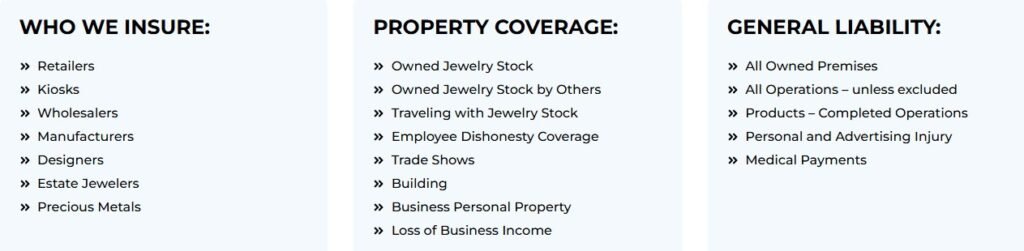
Think of your standard insurance policies—like your Jewelers Block or General Liability—as the sturdy safe in your back office. It’s built to handle everyday risks. But what happens when a catastrophic lawsuit hits? That’s like a flash flood powerful enough to sweep the entire safe away.
This is exactly what umbrella insurance covers: the devastating financial gap left when your primary policies are completely drained. It’s the watertight vault room built around your safe, ready for the worst-case scenario.

Why Jewelers Need Protection Beyond Standard Policies
For jewelers, high stakes and high liability are just part of the job. Your core policies are your first and most vital line of defense, designed for common incidents like theft, property damage, or a customer slipping in your showroom. But every one of those policies has a hard limit.
When a major liability claim blows past that limit, your business—and even your personal assets—are left dangerously exposed. This is where umbrella insurance becomes absolutely essential. It’s not a replacement for your primary coverage; it’s a powerful second layer of financial security. As the premier First Class Insurance Jewelers Block Agency, we see this as a crucial part of any complete protection plan.
Think of it this way: Your general liability policy might cover the first $1 million of a lawsuit. But in an age of multi-million dollar legal verdicts, that’s often just a drop in the bucket. An umbrella policy adds millions more in coverage, acting as a critical safety net to keep a single lawsuit from destroying your life's work.
Understanding Your Liability Exposure
The truth is, the risk of a massive liability claim is growing. More business owners are waking up to the threat of lawsuits that far exceed their standard policy limits, which is why the market for this extra protection is expanding so quickly. For a jeweler managing high-value assets and serving an affluent clientele, this isn't a luxury—it's a necessity for any insurance for a jewelry store.
Of course, the best defense is a good offense. While umbrella insurance provides a crucial backstop after an incident, a truly secure business also invests in proactive risk security management to prevent claims from happening in the first place. A complete strategy combines smart prevention with an unbreakable financial backup plan.
To see exactly where your standard policies stop and an umbrella policy takes over, this table offers a quick, high-level look.
Standard vs. Umbrella Coverage at a Glance
| Typically Covered by Standard Policies | Typically Covered by Umbrella Policies |
|---|---|
| Day-to-day risks like slips, falls, property damage, and auto accidents. | Catastrophic liability claims that exhaust your primary policy limits. |
| Specific areas of liability, like General Liability or Commercial Auto. | Broad liability coverage that sits on top of multiple underlying policies. |
| Provides coverage up to a set limit (e.g., $1 million or $2 million). | Adds a significant layer of additional coverage (e.g., an extra $5 million to $25 million or more). |
| First line of defense for common, predictable claims. | Acts as a secondary, excess layer for severe, "once-in-a-career" events. |
This comparison makes it clear: standard policies are for the expected risks, but umbrella insurance is for the unexpected disasters that can threaten your entire business.
How Umbrella Insurance Layers Over Your Existing Coverage
Think of your business insurance as a security detail for your assets. Your primary policies—like Commercial General Liability (CGL) or a specialized Jewelers Block insurance—are your frontline guards. They’re built to handle the common, day-to-day risks you face.
But an umbrella policy works differently. It’s not on the front lines; it’s your emergency tactical team held in reserve.
This excess liability coverage only springs into action when a catastrophic claim completely overwhelms the limits of your primary policy. It doesn't replace your standard insurance for a jewelry business; it makes it exponentially stronger.
Without that extra layer, if a massive lawsuit blows past your primary limit, your business assets and future profits are next on the chopping block.
Visualizing the Layers of Protection
Imagine a nasty slip-and-fall in your showroom results in a huge lawsuit. Your CGL policy steps up, covering legal fees and settlement costs up to its limit—say, $1 million. But what happens when the final judgment comes in at $3 million?
This is where the layering really matters. The infographic below breaks down exactly how your coverage responds in sequence when a major claim hits.

As you can see, the lawsuit hits your standard policy first. Only after that coverage is completely drained does the umbrella policy activate to handle the rest. It’s the difference between a close call and a devastating financial blow.
How It Works With Multiple Policies
One of the best things about an umbrella policy is its reach. It doesn't just sit on top of one policy; it provides a single, high-limit layer of protection over several of your core liability coverages.
- Commercial General Liability (CGL): If that slip-and-fall in your store leads to a claim far beyond your CGL limit, the umbrella steps in.
- Commercial Auto Liability: An employee causes a multi-car pile-up while on a delivery, and the damages are massive. Once your auto policy limit is exhausted, your umbrella is there.
- Employer's Liability: This coverage, part of your workers' compensation policy, handles lawsuits from employees over work-related injuries. If a major judgment exceeds that policy's limit, your umbrella can respond.
By stretching across these different policies, an umbrella creates a unified shield for your entire jewelry store insurance portfolio. It’s a smart structure designed to protect you from a whole range of worst-case scenarios.
An umbrella policy is designed to activate only after the underlying primary insurance has paid its full limit. This is why insurers require you to maintain specific minimum liability limits on your primary policies, such as CGL and commercial auto, before they will issue an umbrella.
A Real-World Scenario for a Jeweler
Let's walk through a realistic situation to see just how this layering can save a jewelry business.
- The Incident: Your store hosts an exclusive evening event to show off a new collection. A server you hired spills a tray, causing a prominent guest to slip and suffer a career-ending injury.
- The Lawsuit: The guest sues your business for negligence. They’re seeking $4 million to cover medical expenses, lost lifetime income, and pain and suffering.
- The Primary Policy Responds: Your CGL policy has a $1 million limit. Your insurer puts up a defense, but the court awards the full $4 million. Your CGL pays out its maximum, $1 million.
- The Umbrella Policy Activates: You're now on the hook for the remaining $3 million—a figure that would bankrupt most businesses. But your $5 million commercial umbrella policy kicks in, covering the entire $3 million balance.
In this scenario, the umbrella policy single-handedly saved the business from total financial ruin. Without it, the owner would have been on the line for $3 million, almost certainly losing their business, inventory, and even personal assets. It’s a perfect example of why this coverage isn’t a luxury—it’s a necessity.
Choosing Between Commercial and Personal Umbrella Policies
For a jeweler, the line between your professional and personal life can get awfully blurry. Your reputation is your brand, and your personal assets are often deeply intertwined with the success of your business.
This is why you have to understand a critical distinction: commercial umbrella and personal umbrella policies are two completely separate shields. One absolutely cannot do the job of the other.
A commercial umbrella policy is built exclusively to protect your business. It adds another layer of liability coverage right on top of your primary business policies, like your Commercial General Liability (CGL) and commercial auto insurance.
On the other hand, a personal umbrella policy protects you and your family from liability claims that occur outside of your business operations. It sits over your homeowners and personal auto policies.
Relying on one to cover the other is a recipe for financial disaster. If a business-related lawsuit hits, your personal umbrella won't lift a finger. Likewise, if a guest is seriously injured at your home, your commercial umbrella offers zero protection. For many jewelers, holding both policies isn't just a good idea—it’s the only way to be truly secure.
Commercial Umbrella Scenarios for a Jewelry Business
The risks your jewelry store insurance needs to cover are unique and often involve staggering financial stakes. A commercial umbrella policy is designed to handle those catastrophic events that could blow right past your standard policy limits. That extra layer of what umbrella insurance covers can be the difference between staying in business and closing your doors for good.
Picture these scenarios where a commercial umbrella is your final line of defense:
- Multi-Vehicle Accident: Your employee is using a company van for a high-value delivery and causes a major pile-up on the freeway. The resulting injuries and property damage lead to lawsuits totaling $2.5 million. Your commercial auto policy has a $1 million limit. Your commercial umbrella would be there to cover the remaining $1.5 million.
- Libel Lawsuit: You launch an aggressive ad campaign that a competitor claims is defamatory, suing you for damaging their brand. A jury awards them $2 million. After your CGL policy’s advertising injury limit of $1 million is paid out, your commercial umbrella steps in to pay the rest.
- Private Event Injury: During an exclusive trunk show at a rented venue, a temporary display collapses and severely injures a high-profile client. The total liability claim climbs to $3 million. Your CGL covers the first $1 million, and your commercial umbrella handles the remaining $2 million.
Personal Umbrella Risks for a Jeweler
Just because your business is buttoned up doesn't mean your personal wealth is safe. As a successful business owner, you're often a more attractive target for personal liability lawsuits. These can spring from everyday situations that have nothing to do with your insurance for a jewelry store.
A personal umbrella policy is designed to protect your personal assets—your home, savings, and future earnings—from being seized to pay for a large judgment. For jewelers, whose personal and business finances can be linked, this protection is absolutely critical.
Think about these common personal risks:
- Serious Accident at Home: You host a summer party, and a guest slips on a wet patio, suffering a permanent spinal injury. The lawsuit results in a $2 million judgment. Your homeowners policy covers the first $500,000, and your personal umbrella policy is there for the remaining $1.5 million.
- Liability From Your Teen Driver: Your son borrows your car and causes a serious accident, injuring several people. The claims quickly blow past your personal auto liability limit of $500,000. Your personal umbrella provides the extra coverage needed to settle everything without you having to liquidate your assets.
- Charity Board Lawsuit: You volunteer on the board of a local nonprofit. If the board gets sued for mismanagement and lacks proper Directors & Officers (D&O) insurance, you could be held personally liable. A personal umbrella may offer a crucial layer of protection here. You can see how specialized insurers approach complex risks by exploring our work with providers like Lloyd's of London.

Surviving the Era of Nuclear Verdicts
There was a time when a $1 million liability limit felt like a fortress for your business. Today, it’s more like a picket fence trying to stop a tidal wave of what the legal world calls "nuclear verdicts"—jury awards so massive they can obliterate a business overnight.
For years, that million-dollar policy was the gold standard. But the ground has shifted beneath our feet. What was once considered solid protection is now often a dangerously thin layer against modern legal risks.

This isn’t just about big corporations anymore. Jury awards are exploding into the tens of millions, and that changes everything about how a jeweler needs to calculate risk.
The Rise of Multi-Million Dollar Judgments
The term “nuclear verdict” isn't just a dramatic phrase; it points to a very real surge in staggering jury awards against businesses of all sizes. The trend is frankly alarming. The median award rocketed to $44 million in 2023, more than doubling the $21 million figure from just 2020. This spike is a direct threat, as your standard policies are simply not built for this kind of financial impact. You can discover more insights about this trend and its market impact to get a clearer picture of the risks at play.
This means even a minor incident can now spiral into a financial catastrophe if you're not prepared. The days of treating a $1 million policy as a "set it and forget it" safety net are long gone.
A nuclear verdict is generally defined as a jury award that surpasses $10 million. These verdicts are often fueled by emotional appeals, painting the defendant company as a faceless corporation with deep pockets—regardless of its actual size or financial health.
Businesses like high-end jewelry stores are particularly vulnerable. Juries often perceive them as dealing in luxury goods for an affluent clientele, making them a prime target for attorneys seeking a massive payday.
How a Minor Incident Can Escalate
It's tempting to think these massive verdicts only happen to huge companies, but small businesses are increasingly caught in the crossfire. Let’s walk through how a simple, everyday risk can morph into a business-ending legal fight.
The Scenario:
A customer is browsing the displays in your showroom. An employee, rushing to help another client, accidentally bumps a free-standing display. The case topples, striking the customer and causing a complex leg fracture that requires multiple surgeries and a long, painful rehabilitation.
The Escalation:
- The Initial Claim: The customer’s medical bills quickly climb past $250,000. They hire an aggressive attorney who claims your store was negligent in its setup and employee training.
- The Lawsuit: The attorney files a lawsuit demanding damages not just for medical bills, but also for lost wages, future lost income, and immense pain and suffering. The total demand is $5 million.
- The Trial: In court, the attorney portrays your successful jewelry business as a wealthy corporation that put profits ahead of customer safety. The jury, swayed by the customer's story, returns a verdict for $3.5 million.
Your Commercial General Liability policy has a $1 million limit. It pays out its maximum, but you are still on the hook for the remaining $2.5 million. This is the exact moment a nuclear verdict can force you to liquidate your inventory, sell off property, and drain your personal assets just to stay afloat.
This is precisely the gap that umbrella insurance covers. It’s not a luxury; it’s a financial shield designed to absorb the crushing force of a judgment that would otherwise put you out of business for good. For any insurance for a jewelry business, it has become a non-negotiable part of survival.
Specific Coverages and Exclusions for Jewelers
So, what does an umbrella policy actually cover for your jewelry business? Getting this right is crucial. It’s the difference between having an ironclad safety net and finding out—after a disaster—that you have critical gaps in your jewelry store insurance.
Think of your umbrella policy as a backup generator for your liability coverage. It doesn’t create new power, but it kicks in with massive force when your primary sources are exhausted.

At its heart, umbrella insurance covers the catastrophic liability claims that blow past the limits of your primary policies. It’s an excess policy, sitting quietly in the background, waiting for a worst-case scenario to unfold.
What Umbrella Insurance Typically Covers
For a jewelry business, an umbrella policy extends your liability protection in three vital areas. These are the hotspots where lawsuits can quickly escalate into millions of dollars, completely overwhelming a standard policy.
- Bodily Injury Liability: This is for severe physical harm to someone on your property or because of your operations. Imagine a customer slips on a freshly polished floor in your showroom, suffering an injury that ends their career. Your umbrella is there for the massive settlement that follows.
- Property Damage Liability: This applies when your business causes major damage to someone else's property. Say your delivery driver has a brake failure and crashes through a neighboring art gallery. Your commercial auto policy might tap out fast, but the umbrella would cover the rest of the devastating repair costs.
- Personal and Advertising Injury: This protects you from claims like slander, libel, or copyright infringement. If a competitor claims your latest marketing campaign ruined their reputation and sues you for lost profits, your umbrella can cover the enormous judgment against you.
These three pillars are the bedrock of your umbrella coverage. When a claim drains your primary General Liability or Commercial Auto policy, the umbrella policy steps in to handle the overflow, right up to its own much higher limit.
A common mistake is thinking umbrella insurance covers everything. In reality, it’s a liability-focused policy that only extends what's already covered in your underlying policies. If a risk isn’t covered by your primary liability policy, your umbrella won’t touch it either.
What Is Typically Excluded
Knowing what’s left out is just as important as knowing what umbrella insurance covers. These exclusions are the boundaries of your protection and signal where you need other specialized coverage, like a comprehensive Jewelers Block insurance policy.

Common exclusions you’ll find in a commercial umbrella policy include:
- Professional Liability (Errors & Omissions): If you give a client a flawed appraisal on an antique diamond that leads to a huge financial loss, your umbrella policy won’t cover that lawsuit. You need a separate Errors & Omissions (E&O) policy for that kind of risk.
- Property You Own: Damage to your own building, inventory, tools, or equipment isn't covered here. That's the job of your commercial property policy or, more specifically, your Jewelers Block insurance.
- Intentional or Criminal Acts: Insurance is built for accidents. If you or your leadership deliberately cause harm or damage, it's excluded. No policy will cover intentional wrongdoing.
- War and Terrorism: Just like your primary policies, umbrella policies almost universally exclude losses from acts of war or terrorism.
By clearly understanding both the coverages and the exclusions, you can build a truly complete risk management strategy. It ensures all your policies—from your primary liability to your specialized insurance for a jewelry business—fit together without any dangerous gaps.
Jeweler's Umbrella Policy Coverage Checklist
To make this crystal clear, here’s a quick-reference checklist. Use this table to gut-check your current coverage and identify any potential blind spots in your risk management plan.
| Coverage Area | What It Protects Against (Example) | Common Exclusions |
|---|---|---|
| General Liability | A customer suffers a severe head injury after tripping over a display case, leading to a $2 million lawsuit. | Intentional acts, your own property damage, professional errors (like a bad appraisal). |
| Commercial Auto Liability | Your company vehicle causes a multi-car pileup, resulting in injuries and damages far exceeding your $1 million limit. | Damage to your own vehicle, intentional road rage incidents, personal use by an unauthorized driver. |
| Employer's Liability | An employee sues for negligence after a workplace accident, and the judgment exceeds your workers' comp liability limit. | Fines from regulatory bodies (like OSHA), claims covered exclusively under state workers' compensation laws. |
| Advertising Injury | A competitor sues for $1.5 million, claiming your new ad campaign copied their branding and caused reputational harm. | Deliberate copyright infringement, false advertising with knowledge of its falsity. |
This checklist isn't exhaustive, but it highlights the core function of an umbrella policy: to stand as a financial backstop for the most severe liability events your jewelry business could face. Reviewing it against your current policies with your broker is a smart first step toward ensuring you're truly protected.
Your Top Questions About Umbrella Insurance, Answered
When it comes to protecting your life's work, the right questions are your best defense. We’ve heard them all from jewelers just like you, so we’ve put together direct, no-nonsense answers to the most common questions about umbrella insurance.
How Much Umbrella Insurance Coverage Do I Really Need?
There’s no magic number here. The right amount is whatever it takes to protect the total value of your assets—both business and personal—from a catastrophic lawsuit. Think of it as building a financial firewall tall enough to contain any fire that comes your way.
To figure out how high that wall needs to be, start by adding up your net worth. You'll want to tally the value of your:
- Business Assets: Your inventory, of course, but also your store, equipment, and cash reserves.
- Personal Assets: This includes your home, investment accounts, savings, and any other valuable collections.
- Future Earnings: Don’t forget this one. A lawsuit can target your potential income for the next five to ten years.
Your total umbrella limit should be high enough to shield all of it. A specialist broker can walk you through this analysis to make sure your coverage matches the real-world liability risks your jewelry business faces.
Does a Commercial Umbrella Policy Cover Employee Lawsuits?
This is a common source of confusion, and the short answer is: only partially. A standard commercial umbrella policy will extend your Employer's Liability coverage, which is a component of your workers' compensation policy. This gives you extra protection if an employee sues you for negligence over a workplace injury and the judgment blows past your primary limit.
However, your commercial umbrella will not cover claims for things like:
- Wrongful termination
- Discrimination
- Harassment
- Wage and hour disputes
Those risks are handled by a completely different policy called Employment Practices Liability Insurance (EPLI). For true, 360-degree protection from employee lawsuits, you need both a solid umbrella policy and a dedicated EPLI policy working together.
How Does Umbrella Insurance Interact With Jewelers Block Insurance?
This is a critical distinction for every jeweler to understand. These two policies are designed for entirely different jobs—they complement each other, but they don't overlap.
Your Jewelers Block insurance is your frontline defense for your most valuable physical asset: your inventory. It’s a first-party property policy built to cover the loss of or damage to your stock from perils like theft, fire, or even mysterious disappearance.
In contrast, an umbrella policy is pure third-party liability coverage. It offers zero protection for your own property or inventory. Its only job is to protect you when you’re held legally responsible for hurting someone or damaging their property.
So, if your store gets robbed, your Jewelers Block insurance policy kicks in. If a customer has a life-altering fall in your store and sues you for millions, your umbrella policy steps in after your general liability limit is used up. They work in tandem, never in place of one another.
Is Umbrella Insurance Becoming More Expensive?
Yes, and for good reason. The entire insurance industry is scrambling to keep up with a massive spike in "nuclear verdicts"—huge, multi-million dollar legal judgments that are becoming more common.
In fact, the U.S. personal umbrella market is seeing such dramatic rate increases that its combined ratio is projected to hit nearly 200% in 2025. This trend shows just how profoundly these massive lawsuits are changing the game, turning umbrella coverage from a "nice-to-have" into an absolute necessity. You can read the full research on the personal umbrella market to see the data for yourself.
This market shift makes it more crucial than ever to lock in the right coverage. While premiums are going up, the cost of being underinsured in today's legal climate is infinitely greater.
Can I Get an Umbrella Policy Without Underlying Insurance?
Absolutely not. An umbrella policy, by its very nature, is "excess" coverage. It can only exist on top of a solid foundation of primary insurance policies.
Before any insurer will even quote an umbrella, they'll require you to have and maintain specific minimum liability limits on your foundational policies. These typically include:
- Commercial General Liability (CGL): Usually requires limits of at least $1 million per occurrence.
- Commercial Auto Liability: Similar requirements, often a $1 million combined single limit.
- Employer's Liability: Typically with minimums of $500,000 or $1 million.
Think of it like building a house. You can't put on the roof before the foundation and walls are in place. Your primary policies are that foundation, and the umbrella is the final, protective roof that covers everything. Getting the right insurance for a jewelry business starts by getting those layers right.
Don't leave your legacy exposed to a single bad day. As a leading First Class Insurance Jewelers Block Agency, we specialize in building the right layers of protection for your jewelry business, from a powerful Jewelers Block insurance policy to the umbrella coverage that secures your future. Let our experts design a program that gives you true peace of mind. Get a Quote for Jewelers Block today.