
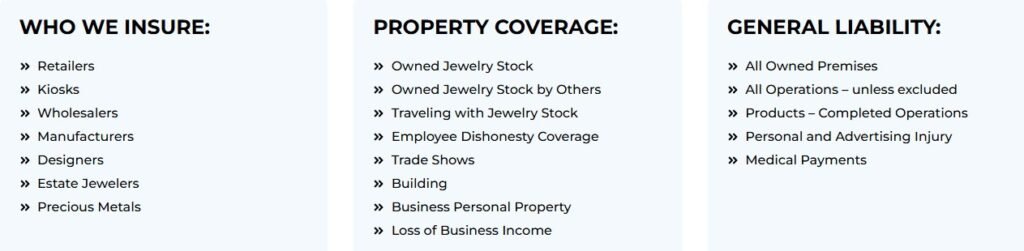
Don't let the name fool you. Inland marine insurance has nothing to do with boats or the ocean. Instead, think of it as a personal security detail for your most valuable inventory while it's in motion—traveling over land, not water.
This specialized coverage is designed to protect your jewelry the moment it leaves the safety of your store, filling a massive gap left by standard commercial property policies.
What Is Inland Marine Insurance for a Jewelry Business

Imagine your best pieces are heading to a trade show, a private client viewing, or simply being transferred between your locations. Inland marine coverage is the shield that protects those assets once they are outside the fixed protection of your showroom and vault.
This policy is the absolute cornerstone of any true Jewelers Block insurance plan. Its entire purpose is to create a protective bubble around your inventory, tools, and even your travel showcases, no matter where your business takes them.
Why the Strange Name?
The term "inland marine" trips a lot of people up, but it has a simple origin. Decades ago, most insurance centered on "ocean marine" policies that covered ships and cargo at sea. As commerce pushed inland using rivers, then railroads and trucks, insurers needed a new type of policy for goods in transit on land. They just kept the "marine" name.
This coverage was a game-changer for jewelers and wholesalers who constantly moved high-value stock. It’s a market that continues to grow right alongside today's complex global supply chains.
The Modern Jeweler's Essential Safeguard
For any jeweler, designer, or wholesaler today, your assets are almost never static. The business itself is defined by movement and risk that happens far beyond your store's four walls.
Inland marine coverage isn't just a nice-to-have policy add-on; it's the very heart of effective jewelry store insurance. It is built specifically to address the mobile nature of a jeweler's inventory—which is almost always their most valuable and vulnerable asset.
This is what makes it so different from your other business policies. Standard property insurance protects your building and what’s inside, but that protection slams to a halt the second an item leaves your front door. Inland marine picks up right where that policy leaves off.
It provides a seamless, continuous shield for your assets on the move, a critical distinction when you’re dealing with items like a flawless diamond ring. Of course, this insurance works hand-in-hand with smart physical safeguards, like knowing how to pack jewelry safely for shipment.

Navigating these policies takes a specialist's eye. An expert like First Class Insurance can help you pinpoint your unique transit risks and structure a Jewelers Block policy that ensures your livelihood is protected, no matter where your inventory is.
Core Protections Every Jeweler Needs
A standard commercial property policy is like a vault—it's incredibly strong, but it's bolted to your floor. The moment a diamond bracelet leaves your store for delivery, that vault's protection is useless. This is where inland marine insurance steps in.
Don't let the old-fashioned name fool you. Think of inland marine as the very engine of a Jewelers Block policy. It’s a mobile shield, built to protect your most valuable assets wherever they go, because the reality of our business is that inventory is constantly in motion.
Shielding Property in Transit
One of its most vital jobs is protecting your property in transit. This is what keeps you whole when you ship items to customers, receive them from suppliers, or even move them between your own stores.
Imagine you’ve just shipped a $50,000 custom engagement ring. The package gets stolen from the delivery truck or just disappears from the tracking system. It happens. Without this specific coverage, you're facing a devastating financial loss. With it, the policy responds, and your business is protected.
Safeguarding Property in Your Care with Bailee's Coverage
What happens when a client trusts you with their priceless family heirloom for a repair? In that moment, you become a "bailee," legally responsible for someone else's property. This creates a massive liability that your standard policies won't touch.
This is exactly why Bailee's Coverage is so critical. It’s designed to protect you if a customer's property is lost, damaged, or stolen while in your care.
If a fire breaks out in your workshop and destroys a client’s antique necklace left for resizing, this coverage is what pays to make your client whole. It’s about more than just money—it’s about protecting your hard-earned reputation.
Of course, the best claim is one that never happens. That’s why smart jewelers pair their insurance with strong proactive loss prevention strategies to reduce risk from the start.
Securing Inventory at Exhibitions and Trade Shows
Trade shows are essential for business, but they're also a hotbed of concentrated risk. You’re moving a huge amount of inventory to a temporary, public space, dramatically increasing its exposure.
Exhibition Coverage is the specific inland marine provision that protects your stock while it's away from your store for a show. This includes protection during:
- Transit to and from the event (often the riskiest part of the trip).
- The show itself, protecting against theft or damage right from your booth.
- Temporary storage, like in a hotel safe overnight.
A single theft at a show can turn a profitable weekend into a financial disaster. This coverage prevents that.
Protecting Your Movable Business Property
Finally, inland marine insurance covers more than just your saleable inventory. It also protects the essential tools and equipment you need to run your business—assets that are often valuable and portable.
Think about the specialized equipment you rely on:
- Laser welders
- Engraving machines
- Gemological and appraisal tools
It also covers things like traveling showcases, portable lighting, and displays you take to private viewings or pop-up events. These items are the lifeblood of your work, and they need protection whether they're at your store, on the road, or at a client's home. You can see just how unique and valuable these items can be when dealing with
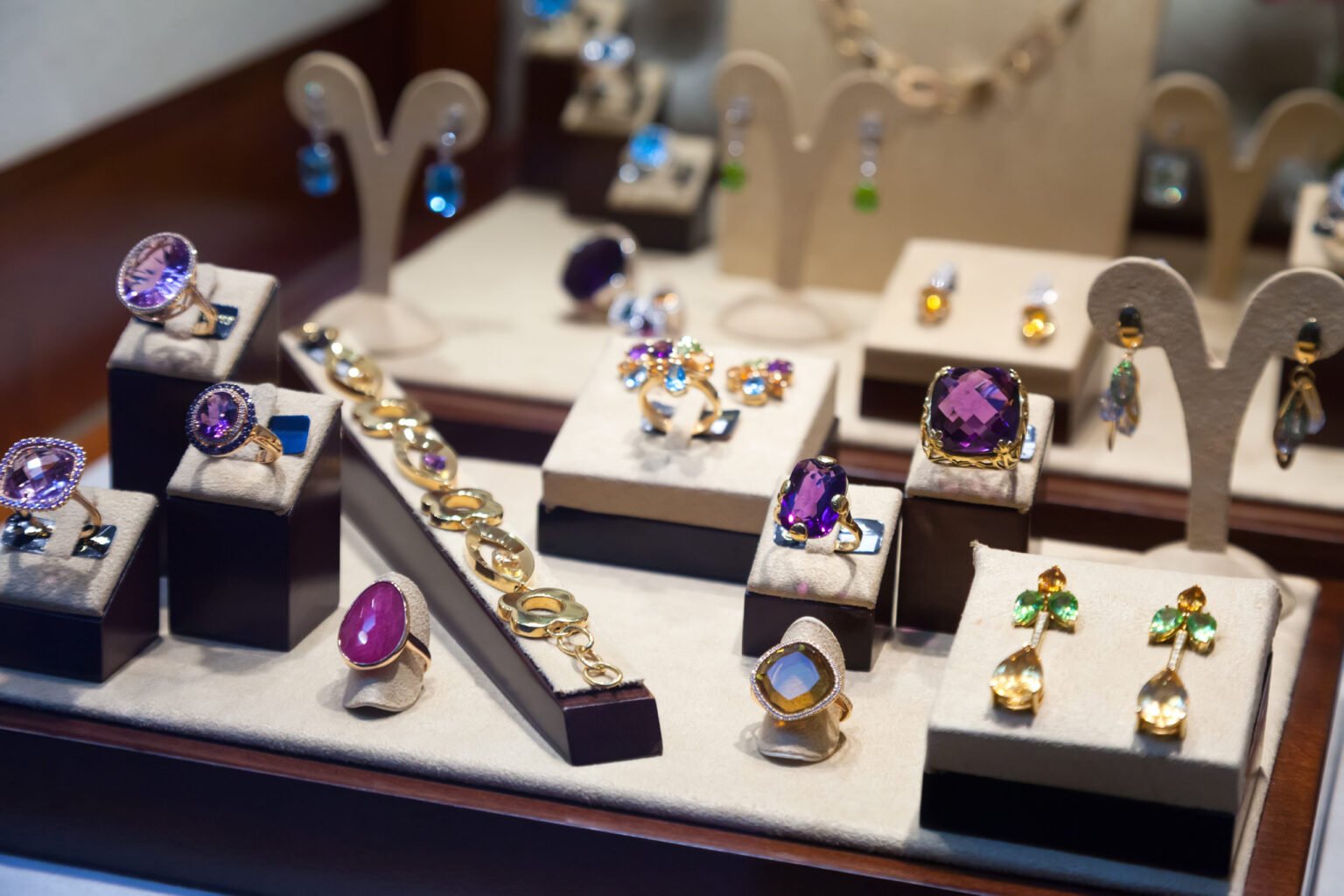
.
Understanding Mysterious Disappearance and All-Risk Policies
Beyond just covering your inventory in transit, the best Jewelers Block insurance policies are built on two powerful ideas every jeweler needs to grasp: "all-risk" and "mysterious disappearance." These aren't just industry jargon; they represent a completely different level of protection that addresses the real-world risks of your business.
Getting these concepts straight is the difference between a policy that might cover you and one that actually performs when a high-value piece simply vanishes.
What Is Mysterious Disappearance Coverage?
Let’s run through a nightmare scenario. It's the end of a long day, and you're doing the final inventory count. A tray of diamond studs comes up one short. You search everywhere—the safe, under the display counters, the repair bench. Nothing.
There's no broken glass, no sign of a break-in, and your security footage shows nothing out of the ordinary. The earring has just… disappeared.
This is mysterious disappearance. It’s the unexplained loss of an item where you can't definitively prove it was stolen or point to a specific cause.
Without this specific coverage, a standard policy would almost certainly deny your claim. Why? Because you can’t prove a covered event like theft occurred. Mysterious disappearance coverage fills this critical gap, acknowledging that small, high-value items can go missing in ways that are impossible to document. For any insurance for jewelry business, this is non-negotiable.
This kind of specific protection is just one part of how a strong inland marine policy creates a complete safety net for your inventory, no matter where it is.

As you can see, a truly comprehensive policy accounts for your assets whether they are on the move, in someone else's care for repair, or on display at an event.
The Power of an All-Risk Policy
To really see the value of mysterious disappearance, you first have to understand the two fundamental ways insurance policies are structured: "named-peril" and "all-risk." The difference is huge and directly impacts what does inland marine insurance cover for your business.
1. Named-Peril Policies
This policy type only covers losses from a specific list of events, or "perils," spelled out in the contract. This list typically includes things like:
- Fire
- Theft (with clear evidence)
- Lightning
- Windstorm
If your loss happens for any reason not on that list, you have no coverage. It’s a very restrictive approach that can leave you dangerously exposed.
2. All-Risk Policies
An "all-risk" policy flips the script entirely. It covers you for any type of loss or damage, except for the causes that are specifically excluded in the policy. This shifts the burden of proof from you (having to prove a covered event happened) to the insurance company (having to prove an exclusion applies).
This "open-peril" structure provides a far wider and more reliable safety net for a jewelry business. It’s the backbone of any quality Jewelers Block plan. While you'll still see exclusions for things like war, nuclear hazards, or intentional damage by you, the default position is "covered."
Think of it this way: a named-peril policy is like a security guard who only looks for threats on a short checklist. An all-risk policy is a guard tasked with watching for every possible threat unless they are specifically told to ignore one. This comprehensive approach is why working with a specialized firm like the First Class Insurance Jewelers Block Agency is so critical. They make sure your policy is built the right way from day one. When you're ready to see the difference, you can Get a Quote for Jewelers Block insurance tailored to these exact needs.
Common Exclusions in Your Jewelry Business Insurance
While a strong Jewelers Block policy feels like a suit of armor, it’s critical to know that it wasn't built to stop every single threat. Understanding your policy's boundaries—its exclusions—is just as important as knowing what it covers. Getting this wrong can lead to devastating financial surprises.
These exclusions aren't hidden traps. They exist because certain risks are so unique or catastrophic they need their own dedicated policy. Think of it this way: your homeowner's insurance protects your house, but you need a separate auto policy for your car. The same logic applies in the high-stakes world of jewelry.
What Is Typically Not Covered
Even the broadest "all-risk" policy will have a list of things it simply won't pay for. Knowing what's on that list is the first step to patching the holes in your financial defenses. While every policy is a bit different, a few common exclusions show up almost every time.
You can usually expect these risks to be excluded:
- Employee Dishonesty: If an employee steals from you, a standard Jewelers Block policy won't cover it. That’s a job for a separate Crime Insurance policy.
- War and Nuclear Events: Losses from massive disasters like war, terrorism (which often needs its own specific coverage), or nuclear hazards are universally excluded.
- Wear and Tear: Insurance is designed for sudden, accidental losses—not the slow, predictable decline from rust, pests, or gradual deterioration.
- Voluntary Parting: This one is tricky. If you’re scammed into willingly handing over a piece, maybe through a fake payment or a convincing con, it’s typically not covered.
This is exactly why a specialist matters. A general agent might not realize you need to add a Crime policy, leaving your insurance for a jewelry business wide open to a major internal theft.
The Critical Unattended Vehicle Exclusion
One of the most dangerous and misunderstood clauses is the unattended vehicle exclusion. This can completely void your claim if jewelry is stolen from a vehicle you weren't in. The specifics vary wildly between policies, but many will deny a claim if the doors were unlocked or if the merchandise was visible from the outside.
Imagine you run into a coffee shop for just two minutes, leaving a case of diamonds locked in the trunk. If a pro thief pops the lock and makes off with it, your claim could be denied flat-out, depending on the exact wording of this exclusion.
This is a massive vulnerability for any jeweler who travels for shows, appointments, or deliveries. Some policies are more forgiving than others, but you have to dig into the fine print to find out. A single clause like this shows why you need an expert from a firm like First Class Insurance in your corner. They know what to look for and can find an insurance for a jewelry store policy that protects you in the real world, not just on paper.
How Valuation and Endorsements Protect Your Bottom Line

Let's get straight to the point: just having insurance for a jewelry business is not enough. The moment of truth arrives after a theft or loss, and whether you recover fully or face a financial disaster comes down to one critical detail: valuation.
How your policy values your inventory is the engine that drives your claim payment. Get this wrong, and you could be left with a fraction of what you need to get back on your feet.
Agreed Value vs. Actual Cash Value
When it comes to insuring rare and high-value pieces, the valuation method is everything. You'll generally run into two types: Actual Cash Value (ACV) and Agreed Value. For a jeweler, the difference is night and day.
-
Actual Cash Value (ACV) is the default for most standard property insurance. It pays out the replacement cost of an item minus depreciation. That’s fine for an aging office desk, but it’s a catastrophe for a vintage Patek Philippe or an antique diamond that has only grown in value.
-
Agreed Value is the non-negotiable standard for jewelers. With this approach, you and your insurer agree on the exact value of your pieces before the policy is even active. If a covered loss happens, that’s the amount you're paid. No arguments, no deductions.
For any business dealing in custom, one-of-a-kind, or irreplaceable inventory, Agreed Value is an absolute must. It guarantees the true, real-world worth of your assets is locked in from day one.
Customizing Your Coverage with Endorsements
Think of your base Jewelers Block insurance policy like a fine, off-the-rack suit. It’s high-quality and provides solid protection, but it might be a little tight in the shoulders or loose around the waist. Endorsements are the custom tailoring that makes it a perfect fit for your unique business.
An endorsement is simply a formal modification to your policy. It’s the tool we use to close coverage gaps and dial in your protection so it matches precisely how you operate.
For a dynamic jewelry business, endorsements are how you ensure your coverage keeps pace. They allow you to add protection for unique risks or temporarily adjust your limits for special circumstances, ensuring your insurance for a jewelry store is always a perfect fit.
Inland marine insurance is the foundation for much of this protection, covering movable property and goods in transit over land. It shields high-value assets like jewelry shipments from theft, damage, or loss—absolutely crucial when you're moving stock between stores, suppliers, or repair shops. For instance, in the U.S. jewelry industry where we specialize, this coverage extends to your tools, showcases, and inventory on the move. Without it, a single hijacked shipment could be a business-ending event. For more on this, check out this report on the inland marine insurance market.
Practical Examples of Essential Endorsements
Endorsements are what turn a generic policy into a precision risk-management instrument. Here are a few examples that are vital for most jewelers:
-
Increased Exhibition Limits: You're heading to a major trade show like JCK Las Vegas with inventory that far exceeds your normal policy limit. An endorsement temporarily raises your coverage for the exact dates of the event, so you're fully protected.
-
Contractors and Processors Floater: Do you send stones to an outside setter or timepieces to a specialist for servicing? This crucial endorsement extends your coverage to protect your property while it’s in someone else’s hands.
-
Travel and Entertainment: If your business involves meeting high-net-worth clients for private viewings outside your store, this endorsement makes sure your inventory is covered during those high-stakes appointments.
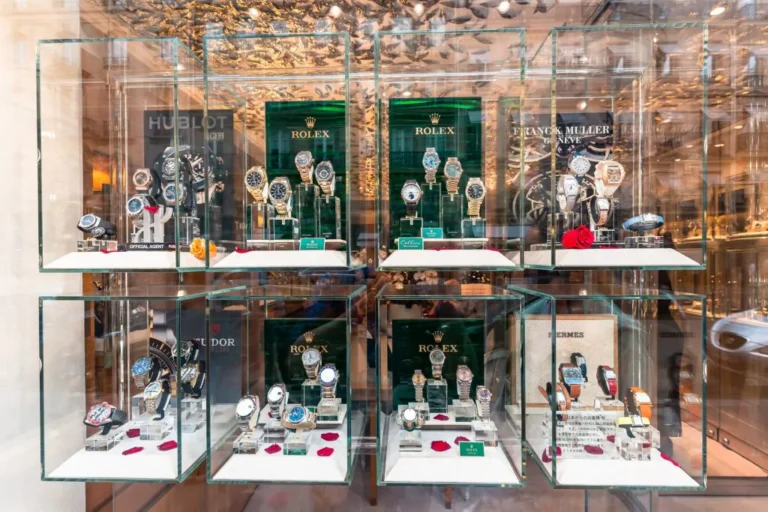
This is exactly why partnering with a specialist is so important. An expert at the First Class Insurance Jewelers Block Agency knows the right questions to ask and which endorsements are necessary to shield your specific business model—whether you’re a custom designer or a dealer in high-value luxury watches.
Get a Quote for The Right Jewelers Block Insurance
Knowing what a Jewelers Block policy is represents the first hurdle. The real challenge is turning that knowledge into a bulletproof shield for your business. Finding the right insurance for a jewelry store comes down to asking the tough questions—and knowing a good answer when you hear one.
This isn’t just about replacing a stolen ring. It's about protecting your entire financial future and the reputation you’ve worked so hard to build. Choosing your insurance partner is one of the biggest business decisions you'll ever make.
Key Questions to Ask Your Insurance Provider
Before you even think about signing a policy, you need to put it to the test. Arm yourself with a few non-negotiable questions and don't be satisfied with vague, hand-wavy responses. Demand specifics.
Your conversation should get right to the point:
- Is mysterious disappearance coverage baked into the policy, or is that a costly add-on?
- How will you value my pieces in a claim? Is it Agreed Value or the much lower Actual Cash Value?
- What are the exact terms of the unattended vehicle exclusion? I need to know the fine print.
- Does this policy automatically cover property in my care (Bailee's) for client repairs?
- Can you easily add endorsements to cover pieces with outside contractors or for a high-value exhibition?
Asking these questions does more than just get you information—it’s a test of your provider’s expertise. A true specialist, like the team at First Class Insurance Jewelers Block Agency, will have clear, confident answers ready. They know your risks inside and out.
The First Class Insurance Advantage
With over 30 years of experience focused squarely on protecting jewelers, First Class Insurance is more than a provider; we’re your partner. Our specialized approach gives you a direct line to premier domestic and international underwriters, making sure your insurance for a jewelry business is both rock-solid and affordable. We know you can’t wait, which is why we deliver most quotes within 24 hours.
There’s a reason inland marine insurance is the go-to for jewelers. It’s built for the unique risks of high-value goods in transit, which can account for a huge slice of industry losses. In North America, U.S. jewelers face transit risks worth billions every year—a threat we specialize in neutralizing with comprehensive Jewelers Block policies. Today's best policies are even using AI to spot fraud and cut claims processing times by up to 50%. You can dig deeper into these trends in the latest inland marine market research.
The next step is simple. Don't leave your life's work exposed for another day. Contact our team to Get a Quote for Jewelers Block insurance built specifically for the realities of your business.
Common Questions, Answered
When it comes to Jewelers Block insurance, the fine print is where your protection lives or dies. Let's tackle a few real-world scenarios that every jeweler worries about and get you some straight answers.
Is My Jewelry Covered if It Is Stolen from My Car?
This is one of the most common—and costly—blind spots for jewelers. The answer is almost always, "it depends on the fine print." Most standard policies have a glaring unattended vehicle exclusion, which means if your car is unattended when the theft happens, you get nothing.
Don't let this be a surprise. Some exclusions are absolute, while others are more forgiving. This is exactly where an expert at First Class Insurance can make all the difference, helping you find a Jewelers Block insurance policy with stronger terms or an endorsement that protects your inventory on the road.
Does Inland Marine Cover a Customer's Ring That I Am Repairing?
Yes, and this is non-negotiable for a serious jewelry business. This exact situation is what Bailee's Coverage was built for. The moment you accept a customer's property for repair or appraisal, you become the "bailee," making you legally and financially responsible for it.
Proper jewelry business insurance isn't complete without it. If that customer's piece is lost, damaged, or stolen from your shop, this coverage steps in to make it right. It protects your client, your reputation, and your bank account all at once.
How Is Jewelers Block Different from Standard Insurance?
Think of a standard business policy like a simple alarm system on your storefront door. It only protects one fixed location. A Jewelers Block policy, on the other hand, is a full-blown security detail that follows your inventory everywhere it goes. It’s built on inland marine principles but is custom-designed for the high-stakes world of the jewelry trade.
A Jewelers Block policy isn't just one type of coverage; it's a bundle of essential protections wrapped into a single, seamless jewelry store insurance plan. It guards your inventory in the vault, in transit, at a trade show, and even covers your customers' property, often on an "all-risk" basis that can include mysterious disappearance.
This bundling is what truly sets it apart. It directly answers what does inland marine insurance cover by taking its core concept—protecting mobile property—and applying it to every unique risk your business faces. Building a policy this comprehensive isn't a DIY job; it demands an expert's touch.
Your inventory is your livelihood. Protecting it requires specialized expertise. The team at First Class Insurance has spent decades building the exact policies jewelers need. To get started, Get a Quote for Jewelers Block today.