

A customer asks for a “brilliant cut diamond,” your sales associate nods, and the memo line on the repair envelope says the same thing. That sounds harmless until the stone is an oval, the appraisal says only “brilliant cut,” and a claim later depends on whether anyone can prove what was in stock.
That gap shows up every day in jewelry businesses. Consumers use “brilliant cut” as if it means “round diamond.” In trade use, that shortcut creates problems in valuation, intake records, appraisals, staff training, and Jewelers Block insurance schedules. If you sell, buy, appraise, ship, or insure diamonds, you need the term used correctly.
From a gemology standpoint, brilliant cut is about facet architecture built for light return. From an operations standpoint, it's about describing inventory precisely enough that replacement and coverage can be handled without argument. Those two issues belong together.
What Brilliant Cut Truly Means Style Not Shape
The first answer to what is brilliant cut is simple. It is a faceting style, not a shape.
A brilliant cut uses a facet arrangement designed to return light efficiently to the eye. Independent references note that “brilliant cut” describes a faceting style with a 57 to 58 facet pattern and that it can be applied to shapes beyond round, including ovals, cushions, and princess cuts, which is why listing only “brilliant cut” on an appraisal or policy schedule can be imprecise for jewelers and insurers (Wikipedia's overview of brilliant gemstone faceting)).

Think of style and shape as two separate labels
In practice, I explain it this way to store teams. Shape is the outline you see face-up. Round, oval, pear, cushion, princess. Cut style is the internal design language of the stone.
That distinction works like a car body and an engine. Two cars can share the same engine platform and still have different bodies. In the same way, multiple diamond shapes can use brilliant-style faceting even though they don't look alike in outline.
Here's where confusion starts at the counter:
- Round brilliant means a round shape using brilliant faceting.
- Oval brilliant means an oval shape using brilliant-style faceting.
- Princess cut is square or near-square in shape, but it can still belong to the broader brilliant family in how it handles light.
- Emerald cut is the clean contrast example because it uses a step-cut arrangement rather than a brilliant-style facet pattern.
Why jewelers should care about the distinction
If your staff says “brilliant” when they mean “round,” customers leave with incomplete information. If your inventory system says “brilliant” without the shape, your records are weaker than they should be. If an appraisal uses only that phrase, a replacement jeweler may have too much room to interpret what counts as comparable.
Practical rule: Record both the shape and the cut style, then add the grading language and proportions when available.
That approach helps in three places at once:
- Sales training gets cleaner because staff can explain sparkle without confusing shape.
- Inventory valuation gets tighter because stock descriptions are easier to match to actual market comparables.
- Insurance documentation becomes more defensible because the item scheduled is specific, not generic.
The term “brilliant cut” has a real gemological meaning. It just doesn't tell the whole story by itself.
The Anatomy of Light Performance
The reason brilliant faceting matters is optical behavior. The stone isn't sparkling by accident. A well-made brilliant cut is a controlled light system.
GIA defines cut as how a diamond interacts with light and notes that every round brilliant has 57 or 58 facets. The light effects assessed include brightness, which is white-light reflection, and fire, which is spectral color dispersion (GIA's diamond cut reference).

The parts that do the work
When I train sales or underwriting teams, I reduce the anatomy to five working parts.
- Table. The large top facet. This is the primary window where light enters and exits.
- Crown. The upper section above the girdle. It helps break light into visible color and affects how lively the stone looks.
- Pavilion. The lower section below the girdle. This is the return engine. If the pavilion is off, light leaks instead of returning upward.
- Girdle. The perimeter boundary separating crown and pavilion. It matters for durability and for how the stone is measured and set.
- Culet. The small facet or point at the bottom tip. Its presence or absence helps explain why some round brilliants are described as 57 facets and others as 58.
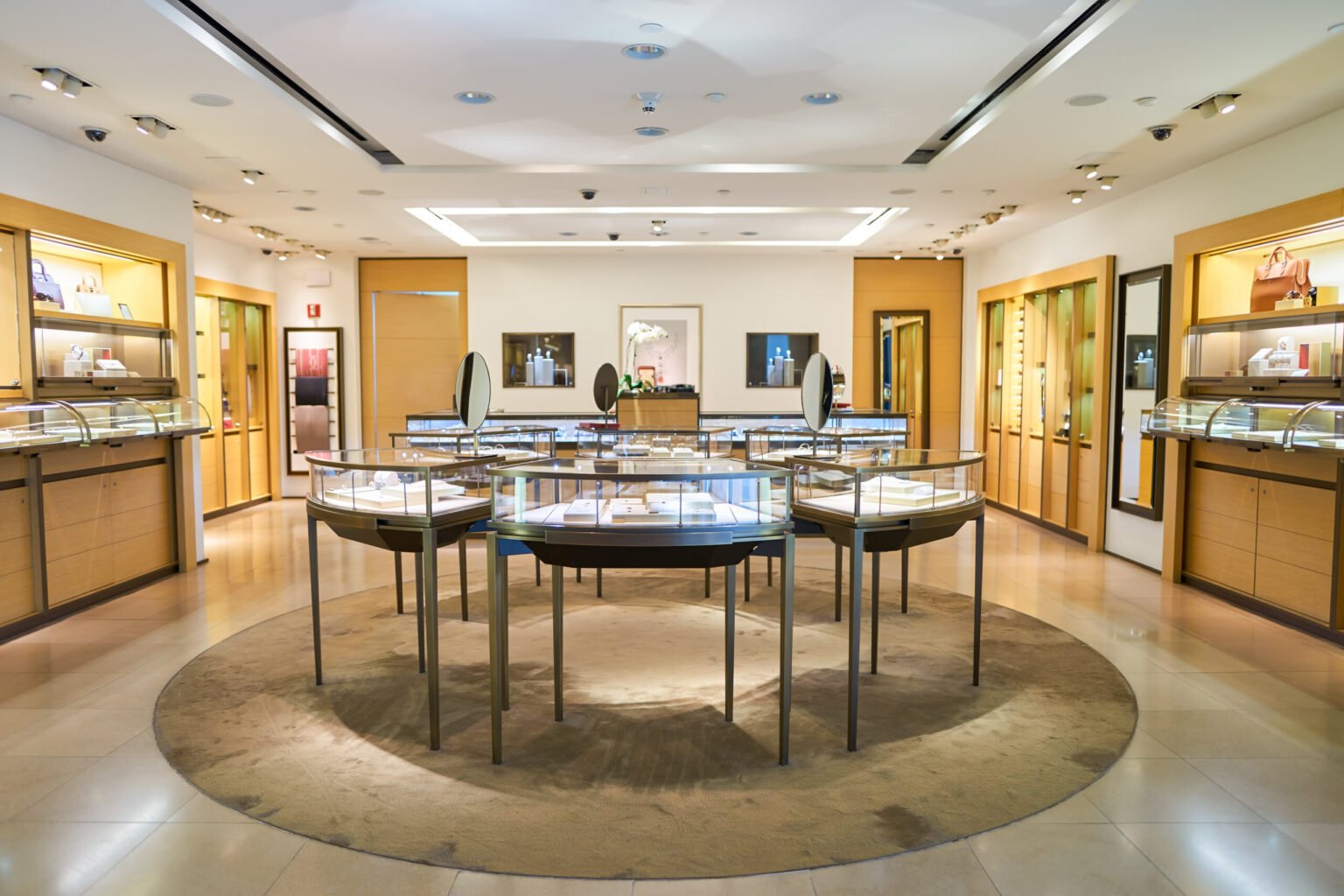
A quick visual helps if you're coaching staff or newer buyers: this jewelry inventory image is a good reminder that face-up beauty depends on what's happening inside the stone, not just on the outline seen in the showcase.
Why proportions became a science
The modern round brilliant didn't become the benchmark just because cutters preferred a round outline. It became the benchmark because cutters and researchers pursued a geometry that would maximize light return.
A major milestone came in 1919, when Marcel Tolkowsky published proportions designed to maximize light return. Later summaries of that formula describe an ideal round brilliant with a 53% table, 59.3% total depth, 34.5° crown angle, 40.75° pavilion angle, and 58 facets, which helped establish the brilliant cut as a mathematically optimized standard for sparkle (GIA's history of the round brilliant).
That matters commercially because “sparkle” isn't just a sales adjective. It's the visible result of proportion decisions.
A short video can help newer staff connect the terminology to what they see under showcase lighting.
A brilliant cut works best when the crown, table, and pavilion act like a coordinated mirror system. If one part is out of harmony, the whole stone loses impact.
For jewelers, that's why two diamonds with similar weight and color can perform very differently in the case.
A Guide to Brilliant Cut Variations
A sales associate pulls two one-carat stones for a client. Both are described as brilliant cuts. One is a round that reads bright from across the case. The other is an oval with a visible bow-tie under the same lighting. On paper, the category sounds similar. In inventory, pricing, training, and insurance documentation, the differences are material.
The round brilliant is the benchmark, but it is only one member of the broader brilliant family. Retail assortments usually include several modified brilliants because customers shop by outline, finger coverage, style, and price tolerance, not by faceting style alone. For store owners, that means "brilliant cut" should never function as a stand-alone inventory description.

Round versus the common modified brilliants
As noted earlier, the round brilliant remains the trade reference point because its facet arrangement is standardized and easier to discuss in formal cut terms. Modified brilliants use the same general goal of returning light, but they introduce shape-specific compromises that affect appearance, mounting decisions, and replacement matching.
| Shape | Typical selling appeal | Common trade-off | Operational note |
|---|---|---|---|
| Round brilliant | Familiar benchmark for sparkle | Tighter customer expectations for visible performance | Easiest shape to explain with standard cut terminology |
| Oval brilliant | Elongated look and strong finger coverage | Bow-tie can reduce face-up brightness | Shape and outline ratio should be recorded clearly |
| Pear brilliant | Distinct outline, popular for pendants and rings | Symmetry issues show quickly to the eye | Orientation should be documented for mounting and replacement |
| Cushion brilliant | Softer outline with a lively look in well-cut stones | Facet pattern and appearance vary widely | Sales staff should describe the actual stone, not the shape label alone |
| Princess | Square profile with bright appeal | Corners are more exposed in wear and setting | Condition and mounting style matter in claim review |
| Marquise | Elongated spread and dramatic silhouette | Bow-tie and pointed ends require closer inspection | Intake notes should include shape, points, and any existing wear |
What these variations mean in practice
Modified brilliant does not mean modified value in a simple up or down sense. It means the selling conversation changes. A round usually sells on predictable optics and broad market familiarity. An oval, pear, or marquise often sells on outline and spread. A cushion may appeal because it feels softer or less standardized. A princess can fit a clean, modern design brief but requires more care at the corners.
I advise jewelers to train staff on the trade-off attached to each shape. If an oval shows a bow-tie, say so and explain whether it is mild or distracting. If a princess has vulnerable corners, connect that to setting choice and wear risk. That kind of explanation improves close rates because it builds trust, and it reduces post-sale disputes because the client heard the limitation before purchase.
The same discipline matters in records.
For appraisals, stock books, and Jewelers Block schedules, "brilliant cut" is incomplete. Record the exact shape, measurements, and any shape-specific features that affect replacement, mounting, or loss exposure. That level of detail helps with valuation today and speeds claim handling if the stone ever has to be repaired, replaced, or matched.
How Cut Quality Is Graded and Priced
In the market, cut quality isn't an abstract concept. It changes salability, customer perception, replacement difficulty, and price justification.
For round brilliants, trade guidance converges on a narrow proportion window for strong performance: table about 53 to 58%, depth about 59 to 62.6%, crown angle about 34 to 35°, and pavilion angle about 40.6 to 41°. When those relationships work together, the diamond shows stronger brilliance, fire, and scintillation. When they don't, sparkle softens and light leakage becomes more likely (round brilliant proportion guidance).
What buyers and appraisers look for
Cut quality is where reports and real-world observation meet. On paper, proportions indicate whether the stone is likely to perform well. In person, the jeweler checks whether the stone looks lively, balanced, and bright under normal viewing.
That's why I tell store owners not to train staff to sell off the certificate alone. Reports matter, but customers buy what they see. A well-proportioned stone usually makes that conversation easier because the visible performance supports the paperwork.
A practical proportion table
Below is a working table for round brilliants. It's best used as a screening tool, not as a substitute for visual assessment.
| Parameter | Excellent Grade Range | Very Good Grade Range |
|---|---|---|
| Table | ~53–58% | Slightly outside the top preferred window |
| Depth | ~59–62.6% | Slightly outside the top preferred window |
| Crown angle | ~34–35° | Slightly outside the top preferred window |
| Pavilion angle | ~40.6–41° | Slightly outside the top preferred window |
The left column is the useful part. Those are the proportion ranges trade guides consistently treat as a strong zone for round brilliant performance. The right column stays qualitative here for a reason. The source material supports the top working window, but it does not supply numeric boundaries for a separate “Very Good” bracket.
Why pricing moves with cut
A diamond can have attractive color and clarity and still disappoint face-up if the cut is weak. That's why well-cut round brilliants tend to be easier to merchandise and defend at the counter. Customers notice life and contrast long before they notice technical language.
Three pricing realities follow from that:
- Better optics support stronger asking prices. A stone that looks bright and balanced is easier to present as worth the premium.
- Weak make creates friction. Salespeople discount verbally before they discount on paper. They start explaining away darkness, leakage, or a glassy look.
- Replacement gets narrower at the top. The better specified the stone, the less room there is to substitute a broad “similar” item.
Bench-level advice: If a round brilliant sits in inventory too long, revisit the cut first. The issue is often visual performance, not just memo age, color, or size.
For fancy shapes, there usually isn't the same simple report language to lean on, so your own standards for intake, buying, and internal grading discipline matter even more.
Insurance Implications for Your Brilliant Inventory
Gemology presents a risk management issue. A brilliant-cut diamond is only insured correctly when the description is specific enough to establish what the business owned and what a comparable replacement should look like.
If your records say only “brilliant cut diamond,” you have a description problem. If they say “oval brilliant, grading details, measurements, and report basis,” you have a much stronger insurance file.

Where vague descriptions create trouble
In a jewelry store, sloppy terminology often enters the record at the least glamorous points:
- Receiving intake where a shorthand memo becomes the permanent description
- Repair envelopes where staff copy customer language instead of trade-accurate language
- Appraisals where broad wording leaves too much room for interpretation
- Inventory exports where software fields are too generic and no one corrects them
Those shortcuts don't matter until they do. A loss, theft, transit claim, or disappearance forces everyone to answer the same question. What exactly was the item?
A specialized market view matters here. Underwriters who deal with the jewelry trade, including those tied to established Jewelers Block capacity such as this Lloyd's of London market reference, understand why a cut description can't be treated as a casual label.

What a stronger inventory record looks like
For any brilliant-style stone, the schedule or stock record should identify more than the word “brilliant.”
Use a record structure like this:
- Shape first: Round, oval, pear, cushion, princess, marquise
- Cut style next: Brilliant or modified brilliant where appropriate
- Report language: Include grading authority and report details when available
- Measurements and proportions: Add table, depth, and angle information if documented
- Condition notes: Record chips, abrasions, repolish history, or corner wear where relevant
- Mounting context: For set stones, note the jewelry type and any setting features affecting replacement
That level of detail helps with more than claims. It improves stock control, pricing consistency, and transfer accuracy between locations or departments.
Why Jewelers Block needs precise gemology
Standard business coverage usually isn't designed around memo goods, stones in transit, mounted inventory, repair intake, and high-value small articles that can disappear without obvious forced entry. Jewelers Block insurance is built for those realities, but the policy still depends on the quality of the insured's records.
If the documentation is weak, the claim process gets harder. If the documentation is strong, the valuation basis is easier to support.
On the insurance side, precision is not paperwork for its own sake. Precision is what turns “we think that was the stone” into “this is the documented item and this is the replacement standard.”
For jewelry store insurance, insurance for a jewelry store, or broader insurance for jewelry business operations, this is one of the most overlooked control points. The issue isn't just coverage limits. It's whether the insured can describe the stock with enough clarity to support those limits.
Protecting Your Most Brilliant Assets
A brilliant cut describes a faceting style, not a shape. For a jeweler, that distinction can decide whether a loss file moves cleanly or turns into a valuation dispute.
I see the problem after a claim, not at the counter. A stock record says "brilliant cut diamond ring." The replacement jeweler needs more. The carrier needs more. If the file does not clearly identify shape, cutting style, mounting details, and any grading support, the conversation shifts from replacement cost to what the item was.
That has day-to-day consequences across the business. Sales associates need accurate language so they do not describe an oval brilliant, round brilliant, and cushion modified brilliant as if they were interchangeable. Buyers need consistent terminology to compare like with like. Managers need records that support pricing, transfers, memo tracking, and year-end inventory values.
Good gemology protects margin.
It also protects insurability. Review your stock descriptions, appraisals, repair intake forms, and scheduled inventory against a visual standard such as this diamond ring reference image. Then ask a hard question. Could an outside appraiser, adjuster, or replacement vendor identify the item without calling your store for clarification?
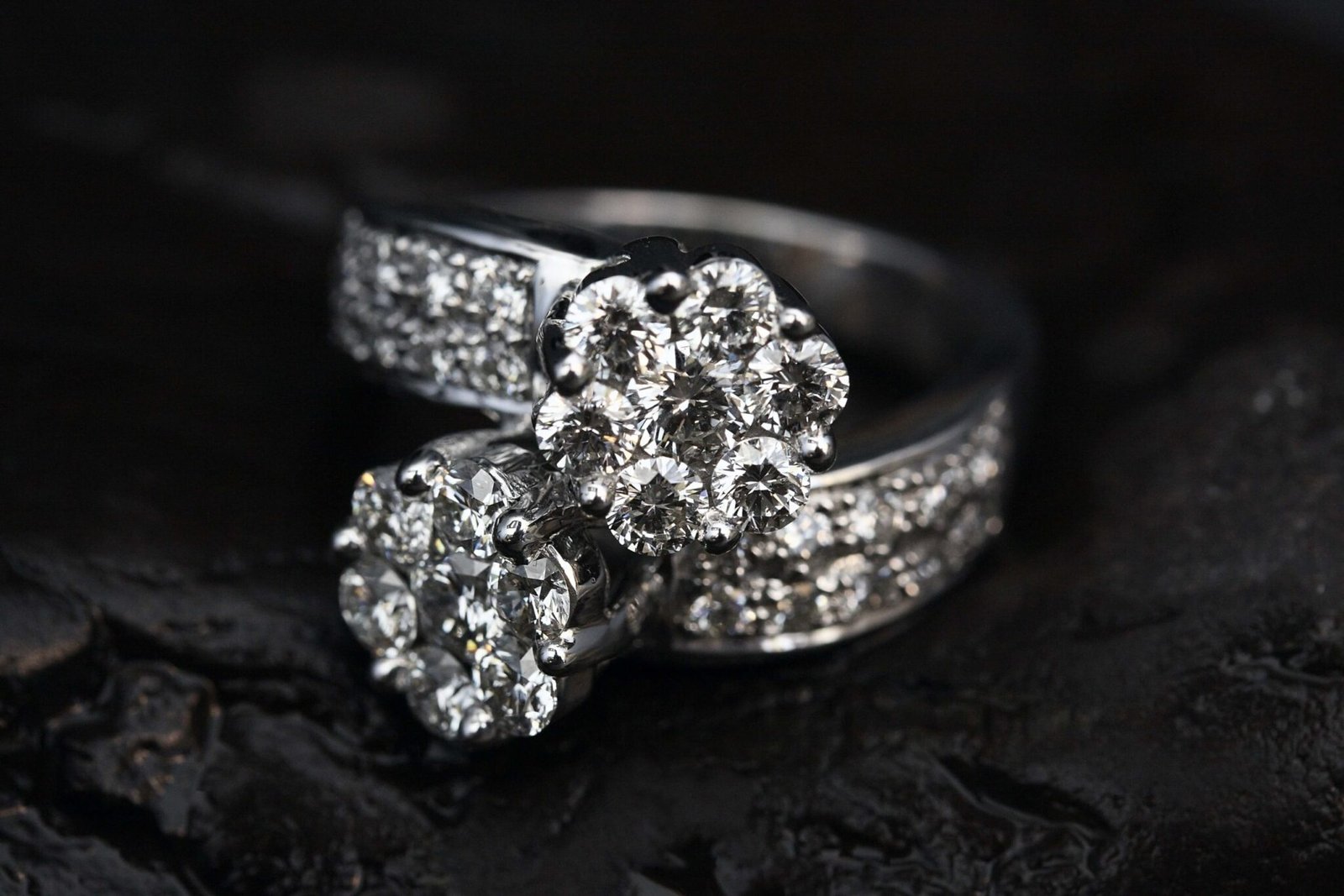
In many stores, the merchandise is documented well enough to sell, but not well enough to settle a claim without friction. That gap shows up in underdescribed brilliant-cut goods, especially mounted pieces where the center stone's style is noted but the rest of the identifying details are thin.
If you need Jewelers Block coverage that reflects how jewelry businesses operate, First Class Insurance can help you protect stock, transit exposure, showcases, and high-value inventory with specialized guidance. Get a Quote for Jewelers Block from a team that understands jewelry store insurance, insurance for a jewelry store, and insurance for jewelry business risks in practical trade terms.