
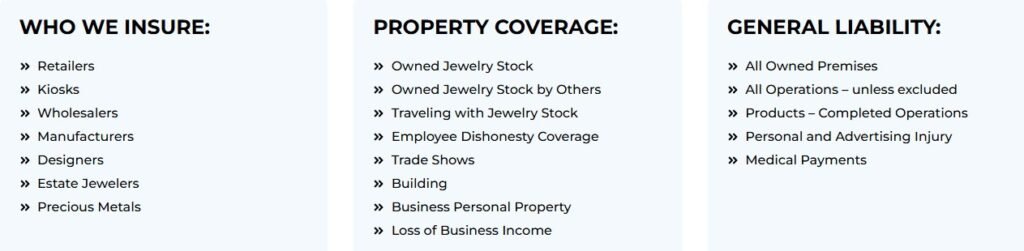
Think of your insurance deductible as the portion of a loss you agree to cover yourself. For small, everyday incidents—a cracked display case, a minor tool repair—paying a small amount out of pocket is manageable. It’s part of the deal that keeps your overall insurance premiums from getting out of hand.
But what about a catastrophic loss? Imagine walking into your store to find your main vault has been emptied overnight. The financial blow is staggering. The last thing you need is to shell out another $10,000, $25,000, or even more for your deductible right when your business is on its knees.
This is precisely where a waiver of deductible becomes your most important financial ally in your insurance for a jewelry business.
What a Waiver of Deductible Actually Is
A waiver of deductible is a powerful clause in your policy that acts like a financial safety net for major disasters. It’s a pre-arranged agreement with your insurer that says, "If a specific, large-scale loss occurs, you don't have to pay your deductible." Instead of you covering the first chunk of the loss, your insurance carrier pays from the very first dollar.
It transforms a devastating financial event into something your business can actually recover from.
Your Policy's Financial Lifeline
Let's look at a real-world example. Say a sophisticated theft results in a $200,000 inventory loss, and your policy has a $10,000 deductible.
Without a waiver, your insurance payout is $190,000. That leaves you to find the other $10,000 to start rebuilding.
With a waiver of deductible, you get a check for the full $200,000. That extra $10,000 in immediate cash flow is crucial for getting back on your feet quickly.
To see the difference side-by-side, let's break down how a claim payment changes with this provision in place.
Claim Payout With and Without a Deductible Waiver
This table shows the real-dollar impact on your business's cash flow after a significant insured event.
| Claim Detail | Standard Policy ($10,000 Deductible) | Policy With Waiver of Deductible |
|---|---|---|
| Total Insured Loss | $200,000 | $200,000 |
| Deductible Paid by Jeweler | $10,000 (Out-of-pocket expense) | $0 (Waived by the insurer) |
| Total Insurance Payout | $190,000 | $200,000 |
| Net Financial Impact | $10,000 immediate cash deficit | $0 immediate cash deficit |
As you can see, the waiver directly injects $10,000 back into your recovery fund exactly when you need it most.
A waiver of deductible is more than just fine print in a Jewelers Block insurance policy; it is a pre-negotiated financial rescue plan. It ensures that during your business's most challenging moments, your coverage provides maximum support precisely when you need it most.
This critical feature isn't automatic. It's usually an endorsement you add or a feature included in more robust policies designed for businesses like yours. Understanding its power is the first step. At First Class Insurance Jewelers Block Agency, we can help you get a quote for Jewelers Block coverage that includes this vital protection, built for the unique risks jewelers face every day.
How the Waiver Works in Your Jewelers Block Policy
A waiver of deductible isn’t a one-size-fits-all feature. Its real power is in the fine print of your Jewelers Block insurance policy. Think of it as a set of pre-arranged emergency protocols. Your insurer agrees to forgive your deductible, but only when a claim is triggered by a severe, clearly defined event—the kind that poses a catastrophic threat to your business.
These trigger events aren't random. They’re carefully selected to cover the worst-case scenarios a jeweler can face, where having to pay a large deductible out-of-pocket would just add insult to injury. While every policy is different, the most common triggers include:
- Verified Armed Robbery: Losses from a confirmed hold-up or violent theft where employees or customers are threatened.
- Professional Safe-Cracking: When a UL-rated safe is professionally breached, showing a sophisticated and determined attack on your primary security.
- Fire or Natural Disaster: Complete or substantial loss of inventory from a fire, flood, or other specified disaster at your insured location.
Essentially, the waiver kicks in for losses that are unambiguous, severe, and completely out of your hands.
The Franchise Deductible: A Related Concept
In some more advanced insurance for a jewelry store policies, you might come across something called a "franchise deductible." It works a bit like a waiver but is triggered by the size of the loss, not the cause.
A franchise deductible sets a dollar threshold. If your total insured loss smashes through that threshold, the deductible is waived entirely. But if the loss falls short, you're on the hook for the full deductible.
Let’s say your policy has a $10,000 standard deductible but includes a $100,000 franchise deductible. If you have a loss of $95,000, you’d get an $85,000 payout. But if the loss hits $105,000, the franchise clause activates, and the insurer pays the full $105,000.
This decision tree shows how an insured loss is handled depending on whether your policy has a waiver of deductible.

As you can see, having a waiver for qualifying events shifts the entire initial financial burden to the insurer, protecting your business's cash flow when you need it most.
Heist Scenario: Calculating the Financial Impact
Let's walk through a real-world scenario. Your jewelry store is hit by a professional crew in an overnight heist. They bypass the alarm, crack your high-security safe, and make off with $250,000 in diamond rings and watches. Your policy has a $15,000 deductible.
- Scenario A (No Waiver): The insurer confirms the loss. Your payout is $250,000 (loss) – $15,000 (deductible) = $235,000. Your business has to find that first $15,000 just to start restocking.
- Scenario B (With Waiver): The loss was due to professional safe-cracking—a specified trigger—so the waiver of deductible activates. The insurer pays the full $250,000. You are out $0 for the inventory and can focus on recovery.
That $15,000 difference is more than just a number. It's the working capital you need for payroll, rent, and other immediate expenses. This is a perfect example of how an expert First Class Insurance Jewelers Block Agency structures coverage that provides true financial resilience.
The idea of waiving cost-sharing during a crisis isn't new. During the COVID-19 pandemic, a huge percentage of health insurance plans waived deductibles for treatment. One analysis found that by late 2020, 49% of people in fully-insured plans had such waivers. This just shows how insurers adapt to major events, a principle First Class Insurance applies when negotiating specialized waivers for jewelers facing disasters like floods or widespread shipping disruptions. You can dig into the data on these industry-wide responses by reading the full KFF analysis.
Key Scenarios Where a Waiver Protects Your Business
A waiver of deductible isn't just another line of insurance jargon; it's a powerful tool that kicks in to protect your jewelry business from financial shock. Its value shines brightest in high-stakes situations that are, unfortunately, all too common in our industry.
For a jeweler, the difference between a claim paid in full and one reduced by a hefty deductible can determine how fast you recover—or if you can recover at all. Let's walk through four critical scenarios where having this waiver proves its worth, turning a potential disaster into a manageable event.

Violent Theft and Robbery
Imagine a brazen smash-and-grab during business hours or a coordinated armed robbery. These violent attacks are not just terrifying; they result in immediate, catastrophic inventory loss. It's in these specific cases that a waiver of deductible in your Jewelers Block insurance is designed to trigger automatically.
Consider this: thieves smash your display cases and make off with $75,000 worth of merchandise. Your policy has a $10,000 deductible.
- Without a Waiver: Your insurer pays $65,000. You're on the hook for the remaining $10,000, an out-of-pocket expense you have to find while dealing with repairs and the trauma of the robbery.
- With a Waiver: Because the loss was a confirmed robbery, the waiver kicks in. Your insurer pays the full $75,000, giving you the maximum possible funds to start restocking and rebuilding.
This immediate financial relief is absolutely critical for staying in business.
Mysterious Disappearance
This is one of the most frustrating things that can happen to a jeweler. A high-value diamond is there for your morning inventory count but has vanished by closing. No signs of forced entry, no direct evidence of theft—just an unaccounted-for loss. This is what we call a mysterious disappearance.
Not all policies cover this, but a robust insurance for jewelry business plan will. More importantly, some policies will waive the deductible for these large, unexplained losses.
A single high-value piece can represent a huge portion of a jeweler's inventory. For a detailed look at protecting such assets, check out our visual guide featuring a stunning diamond ring on a black background.

If a $50,000 ring vanishes and your policy has a $5,000 deductible, a waiver means you get the full $50,000 instead of $45,000. That makes a massive difference in replacing a key piece without crushing your profit margins.
Goods in Transit
Your inventory is often most vulnerable when it's outside your four walls. Whether you're shipping to a client, receiving from a supplier, or traveling to a trade show, the risk of theft skyrockets. This is exactly what Jewelers Block insurance is designed to cover.
Let's say a wholesale jeweler ships a package of loose stones valued at $100,000 via an armored carrier, but the package is hijacked en route. Their policy includes a $10,000 deductible.
- Standard Policy: The payout is $90,000. That $10,000 loss comes straight off the wholesaler's bottom line.
- Policy with Waiver: For a verified transit theft, the waiver clause is triggered. The insurer covers the entire $100,000 loss, ensuring the wholesaler's profitability isn't wiped out by a single incident.
For any business that relies on shipping, this protection isn't a luxury. It's essential.
Custody and Repair Risks
Your responsibility doesn't end with your own inventory. The moment you take in a customer's treasured heirloom for repair or appraisal, you become its guardian. If that item is damaged or stolen while in your care, the financial and reputational fallout can be devastating. This is what insurers call "property of others in your care, custody, or control."
Imagine a customer’s vintage necklace, valued at $30,000, is stolen from a repair bench. If your policy has a waiver for such events, your insurance for a jewelry store will cover the full replacement cost. This allows you to make your client whole without dipping into your own funds, preserving not just your finances but also your customer's trust.
In every scenario, the waiver of deductible acts as a critical financial buffer, shielding your business's cash flow from the initial shock of a major loss. To see how this protection can be built into your coverage, get a quote for Jewelers Block from our expert team.
Decoding the Fine Print in Your Insurance Policy
Let's be honest—insurance policies can feel like they're written in another language. The pages are often packed with jargon that seems designed to confuse you, not give you clarity. But when it comes to a waiver of deductible in your Jewelers Block insurance, those specific words are everything. They literally decide whether you get a full payout after a major loss or if you're stuck with a hefty out-of-pocket bill.
This is where the fine print becomes your best friend or your worst enemy.
Understanding the language in your policy gives you power. You'll know exactly what your insurance for a jewelry business covers, moving beyond assumptions and gaining real confidence in your protection. Let's translate some of the most critical terms you're likely to see.
Key Terms You Must Understand
When you look at your policy's waiver section, a few specific legal terms will pop up again and again. It's vital to know what they mean before you ever have to file a claim.
- Per Occurrence: Think of this as "per event." Your deductible applies to each separate incident that causes a loss. If you suffer two unrelated thefts in one year, you’d be on the hook for two separate deductibles unless a waiver kicks in for one of them.
- Aggregate Deductible: This is a running total. It's the maximum amount you'll pay in deductibles over your policy period (usually a year). Once your combined payments for smaller claims hit this limit, your insurer starts covering 100% of any subsequent losses for the rest of the term.
- Franchise Deductible: As we mentioned earlier, this is a simple threshold. If your loss is below the franchise amount, you pay the whole thing. But if the loss exceeds that amount, the insurer pays the entire claim from the very first dollar. The deductible effectively vanishes.
The way these terms work together determines your financial exposure in a claim. Working with a specialist broker, like someone from First Class Insurance Jewelers Block Agency, is the best way to make sure your policy language actually delivers the protection you think you're paying for.
Analyzing Sample Policy Clauses
Let's look at how this language shows up in a real-world (but anonymized) policy. Getting comfortable with these examples will make reviewing your own coverage much easier.
Sample Clause 1 (Waiver for Specific Perils):
"The deductible, as stated in the Declarations, shall be waived in the event of a loss or damage directly resulting from: (a) armed robbery from the insured’s premises while open for business; or (b) the forcible entry into a UL-rated safe or vault, evidenced by visible marks."
This one is pretty straightforward. It clearly says your deductible is forgiven for two specific events: a confirmed armed robbery during business hours and a professional safe-cracking job. For any other kind of loss, like a mysterious disappearance or accidental damage, the standard deductible would still apply.
Sample Clause 2 (Franchise Deductible Language):
"In the event a single loss covered hereunder exceeds $250,000, no deductible shall be applied to said loss. For any loss less than or equal to $250,000, the applicable per-occurrence deductible shall be subtracted from the amount of the adjusted loss."
Here, the trigger is purely financial. The cause of the loss doesn't matter—if it's big enough, the deductible disappears. This is an incredibly powerful feature for businesses with high-value inventory, as it protects against any type of catastrophic loss, not just specific kinds of theft. You can find more insights on this by exploring our guide on insuring luxury watches.

The need for clear rules around deductibles isn't new. For instance, a 2007 regulatory opinion from New York’s Department of Financial Services laid down the law for auto repair deductibles, requiring shops to report any "deductible absorption" to prevent fraud. While that's a different industry, the core principle—clarity and fairness—is what guides good specialty insurance today. You can learn more about the history of deductible regulations to see how deep these foundational ideas run.
Is a Waiver of Deductible Worth the Cost?
For any jewelry business owner, every line item on the expense report has to earn its keep. Insurance is no different. The decision to add a waiver of deductible to your Jewelers Block insurance policy boils down to a single, critical question: is the extra premium worth the financial shield it provides?
This isn't just a gamble; it's a calculated business decision. You're trading a small, predictable annual cost for protection against a large, unpredictable out-of-pocket expense after a major claim. The real analysis is weighing that modest bump in your premium against the potential of saving $10,000, $25,000, or even more when disaster strikes.

How Underwriters Price This Protection
When you ask for a waiver of deductible, the underwriters at partners of First Class Insurance don't just pull a number from a hat. They perform a detailed risk assessment of your jewelry store insurance profile to figure out the cost. This process means taking a deep dive into several key factors of your insurance for jewelry business:
- Security Measures: The quality of your safes (that UL rating matters), the sophistication of your alarm systems, the presence of surveillance cameras, and how strict your opening/closing procedures are all come into play. Better security lowers the risk of a major loss, which in turn can lower the cost of the waiver.
- Inventory Value and Composition: The total value of your inventory is a huge factor. A store carrying $5 million in diamonds has a much higher exposure than one with $500,000 in silver pieces.
- Sales Volume and Operations: High transaction volumes or frequent travel for trade shows can crank up the risk, influencing the premium for this kind of coverage.
- Claims History: A clean track record without any major theft or loss shows you have a handle on risk management. That makes you a much more attractive candidate for a competitively priced waiver.
Essentially, the more you do to protect your business, the more affordable it becomes to add this extra layer of financial security.
A Clear Cost-Benefit Comparison
Let’s make this real. The table below lays out a hypothetical cost analysis for a mid-sized jewelry store. It shows how a relatively small increase in your annual premium can completely wipe out a huge out-of-pocket expense after a catastrophic claim.
Cost and Benefit Comparison of a Deductible Waiver
This table shows a hypothetical cost analysis for a mid-sized jewelry business, illustrating the trade-off between a higher premium and the potential savings from a waived deductible.
| Policy Feature | Policy Without Waiver | Policy With Waiver |
|---|---|---|
| Annual Premium | $12,000 | $13,500 (+$1,500) |
| Deductible | $25,000 | $25,000 (Waived on major claims) |
| Loss from a Heist | $150,000 | $150,000 |
| Your Out-of-Pocket Cost | $25,000 | $0 |
| Total Insurance Payout | $125,000 | $150,000 |
In this scenario, paying an extra $1,500 a year saves the business $25,000 in cash right when it needs it most. That’s a return on investment that speaks for itself.
Alternatives to a Full Waiver
So, what if a full waiver isn't the right fit for your budget or risk profile? You still have options. One common alternative is a deductible buy-down. This endorsement lets you pay a smaller additional premium to reduce your deductible (for instance, from $25,000 down to $10,000), rather than eliminating it entirely for specific events.
A deductible buy-down provides a middle ground. It offers a way to lower your financial exposure during a claim without the full cost of a complete waiver. It's a strategic choice for managing cash flow risk.
Ultimately, making the right choice requires a clear understanding of your policy's terms. To truly grasp your insurance policy, including its deductible waiver clauses, knowing how to do so with confidence is an invaluable skill. Our friends at TermCraft have a guide on how to effectively review a contract that can help you demystify complex legal documents. At First Class Insurance, we can walk you through all these options. Get a Quote for Jewelers Block today to see a personalized cost-benefit analysis for your business.
How to Secure the Right Coverage for Your Business
Getting the right Jewelers Block insurance—especially with a waiver of deductible—isn't about just buying a policy. It's about forging a strategic partnership. This isn't a transaction; it's a process of building a shield that truly understands and protects your specific operation. The secret is showing underwriters that your jewelry business is a well-run, lower-risk bet.
An expert agency, like First Class Insurance, is your advocate in this conversation. With over 30 years of experience, we know exactly what makes underwriters tick. We help you put your best foot forward, building a compelling case that justifies better terms, like waiving your deductible.
Positioning Your Business for Success
If you want to negotiate a waiver of deductible, you need to paint a clear, professional picture of how you manage risk. Underwriters reward jewelers who are serious about security.
Here’s what you need to focus on:
- Meticulous Documentation: Get all your records in order. This means specs for your UL-rated safes, your alarm monitoring contracts, detailed maps of your CCTV coverage, and your written protocols for opening, closing, and handling high-value pieces.
- A Clean Claims History: Your track record says it all. A history with few or no major losses is your most powerful negotiating tool. It’s proof that your procedures work.
- Operational Clarity: Don’t be vague about what you do. Whether you’re constantly traveling for trade shows, shipping high-value items, or dealing with significant bench risk from custom work, you need to explain your process. It shows you're in control of your unique exposures.
Understanding the paperwork is part of the game, too. The process usually kicks off with forms like the ACORD 125 form, which is the starting line for most commercial insurance applications.
When you work with a specialist agency, you're not just filling out forms—you're presenting a curated risk profile. First Class Insurance uses its deep-rooted underwriter relationships to turn your operational strengths into a customized, cost-effective insurance for a jewelry store policy that protects your legacy.
Your Strategic Insurance Partner
Securing the best insurance for a jewelry business isn't a DIY project. You need an expert who speaks the underwriters' language and gets the nuances of the jewelry trade. That's who First Class Insurance Jewelers Block Agency is. We work with trusted underwriters, including those in esteemed markets like Lloyd's of London, to build coverage that fits your business like a glove.
Are you ready to stop just buying insurance and start building a real shield around your business? Let our expertise work for you.
Contact First Class Insurance today to Get a Quote for Jewelers Block and feel the difference that expert guidance makes.
A Few Common Questions About Deductible Waivers
When you dig into the fine print of insurance for a jewelry business, a few practical questions always come up. To give you some quick clarity, we've pulled together the most common questions we hear from jewelers about the waiver of deductible, with some straight answers.
Does a Waiver of Deductible Cover All Types of Losses?
No, and this is a critical point. A waiver isn't a free pass on every deductible. Think of it as a financial lifeline reserved for specific, catastrophic events that are clearly spelled out in your Jewelers Block insurance policy. It’s designed to kick in for the absolute worst-case scenarios.
Common triggers usually include things like:
- A confirmed armed robbery
- Forcible entry into a UL-rated safe or vault
- Major losses from a fire
It’s almost never going to cover smaller, more common claims like a minor scratch from a bench slip or small-scale shoplifting. You’ll need to check your specific policy to see exactly which events trigger your waiver.
Will Adding a Waiver Make My Premium Skyrocket?
While any added coverage will adjust your premium, the increase for a waiver is often surprisingly small—especially when you consider what it saves you. The exact cost really comes down to your business’s unique risk profile, factoring in your security measures, inventory value, and claims history.
A specialist broker can run the numbers and show you the precise cost-benefit for your operation.
For a lot of jewelers, that small bump in premium is a no-brainer. It brings serious peace of mind and can prevent a sudden $10,000 or $25,000 out-of-pocket hit during a crisis.
What's the Difference Between a Franchise Deductible and a Waiver?
This is a great question because they sound similar but work very differently. A standard waiver of deductible is all about the cause of the loss. If the loss is from a covered event—like an armed robbery—the deductible is wiped out, no matter the dollar amount of the claim.
A franchise deductible, on the other hand, is tied to the size of the loss. With this, your policy sets a specific dollar threshold. If your claim goes above that amount (say, $100,000), your deductible is waived. But if the claim falls below that threshold, you're on the hook for the full deductible amount.
Making sense of these details is what we do all day, every day. The expert team at First Class Insurance is here to walk you through every clause in your policy and build coverage that actually protects what you’ve built.
Get a Quote for Jewelers Block today and get a personalized analysis from a dedicated specialist.